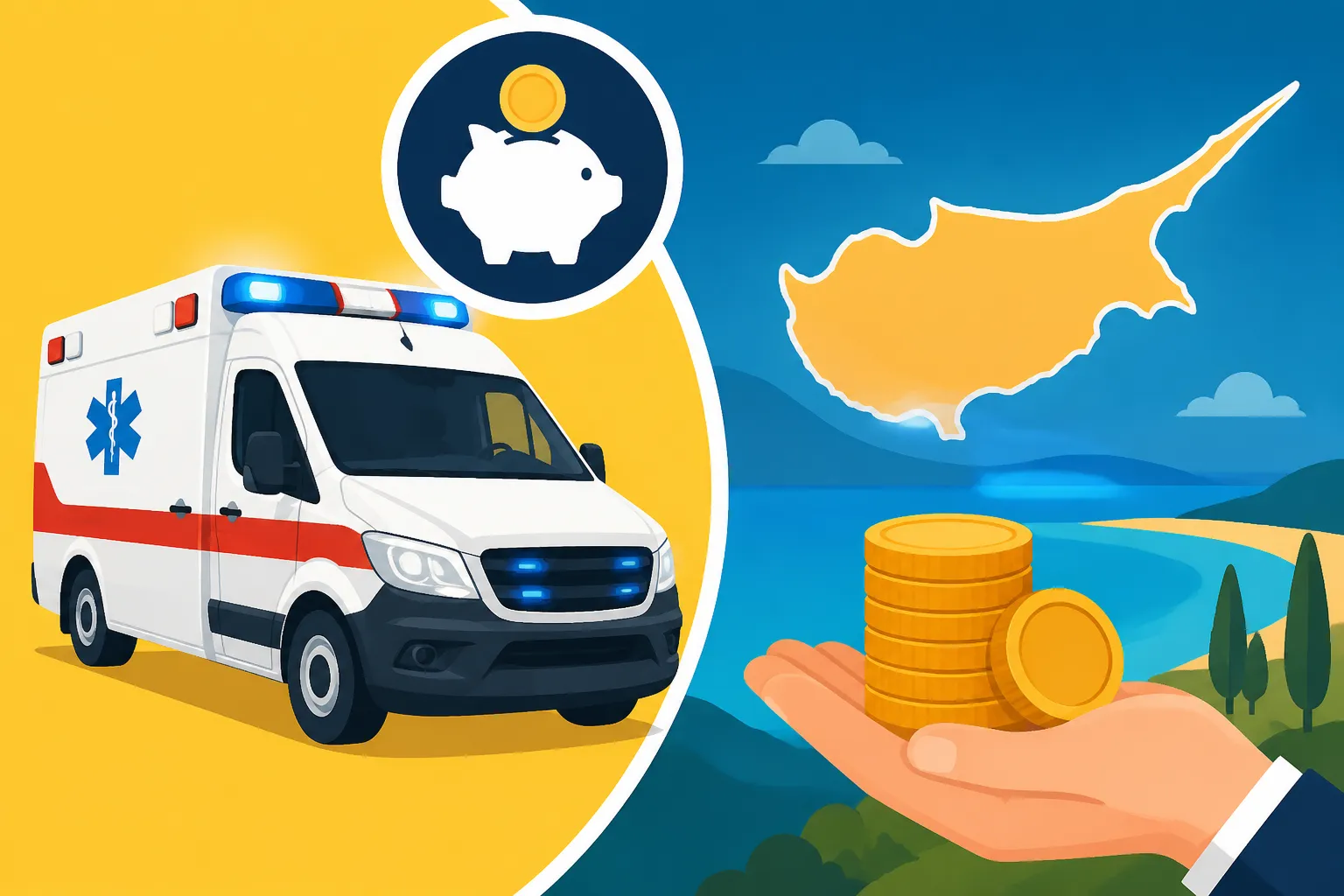
How Much Does an Ambulance Cost in Cyprus?
Picture this: you're enjoying the gorgeous Cypriot sunshine, perhaps exploring an ancient ruin or simply relaxing by the sea, when suddenly, a medical emergency strikes. It's a terrifying thought, and in the panic of the moment, the last thing you want to be worrying about is "how much will this cost?" Dealing with medical emergencies in a foreign country is challenging enough without the added stress of financial uncertainty. This guide is here to shed light on exactly what you can expect regarding ambulance costs in Cyprus, whether you're a long-term expat or just visiting.
Understanding Emergency Medical Services in Cyprus
When a medical crisis hits, knowing who to call and what to expect from the emergency services can make all the difference. Cyprus has a system designed to respond to urgent situations, but it's vital to understand its nuances, especially when it comes to ambulances.
When to Call 112
Just like in many parts of Europe, the universal emergency number in Cyprus is 112. This single number connects you to all emergency services – ambulance, police, and fire department. When you dial 112, you'll reach an operator who can dispatch the appropriate services based on your situation. It's not just for life-or-death scenarios; if someone has a serious accident, a sudden severe illness, or any condition where immediate medical intervention and transport are critical, 112 is the number to remember.
For example, if you witness a car accident on the Limassol highway and someone is clearly injured, or if a friend collapses unexpectedly in a café in Nicosia, you should call 112 immediately. The operators are generally equipped to handle calls in English, which is a huge relief for many expats and tourists, cutting through that initial language barrier anxiety. Don't hesitate because you're worried about costs; your priority in an emergency should always be getting help. For more detailed information, read our comprehensive guide on Understanding Emergency Numbers (112) and Ambulance Care in Cyprus.
The Role of Public vs. Private Ambulances
Cyprus operates a dual system when it comes to healthcare, and this extends to ambulance services. You'll primarily encounter public ambulances, but private options exist, particularly in the larger cities.
The public ambulance service is managed by the Ministry of Health and is integrated with the General Healthcare System (GeSY) and the public hospitals. These are the ambulances you typically see responding to 112 calls. They are staffed by paramedics and nurses and are equipped to provide immediate life support and safe transportation to the nearest appropriate public hospital. Their primary goal is rapid response and stabilization.
Private ambulance services, on the other hand, are run by private hospitals or independent companies. They often offer a more rapid response time, particularly if you have specific private health insurance that includes this service or if you're willing to pay out-of-pocket for perceived speed or convenience. You generally wouldn't call 112 for a private ambulance; you'd directly contact the private hospital or service provider. These services might also be used for inter-hospital transfers between private facilities or for non-emergency medical transport where a higher level of care is required than a regular taxi, but a full emergency ambulance isn't necessary.
The key difference lies not just in ownership but also in their dispatch. Public ambulances are centrally dispatched through 112, ensuring coverage across the island, while private ambulances are typically called directly by individuals or private hospitals and their availability can be more localized.
The Cost of an Ambulance Ride in Cyprus
Now, let's get to the nitty-gritty: how much will an ambulance actually set you back? The answer, like so many things in Cyprus, depends heavily on your residency status and insurance coverage.
Public Ambulance Costs: GeSY and Non-GeSY
For those registered with the General Healthcare System (GeSY), Cyprus's national healthcare scheme, the news is generally good. If you are a legal resident and actively contributing to GeSY, ambulance services in a public emergency are usually covered. This means that if you call 112 and a public ambulance transports you to a public hospital, you will typically not face a direct charge at the point of service. This is a massive relief and a key benefit of being part of the system. We covered this in detail in How Cyprus's Health System Works: GeSY vs Private Explained (2027).
However, it's crucial to understand that "covered" doesn't always mean "completely free" for every single aspect of your subsequent treatment. While the ambulance itself might be covered, you may still encounter co-payments for doctor visits, specialist consultations, or certain hospital services once you arrive at the public hospital, depending on your treatment. Our article, Understanding GeSY Co-Payments and Out-of-Pocket Fees in Cyprus, provides more clarity on these potential costs.
For non-GeSY registered individuals, which includes tourists, short-term visitors, or expats who haven't yet registered or aren't eligible, public ambulance services are not free. In such cases, you will be liable for the full cost of the ambulance transport. While precise figures can fluctuate, you can generally expect a public ambulance ride without GeSY coverage to cost anywhere from €100 to €300, or potentially more depending on the distance and complexity of the care provided en route. This fee is separate from any hospital charges you will incur later. It's often billed directly to you or your insurance provider after the fact. This is where having robust travel insurance, like that offered by SafetyWing, can literally be a lifesaver, covering these unexpected emergency transport costs.
Private Ambulance Costs
If you opt for a private ambulance service – either by directly calling a private hospital or if your private health insurance directs you to one – the costs are typically higher than those of public ambulances for uninsured individuals. Private ambulance companies operate on a fee-for-service model.
The exact cost of a private ambulance will vary significantly based on the provider, the distance of the transport, and the level of medical care required during the journey. You could be looking at €200 to €500 or even more for a basic transfer. If advanced life support, specialized equipment, or a doctor accompanies the patient, the price can climb much higher. These services are usually paid upfront or billed directly to your private health insurance. If you have private health insurance, it's essential to check your policy's terms regarding emergency transportation. Some policies will cover private ambulance costs, while others might only cover public ones, or have limitations. This is a good point to review your options in Understanding Private Health Insurance Options in Cyprus.
Factors Influencing the Final Bill
The final cost of an ambulance in Cyprus isn't a fixed, one-size-fits-all fee. Several variables can influence what ends up on your bill:
- Distance Travelled: This is a straightforward factor. A longer journey, for example, from a remote village in the Troodos mountains to a major hospital in Limassol, will naturally cost more than a short hop across town. Fuel, staff time, and vehicle wear and tear all add up.
- Medical Services Rendered En Route: Did the paramedics simply transport you, or did they provide advanced medical care? Things like administering medication, setting up IV drips, performing resuscitation, or using specialized monitoring equipment during the journey will add to the overall charge. The level of intervention directly correlates with the final cost.
- Staffing: If the ambulance crew includes a doctor or a highly specialized nurse in addition to paramedics, this can also increase the cost, reflecting the higher expertise brought to bear on your case.
- Time of Day/Week: While less common for public emergency services (which should always be available), some private services might have slightly different rates for out-of-hours calls, though this is usually integrated into their general pricing structure.
- Hospital Transfer Type: Is it an emergency transfer, or a planned inter-hospital transfer? Planned transfers are often less expensive per minute of service as they don't involve the same urgent dispatch and immediate response protocols.
It’s truly a maze, isn't it? This unpredictability is precisely why having proper health coverage, whether it's GeSY or a solid private plan, is non-negotiable for anyone spending significant time in Cyprus.
How to Manage Ambulance Costs and Insurance
Navigating medical costs in an emergency can feel overwhelming, but being prepared with the right insurance and knowledge can save you a lot of stress and money.
The Importance of Health Insurance
For anyone living in Cyprus, health insurance is not just a good idea; it's often a legal requirement for residency, and it's absolutely essential for peace of mind.
For Residents (GeSY): If you're contributing to GeSY, your emergency ambulance transport to a public hospital is covered. This is one of the most significant benefits of being part of the system. However, don't just assume your registration is active; always keep your GeSY registration details handy and ensure your contributions are up to date. You can learn more about how to register in How to Register for GeSY (General Healthcare System) in Cyprus (2027). GeSY effectively acts as a safety net for emergency care, ensuring you won't be hit with a hefty ambulance bill if you need urgent transport to a public facility.
For Expats with Private Insurance: Many expats, especially those not eligible for GeSY or who prefer the private healthcare system, choose private health insurance. It's paramount that your private policy includes emergency ambulance cover. Read the fine print! Some policies might only cover public ambulances, some might have limits on the cost, or require pre-approval for non-emergency transfers. A good private policy should clearly state how it handles emergency medical transport, including whether it covers both public and private ambulance services, and under what circumstances. This is crucial for avoiding unexpected bills. Take a look at Health Insurance in Cyprus: GeSY, Private and Employer Options Explained for a deeper dive.
Travel Insurance for Tourists and Short-Term Visitors
If you're not a resident of Cyprus and therefore not covered by GeSY, robust travel insurance is your best friend. For tourists, the cost of an ambulance and subsequent medical care can quickly skyrocket, turning a beautiful holiday into a financial nightmare. A good travel insurance policy should cover:
- Emergency Medical Expenses: This is the core of it, covering doctor's fees, hospital stays, and treatments.
- Emergency Evacuation/Repatriation: Crucially, this includes ambulance costs and, in severe cases, transport back to your home country.
- Medical Assistance: Many policies offer a 24/7 helpline, which can be invaluable for navigating a foreign medical system.
Brands like SafetyWing are specifically designed with travelers and digital nomads in mind, offering comprehensive medical and travel insurance that explicitly covers emergency medical evacuation, which includes ambulance transport. Imagine you're hiking in Akamas, twist your ankle badly, and need an ambulance; with a policy from SafetyWing, you have peace of mind that the transport and initial treatment costs will be handled. Always purchase travel insurance before you depart and ensure it covers medical emergencies in Cyprus.
What to Do If You're Uninsured
Facing an emergency when uninsured is a stressful situation, but not insurmountable. If you find yourself needing an ambulance without any form of health or travel insurance, here's what you can expect and how to handle it:
- Seek Treatment First: Your health is the priority. Do not delay calling 112 if you need an ambulance. Emergency services will treat you regardless of your insurance status.
- You Will Be Billed: Expect to receive a bill for the ambulance service and any subsequent medical treatment at the hospital. Public hospitals, while part of GeSY, will charge non-GeSY patients for their services. For an idea of potential costs, read The Cost of Healthcare in Cyprus: A Complete Breakdown for Foreigners (2026).
- Negotiate Payment Plans: Hospitals and ambulance services in Cyprus are generally understanding. If you receive a large bill, especially for an unexpected emergency, don't be afraid to speak to the billing department or administrative staff. You may be able to negotiate a payment plan over several months.
- Explore Options with Your Home Country's Embassy/Consulate: While they can't pay your medical bills, your embassy or consulate might be able to provide advice, connect you with local resources, or assist in contacting family back home for financial support.
- Avoid Unnecessary Services: Once stabilized, if you are uninsured, try to be mindful of services that may not be absolutely critical, but always follow medical advice.
This is a tough spot to be in, and it underscores why adequate coverage is so vital. Being uninsured for an emergency in a foreign country is a situation best avoided at all costs.
Practical Scenarios and What to Expect
Let's walk through a few hypothetical, but very real, scenarios to give you a clearer picture of how ambulance costs might play out.
Scenario 1: GeSY Registered Resident
Imagine Maria, a GeSY-registered expat living in Paphos, suddenly experiences severe chest pain one evening. Her husband, panicked, immediately calls 112. A public ambulance arrives within minutes. The paramedics assess Maria, stabilize her, and transport her to the Paphos General Hospital, a public facility.
What happens next? Upon arrival at the hospital, Maria presents her GeSY card (or her ID, which allows them to verify her GeSY status). Because she is registered and contributing, the ambulance transport cost is covered by GeSY. She will then be seen by emergency doctors. For any further consultations, tests, or medication within the public hospital system, she will pay the standard GeSY co-payments. For instance, a visit to the emergency department might incur a small fee, and prescriptions would have minimal co-payments. The biggest relief for Maria and her husband is that the immediate, high-cost ambulance bill is not something they have to worry about at that stressful moment.
Scenario 2: Tourist with Travel Insurance
Next, let's consider David, an American tourist on a two-week holiday in Ayia Napa. While enjoying a day at the beach, he slips on some rocks and sustains a serious head injury. His friends call 112. A public ambulance is dispatched and takes David to the nearest public hospital, Famagusta General Hospital.
What happens next? David is not a GeSY member. Therefore, he will be charged for the ambulance ride. Let's say the bill for the ambulance is €150. He will also be charged for his emergency room visit, any scans (like a CT scan), and any required medication. These costs can quickly add up to several hundred or even a few thousand euros. However, David wisely purchased travel insurance from SafetyWing before his trip. He or his friends contact SafetyWing's 24/7 emergency assistance line. They guide him on the billing process, and his policy covers the ambulance cost and his subsequent medical treatment, up to his policy limits. He might have an initial deductible, but the bulk of the unexpected expenses are handled by his insurance provider. This scenario perfectly illustrates why travel insurance is indispensable for tourists in Cyprus. For more on what to do, see What Should I Do in a Medical Emergency in Limassol?.
Scenario 3: Uninsured Expat
Finally, think about Liam, a new expat who has just arrived in Larnaca and is still in the process of applying for his residency permit. He hasn't registered for GeSY yet and hasn't purchased private health insurance because he thought he'd "get around to it." He wakes up with excruciating abdominal pain and calls 112. A public ambulance transports him to Larnaca General Hospital.
What happens next? Liam is not covered by GeSY. The public ambulance service will charge him for the transport. The emergency room visit, blood tests, potential ultrasounds, and doctor consultations will also be billed to him directly as a private patient (albeit at a public hospital). This could easily amount to €500-€1500 or more for an emergency that doesn't even require surgery. Liam will receive a substantial bill. He might have to pay it upfront or arrange a payment plan with the hospital's accounts department. This situation highlights the immense financial risk of being uninsured, even for a short period, when living abroad. It's a stark reminder that you really need to prioritize setting up your health coverage, whether it's through How to Buy Private Health Insurance as a Newcomer in Cyprus or getting your GeSY sorted.
Public vs. Private Ambulance Costs in Cyprus: A Comparison
To make things clearer, here’s a quick overview of the typical cost implications for public versus private ambulance services in Cyprus. Please remember these are general estimates and actual costs can vary based on specific circumstances, distance, and the services provided.
| Feature | Public Ambulance (via 112) | Private Ambulance (direct call/private hospital) |
|---|---|---|
| Eligibility/Access | Anyone in an emergency (primarily dispatched via 112) | Typically via private hospital contact, or by private insurance provider |
| Cost for GeSY Member | Generally covered (minimal or no direct charge) | Full cost, typically €200 – €500+ (if chosen over public) |
| Cost for Non-GeSY / Uninsured | €100 – €300+ (billed after service) | Full cost, typically €200 – €500+ (billed directly) |
| Coverage by Travel Insurance | Often covered (check policy details, e.g., SafetyWing) | Often covered if policy includes private medical transport (check policy details) |
| Response Time | Aims for rapid response, depends on location and demand | Can sometimes offer faster response in specific urban areas, depends on provider |
| Primary Destination | Public Hospitals | Private Hospitals (or public if required) |
| Service Level | Basic to advanced life support, emergency transport | Basic to advanced life support, emergency and non-emergency transport |
| Payment Method | GeSY covers; Uninsured billed post-service; Insurance claim | Direct payment; Private insurance claim |
Emergency Medical Care in Cyprus
Beyond ambulance costs, it's really important to have a broader understanding of what to do in a medical emergency. Knowing the full picture can help you make informed decisions when you're under pressure. Our comprehensive guide, Emergency Medical Care in Cyprus: What Every Expat Needs to Know, walks you through everything from calling 112 to navigating hospital admissions.
Being prepared is about more than just knowing a phone number; it's understanding the system. If you find yourself in an emergency needing hospital care, it's also worth knowing about the potential costs for an emergency room visit. Even if your ambulance is covered, the ER itself might have separate charges. How Much Does an Emergency Room Visit Cost in Cyprus? will give you a clearer idea of those costs.
Whether you're visiting or living here, understanding the local healthcare system can sometimes feel like trying to solve a puzzle. But don't despair! With the right information and preparation, you can confidently navigate any medical situation that comes your way. Having a plan, and the right insurance, whether it’s GeSY or a reliable provider like SafetyWing, means you can focus on getting better, not stressing over bills.
Disclaimer
The information provided in this guide is intended for general informational purposes only and does not constitute medical, legal, or financial advice. While we strive to provide accurate and up-to-date information, healthcare regulations, costs, and insurance policies in Cyprus are subject to change. Always consult with a qualified professional for advice tailored to your specific situation, and verify current information with official sources or your insurance provider before making any decisions.