What Is GeSY and How Does It Work in Cyprus?
Moving to a new country like Cyprus can be incredibly exciting, but let's be honest, the administrative side of things often feels like a giant, convoluted puzzle. One of the biggest pieces of that puzzle for many expats is figuring out the healthcare system, especially something called GeSY. You've heard the acronym, maybe you've heard whispers of it, but understanding what it truly is and how it actually functions can feel like deciphering an ancient scroll. This guide is here to cut through the confusion, offering a realistic, expat-focused walkthrough of Cyprus's General Healthcare System, or GeSY.
Deconstructing GeSY: What Exactly is it?
Let's start from square one. GeSY, pronounced "ye-see" by many locals, stands for the General Healthcare System (Γενικό Σύστημα Υγείας). It's Cyprus's ambitious, universal healthcare system, designed to provide comprehensive medical care to all eligible residents based on social insurance contributions, rather than direct payments at the point of service for most treatments. It officially launched in two phases, starting in 2019, fundamentally transforming how healthcare is accessed on the island.
Before GeSY, the system was a mix of a rather overstretched public sector and a robust, but often expensive, private sector. Foreign residents, unless they worked for a company providing private insurance, often found themselves navigating this divide, frequently opting for private care simply for convenience and speed, or relying on patchy public services. The government, recognising the need for a more equitable and sustainable model, introduced GeSY with the core aim of ensuring that everyone living and working in Cyprus could access quality medical services without the crippling fear of huge bills. It’s a huge step towards modernising the healthcare landscape here, bringing Cyprus more in line with other European nations that have social health insurance systems.
The driving force behind GeSY is the Health Insurance Organisation (HIO), an independent public law body responsible for its administration and oversight. Their mandate is to manage the funds, ensure the smooth operation of the system, and regulate all the healthcare providers who participate. This means they are the ones setting the rules, managing contributions, and making sure that the network of doctors, specialists, hospitals, and pharmacies works together. It’s a monumental task, and while it's still evolving and has its quirks, the intention is to create a unified system where your health isn't dictated by your wallet. This is a crucial distinction for many newcomers who might be used to entirely private or entirely state-funded systems in their home countries.
Understanding GeSY Eligibility: Who Gets In?
Alright, so you know what GeSY is in theory. Now for the million-dollar question: are you eligible? This is where many expats hit their first bureaucratic hurdle, and honestly, it can feel like you're trying to prove your existence to a skeptical committee. The short answer is that GeSY is generally available to all legal residents of Cyprus who make social insurance contributions. But, as with all things Cypriot admin, the devil is in the details. To dive deeper into the specifics, I highly recommend checking out our comprehensive guide on Understanding Who Is Eligible for GeSY in Cyprus.
Contributions and Residency Status
Eligibility hinges primarily on your social insurance contributions. If you are employed in Cyprus, your employer will typically register you and deduct your GeSY contributions directly from your salary along with your social insurance. This is usually the smoothest path into the system. For the self-employed, you'll be responsible for making your own contributions to the Social Insurance Fund. Pensioners also contribute, usually based on their pension income. Dependents – spouses and minor children – are typically covered under the eligible family member, provided they are also legal residents.
There are specific categories of residents who are automatically eligible without direct contributions based on certain criteria, such as those receiving public assistance or individuals with specific severe chronic diseases. However, for most working expats, it comes down to being a legal resident and making those mandatory social insurance payments. Your residency status significantly impacts your access to Ge entire system, which is why it's vital to understand How Your Residency Status Affects GeSY Access in Cyprus.
The Waiting Game for Newcomers
Here’s a common point of frustration for new arrivals: you might start working and making contributions immediately, but your official registration with GeSY, especially obtaining your unique identification number (which is your Arcadian number linked to your identity card or Alien Registration Card/ARC), can take a bit of time. During this interim period, you're contributing to the system but might not yet have full access. This is a critical time when having alternative coverage is paramount. For those first few months before your GeSY kicks in, or if you're frequently jetting off the island for work or holidays, something like SafetyWing can really be a smart choice to cover you for emergencies and unexpected illnesses. It's a travel medical insurance designed for nomads and expats, which means it understands the gaps that can arise when you're in bureaucratic limbo or travelling outside your primary healthcare zone.
It’s not just non-EU citizens who face this waiting period; sometimes EU citizens who are new to the island and are just establishing their employment can also experience a delay in getting their full GeSY access activated. The key takeaway here is: do not assume instant coverage. Always have a plan B for healthcare during your initial months.
GeSY in Practice: Navigating the System Day-to-Day
Once you're in and have your GeSY number sorted, the real journey begins: using it. This is where the practicalities of the system come into play, and understanding the flow is crucial to avoid unnecessary stress or unexpected costs. It's quite different from what many expats are used to, so let's break it down step-by-step.
Choosing Your Personal Doctor (GP)
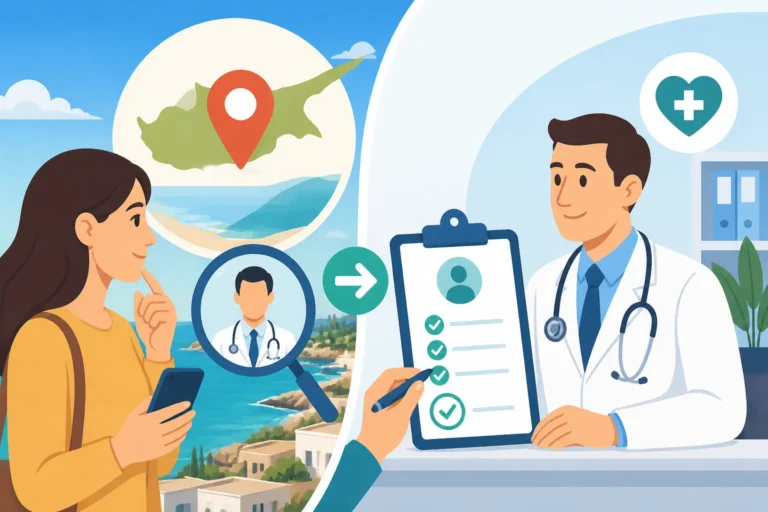
The first and most fundamental step in using GeSY is registering with a Personal Doctor (GP). Your GP is your gateway to the entire system. You cannot, in most cases, directly book an appointment with a specialist under GeSY without a referral from your GP. This gatekeeper model is standard in many European healthcare systems but can be a surprise if you're used to direct access. You can find a list of participating GPs through the HIO's online portal or by asking around in expat groups. Finding an English-speaking doctor in areas like Limassol or Paphos is usually quite manageable, but it might take a bit of searching. Our guide on How to Choose a Personal Doctor (GP) Under GeSY in Cyprus offers more detailed advice on this important decision.
Once you’ve chosen a GP, you register with them through the GeSY portal. This officially links you to them, and they become your primary point of contact for all non-emergency medical needs. When you visit your GP, you’ll usually pay a small co-payment – a nominal fee for the service. For most GP visits, this is quite low, but it's important to be aware of Understanding GeSY Co-Payments and Out-of-Pocket Fees in Cyprus.
Specialist Referrals and Hospital Care
So, you’ve seen your GP, and they've determined you need to see a specialist – perhaps a dermatologist, a cardiologist, or an orthopaedic surgeon. Under GeSY, your GP must provide you with a referral. You then take this referral and use the GeSY portal or contact specialists directly to book an appointment with a GeSY-registered specialist. This is where patience often becomes a virtue. Waiting times for specialist appointments, particularly for popular specialties, can vary significantly. While some might be quick, others can stretch into weeks or even months.
When it comes to hospital care, GeSY covers both outpatient and inpatient services at participating public and private hospitals. If your GP refers you to a hospital for tests or a consultation, or if you require admission, GeSY will cover the costs, again usually with a co-payment depending on the service. Emergency care is also covered, but it's vital to know that for non-life-threatening situations, going directly to an A&E department without a GP referral can incur higher co-payments. For true emergencies, always call 112, the pan-European emergency number. What to do in a medical crisis is paramount, so be sure to read our guide on Emergency Medical Care in Cyprus: What Every Expat Needs to Know.
Here’s a quick overview of typical co-payments under GeSY:
| Service Category | Co-payment (approx. €) | Notes |
|---|---|---|
| Personal Doctor (GP) Visit | €1 | For consultations. |
| Specialist Doctor Visit | €6 | Requires GP referral for GeSY coverage. |
| Pharmacy Prescription Item | €1 | Per prescribed item, if covered by GeSY. |
| Laboratory Test | €1 | Per category of test (e.g., blood tests, urine tests). |
| Physiotherapy/Occupational Therapy/Speech Therapy | €6 | Per session, requires GP referral. |
| Diagnostic Examinations (e.g., MRI, CT scan) | €6 | Per examination, requires GP referral. |
| Hospital Inpatient Care | Free | No co-payment for admission, but separate co-payments apply to certain services during stay. |
| Accident & Emergency Visit | €10 | For non-urgent cases without GP referral. Free for urgent cases. |
Note: These co-payments are subject to change by the HIO. Always confirm current rates.
Medications and Pharmacies
Prescription medications are another area where GeSY makes life significantly easier. Once you have a prescription from a GeSY-registered doctor, you can take it to any participating pharmacy. You'll pay a small co-payment per prescribed item. The system integrates electronically, so pharmacists can usually see your prescriptions directly. This saves a lot of hassle compared to trying to get foreign prescriptions filled or paying full price for every single medication. For a deeper dive, check out our guide on Prescription Medications and Pharmacies in Cyprus: The Complete Guide.
Benefits and Real-World Limitations of GeSY
Now that we’ve covered the mechanics, let’s talk about the practical impact of GeSY – the good, the bad, and the sometimes exasperating reality for expats.
The Undeniable Benefits
The biggest benefit, without a doubt, is comprehensive healthcare at an affordable cost. For many expats, particularly those coming from countries with expensive private systems or no universal coverage, GeSY is a godsend. It covers a vast array of services, including GP visits, specialist consultations, laboratory tests, diagnostic scans, hospitalisation, surgeries, maternity care, and even some mental health services. This comprehensive coverage means a significant reduction in out-of-pocket expenses.
Another huge advantage is the peace of mind it offers. Knowing that you, and your family, have access to medical care without worrying about astronomical bills for serious illnesses or accidents is invaluable. It levels the playing field, ensuring that everyone, regardless of their financial standing, can get the care they need. For families, the ability to Add Dependents to Your Health Coverage in Cyprus simplifies things immensely once you're registered.
The electronic system, while sometimes clunky, also allows for better continuity of care. Your various GeSY doctors and pharmacists can access your medical history within the system, theoretically leading to more informed and coordinated treatment plans. This can be especially helpful if you're seeing multiple specialists.
The Common Frustrations and Real-World Limitations
While GeSY is a fantastic system in principle, it's not without its challenges, and as an expat, you're likely to encounter a few. The most common complaint revolves around waiting times. While emergency services are prompt, booking non-urgent specialist appointments or certain diagnostic tests can involve considerable delays. This is particularly true in major cities where demand is high, or for highly specialised fields. This often leads expats (and Cypriots!) to use the private sector for faster access, even if they're covered by GeSY. This brings us to a common dilemma: Public vs Private Healthcare in Cyprus: Which Should Expats Choose?.
Bureaucracy and Language Barriers can also be a significant source of frustration, especially during initial registration or when trying to understand specific processes. While many healthcare professionals speak English, the administrative side of things can sometimes revert to Greek, making it tricky for non-Greek speakers to navigate. Don't be afraid to ask for help or bring a friend if you're struggling.
Choice of Doctors: While GeSY offers a choice of GPs and specialists, the pool might feel limited compared to a fully private system, especially in smaller towns. Finding an English-speaking doctor who also fits your personal preferences might take a bit of effort.
What's NOT fully covered: While extensive, GeSY doesn't cover everything. Dental care, for instance, has very limited coverage (usually just basic check-ups and extractions, with more complex procedures being out-of-pocket). Certain elective cosmetic procedures, specific alternative therapies, or some very new, experimental treatments might also fall outside its scope. This is where many expats choose to supplement their GeSY coverage with private health insurance for specific needs, or for travel outside of Cyprus where GeSY doesn't apply. Again, services like SafetyWing can be a great option for those international travel needs, providing peace of mind even when you're off the island.
In summary, GeSY is a robust and essential healthcare system in Cyprus. It provides invaluable access to medical care for residents, dramatically reducing costs and offering a comprehensive safety net. However, like any large-scale public system, it requires patience, a bit of navigation, and a clear understanding of its processes and limitations. Knowing how to register, how referrals work, and what to expect regarding co-payments will save you a lot of headaches and ensure you make the most of what this system has to offer.
Disclaimer
The information provided in this guide is for general informational purposes only and does not constitute medical or legal advice. Healthcare policies and procedures in Cyprus are subject to change. Always consult with the official Health Insurance Organisation (HIO) or a qualified legal professional for the most accurate and up-to-date information regarding your personal circumstances.