What Should I Do in a Medical Emergency in Limassol?
Getting caught in a medical emergency is terrifying enough, but when you're an expat or a tourist in a foreign country like Cyprus, especially in a bustling city like Limassol, that fear can multiply exponentially. The language barrier, the unfamiliarity with local systems, and the sheer panic of the moment can leave you feeling utterly lost and vulnerable. This comprehensive guide is designed to cut through that confusion, providing you with clear, actionable steps on exactly what to do when a medical emergency strikes in Limassol, ensuring you're as prepared as possible.
Recognizing a Medical Emergency and Knowing When to Act
One of the most crucial first steps is to accurately assess the situation. Not every health issue requires an ambulance and a trip to the emergency room. Understanding the difference can save you valuable time, stress, and potentially unnecessary costs.
What Constitutes an Emergency in Cyprus?
In Cyprus, just like anywhere else, a medical emergency is generally defined as a sudden illness or injury that could put your life or health at serious risk if not treated immediately. These are situations where every second counts, and delaying treatment could have severe consequences.
Think about scenarios like severe chest pain that might indicate a heart attack, sudden and extreme difficulty breathing, symptoms suggesting a stroke (sudden weakness or numbness on one side, confusion, slurred speech), uncontrolled bleeding, a major accident resulting in severe trauma, or any loss of consciousness. For children, a very high fever combined with lethargy, a rash that doesn't fade when pressed, or severe difficulty breathing should also be treated as an emergency. These are the moments you absolutely must not hesitate to seek immediate professional medical help. Don't try to "wait it out" or self-diagnose with Dr. Google when these symptoms appear.
When to Go to A&E versus Calling an Ambulance
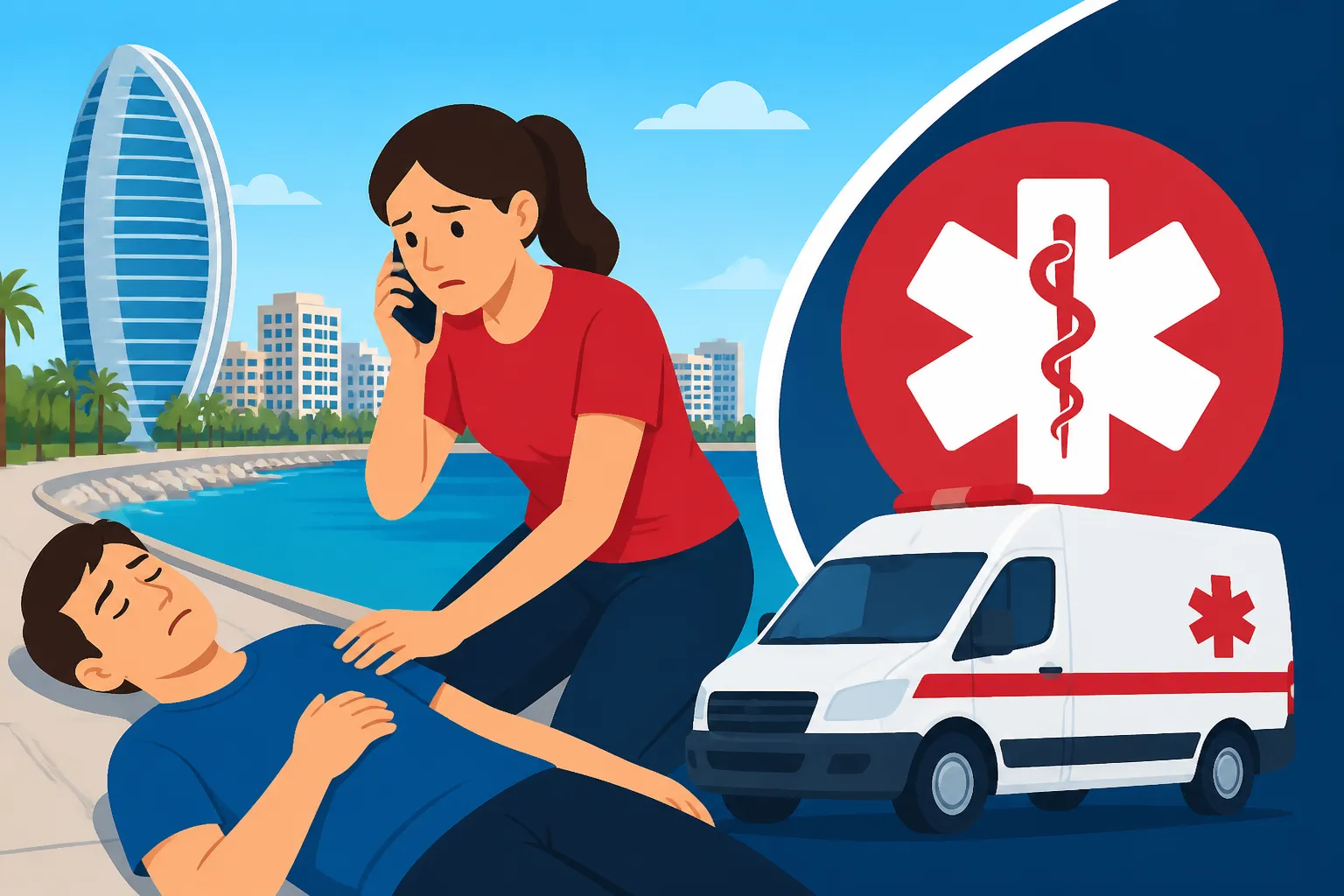
This is a common dilemma, even in your home country. In Limassol, the decision-making process is similar. If the condition is life-threatening or could worsen significantly during transport, and you are unable to safely transport yourself or the affected person, calling an ambulance via 112 is the unequivocal choice. For instance, if someone has fallen and suspects a spinal injury, or is unconscious, moving them without professional medical assistance could cause further harm. Likewise, if you're experiencing severe chest pain or stroke symptoms, the ambulance paramedics can begin treatment on the way to the hospital, which can be critical for positive outcomes. To delve deeper into how these services operate, you might find our guide on Understanding Emergency Numbers (112) and Ambulance Care in Cyprus particularly useful.
However, for less critical but still urgent issues – such as a suspected broken bone where the person is stable, a deep cut that requires stitches but isn't gushing blood, or a sudden, severe allergic reaction that isn't causing breathing difficulties – you might consider getting to the Accident & Emergency (A&E) department of a hospital by taxi or a private car, if it's safe to do so. This can sometimes be quicker than waiting for an ambulance if roads are busy, and it frees up ambulance services for those who truly cannot wait. Always use your best judgment, but err on the side of caution if you're unsure.
Immediate Steps During an Emergency in Limassol
When panic sets in, it's hard to think clearly. Having a mental checklist, or even better, a physical one, can be a lifesaver. Here’s how to navigate the immediate aftermath of an emergency in Limassol.
Calling for Help: The Emergency Numbers
The primary emergency number in Cyprus, covering all services (police, fire, ambulance), is 112. This is the European standard and works from any phone, mobile or landline, even without credit on a mobile. When you call 112, you will be connected to an operator who can dispatch the appropriate services. They generally speak English, but clear and concise communication is paramount.
Here’s what you need to tell them:
- Your Location: Be as precise as possible. Provide the full address, including street name, building number, apartment number, and any nearby landmarks. If you're on a major road, mention the direction of travel or nearest junction. In Limassol, mentioning a well-known hotel, a specific beach, or a large shop nearby can also help.
- Nature of the Emergency: Clearly state what has happened (e.g., "my husband is having chest pain," "there's been a car accident with injuries," "my child is unconscious").
- Number of People Involved: How many people need medical attention?
- Condition of the Patient(s): Are they conscious? Breathing? Bleeding heavily?
- Your Name and Contact Number: This allows them to call you back if they need more information or if they can't find your location.
Language Barrier Tips: While 112 operators usually speak English, stress can make things difficult. Speak slowly and clearly. If you have a Greek-speaking friend nearby, put them on the phone. Don't hang up until the operator tells you to, and be prepared to stay by the phone if they need to contact you again.
For non-emergency medical advice or less severe issues, contacting your personal doctor (GP) first is always recommended. Our guide on Registering with a Personal Doctor (GP) in Cyprus: The Complete Expat Guide (2027) offers more insight into finding and registering with a GP.
Navigating Limassol's Hospitals and Clinics
Limassol is well-served by both public and private medical facilities. Knowing their names and locations can be crucial.
Public Hospital:
- Limassol General Hospital (Γενικό Νοσοκομείο Λεμεσού): This is the main public hospital serving the Limassol district. It has a full Accident & Emergency (A&E) department that operates 24/7. This is where ambulances will typically take patients for serious emergencies under the GeSY system. Expect potentially longer waiting times, especially for non-life-threatening conditions, but rest assured, they are equipped for major trauma and critical care.
Private Hospitals:
Limassol also boasts several excellent private hospitals with A&E departments, which often have shorter waiting times and offer a more personalized experience, though at a cost if you don't have private insurance or aren't covered by GeSY for private services.
- Ygeia Polyclinic (Πολυκλινική Υγεία): A very well-regarded private hospital with a 24-hour A&E department. Many expats choose Ygeia for their private medical needs.
- Mediterranean Hospital of Cyprus (Μεσογειακό Νοσοκομείο Κύπρου): Another prominent private hospital with comprehensive emergency services.
If you are conscious and able to choose, and have private health insurance, you might opt for a private hospital's A&E for a quicker service, especially for conditions that are urgent but not immediately life-threatening. However, for severe trauma, a public hospital might sometimes be better equipped for the initial stabilization. The most important thing is to get to a hospital immediately. For a deeper understanding of the options, refer to our comparison: Understanding the Difference Between Public and Private Hospitals in Cyprus.
Upon arrival at any A&E, you will usually be triaged by a nurse to assess the severity of your condition. This means that patients with more critical conditions will be seen first, regardless of when they arrived. Be prepared to provide identification and health insurance information at the registration desk.
Essential Information to Have Ready
In an emergency, every moment counts, and fumbling for documents only adds to the stress. Expats are advised to prepare a small, easily accessible "emergency pack" – physical or digital – with critical information.
This should include:
- Identification: Your passport or Cypriot ID card/Alien Registration Card (ARC).
- Health Insurance Details: If you're registered with the General Healthcare System (GeSY), have your GeSY beneficiary number or your Cypriot ID. If you have private health insurance, carry your insurance card, policy number, and the emergency contact number for your insurer. Some international insurance providers, like SafetyWing, offer travel medical insurance that can be invaluable for tourists or those awaiting GeSY registration. Knowing your policy details upfront can streamline the admission process in private hospitals.
- Medical History: A concise list of any chronic conditions, past surgeries, and significant allergies (especially drug allergies).
- Current Medications: A list of all medications you are currently taking, including dosage and frequency. If possible, bring the actual medication containers.
- Emergency Contact Information: The names and phone numbers of at least two people (family or close friends) who can be contacted on your behalf.
- Blood Type: While hospitals will test if needed, knowing your blood type can save a few minutes.
Keep this information readily available, perhaps in your wallet, a dedicated folder, or securely on your smartphone. The more prepared you are, the smoother the process will be during a highly stressful event. For a complete list of important documents, check out What Documents Do I Need to See a Doctor in Cyprus?.
Understanding Costs and Insurance Coverage
The financial aspect of a medical emergency is often a major concern for expats and tourists. Navigating the costs depends heavily on your residency status and insurance coverage in Cyprus.
GeSY and Emergency Care
If you are a legal resident of Cyprus and registered with the General Healthcare System (GeSY), you are generally covered for emergency medical care at public hospitals. This means your out-of-pocket costs will be minimal, usually just the standard co-payment fees, which are significantly lower than the full cost of treatment. For example, an emergency room visit might incur a small co-payment, typically around €10 for consultations or treatments. Hospital admissions and necessary diagnostic tests are also largely covered.
However, it's crucial to understand that if you opt to go to a private hospital for an emergency without a referral from a GeSY personal doctor (GP) or specialist for that specific condition, you will likely be responsible for the full cost of treatment. Some private hospitals are integrated into GeSY for certain services or specialists, but this is not always the case for their A&E departments when arriving without prior arrangement. Always clarify with the private hospital if they accept GeSY for your specific emergency. Understanding the nuances of co-payments is vital, and you can learn more by reading Understanding GeSY Co-Payments and Out-of-Pocket Fees in Cyprus.
Private Insurance and Tourists
For those who are not eligible for GeSY, or for tourists visiting Limassol, private health insurance is your best friend in an emergency. If you have purchased a comprehensive private health insurance policy, either locally or internationally, it will cover most, if not all, of your emergency medical expenses. This often includes ambulance services, A&E consultations, diagnostic tests, hospital stays, and any necessary surgeries or treatments.
It’s paramount to thoroughly understand your private health insurance policy before an emergency strikes. Know your deductible (the amount you pay before your insurance kicks in), your co-insurance (the percentage you pay after the deductible), and what procedures require pre-authorization from your insurer. Many private policies will require you to pay upfront for services and then claim reimbursement, so ensure you keep all receipts and medical reports.
For tourists or those on short-term stays, travel medical insurance is indispensable. Companies like SafetyWing offer flexible and affordable travel medical insurance designed for digital nomads and travelers, providing coverage for unexpected medical emergencies abroad. Having a robust plan from a provider like SafetyWing can prevent a medical emergency from turning into a financial catastrophe, offering peace of mind when you're far from home. Make sure your travel insurance explicitly covers emergency care, ambulance services, and potential repatriation.
What to Expect Regarding Payment
In public hospitals for GeSY beneficiaries, expect to pay any applicable co-payments at the cashier after your treatment. If you are not a GeSY beneficiary or have limited coverage, you will be billed for services.
In private hospitals, it's common practice to ask for an upfront payment or a guarantee of payment, especially if you do not have GeSY coverage or if your private insurance requires direct billing arrangements. This could be a significant amount, particularly for admissions or complex procedures. If you have private insurance, contact them immediately or have a friend or family member do so to inform them of your situation and clarify billing procedures. They may be able to arrange direct billing with the hospital, or advise you on the reimbursement process. Ensure you get detailed invoices and medical reports from the hospital for your insurance claim.
For an in-depth look at various insurance options, explore our guide on Understanding Private Health Insurance Options in Cyprus, and if you're new to the island, How to Buy Private Health Insurance as a Newcomer in Cyprus might be helpful.
After the Emergency: Follow-up and Support
Surviving an immediate medical emergency is just the first hurdle. The road to full recovery often involves follow-up care, and for expats, this can involve additional logistical and emotional challenges.
Follow-up Care in Limassol
Once the immediate crisis has passed and you are discharged from the hospital, follow-up care is essential. Your discharge papers will usually include instructions for further appointments, medication, and specific care guidelines.
- For GeSY Beneficiaries: You will likely be advised to follow up with your personal doctor (GP) who can then refer you to a GeSY specialist if needed. This integrated system ensures continuity of care within the public healthcare framework. Make sure to schedule these appointments promptly.
- For Private Insurance Holders/Self-Pay: You have the flexibility to choose your follow-up care. Many private hospitals offer outpatient clinics with specialists covering almost all medical fields. You can also consult private GPs who can refer you to other private specialists. If your initial emergency was covered by a travel insurance plan like SafetyWing, ensure any follow-up care is also within your policy's terms or consider registering for local private health insurance for ongoing needs. If you need to find an English-speaking doctor, Limassol has many, and resources like How to Find an English-Speaking Doctor in Cyprus can assist you.
Ensure you have a clear understanding of your medication schedule, any dietary or activity restrictions, and signs to watch out for that might indicate a complication. Don't hesitate to ask questions if anything is unclear before you leave the hospital.
Psychological Impact and Support
Undergoing a medical emergency, especially in a foreign country, can be a profoundly traumatic experience. It's common to feel anxiety, stress, fear, or even post-traumatic stress symptoms afterwards. Don't underestimate the psychological impact.
- Talk to Someone: Share your experience with trusted friends, family, or other expats. Sometimes just articulating what you went through can be therapeutic.
- Seek Professional Help: If you find yourself struggling with persistent anxiety, nightmares, difficulty sleeping, or changes in mood that affect your daily life, consider reaching out to a mental health professional. Limassol has several English-speaking psychologists and therapists who can provide support and coping strategies.
- Lean on Expat Communities: Online expat groups and local social clubs in Limassol can be a great source of emotional support and practical advice, connecting you with others who have faced similar challenges. They can offer a sense of community and understanding that is invaluable during difficult times.
Remember, taking care of your mental well-being is just as important as your physical recovery. Don't suffer in silence.
Disclaimer
The information provided in this guide is intended for general informational purposes only and does not constitute medical advice. While we strive to ensure accuracy, healthcare regulations and procedures in Cyprus can change. Always consult with a qualified medical professional for any health concerns or emergencies. In a life-threatening situation, immediately call the emergency services number 112.