How Do I Get Medication Delivered to My Home in Cyprus?
Oh, the sheer frustration of needing medication but being stuck at home! Perhaps you're feeling under the weather yourself, caring for a sick child, or maybe you just haven't quite mastered the Cypriot driving labyrinth yet, and getting to the pharmacy feels like an Olympic event. It's a common expat dilemma, and believe me, I've been there, staring at an empty paracetamol bottle during a sudden fever. This guide is going to walk you through the various ways you can get your much-needed medications delivered right to your doorstep here in Cyprus, making your life just a little bit easier.
Understanding the Cypriot Pharmacy System and the Need for Delivery
Let's face it, when you first move to a new country, even simple tasks like picking up a prescription can feel daunting. The traditional pharmacy experience in Cyprus has its own quirks, and understanding them is the first step to appreciating the convenience of delivery.
The Traditional Pharmacy Experience in Cyprus
In Cyprus, pharmacies are usually independent businesses, often family-run, and they’re a vital part of every neighbourhood. You'll find them dotted around every town and village, identifiable by a green cross sign. Traditionally, getting your medication meant a physical visit. You'd hand over your prescription (or explain your symptoms for over-the-counter remedies), wait for the pharmacist to prepare it, and then pay.
Regular pharmacy hours typically run from morning to lunchtime, then a siesta break, reopening in the late afternoon/evening, and usually closing relatively early. Navigating these hours, especially if you're used to 24/7 access, can be a challenge. And forget Sundays and public holidays – most pharmacies are closed, with a rotating roster of on-duty pharmacies open for emergencies. Figuring out which one is open in your area can involve a quick Google search or checking local municipality websites, but it’s still a trip you have to make. For a comprehensive overview, you might want to read our guide on Prescription Medications and Pharmacies in Cyprus: The Complete Guide.
While most pharmacists speak excellent English, especially in tourist areas and larger cities like Limassol and Nicosia, there can still be moments where a specific medical term or a nuanced request gets lost in translation. These are all small hurdles, but when you're feeling unwell, they can feel like insurmountable mountains.
Why Home Delivery is a Game-Changer for Expats
For expats, home delivery of medication isn't just a convenience; it's often a lifesaver. Think about it:
- Sudden Illness: You wake up with a nasty flu, fever, or a migraine. The last thing you want to do is drag yourself out of bed, get dressed, and trek to a pharmacy.
- Mobility Issues: Whether temporary (a sprained ankle) or permanent, getting around can be tough. Public transport in Cyprus isn't always the most comprehensive, and taxis can add to the cost.
- Caring Responsibilities: If you're looking after young children or an elderly relative, leaving them to pop out for medication might not be an option.
- Lack of Transport: Many expats, especially when they first arrive, don't have a car. Relying on friends or public transport for essential errands can be inconvenient and stressful.
- Discretion: Sometimes, you just prefer a bit of privacy when picking up certain medications.
- Time-Saving: Even if you're perfectly well, getting an hour back from your busy schedule is always a win.
The shift towards delivery services, especially accelerated by recent global events, has been a game-changer. It means you can stay home, focus on recovery, and have your essential supplies brought right to you. This is an incredibly comforting thought when you're trying to settle into a new country and facing unexpected health issues.
Your Options for Medication Home Delivery in Cyprus
The good news is that medication delivery in Cyprus is becoming more and more accessible. It's not always advertised as loudly as, say, pizza delivery, but the services are definitely out there if you know where to look.
Direct Pharmacy Delivery Services
Some larger pharmacies, particularly those part of small chains or located in busier urban centers, have started offering their own direct delivery services. This often means they have dedicated staff or partner with local couriers to bring prescriptions and over-the-counter items directly to your home.
The best way to find out if your local pharmacy offers this is simply to call them. Don't be shy! Explain your situation in English, and ask if they deliver. You might be surprised. Many smaller, independent pharmacies, while not advertising broadly, might offer this service to regular customers or in specific situations.
How it typically works:
- Contact: Call your preferred pharmacy. If you have a physical paper prescription, they might ask you to send a photo via WhatsApp or email, or sometimes they'll send someone to collect the physical prescription from you (though this is less common). If it's an e-prescription (from your GeSY doctor), they'll simply ask for your ID number and retrieve it electronically.
- Order Confirmation: They'll confirm your items, total cost, and any delivery fee.
- Delivery Details: Provide your full address, including any specific directions (e.g., "the house with the green gate, opposite the bakery"). Cypriot addresses can be less precise than you might be used to, so clear instructions are vital.
- Payment: Payment is often upon delivery, usually in cash, but some pharmacies might offer card payments or even online payment links.
A notable example of a pharmacy group offering delivery across Cyprus is Alpha Mega Pharmacies. They have a strong online presence and often provide delivery services, making them a reliable option. However, it's always worth checking with smaller local pharmacies first, as they often offer a more personal touch and might be closer.
Third-Party Delivery Platforms
Cyprus has embraced the digital age, and with it, a rise in third-party delivery platforms. These aren't just for your evening takeaway anymore; many have expanded to include grocery stores, convenience shops, and yes, pharmacies!
The most prominent platforms for this in Cyprus are Foody and Wolt. Both are popular apps that partner with various businesses, including many local pharmacies, to provide on-demand delivery.
How these platforms typically work:
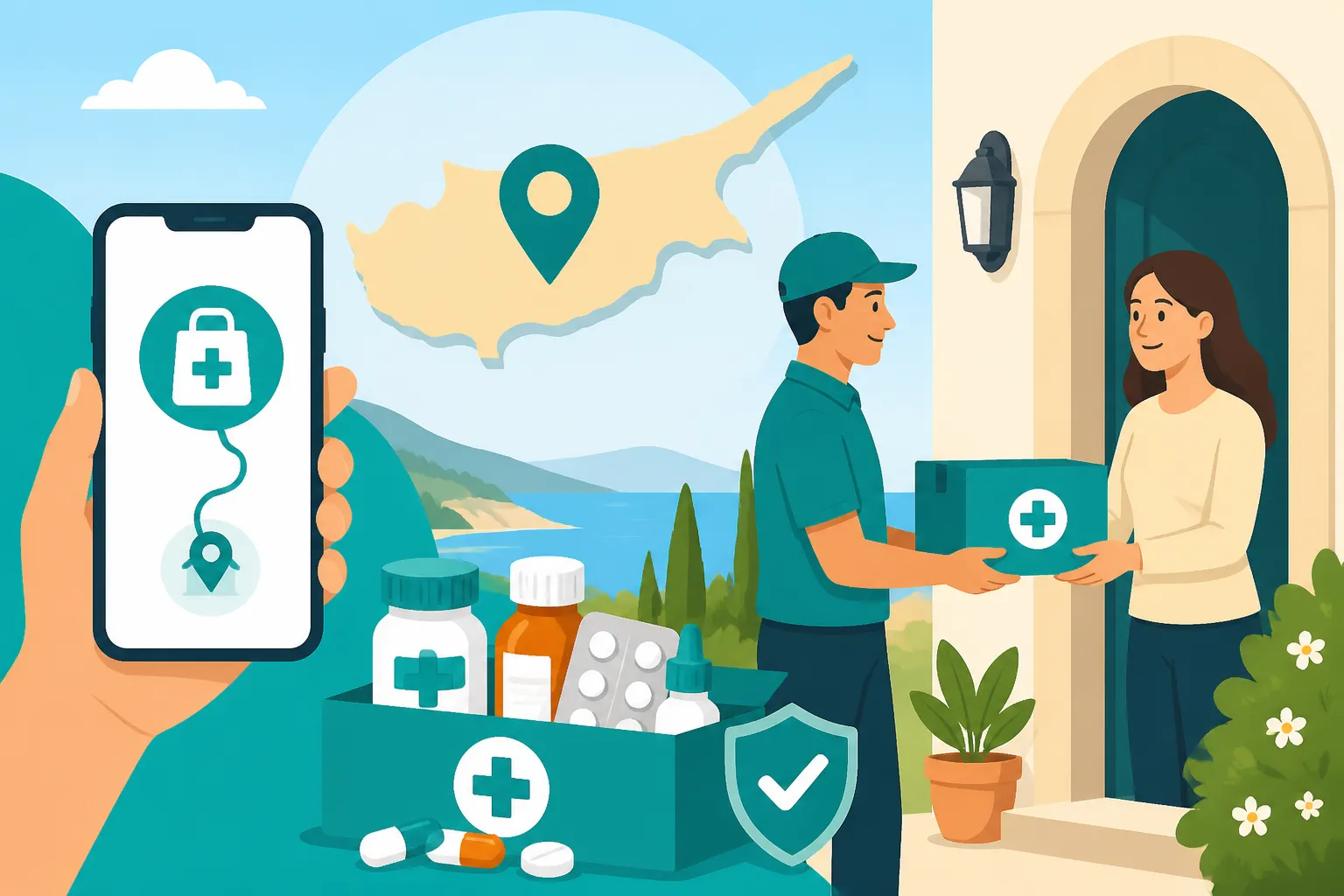
- Download the App: Get Foody or Wolt on your smartphone.
- Location Services: Ensure your location services are on so the app can show you pharmacies near you that offer delivery.
- Browse/Search: Look for the "Pharmacy" or "Health & Beauty" section. You'll see a list of participating pharmacies.
- Select Items: Browse their available stock. For prescription medications, you'll usually be prompted to upload a photo of your physical prescription or provide details for an e-prescription. Some apps might have a chat function to communicate with the pharmacy directly through the platform.
- Checkout and Payment: Add items to your cart, specify your delivery address, and pay securely within the app using a credit/debit card.
- Track Your Order: You can track the delivery person's progress in real-time.
These platforms are incredibly convenient, often have a wider reach, and payment is usually hassle-free through the app. However, be mindful of potential delivery fees, which can vary based on distance and the platform's policies. The selection might also be limited to what the partnered pharmacies choose to list on the app.
Here's a quick comparison to help you weigh your options:
| Feature | Direct Pharmacy Delivery | Third-Party Delivery Platforms (e.g., Foody, Wolt) |
|---|---|---|
| Availability | Varies by pharmacy, often limited to local | Wider network of partnered pharmacies |
| Ordering | Phone call, sometimes email/WhatsApp | Smartphone app, user-friendly interface |
| Prescription | Provide details over phone or send photo | Upload photo or enter e-prescription details |
| Delivery Fees | Can be free, or a small fixed fee | Variable fees based on distance/platform policies |
| Payment | Cash on delivery, sometimes card/online | In-app card payment (secure) |
| Tracking | Usually no real-time tracking | Real-time tracking via app |
| Convenience | Personal service, might be faster locally | High digital convenience, broader options |
| Language | Direct communication with pharmacist | App interface in English, support available |
Emergency or Urgent Delivery Scenarios
What if it's truly urgent, and you need medication now? While there isn't a dedicated "emergency medication delivery" service from the government or GeSY, the existing pharmacy system is designed to cover urgent needs.
As mentioned, there are always on-duty pharmacies, or "duty pharmacies" (Φαρμακεία εφημερίας), open outside regular hours, on weekends, and public holidays. These are crucial for urgent needs. You’ll need to physically go to one, or send someone, but it ensures access. You can find the list of duty pharmacies on the Cyprus Ministry of Health website or via local newspapers and online search engines like Google Maps (searching "on-duty pharmacy near me" will often yield results).
It's important to differentiate between general home delivery and emergency medical situations. If you are experiencing a medical emergency, the primary concern is immediate medical attention, not just medication delivery. In such cases, you should call 112 for an ambulance or head straight to the nearest hospital emergency room. For more on this, check out our guide on Emergency Medical Care in Cyprus: What Every Expat Needs to Know.
For urgent but non-life-threatening medication needs, like a sudden fever or an asthma inhaler running out, the third-party delivery apps or a quick call to a local pharmacy are your best bet. Some pharmacies that offer delivery might prioritize urgent requests, but this is at their discretion. It’s always best to be prepared, especially with essential medications, as highlighted in Understanding the Pharmacy System and Buying Medicines in Cyprus.
Navigating Prescriptions, Payments, and Practicalities
Getting medication delivered successfully involves more than just knowing who delivers. There are a few practicalities, especially around prescriptions and payments, that are worth understanding.
The Prescription Predicament
This is often where expats hit a snag. How do you get your doctor's orders to the pharmacy when you're not physically there?
- eGeSY Prescriptions: If you're registered with GeSY, Cyprus's General Healthcare System, your doctor will issue an electronic prescription (eGeSY). This is a game-changer for delivery! The prescription is stored digitally, and any GeSY-registered pharmacy can access it using your ID number (or your GeSY beneficiary number) and the doctor's reference. This means you simply need to tell the pharmacy your details, and they can retrieve the prescription. If you're struggling to register with a doctor under GeSY, our guide on Registering with a Personal Doctor (GP) in Cyprus: The Complete Expat Guide (2027) can help.
- Private Prescriptions: If you're seeing a private doctor, they will usually give you a physical, paper prescription. For delivery, the pharmacy will likely ask you to send a clear photo of this prescription via WhatsApp or email. Some might still require the physical copy to be presented upon delivery, so always confirm this beforehand. It's a good idea to keep your private doctor informed if you're planning to use a delivery service, as they might have preferred pharmacies or methods.
- Specialist Referrals: If you've been referred to a specialist under GeSY, they will also issue e-prescriptions. If you're seeing a private specialist, the same rules apply as with private GPs. Understanding how these referrals work can be helpful, so take a look at How to Get a Referral to a Specialist Under GeSY in Cyprus.
Key takeaway: Always confirm with the pharmacy how they prefer to receive your prescription information before placing an order for delivery.
Costs, Co-payments, and Insurance Considerations
Money matters, especially when you're unwell. Understanding the costs involved is crucial.
- Medication Costs: Under GeSY, many prescription medications have a very low co-payment (typically €1 per item). Over-the-counter medications are paid for in full. If you're not eligible for GeSY or choose to go private, you'll pay the full cost of both prescription and over-the-counter medicines. For a full breakdown of costs, check out The Cost of Healthcare in Cyprus: A Complete Breakdown for Foreigners (2026).
- Delivery Fees: Direct pharmacy delivery might be free, especially if you're a regular customer or if your order is above a certain amount. Third-party platforms almost always charge a delivery fee, which can range from €2 to €5, depending on distance and demand.
- Private Health Insurance: If you have private health insurance in Cyprus, it might cover the cost of the medication itself (minus any excess or co-insurance), but it's highly unlikely to cover the delivery fee. You'll typically pay for the medication upfront and then claim reimbursement from your insurer. It's always a good idea to understand your policy's specifics. Many expats opt for private insurance to bridge gaps, or while waiting for GeSY eligibility. Companies like SafetyWing offer flexible travel medical and global health insurance designed for digital nomads and expats. While they won't pay for your delivery fee directly, they provide a safety net for unexpected medical costs, including eligible prescription medications, which is invaluable when you're far from home. Make sure you understand Health Insurance in Cyprus: GeSY, Private and Employer Options Explained and Understanding Private Health Insurance Options in Cyprus.
Tips for a Smooth Delivery Experience
Having spent years navigating the quirks of Cypriot services, I can tell you that a little bit of preparation goes a long way.
- Call Ahead and Be Clear: Don't assume. Always call the pharmacy directly (even if using an app, a quick call for complex prescriptions can help). Be super clear about your exact address, including any landmarks ("next to the big eucalyptus tree," "the house with the blue shutters"). Trust me, vague addresses are a common cause of delays!
- Have Your Prescription Ready: Whether it's your GeSY ID or a clear photo of your paper prescription, have it easily accessible.
- Confirm Payment Method: Always ask how they prefer payment. Cash is king in many situations in Cyprus, even if card payments are increasingly common.
- Be Patient with Delivery Times: While some services are fast, expect a realistic delivery window, especially during peak hours or if you're outside a major city center. Don't expect Amazon Prime speeds in rural areas.
- Check Your Order: When your medication arrives, quickly check that you have everything you ordered and that the packaging is intact before the delivery person leaves.
- Keep a Basic Stock: Even with delivery, it's smart to have a small home medical kit with essentials like pain relievers, bandages, antiseptic, and any critical daily medications you need. This is especially true for those first few days after arriving when everything feels new and confusing. If you're wondering what to pack, check out What Should I Pack in a Home Medical Kit for Cyprus?.
- Know Your Doctor: Having a good relationship with your Personal Doctor (GP) is vital. They are your first point of contact for prescriptions and medical advice, and can often help facilitate things if you're stuck. You can also explore How to Find an English-Speaking Doctor in Cyprus.
The Future of Medication Delivery and Staying Prepared
Cyprus is constantly evolving, and its digital health services are no exception. The convenience you've come to expect will only continue to grow.
Evolving Digital Health Services
The GeSY system is still relatively new, and it's continuously being refined and expanded. As more aspects of healthcare become digital, it's highly probable that medication delivery will become even more streamlined. We might see further integration between the GeSY portal and pharmacy delivery services, making the entire process seamless. The aim is to make healthcare as accessible as possible, and that absolutely includes getting your prescriptions without unnecessary hassle. Keeping an eye on government health initiatives and app updates will give you an idea of what's coming next.
Being Proactive with Your Health Needs
While delivery services are fantastic, the best approach is always to be proactive about your health.
- Regular Doctor Visits: Keep up with your routine check-ups with your GP. This helps ensure your prescriptions are current and you're not caught off guard.
- Medication Management: Don't wait until you're down to your last pill to reorder. Plan ahead, especially if you take daily medications.
- Pharmacy Relationship: Build a relationship with a local pharmacy. They often remember regular customers and are more likely to go the extra mile for you.
- Robust Health Coverage: Having comprehensive health insurance, whether it's GeSY or private coverage like what SafetyWing offers, provides peace of mind. Knowing that unexpected medical bills for consultations or medication won't break the bank means you can focus on getting better rather than worrying about finances. Always remember that while delivery is a convenience, solid health coverage is a necessity. Navigating the Cypriot healthcare system can be complex, so having a good understanding of your options, as covered in Navigating the Cypriot Healthcare System: An Expat's Roadmap (2027), is crucial.
Getting medication delivered to your home in Cyprus is entirely possible and becoming increasingly common. With a little bit of know-how and by leveraging available apps and services, you can ensure that you and your family have access to the care you need, even when you can't step out the door. Stay healthy, and don't let those minor logistical hurdles get you down!
Disclaimer
Please note that while I strive to provide accurate and up-to-date information, the landscape of services and regulations in Cyprus can change. Always verify current details with relevant service providers, pharmacies, and official government sources. This guide is for informational purposes only and does not constitute medical or legal advice.