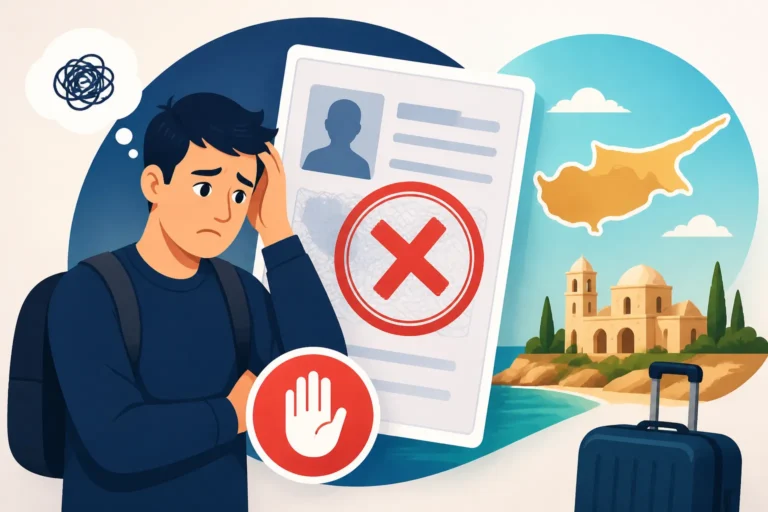
Can I Extend My Visitor Stay in Cyprus?
That feeling when your Cypriot adventure is drawing to a close, and you just know you're not ready to leave? The sun, the sea, the halloumi – it gets under your skin, doesn't it? Many of us expats have been there, watching our visitor stay tick down, wondering if there's any way to magic up a few more weeks, or even months, in this beautiful island nation. This guide is going to walk you through the realistic possibilities, and the equally realistic hurdles, of extending your visitor stay in Cyprus, helping you understand what's genuinely on the table and what might just be wishful thinking.
Understanding the Standard Visitor Stay in Cyprus
Before we even dive into extensions, it's absolutely crucial to understand the foundational rules of visitor stays here in Cyprus. This isn't just bureaucratic fluff; it dictates everything that comes next.
Schengen Area Rules for Non-EU Citizens
For many non-EU citizens, the primary concern revolves around the "90/180-day rule." While Cyprus isn't yet fully integrated into the Schengen Area for borderless travel, it largely applies the Schengen rules for short-stay visas and visa-free travel durations. What this means is that if you're from a country that enjoys visa-free travel to the Schengen Area (and by extension, Cyprus for short stays), you are generally allowed to stay for up to 90 days within any 180-day period.
This isn't a continuous 90 days from your arrival; it's a rolling window. Every day you are in Cyprus (or any Schengen country if you've been traveling around Europe), counts towards that 90-day limit. The system tracks your entries and exits, and exceeding this limit without a proper visa or residence permit can lead to serious consequences. It can be a real headache trying to calculate this on the fly, especially if you're hopping between countries, so always keep a close eye on your entry stamps and travel history.
Specifics for EU and UK Citizens
Now, if you're an EU citizen, your situation is quite different and, frankly, a lot simpler. Thanks to the principle of freedom of movement, you have the right to enter and reside in Cyprus for up to three months without any formalities other than a valid ID or passport. If you wish to stay longer, you simply need to register your presence with the Civil Registry and Migration Department (CRMD) to obtain a [Yellow Slip / MEU1]. This is a registration, not a visa application, and it grants you the right to reside, work, or study. So, for EU citizens, "extending a visitor stay" isn't really a concept in the same way; it's about formalizing your long-term residency if you choose to remain.
For UK citizens, post-Brexit, the rules have shifted. You are now generally treated similarly to other non-EU citizens for short stays, meaning you're typically subject to the 90/180-day rule. If you wish to stay longer than 90 days within a 180-day period, you will need to apply for a long-stay visa or a residence permit. It's a significant change from the good old days, and one that often catches newcomers off guard, leading to difficult situations if not planned for.
Short-Stay National Visas
Some visitors might enter Cyprus on a specific national short-stay visa, which could be issued for a duration of less than 90 days, or perhaps for a specific purpose. These are less common for general tourism but might apply to certain business trips or special events. The duration stated on your visa is your hard limit, and any extension requests would be strictly reviewed against the initial purpose of your visit, and only under truly exceptional circumstances. The golden rule here: never assume; always check the exact stamp in your passport or the validity dates on your visa sticker.
The Realities of Extending a Visitor Stay: Is it Even Possible?
Alright, let's get down to brass tacks. You're here, you love it, and you want to stay. Can you actually extend your visitor stay in Cyprus? The short answer for most people is: it's highly unlikely for casual reasons.
General Rule: Extensions are Rare and for Exceptional Circumstances
The Cypriot authorities, like those in most countries, view short-stay visas and visa-free entries as just that: short stays for tourism or very brief business trips. They are not intended as a backdoor to long-term residency or as a trial period for moving here permanently. Extending a visitor stay is not a routine administrative process you can simply apply for because you’ve decided you fancy a few more weeks on the beach. It's strictly reserved for situations that are genuinely outside your control and prevent your timely departure.
This is a point where many expats initially feel frustrated, as their home countries might have more lenient rules. But here, the expectation is that you arrive with a clear plan for your departure date, and you stick to it. The Civil Registry and Migration Department (CRMD) processes these requests, and their bar is set incredibly high.
Who to Contact and What Documents You'll Need
If you truly believe you have an exceptional circumstance, you would need to contact the CRMD. Their offices are in various districts (Nicosia, Limassol, Larnaca, Paphos, Famagusta). Be prepared for a potentially lengthy process and a lot of scrutiny.
Typically, you would need to provide:
- Your valid passport (and any current visa sticker).
- Proof of your original entry into Cyprus.
- A written, detailed explanation of the exceptional circumstances preventing your departure. This needs to be compelling and verifiable.
- Documentary evidence to support your claim (e.g., medical certificates, police reports, flight cancellation notices).
- Proof of sufficient funds to support yourself for the extended period without working. This is critical – they want to know you won't become a burden.
- Proof of accommodation for the extended period.
- A new return ticket or reservation showing your revised departure date.
- Comprehensive travel or health insurance covering the extended period. For instance, reputable providers like Cigna Global offer excellent coverage that can sometimes be adjusted for unexpected extensions, especially for medical reasons.
- Any other documents the CRMD might request on a case-by-case basis.
Honestly, the sheer volume and specificity of documentation required are designed to filter out all but the most genuine, unforeseen emergencies.
The "Exceptional Circumstance" Clause: What Truly Qualifies?
This is where the rubber meets the road. What does "exceptional circumstance" actually mean to the Cypriot authorities?
- Medical Emergency: This is probably the most commonly accepted reason. If you or a close family member (spouse, child) becomes seriously ill or has an accident that genuinely prevents travel, and you have official medical certificates and hospital letters to prove it, an extension might be granted. This usually covers the period of incapacitation and a short recovery time. You'd need clear evidence from a Cypriot hospital or doctor. For information on getting care, you might want to read about Emergency Medical Care in Cyprus: What Every Expat Needs to Know.
- Force Majeure: Think natural disasters (like a major earthquake or widespread floods in your home country), political unrest, or a global pandemic that suddenly grounds all flights. Events that are truly beyond anyone's control. A simple flight delay, unless it's an extended grounding due to a major event, is usually not enough; you're expected to find alternative travel.
- Unforeseen Flight Cancellations: If all flights to your destination are cancelled for an extended period due to reasons beyond the airline's control (e.g., extreme weather, air traffic control strike), and you have evidence from the airline, this could be a basis. However, if it's just your flight and other options exist, you're expected to book another.
What doesn't qualify?
- "I really like it here and want more time."
- "My friends are coming next week, and I want to see them."
- "I found a great deal on a return flight next month."
- "I didn't realise the 90 days went by so fast!"
- "I'm waiting for a job offer to come through."
These are all personal reasons, and while understandable from a human perspective, they do not meet the strict criteria for a visitor stay extension in Cyprus. The system is designed to manage immigration, not accommodate changing travel whims.
What Happens If You Overstay Your Welcome?
This is a serious topic, and one that absolutely needs to be understood by anyone considering extending their stay without official approval. Overstaying your visa or permitted visa-free period in Cyprus is not just a minor infraction; it has significant and potentially long-lasting consequences.
Consequences and Penalties
The Cypriot authorities are quite strict about immigration laws, and rightly so. If you overstay, you could face:
- Fines: You will almost certainly be subject to substantial fines. These are often calculated per day of overstay and can quickly add up to hundreds or even thousands of Euros, depending on the length of your overstay. This isn't a friendly reminder; it's a mandatory penalty.
- Deportation: Beyond fines, the ultimate consequence is deportation. This means you will be forcibly removed from the country, possibly detained until arrangements can be made, and this process is both expensive (often at your own cost) and deeply unpleasant.
- Entry Ban: An overstay often results in an entry ban, not just for Cyprus but potentially for the entire Schengen Area (even with Cyprus being outside the full Schengen implementation, data is shared). This means you could be prohibited from re-entering Cyprus or other European countries for a period of several years, usually ranging from 1 to 5 years, but sometimes even longer. This can devastate future travel plans, business opportunities, or family visits.
- Difficulty with Future Visas: Even if you don't receive an explicit entry ban, a history of overstaying will make it incredibly difficult to obtain any type of visa for Cyprus or other developed nations in the future. Immigration authorities across the globe share information, and a red flag on your record will follow you.
- Legal Difficulties: Depending on the length and circumstances of your overstay, you could even face criminal charges. While rare for a few days' overstay, longer periods could be seen as deliberate evasion of immigration laws.
The Stress and Uncertainty
Beyond the official penalties, overstaying comes with immense personal stress. Living illegally means constant anxiety about being discovered. You won't have access to proper healthcare (unless it's an emergency, and even then, billing will be an issue), you can't work legally, and you'll be constantly looking over your shoulder. This is no way to experience Cyprus, no matter how beautiful it is.
The uncertainty of your legal status can also affect your ability to travel or work in other countries once you eventually leave Cyprus, as the black mark on your immigration record can be globally recognised. For a comprehensive look at the repercussions, you might find this article useful: What Happens If I Overstay My Visa in Cyprus?.
| Aspect | Genuine Exceptional Circumstance (Potential for Extension) | Personal Desire / Convenience (No Extension) |
|---|---|---|
| Reason | Serious medical emergency, natural disaster, geopolitical event, flight grounding. | Wanting more holiday time, waiting for personal plans, minor flight changes. |
| Evidence Required | Official medical certificates, police reports, airline cancellation proof. | None accepted; personal feelings are irrelevant to immigration law. |
| Probability | Very low, but possible with undeniable proof. | Effectively zero. |
| Outcome | Short, defined extension until departure is possible, possibly with fines. | Overstay, fines, deportation, entry ban, future visa difficulties. |
| CRMD Stance | Strict review, highly scrutinised. | Firm refusal, expectation of immediate departure. |
Alternative Paths for Longer Stays
Given the stringent rules for visitor stay extensions, it's far more pragmatic to look at legitimate, long-term options if you're truly enchanted by Cyprus and want to make it your home, or at least stay for an extended period beyond the 90/180 days. Trying to bend the visitor rules is a risky game; planning a proper move is the smart approach.
Transitioning to a Residence Permit
Cyprus offers several avenues for non-EU citizens to obtain a residence permit, often referred to as a "Pink Slip" for temporary residency. These permits are designed for individuals who intend to reside in Cyprus for more than 90 days and have a legitimate reason to do so, such as employment, study, or independent financial means.
- Work Permits: If you've secured a job offer from a Cypriot employer, they can sponsor you for a work permit. This is one of the most common routes for expats. The process involves your employer proving that a Cypriot or EU citizen couldn't fill the role. This can be complex, and you can learn more about How to Get a Work Permit to Work in Cyprus (2027).
- Digital Nomad Visa: This is a fantastic option if you work remotely for a company outside of Cyprus or are self-employed with clients primarily outside the country. Cyprus introduced its Digital Nomad Visa to attract professionals, offering a one-year residency that can be renewed. There are income requirements, and it's certainly gained popularity. To see if you qualify, check out The Expat Guide to the Cyprus Digital Nomad Visa (2027).
- Student Visas: If you're considering further education, enrolling in a recognised Cypriot university or institution can grant you a student visa. This allows you to reside in Cyprus for the duration of your studies. For details on how to apply, look into How to Get a Student Visa and Study in Cyprus: The Full Guide (2027).
- Temporary Residence Permit (Pink Slip): For those who are not working, studying, or on a Digital Nomad Visa but have sufficient independent financial resources, the Pink Slip (Category F, or just the standard temporary residence permit) allows you to reside in Cyprus without the right to work. This is popular among retirees or individuals with passive income. Understanding the nuances of Understanding Residence Permits and the Pink Slip in Cyprus (2027) is key here.
- Family Reunification: If you have a spouse or close family member who is already a legal resident of Cyprus, you might be able to apply for a family reunification visa. This typically applies to spouses and minor children.
Each of these pathways has specific requirements, processing times, and eligibility criteria. They all demand significant documentation, including proof of funds, accommodation, and often, health insurance. Providers like Cigna Global are often a go-to for expats needing comprehensive international health insurance that meets residency requirements.
The Importance of Planning Ahead
The critical takeaway here is that these transitions from visitor to resident status require proactive planning. You cannot, in most cases, simply arrive on a tourist visa and expect to seamlessly switch to a work permit or Pink Slip while remaining in the country after your initial 90 days are up. Many of these applications require you to apply from your country of origin or have your long-term visa approved before you even arrive.
Starting the process for a residence permit while still on a visitor stay is risky and often leads to an overstay if not timed perfectly. The application process itself can take several months, and during this time, your visitor status might expire. This is why many expats choose to return to their home country to complete the application process for their long-term visa and then re-enter Cyprus with the appropriate documentation.
Think of it this way: your visitor stay is like a short date; a residence permit is like moving in together. You don't usually jump from one to the other without a significant period of consideration and formal arrangements. If you're planning a full move, logistics can be a real hurdle. Companies like Sirelo can assist with the practicalities of international relocation, helping you plan everything from shipping your belongings to finding reliable services in Cyprus, which is a big part of successful long-term planning.
Navigating Cypriot immigration can feel like a labyrinth, but there are clear paths if you do your homework. Understanding How Your Residency Status Affects GeSY Access in Cyprus is another crucial aspect to consider when planning for a long-term stay. The key is to respect the rules, plan meticulously, and explore the correct legal avenues for your desired length of stay. Don't risk a black mark on your record for the sake of a few unplanned extra days. For more on the administrative side, you'll find helpful insights in The Complete Guide to Moving to Cyprus: Your First 90 Days (2027) and Understanding the Cost and Timeline of the Cyprus Immigration Process.
Disclaimer
The information provided in this guide is intended for general informational purposes only and does not constitute legal or immigration advice. Immigration laws and procedures in Cyprus are subject to change. It is essential to consult with the official Cypriot Civil Registry and Migration Department or a qualified immigration lawyer for the most accurate, up-to-date, and personalised advice regarding your specific situation. Reliance on any information in this guide is solely at your own risk.