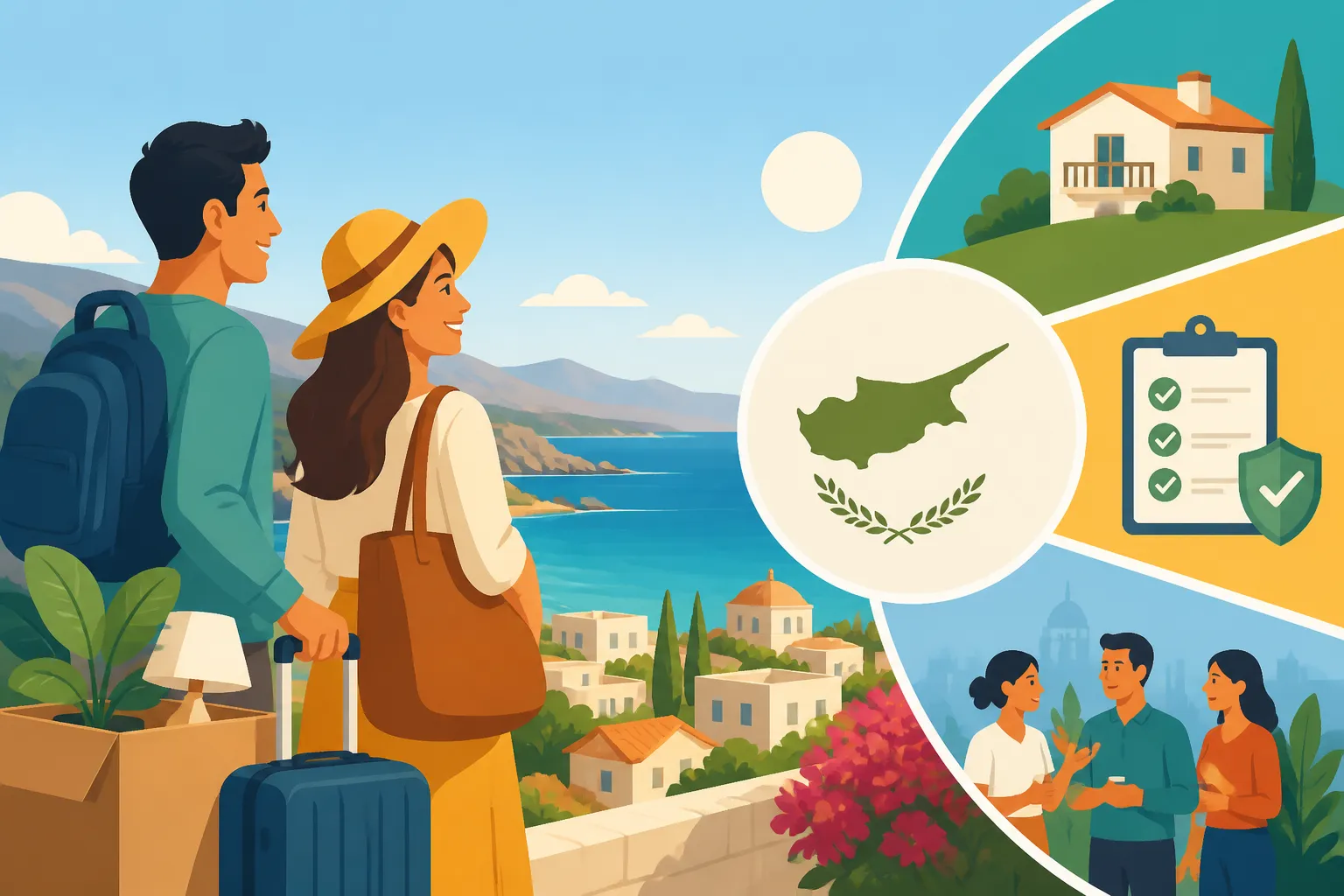
The Complete Guide to Moving to Cyprus: Your First 90 Days (2027)
Moving to Cyprus can feel like you've landed on a different planet, even if you’ve travelled extensively before. The sun-drenched beaches and laid-back lifestyle are alluring, but the initial administrative hurdles, cultural nuances, and sheer volume of things to do in your first few weeks can easily overwhelm even the most seasoned expat. This comprehensive guide is here to walk you through those critical first 90 days, helping you navigate everything from visa requirements to setting up your utilities and truly beginning your new life on this beautiful island.
Before You Arrive: The Pre-Move Checklist
The key to a less stressful move is preparation. Trust me, trying to sort out crucial paperwork while battling jet lag and the Cypriot summer heat is not a recipe for success. Get as much done as you possibly can before you even step foot on the island.
Visa and Residence Permit Essentials
This is arguably the most critical piece of the puzzle. Depending on your nationality, your journey into Cyprus will begin with different visa requirements, and getting this wrong can derail everything. For non-EU citizens, understanding your visa category – whether it's for work, study, or family reunification – is paramount. Don't assume anything; always double-check the specific requirements for your situation with the Civil Registry and Migration Department.
Many new arrivals will be aiming for a "Pink Slip," which is the common term for a temporary residence permit. This isn't just a formality; it's your gateway to everything else, from opening a bank account to registering for healthcare. The application process can be lengthy, requiring a stack of documents: proof of income, accommodation, health insurance, and sometimes even a clean criminal record from your home country. Be prepared for multiple visits to the district immigration offices, and ensure every document is translated into Greek or English and, if required, apostilled. Countless expats are caught out because a seemingly minor document was missing or incorrectly presented. Take a deep dive into The Complete Guide to Cyprus Visas and Immigration for Expats (2027) to ensure you're on the right track from the very beginning.
Remember, the moment you arrive, your clock starts ticking. For many, you’ll enter on a tourist visa or visa-free status, which typically allows a stay of 90 days within a 180-day period. Your application for a residence permit needs to be submitted well within this initial window. It’s not uncommon for the process to extend beyond the 90 days, so having proof of a submitted application is crucial to avoid overstaying your initial legal entry period. Keep copies of everything, and I mean everything – application forms, receipts, correspondence. The Cypriot bureaucracy moves at its own pace, and patience (and copious amounts of paperwork) will be your best allies.
Financial Preparations and Budgeting
Before you land, you need a realistic financial plan. Cyprus might have a lower cost of living than some Western European countries, but initial setup costs can quickly add up. Think about your first few months: rent deposits, furniture (if your rental is unfurnished), connecting utilities, car purchase or rental, and groceries. You’ll need a cushion.
It's a good idea to have access to funds that aren't tied to a Cypriot bank account for your immediate needs. Transferring large sums of money can take time, especially if you haven't yet opened a local account. Consider having a credit card with good international usage terms and some cash for emergencies. Researching The Complete Guide to Cost of Living in Cyprus for Expats (2026) will give you a much clearer picture of what to expect, from weekly grocery bills to monthly utility costs. Don't forget to factor in unexpected expenses – a taxi ride that costs more than you anticipated, or a sudden need for a specific document that requires a fee.
You also need to think about your long-term financial stability. If you're coming to work, ensure your employment contract is clear on salary and payment dates. If you’re self-employed, have a solid plan for your income stream. For those moving under the Category F visa or similar independent means routes, you’ll have specific income requirements to prove. Having your finances in order long before you arrive not only streamlines your visa application but also reduces a huge source of stress during your initial adjustment period.
Packing and Logistics Planning
Deciding what to bring and what to leave behind is always a challenge. Cyprus has a warm climate for most of the year, so layers for cooler evenings and winter are important, but you won't need heavy coats like in northern Europe. Think light clothing, swimwear, and comfortable shoes. Essentials like prescription medications (with your doctor's letter), important documents, and universal power adaptors should be in your carry-on.
When it comes to shipping your belongings, you have a few options: air freight for urgent items, sea freight for larger shipments, or excess baggage on your flight. Each has its pros and cons in terms of cost, speed, and what you can send. If you’re planning a significant move, you might want to look into international moving services. Companies like Sirelo can help you compare quotes and find reliable movers who understand the complexities of international shipping, including customs regulations for Cyprus. Make sure your precious or irreplaceable items are well-insured and documented before they leave your sight.
Don't underestimate the emotional aspect of packing. It’s not just about things; it’s about preparing for a new chapter. Consider bringing a few comforts from home – favourite photos, books, or a special mug – to make your new place feel more familiar. While Cyprus has virtually anything you could need, having those familiar items can provide a sense of stability when everything else feels new and a bit overwhelming.
Week 1: Settling In and Immediate Priorities
The first week is a whirlwind. You’re likely exhausted, a little disoriented, and buzzing with excitement and a touch of anxiety. Focus on the absolute essentials to get your feet on the ground.
Arrival, Accommodation, and First Impressions
Stepping off the plane at Larnaca or Paphos airport, you'll immediately feel the Cypriot sun and the more relaxed pace of life. Your first priority is getting to your accommodation. If you’ve rented a place for short-term stays, make sure you have clear instructions and contact details for your host or agent. Many expats choose temporary rentals like Airbnb or serviced apartments for their first few weeks, allowing them time to explore neighbourhoods and find a longer-term home.
Once you’re in, take a moment to breathe. Unpack a few essentials, grab a quick bite (even if it’s just something simple from a local kiosk), and try to get some rest. You'll be tempted to immediately start exploring, but fatigue can make simple tasks feel monumental. Don't forget to register with your local mukhtar (village/community leader) or the local district office within a few days of arrival. This is a crucial step for your residency application, especially for those applying for a Pink Slip. While often informal, having this initial registration shows you’re establishing roots.
My personal advice: don't try to solve all the world's problems on day one. Focus on getting food, a good night's sleep, and orienting yourself with your immediate surroundings. Everything else can wait until you're a bit more refreshed.
Getting Connected: Phone, Internet, and Local Apps
Communication is key, especially in those initial days. The first thing you need is a local mobile phone number. This is surprisingly easy: head to a local mobile provider store (like Cyta or Epic) with your passport and ideally proof of address (your temporary rental agreement might suffice). You can opt for a pay-as-you-go SIM card initially, which is quick and easy to set up. This will immediately give you a local number that banks, immigration, and landlords will recognise. If you're coming from another country and want to stay connected from the moment you land, consider an eSIM service like Airalo. This allows you to have data access almost instantly without needing a physical SIM, perfect for those first few hours or days before you get your local number.
Once you have a local number, get internet access sorted. If your temporary accommodation doesn’t provide it, you might need to rely on public Wi-Fi or your mobile data for a while. For long-term internet in your own place, setting up services like Cyta or Epic will require a residence permit and proof of address. Don’t rush this; it can take a few weeks for installation, so plan ahead. You can find more details on getting connected in The Expat Guide to Setting Up Utilities (Electricity, Water, Internet) in Cyprus.
Beyond phone and internet, download some essential local apps:
- Bolt/Cabcy: For taxis and ride-sharing (though taxis are often hailed or booked by phone).
- Food delivery apps: Wolt or Foody are popular for ordering meals.
- Banking apps: Once you open an account, these are invaluable for managing your finances.
- Google Maps: Indispensable for navigating, especially with Cyprus’s often confusing street names and lack of logical numbering in some areas.
| Service/Provider | Description | Key Features |
|---|---|---|
| Cyta | Largest telecommunications provider, offering mobile, internet, and TV. | Widest coverage, comprehensive packages, reliable. |
| Epic | Major competitor to Cyta, offering similar services. | Often more competitive pricing, good bundles. |
| Airalo | eSIM provider for international travellers. | Instant data access upon arrival, flexible plans. |
| Bolt/Cabcy | Ride-hailing and taxi booking apps. | Convenient for transport in major cities, especially Limassol and Nicosia. |
| Wolt/Foody | Food delivery services. | Extensive restaurant selection, quick delivery. |
Navigating Your First Shopping Trip and Local Culture
Your first grocery run will be an experience. Cyprus has large supermarkets like AlphaMega, Metro, and Sklavenitis, which will feel familiar to many Western expats, offering a wide range of international and local products. However, don't miss out on local fruit and vegetable markets (called laiki agora). These are fantastic for fresh, seasonal produce and a taste of authentic Cypriot life.
Culturally, you'll quickly notice the Cypriot approach to time. Things often run on "Cypriot time," which means appointments might not start exactly when scheduled, and services can take longer than you're used to. This isn't disrespect; it's just a different pace. Embrace it, be patient, and try not to get frustrated. A "siga siga" (slowly, slowly) approach to life is the norm here.
You'll also find that English is widely spoken, especially in tourist areas and major cities, but learning a few basic Greek phrases will go a long way. Even a simple "kalimera" (good morning), "efharisto" (thank you), or "parakalo" (please/you're welcome) will be genuinely appreciated and can help bridge cultural gaps. Cypriots are generally very welcoming and helpful, even if the bureaucracy can sometimes feel like a stone wall.
Month 1: Establishing Your Foundations
With the immediate chaos of arrival behind you, month one is all about solidifying your legal and practical foundations in Cyprus. These steps are crucial for long-term living.
Registering Your Residency and TIN
This is where the real administrative work begins. For non-EU citizens, getting your temporary residence permit (Pink Slip) application submitted is paramount. As discussed, this process is central to your legal stay. Make sure you have all the necessary documents for Understanding Residence Permits and the Pink Slip in Cyprus (2027), including your passport, proof of address (rental agreement), proof of sufficient funds (bank statements), health insurance, and a clean criminal record. Head to the Civil Registry and Migration Department (CRMD) in your district as soon as you have your documents in order. Expect queues and potential multiple visits; it’s just part of the process.
Concurrently, you'll need to register with the Tax Department to obtain a Tax Identification Number (TIN). This nine-digit number is vital for almost every official transaction in Cyprus, from opening a bank account to registering for healthcare and, eventually, filing your taxes. This is generally a more straightforward process than the residence permit, requiring your passport and temporary residence permit (or proof of application). Go to your local District Tax Office. Be prepared to fill out a simple form, and you usually get your TIN on the spot. Without it, you’ll hit roadblocks, so prioritize this once your initial residency paperwork is underway. More detailed steps can be found in How to Register with the Tax Department and Get a TIN in Cyprus.
Even if you’re an EU citizen, you’ll still need to register your presence with the CRMD within four months of your arrival to obtain your Yellow Slip (MEU1). This document confirms your right of residence and is essential for employment, healthcare, and other services. While less complex than the Pink Slip, it still requires an application form, passport, and proof of address and means. Don't delay; these foundational registrations are the bedrock of your life in Cyprus.
Opening a Cypriot Bank Account
Trying to live in Cyprus without a local bank account is like trying to swim with an anchor tied to your leg – it’s just not practical. You'll need it for receiving salary, paying bills, and even some visa applications require local bank statements. The main banks are Bank of Cyprus and Hellenic Bank. While they are generally reliable, the process of opening an account as a foreigner can be incredibly frustrating and slow.
You’ll typically need your passport, your residence permit (or proof of application for one), your TIN, and proof of address (like a utility bill or rental agreement). Some banks might also ask for proof of income or the source of your funds. Be prepared for several visits and expect delays. My advice? Start this process as soon as you have your TIN and Pink Slip (or Yellow Slip). Each bank has slightly different requirements, so it's wise to call ahead or check their website. The Expat Guide to Opening a Bank Account in Cyprus provides a detailed walkthrough of this often-daunting task.
Once your account is open, set up online banking and get a debit card. This will make managing your day-to-day finances much easier. Remember that international transfers might incur fees, so explore options for sending money from your home country to Cyprus, such as Wise (formerly TransferWise) or other specialist currency exchange services, which can often be cheaper than traditional bank transfers.
Healthcare Registration: GeSY and Beyond
Access to healthcare is a non-negotiable for anyone living abroad. Cyprus has a national healthcare system called GeSY (General Healthcare System), which is generally excellent once you're integrated. However, eligibility and registration can be a bit of a maze, especially in your first 90 days.
If you are employed or self-employed and making social insurance contributions in Cyprus, you will likely be eligible for GeSY. Your employer should register you with the Social Insurance Services, which then automatically enrols you into GeSY. Once registered, you'll need to choose a Personal Doctor (GP) via the GeSY portal. This GP is your first point of contact for all medical needs and referrals. You can find detailed steps on How to Register for GeSY (General Healthcare System) in Cyprus (2027).
For those not immediately eligible for GeSY (e.g., waiting for work permit approval, digital nomads, or those with certain residence permits), private health insurance is a must. In fact, many visa applications explicitly require proof of private health insurance for the first year. Even if you are eligible for GeSY, many expats choose to maintain private insurance for faster access to specialists, shorter waiting times, and broader choice of hospitals, as detailed in Public vs Private Healthcare in Cyprus: Which Should Expats Choose?. Ensure your private policy meets the minimum requirements set by the Cypriot authorities for your residence permit application. Don't leave your health to chance; a medical emergency can be incredibly stressful and expensive if you're not covered.
Month 2: Getting Mobile and Integrated
By month two, you should have your basic administrative needs largely sorted. Now it's time to focus on practicalities like getting around and securing your long-term housing.
Driving, Transportation, and Licence Conversion
Cyprus is a car-dependent island. While major cities have bus services, they are not always frequent or extensive, especially if you live outside the immediate city centre. Public transport might get you by for a short while, but to truly explore and manage daily life (like grocery runs, school drop-offs, or weekend excursions), a car becomes almost essential. You can learn more about The Expat Guide to Public Transport in Cyprus, but be prepared for the reality that a private vehicle offers unparalleled freedom here.
If you're from an EU country, you can drive on your existing licence until it expires, at which point you'll need to convert it to a Cypriot one. Non-EU citizens typically have a grace period (often 6 months) to drive on their foreign licence, but you absolutely must convert it to a Cypriot driving licence within that timeframe. The process involves visiting the Department of Road Transport (DoRT) and presenting your foreign licence, passport, residence permit, and two passport-sized photos. Depending on your home country's agreement with Cyprus, you might need to take a driving test, though many countries have reciprocal agreements. Make sure you understand the specific requirements for your nationality by consulting Driving in Cyprus: Licences, Registration and Rules for Expats (2027).
Once you have your licence, you'll need a car. Buying a used car is a common route for expats. Be aware of the MOT (Ministry of Transport) test requirements and annual road tax. Car insurance is mandatory, and there are several local and international providers to choose from. When purchasing a used vehicle, ensure all documentation is legitimate and the transfer of ownership is properly registered at the DoRT.
Exploring Housing: Renting vs. Buying
By now, you're probably out of your temporary accommodation and into something more stable. However, many expats use their first few months to truly explore different areas and decide whether to rent long-term or consider buying property.
For renters, you'll be signing a more formal rental agreement, usually for a year, and paying a security deposit (often one or two months' rent). Understand your tenant rights and responsibilities. The rental market can be competitive, especially in popular expat hubs like Limassol and Paphos, and prices have risen. Websites like Bazaraki and various Facebook groups are popular places to find rentals. Always view the property in person and get everything in writing. The Complete Guide to Renting a Home in Cyprus (2027) offers invaluable advice for this.
For those considering buying, the first 90 days is a good time to get acquainted with the property market, understand locations, and start talking to real estate agents and lawyers. Buying property in Cyprus can be a complex process, with considerations like title deeds, transfer fees, and legal checks. While you might not finalize a purchase in your first three months, laying the groundwork is a smart move. Think about what kind of lifestyle you want: city living in Nicosia, beachfront in Limassol, or something quieter in a village. Don’t rush this decision; it’s a significant financial commitment.
Utilities: Setting Up and Managing Your Home Services
Once you're in your long-term rental or purchased property, connecting utilities will be a priority. This includes electricity (EAC), water (Water Board), and internet/TV. The process usually requires your rental agreement or property title deeds, your passport, and your TIN.
- Electricity (EAC): Visit your local EAC office. You'll need to pay a deposit, which varies depending on the property type and size. They’ll connect your service within a few days.
- Water (Water Board): Similar to electricity, visit the local Water Board office. A deposit will be required, and connection is usually quick.
- Internet and TV: As mentioned in Week 1, Cyta and Epic are the main providers. This process can take a couple of weeks for installation, so arrange it as soon as you can. They will often offer bundled packages for internet, landline, and TV.
The Expat Guide to Setting Up Utilities (Electricity, Water, Internet) in Cyprus has all the granular details. Be aware that utility bills often come in physical form to your mailbox, so make sure you have a functional postal address. Many providers now offer online payment options, which are much more convenient. Keeping track of these bills, especially in the first few months, is crucial to avoid service interruptions.
Month 3: Deepening Your Roots and Expanding Horizons
By your third month, you should feel much more grounded. Now, it’s about refining your integration, focusing on employment, education, and social connections.
Employment and Career Integration
If you came to Cyprus for work, you're likely already in your job. However, if you're still job searching or looking to change roles, month three is a good time to intensify your efforts. Networking is crucial in Cyprus. Attend local expat events, join relevant professional groups on LinkedIn or Facebook, and connect with people in your industry. Many jobs are found through word-of-mouth.
Update your CV to a Cypriot-friendly format and tailor your cover letter for local companies. Be persistent. The job market can be competitive, and sometimes it takes time to find the right fit. Understand the local employment laws, including probationary periods, notice periods, and worker rights. The Expat Guide to Finding a Job in Cyprus (2027) offers excellent strategies for navigating the local job market.
For those who are self-employed or considering freelancing, ensure you are fully compliant with tax and social insurance registrations. Becoming a legal freelancer requires registering with the Tax Department and the Social Insurance Services, ensuring you're contributing appropriately and are eligible for benefits down the line. This is a critical step to avoid any future legal or financial headaches.
Education for Expat Families
For expat families, securing suitable education for children is often a top priority. By month three, if you haven’t already, you should be fully immersed in this. Cyprus offers a range of options: public Cypriot schools, private Cypriot schools, and international schools.
- Public Schools: These teach in Greek and follow the Cypriot curriculum. They are free but might require an adjustment period for children not fluent in Greek. Registration typically happens at the local district education office.
- Private Cypriot Schools: These often offer a bilingual curriculum (Greek and English) and can provide a good balance between local integration and academic standards. Fees apply.
- International Schools: These typically follow British, American, or other international curricula and teach entirely in English. They are popular with expats but come with significant tuition fees. Schools like The Heritage Private School or American Academy are well-known.
Start your research early, as international schools, in particular, can have waiting lists. Visit schools, talk to other expat parents, and consider what best suits your child's needs and your family's long-term plans. Schools and Education in Cyprus: A Complete Guide for Expat Families will guide you through this important decision. Remember that enrolling children often requires a range of documents, including birth certificates, previous school records, and your residence permit.
Embracing Local Life and Community
Beyond the practicalities, month three is when you can really start to embrace local life. Learning some Greek, even just a few phrases, will significantly enhance your experience. Consider taking a local language class; it's a great way to meet people and show your commitment to living here. Learning Greek for Living in Cyprus: A Complete Guide for Expats provides practical tips and resources.
Join local clubs or groups that align with your interests, whether it's a hiking club, a book group, a sports team, or a volunteering organisation. Many expat communities organise social events, coffee mornings, or networking gatherings. Facebook groups like "Expats in Limassol" or "Paphos Expats" are fantastic resources for connecting with others, asking questions, and finding out about local events.
Visit archaeological sites, explore hidden villages, try new local dishes at traditional tavernas, and take part in local festivals. The more you immerse yourself, the more Cyprus will feel like home. Building a strong social circle takes time and effort, but the rewards are immeasurable in creating a fulfilling expat life.
Overcoming Common Expat Challenges
Life in Cyprus is wonderful, but like any move, it comes with its unique set of challenges. Knowing what to expect can help you navigate them with a little less stress.
Bureaucracy and Patience in Cyprus
Ah, Cypriot bureaucracy. It’s a rite of passage for every expat. You’ll hear stories, you’ll experience it yourself, and you’ll learn the art of siga siga. Appointments are often more of a suggestion than a strict time, documents you thought were approved might need re-checking, and the exact requirements can sometimes shift without clear notice. This is arguably the biggest source of frustration for newcomers from more efficiency-driven cultures.
The key is radical patience. Go into every administrative interaction expecting delays and needing extra documents. Bring a book, bring your phone fully charged, and bring a positive attitude. Politeness and a smile often go further than frustration. Always make copies of every document you submit, and request a receipt or confirmation where possible. Don't be afraid to ask for clarification, even if it means asking the same question to different people until you get a consistent answer. Building a relationship with a local lawyer or an administrative assistant who specialises in expat services can also be an invaluable investment for navigating the more complex issues.
This isn't to say the system is intentionally difficult; it's simply different. Once you understand the rhythm, it becomes less daunting. Think of it as a marathon, not a sprint.
Language Barriers and Cultural Nuances
While English is widely spoken in Cyprus, especially in tourist areas and major cities like Limassol, Nicosia, and Paphos, venturing into smaller villages or dealing with older generations can quickly expose language barriers. This is where those basic Greek phrases you've been learning come in handy. Even a small effort shows respect and can significantly improve interactions.
Cultural nuances also play a role. Family is incredibly important, hospitality is ingrained, and direct communication can sometimes be softened by politeness. Cypriots tend to be warm and welcoming, often expressing their opinions openly and loudly, which can sometimes be misinterpreted as aggression by those from more reserved cultures. Don't be offended; it's usually just passion. The concept of personal space might also be different, with people standing closer during conversations than you might be used to.
Learning about these subtle differences, perhaps by reading up on Cypriot customs or simply observing locals, will help you integrate more smoothly. Engaging with locals, trying local foods, and participating in community events are excellent ways to absorb the culture and build bridges.
Building a Social Circle and Support Network
Moving to a new country can be isolating, even in a welcoming place like Cyprus. Building a robust social circle and support network is crucial for your mental well-being and overall happiness. It doesn’t happen overnight, but it’s definitely achievable.
Beyond official expat groups, consider joining local activity clubs (sports, hobbies, volunteering), taking a language class, or simply frequenting the same local coffee shop or tavern. Shared interests are a fantastic way to meet like-minded people, both expats and locals. If you have children, school gates are an excellent place to connect with other parents.
Don't be afraid to put yourself out there. Invite new acquaintances for coffee, offer to help, or simply strike up conversations. It takes effort, but over time, you'll start to build a diverse network of friends who can share experiences, offer advice, and be there for you. Having a support system, especially people who understand the unique challenges of expat life, can make all the difference when you encounter a particularly frustrating bureaucratic hurdle or just miss home.
Essential Tips for a Smooth Transition
After 90 days, you're no longer a total newcomer, but the journey of adaptation continues. These tips will help ensure your transition remains as smooth as possible.
Understanding Cypriot Laws and Etiquette
While you’ll grasp the basic laws through your visa and tax processes, a deeper understanding of local regulations and unspoken rules is vital. For instance, laws regarding noise levels, especially during siesta hours in residential areas, or rules about waste disposal, might differ from what you’re used to. Traffic laws are strictly enforced, particularly regarding seatbelts, mobile phone use, and speed limits. Always err on the side of caution.
Etiquette in Cyprus is generally polite and respectful. When visiting churches or monasteries, dress modestly. When invited to someone's home, a small gift (like sweets or flowers) is always appreciated. While Cypriots are generally open, sensitive political topics (especially the Cyprus problem) are best approached with caution or avoided in casual conversation, especially with new acquaintances. Learning about these nuances helps you avoid unintentional faux pas and shows respect for your new home.
Keep yourself informed about local news and current affairs. Knowing what’s happening in your community and the wider country helps you feel more connected and understand the context of daily life.
Financial Planning Beyond the First 90 Days
Your initial financial setup is done, but now it’s time for longer-term planning. This includes understanding the Cypriot tax system more deeply, especially if you qualify for benefits like the non-domicile status. The Complete Guide to Taxes in Cyprus for Expats (2027) will become your new best friend. Ensure you're aware of income tax bands, social insurance contributions, and any other levies applicable to your income or assets.
Consider setting up a local pension plan or understanding how your home country's pension might integrate with your new life in Cyprus. If you've purchased property, familiarize yourself with ongoing property taxes and communal fees. If you're running a business, stay abreast of VAT regulations and corporate tax obligations. Engaging with a local financial advisor or accountant can be incredibly beneficial for optimising your financial situation in Cyprus. They can help you navigate the complexities and ensure you’re compliant while taking advantage of any available benefits.
Continuous Learning and Adaptation
The first 90 days are just the beginning. Expat life is a journey of continuous learning and adaptation. Be open to new experiences, new ways of doing things, and new perspectives. What might seem frustrating initially often becomes part of the charm of living abroad.
Continue to learn Greek; even small improvements make a big difference. Explore different parts of the island – from the Troodos mountains to the Akamas Peninsula. Engage with local communities, participate in cultural events, and try to build relationships with Cypriots, not just other expats. This deeper integration is what transforms a temporary stay into a true home.
Challenges will still arise, but with a solid foundation established in your first three months, you’ll be much better equipped to handle them. Embrace the adventure, enjoy the sunshine, and savour the unique experience of living in Cyprus. It's a journey, and you've just taken some incredibly important first steps.
Disclaimer
The information provided in this guide is for general informational purposes only and does not constitute legal, financial, or immigration advice. While every effort has been made to ensure accuracy, laws and regulations in Cyprus can change frequently. Expats should consult with relevant professionals, such as immigration lawyers, financial advisors, and tax consultants, for advice tailored to their specific circumstances. Always verify current requirements with official government sources (e.g., Civil Registry and Migration Department, Tax Department, Ministry of Health) before making any decisions.