Understanding Residence Permits and the Pink Slip in Cyprus (2027)
Navigating the labyrinthine world of Cypriot immigration can feel like an Olympic sport, especially when you're just trying to understand what a "Pink Slip" actually is and why everyone keeps mentioning it. It's a common frustration for newcomers, this seemingly simple document becoming a focal point of anxiety. This comprehensive guide is here to demystify residence permits in Cyprus, breaking down everything you need to know about obtaining and maintaining your legal right to call this beautiful island home.
What Exactly is a Residence Permit in Cyprus?
When you first arrive in Cyprus, especially if you're coming from outside the European Union, the concept of a "residence permit" can feel quite abstract. It’s not just a fancy ID card; it's your official authorisation from the Republic of Cyprus to live here for an extended period. Think of it as your official blessing, your legal entry ticket into the everyday rhythms of Cypriot life beyond a simple tourist visit. Without one, your stay is limited, and your ability to engage fully with local services, banking, and even long-term rentals becomes incredibly complicated, if not impossible.
More Than Just a Stamp: Understanding the Pink Slip's Role
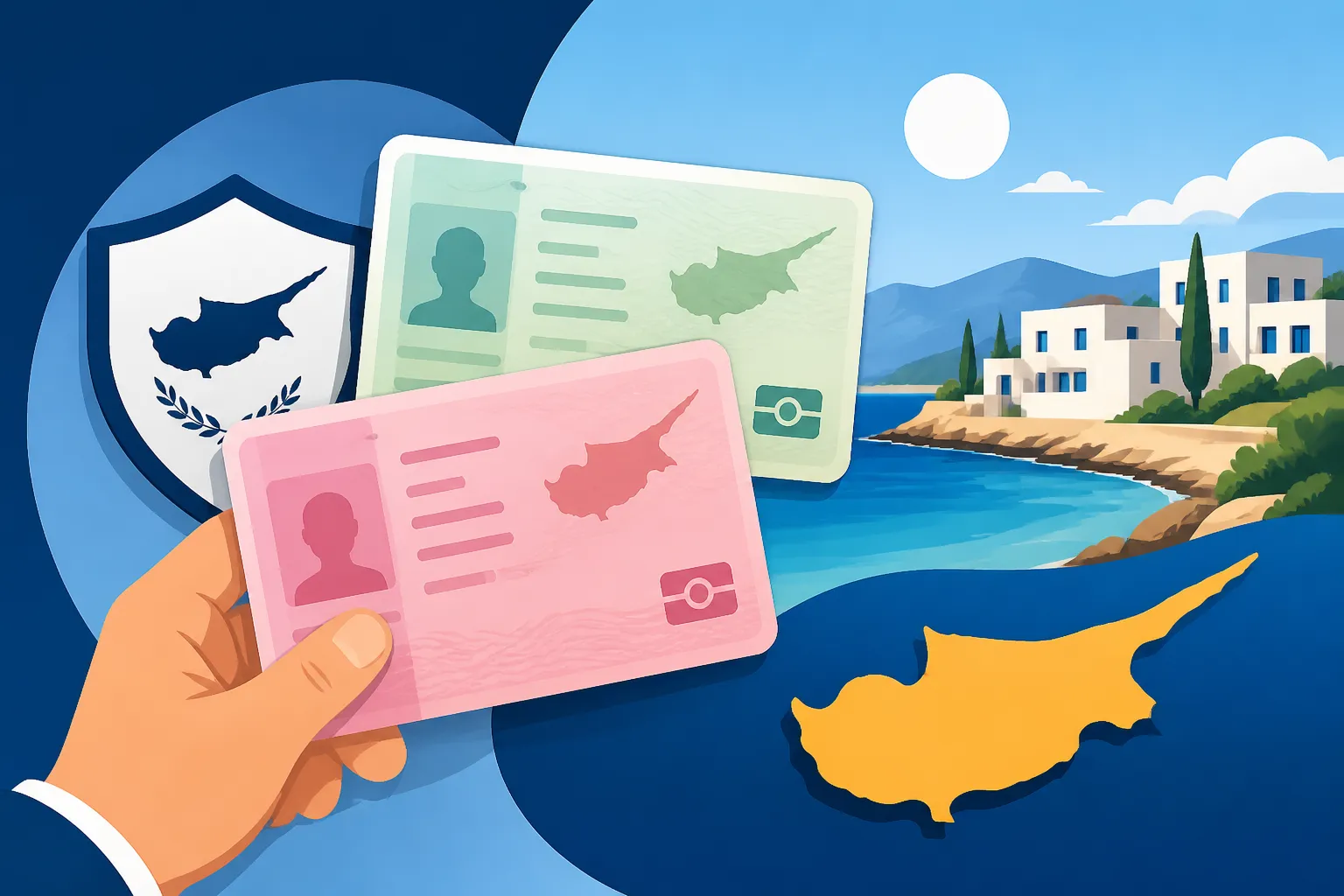
The term "Pink Slip" is probably one of the first pieces of local jargon you'll encounter, and it causes a fair bit of head-scratching. Historically, temporary residence permits were literally printed on pink paper, hence the catchy nickname. While the physical document might look different now – it's typically a white card resembling a national ID or driving licence – the name "Pink Slip" has stuck. It's simply the colloquial term for a Temporary Residence Permit issued to non-EU citizens who wish to live in Cyprus for more than 90 days, but do not yet qualify for permanent residency. This document outlines your residency status, its validity, and often, the reason for your stay (e.g., student, employee, financially independent person).
For many expats, especially those relocating for work or retirement, securing this Pink Slip is the critical first step. It signifies that you've been granted temporary legal residence, allowing you to establish yourself here without constantly worrying about visa run implications or overstaying your welcome. It’s the foundational document upon which you build your new life in Cyprus.
Why Do You Need a Residence Permit?
The necessity of a residence permit goes far beyond just ticking a box for the government. It's the key that unlocks many essential aspects of daily life as an expat in Cyprus. Without it, you'll find yourself hitting brick walls when trying to open a proper bank account, get a local phone contract, register for public healthcare like GeSY, or even sign long-term rental agreements. Imagine trying to pay your electricity bill or renew your car registration – these everyday tasks become arduous or impossible without a valid residence permit.
Furthermore, a residence permit establishes your legal presence in the country, which is crucial for international travel and dealing with official matters both within Cyprus and with your home country. It demonstrates your commitment to residing legally and integrates you into the administrative framework of the Republic. It’s the difference between being a temporary visitor and a recognised resident.
The Legal Framework: Who Regulates Residence Permits in Cyprus?
The authority responsible for all matters concerning immigration, including the issuance and renewal of residence permits, is the Civil Registry and Migration Department (CRMD), often referred to simply as the Migration Department. This central government body, under the Ministry of Interior, is the ultimate decision-maker for all visa and residency applications for both EU and non-EU citizens. They interpret and enforce the Republic's immigration laws and policies.
Understanding their role is paramount because they are the gatekeepers. All your applications, inquiries, and appeals will go through them. While you might interact with local District Migration Units for submissions and appointments, the central authority is always the CRMD. Their regulations are subject to change, so staying updated on their official website or consulting with an immigration expert is always advisable to ensure you're following the latest procedures.
Who Needs a Residence Permit and Who is Exempt?
The requirement for a residence permit largely hinges on your nationality and the duration of your intended stay in Cyprus. It’s not a one-size-fits-all situation, and this is where much of the initial confusion for expats often arises. Understanding your specific category is the first critical step in figuring out your immigration pathway.
EU/EEA Citizens: The Yellow Slip and Beyond
If you're an EU, EEA (European Economic Area), or Swiss citizen, you are incredibly fortunate when it comes to living in Cyprus. Thanks to the principle of freedom of movement, you don't need a traditional "residence permit" in the same way non-EU citizens do. You have the right to enter and reside in Cyprus for up to three months without any formalities other than a valid ID or passport. However, if you plan to stay longer than three months, you are required to register your presence.
This registration is done by applying for what's locally known as a "Yellow Slip," officially known as a Registration Certificate for EU citizens (MEU1). It's a straightforward process, primarily requiring proof of sufficient funds (or employment), health insurance, and accommodation. While it’s not a "permit" in the non-EU sense, it's your essential document proving your legal long-term residency and is crucial for accessing services and living here without issues. You can find more details on how to get this through the guide on How to Register as an EU Citizen (Yellow Slip / MEU1) in Cyprus.
Non-EU/EEA Citizens: Your Mandatory Requirement
For those hailing from outside the EU/EEA, a residence permit is an absolute must if you intend to stay in Cyprus for more than 90 days within any 180-day period. This includes citizens from countries like the UK (post-Brexit), USA, Canada, Australia, India, South Africa, and countless others. Your tourist or short-stay visa limits your time, and exceeding it without a valid residence permit will lead to significant legal trouble, including fines, detention, and potential bans from future entry.
The type of residence permit you apply for will depend entirely on the purpose of your stay – whether you're working, studying, retiring, or joining family. This is where the "Pink Slip" usually comes into play. It's the most common temporary residence permit issued to non-EU individuals, providing the legal foundation for your extended presence on the island. Ignoring this requirement is not an option; it's a fundamental aspect of your relocation process.
Special Cases: Digital Nomads and Family Members
Cyprus has made significant efforts to attract specific groups, including digital nomads, and these individuals also fall under the residence permit umbrella, albeit with their own specific criteria. The Cyprus Digital Nomad Visa, for instance, allows non-EU citizens who can work remotely for companies outside Cyprus to live here, provided they meet certain income thresholds and other requirements. This is a specific type of temporary residence permit tailored for this demographic. For a deeper dive into this, you might want to read The Expat Guide to the Cyprus Digital Nomad Visa (2027).
Similarly, if you are a non-EU citizen with family members already residing legally in Cyprus, you might be eligible for a residence permit through family reunification provisions. This applies to spouses, dependent children, and sometimes even dependent parents. Each of these "special cases" has its own set of detailed criteria and application procedures that differ from the standard Pink Slip for financially independent persons or employees. These pathways demonstrate Cyprus's attempt to be inclusive while maintaining controlled immigration.
The Different Types of Residence Permits for Non-EU Citizens
For non-EU citizens, understanding the specific category of residence permit you need is paramount, as each type has distinct requirements, eligibility criteria, and implications for your life in Cyprus. It's not just about getting any permit, but the right one that aligns with your circumstances.
Temporary Residence Permit (Pink Slip): The Most Common Route
The Temporary Residence Permit, universally known as the "Pink Slip," is the most frequently issued type for non-EU individuals planning to reside in Cyprus for an extended period. This permit is typically issued for one year initially and can be renewed annually. It’s designed for various purposes and can be categorised further based on the applicant’s primary reason for living on the island.
For instance, if you're a non-EU citizen who is not working in Cyprus but has sufficient funds to support yourself, you would apply for a Pink Slip as a "financially independent person" (also sometimes referred to as a Visitor's Visa, though it's a residence permit). This is a popular choice for retirees or individuals with passive income. The key here is demonstrating a stable and sufficient income from outside Cyprus that eliminates the need to seek employment locally. This ensures you won't become a burden on the state and that you can comfortably afford the cost of living in Cyprus.
Category F: Independent Means Permit
While often confused with the Pink Slip for financially independent persons, the Category F permit is actually a pathway to permanent residency for non-EU citizens who wish to reside in Cyprus without working. It’s distinct from the temporary Pink Slip in that it grants indefinite leave to remain, provided certain conditions are met and maintained. The financial criteria for Category F are typically more stringent than for a temporary Pink Slip, requiring a higher guaranteed annual income from abroad and often proof of capital investments.
This permit is geared towards individuals who genuinely want to make Cyprus their long-term home and are not seeking employment, instead relying on robust external financial resources. It’s a more substantial commitment than a temporary permit and offers greater security of tenure. The application process is generally more rigorous, involving detailed financial disclosures and a longer processing time, but the reward is the peace of mind that comes with permanent residency.
Work Permits: Connecting Your Job to Your Stay
If your primary reason for moving to Cyprus is employment, then you will require a work permit, which is inextricably linked to your residence permit. For non-EU citizens, an employer in Cyprus must sponsor you, demonstrating that no suitable EU or Cypriot candidate could fill the position. This is a critical hurdle, as the Cypriot government prioritizes local and EU employment. Your employer initiates the application process on your behalf, applying for an employment permit through the Department of Labour.
Once the employment permit is approved, you then apply for the residence permit (often still colloquially called a Pink Slip, but specifically an employment-based one) with the Migration Department. This type of permit ties your residency status directly to your employment, meaning if you lose your job or change employers, your permit status will likely need to be re-evaluated or even re-applied for. It's a symbiotic relationship between your work and your right to reside. To delve deeper into this, you might find our guide How to Get a Work Permit to Work in Cyprus (2027) very helpful.
Student Visas and Residence Permits
For those aspiring to pursue education in Cyprus, a student visa, which becomes a student residence permit upon arrival, is your necessary document. This permit allows non-EU students to reside in Cyprus for the duration of their studies at an accredited educational institution. The process typically involves gaining acceptance from a Cypriot university or college, which then often assists with the visa application process. You’ll need to prove your enrolment, demonstrate sufficient funds to cover tuition and living expenses, and secure adequate health insurance.
Student permits are usually issued for the academic year and require annual renewal, tied to your continued enrolment and academic progress. They generally come with restrictions on working hours, allowing part-time employment to help cover living costs but not as a primary means of support. It's a clear pathway for academic enrichment, offering a structured legal presence in Cyprus. For detailed information, see our article on How to Get a Student Visa and Study in Cyprus: The Full Guide (2027).
Family Reunification Permits
Cyprus also provides avenues for family members of legally residing non-EU citizens to join them on the island. These are known as family reunification permits. Typically, this applies to spouses and minor dependent children. The sponsor (the family member already residing in Cyprus) must meet certain income and accommodation criteria to demonstrate they can support their dependents without recourse to public funds.
The application for family reunification is often initiated by the sponsor in Cyprus, and once approved, the family members can apply for their respective residence permits. These permits are usually linked to the sponsor's permit and may require renewal concurrently. This pathway allows families to stay together, promoting social cohesion for expat communities. Our guide Family Reunification in Cyprus: Bringing Your Spouse and Children (2027) offers more in-depth advice.
Here's a quick overview of the main non-EU residence permit types:
| Permit Type | Purpose | Initial Validity | Renewal Frequency | Key Requirement | Pathway to Permanent Residency? |
|---|---|---|---|---|---|
| Temporary Residence (Pink Slip) | Financially Independent, Visitor | 1 Year | Annually | Sufficient funds from abroad | Yes, after 5 years of legal stay |
| Employment-based (Pink Slip) | Work in Cyprus | 1 Year | Annually | Employer sponsorship, job offer | Yes, after 5 years of legal stay |
| Student (Pink Slip) | Study at Cypriot institution | 1 Academic Year | Annually (with study) | Enrolment, funds, health insurance | Possible, but usually requires change of status |
| Family Reunification (Pink Slip) | Join family in Cyprus | 1 Year | Annually (with sponsor) | Sponsor's income, accommodation, relationship | Yes, after 5 years of legal stay |
| Category F (Permanent) | Financially Independent | Indefinite | N/A | Higher income, investment (specific criteria) | Immediate permanent residency |
The Application Process: Step-by-Step for the Pink Slip
Applying for a Pink Slip can feel like a bureaucratic marathon, but breaking it down into manageable steps makes the journey less daunting. This process generally applies to most temporary residence permits for non-EU citizens, especially the financially independent person category.
Gathering Your Documents: The Paperwork Gauntlet
This is perhaps the most crucial and time-consuming stage. The Cypriot authorities are very particular about documentation, and any missing or incorrect papers can lead to significant delays or even rejection. You'll need a comprehensive list of documents, usually including:
- Application Form: The official form (MIP1 for visitors, or others specific to employment/student) correctly filled out.
- Passport Copies: All pages of your valid passport, including your entry stamp. Ensure your passport has at least six months' validity beyond your intended stay.
- Proof of Accommodation: A rental agreement or property title deed in your name (or your spouse's), duly stamped by the tax office. This is crucial for establishing your address. For more on rental agreements, see How to Sign a Rental Agreement and Pay a Deposit in Cyprus.
- Financial Means: Bank statements from a Cypriot bank account demonstrating sufficient funds (we'll get to this in detail next).
- Health Insurance: A valid health insurance policy covering inpatient and outpatient treatment in Cyprus (more on this below).
- Criminal Record Certificate: An official certificate from your country of origin, proving a clean criminal record. This usually needs to be apostilled or legalised.
- Marriage Certificate/Birth Certificates: If applying with family members, to prove your relationship. These also typically need to be apostilled.
- Passport Photos: Several recent passport-sized photographs meeting biometric standards.
- Administrative Fees: The non-refundable application fee.
It's vital to have both original documents and several sets of photocopies. Take your time, cross-check everything, and remember that even a minor discrepancy can cause a headache.
Proving Financial Self-Sufficiency: The Bank Statement Saga
For the financially independent person's Pink Slip, this is a make-or-break requirement. You need to demonstrate that you have a stable and sufficient income from abroad, meaning funds that originate from outside Cyprus and are transferred into your Cypriot bank account. The exact amount required can fluctuate but generally needs to be enough to cover your living expenses for the year without working. As of 2026, the general guideline for a single person is typically around €10,000-€15,000 annually, with additional amounts for dependents (e.g., €5,000 for a spouse, €3,000-€4,000 per child).
This money needs to be demonstrably liquid and accessible. The authorities will want to see bank statements from a Cypriot bank, showing regular incoming transfers from your overseas accounts or a substantial lump sum that covers the year. Opening a bank account in Cyprus can be a process in itself for foreigners, often requiring your passport, proof of address, and sometimes even a letter of reference from your previous bank. Our guide The Expat Guide to Opening a Bank Account in Cyprus provides a full walkthrough. It's often recommended to open your account and transfer funds before starting the Pink Slip application to avoid delays.
Health Insurance Requirements: A Non-Negotiable Necessity
Having adequate health insurance is not optional; it's a mandatory requirement for any temporary residence permit in Cyprus. For non-EU citizens, the General Healthcare System (GeSY) is usually not immediately accessible upon arrival, as it requires contributions based on employment or self-employment status once you are legally settled. Therefore, you will need private health insurance that covers at least inpatient care, and often outpatient care, emergency medical evacuation, and repatriation.
Many expats opt for international health insurance providers that offer comprehensive plans tailored for those living abroad. Companies like Cigna Global are well-regarded for their expat-focused policies, providing coverage that meets Cypriot immigration requirements and gives you peace of mind. It’s crucial that your policy specifies coverage within Cyprus and is for a minimum of one year. Ensure you have the policy certificate translated into Greek if it's not already in English and a summary of benefits for your application. More information on options can be found in Health Insurance in Cyprus: GeSY, Private and Employer Options Explained.
Submitting Your Application: The Civil Registry and Migration Department
Once you have meticulously gathered all your documents, the next step is to submit your application to the Civil Registry and Migration Department (CRMD) through your local District Migration Unit. This usually requires booking an appointment in advance, as walk-ins are rarely accommodated, especially in busier districts like Limassol or Nicosia. On the day of your appointment, arrive early with all your original documents and several sets of photocopies.
The immigration officer will review your application, verify your documents, and take your biometric data (fingerprints and a digital photograph). It’s important to be polite and patient, as these offices can be very busy. Any questions you have should be asked clearly, and be prepared to explain aspects of your application if necessary. This is not the time to be shy; clarifying details upfront can prevent issues down the line.
The Waiting Game and Biometrics
After submission, the waiting game begins. Processing times for Pink Slips can vary significantly, ranging from a few weeks to several months, depending on the volume of applications and the complexity of your case. It's not uncommon for it to take 3-6 months. During this period, you are typically allowed to remain in Cyprus legally, provided you submitted your application before your initial short-stay visa expired. You will usually receive a stamped receipt that acts as temporary proof of your pending application.
Once your application is approved, you will be notified to return to the Migration Department to collect your physical Pink Slip card. This often involves another short wait while the card is printed. The feeling of finally holding that card in your hand after months of anticipation is truly liberating, signifying the official start of your life as a recognised resident of Cyprus.
Key Requirements and Eligibility for a Pink Slip
Understanding the core requirements is crucial before embarking on the Pink Slip journey. These aren't just arbitrary rules; they are designed to ensure that those residing in Cyprus can do so sustainably and lawfully.
Proof of Stable Income or Sufficient Funds
As mentioned, financial stability is a cornerstone of the Pink Slip application for non-EU citizens, especially those seeking residency as financially independent individuals. This isn't just about having money in the bank; it’s about demonstrating a reliable and consistent source of income that comes from outside of Cyprus. This income stream could be from pensions, investments, rental properties abroad, or other legitimate sources that do not require you to work in Cyprus.
The Migration Department scrutinises these financial declarations to ensure you won't become a burden on the state's social welfare system. They want to see consistent income, not just a one-off deposit. Typically, you will need to provide detailed bank statements from a Cypriot bank, showing the transfer of funds from your overseas accounts. For a single person, annual income requirements can be around €10,000 to €15,000, with additional amounts for each dependent. These figures are subject to change, so always check the latest official guidelines or consult with a local legal expert.
Accommodation in Cyprus: Renting vs. Owning
One of the fundamental proofs required for your residence permit is stable accommodation in Cyprus. You need to demonstrate that you have a place to live for at least the duration of your permit's validity. This can be either a rental property or a property you own. If you're renting, you must provide a copy of your tenancy agreement, which absolutely must be stamped by the tax office (Stamping Office). Without this stamp, the agreement is not legally recognised by the Migration Department, and your application will be rejected. This is a common pitfall for new expats.
If you own property, you’ll need to provide copies of your title deeds or the contract of sale if the title deeds are still pending. The address on your application needs to match your accommodation proof exactly. Whether you're navigating the rental market or looking to buy, ensuring your housing documentation is impeccable is vital. For guidance on securing a place, consider reading The Complete Guide to Renting a Home in Cyprus (2027).
Clean Criminal Record and Health Certifications
The Cypriot government, like most sovereign nations, prioritises the safety and well-being of its residents. Therefore, a clean criminal record is a non-negotiable requirement for obtaining a residence permit. You will need to obtain an official "Certificate of Good Conduct" or "Police Clearance Certificate" from your country of origin (and sometimes from any country you've resided in for a significant period). This document must typically be apostilled or legalised by the appropriate authorities in your home country to be accepted in Cyprus.
In addition to your criminal record, you will also need to undergo a medical examination in Cyprus. This typically involves a blood test to check for certain diseases (e.g., HIV, Hepatitis B & C, Syphilis) and a chest X-ray to check for tuberculosis. These tests must be performed at a government hospital or designated private clinic in Cyprus, and the results submitted with your application. These health checks ensure that applicants do not pose a public health risk.
Validity and Renewal Procedures
The standard Pink Slip (temporary residence permit) is typically issued for a period of one year. It is crucial to be aware of your permit's expiry date well in advance, as you are responsible for initiating the renewal process. Renewing a Pink Slip involves a similar, albeit sometimes less rigorous, process to the initial application. You will need to submit updated versions of many of the original documents, including recent bank statements, a valid rental agreement (stamped), and proof of continued health insurance.
It's highly advisable to begin the renewal process at least 1-2 months before your current permit expires. The Migration Department generally allows you to remain in Cyprus while your renewal application is pending, provided it was submitted on time. However, allowing your permit to expire without applying for renewal can lead to fines, difficulties in future applications, and even deportation. Proactive management of your permit's validity is key to a smooth expat life.
What Happens After You Get Your Residence Permit?
Receiving your Pink Slip is a significant milestone. It's more than just a piece of plastic; it's your official gateway to fully integrating into Cypriot society and accessing the services you need. Suddenly, many things that felt impossible or complicated become straightforward.
Rights and Limitations of a Pink Slip Holder
With your Pink Slip in hand, you gain several important rights. You have the legal right to reside in Cyprus for the duration of your permit, which means no more visa runs or anxiety about overstaying. You can open a local bank account without issues, sign longer-term contracts for utilities and rentals, and register for various government services. It gives you a legitimate address and status, which is invaluable for day-to-day life.
However, a Pink Slip is not without its limitations. Crucially, a temporary residence permit issued to a financially independent person or student generally does not grant you the right to work in Cyprus. If you wish to work, you would need a separate employment permit, which would then be tied to a different type of residence permit. Also, while it allows you to travel within Cyprus, it does not automatically grant you unrestricted travel rights within the Schengen Area. Cyprus is not yet part of Schengen, so travel to other EU countries still falls under Schengen visa rules if you are a non-EU citizen.
Accessing Public Services: GeSY and Beyond
One of the most significant benefits of having a valid residence permit is the potential to access the General Healthcare System (GeSY). While not immediate, once you have your Pink Slip and are registered with the Social Insurance Services (if employed or self-employed), you can then register for GeSY. This allows you access to public doctors, specialists, hospitals, and pharmacies at significantly reduced costs or free of charge, depending on the service. This is a game-changer for many expats, as private healthcare can be expensive.
Beyond healthcare, your residence permit will enable you to interact more easily with various public services. You can register your car, apply for a Cypriot driving licence (if you have converted your foreign one, see How to Convert a Foreign Driving Licence in Cyprus), and access municipal services in your local area. It essentially transitions you from being a transient visitor to a registered member of the community. For a full breakdown on GeSY, refer to How to Register for GeSY (General Healthcare System) in Cyprus (2027).
Travel Considerations with Your Residence Permit
While your Pink Slip grants you the right to live in Cyprus, it's essential to understand its implications for international travel. Your Pink Slip is strictly a travel document for entering and exiting Cyprus. It does not replace your passport, nor does it automatically grant you visa-free access to other countries, including those in the Schengen zone. If you are a non-EU citizen and wish to travel to a Schengen country, you will still need to check their specific visa requirements for your nationality.
When traveling out of Cyprus, you will present your passport and your Pink Slip to Cypriot immigration officials. Upon your return, you'll need both again. It is always wise to carry both documents when traveling to avoid any confusion. Do not assume that your Cypriot residence permit grants you the same travel freedoms as an EU citizen; it's a common misconception.
The Path to Permanent Residency
For many non-EU expats, the temporary Pink Slip is just the first step on a longer journey towards making Cyprus their permanent home. After five years of continuous legal residence in Cyprus with a temporary residence permit (such as a Pink Slip), you typically become eligible to apply for Permanent Residency. This is a significant upgrade, offering much greater security and fewer renewal formalities. The five-year period usually requires you to have lived in Cyprus for at least 183 days per year during that time.
Applying for permanent residency involves a more thorough review of your history in Cyprus, including your financial stability, integration into the community, and continued good character. It's a testament to your long-term commitment to the island. Obtaining permanent residency is a goal for many who envision a long-term future here, offering a more stable foundation for your expat life. You can learn more about this in The Complete Guide to Permanent Residency in Cyprus (2027).
Common Pitfalls and How to Avoid Them
The Cypriot immigration system, while generally clear, can be unforgiving if rules are misunderstood or deadlines missed. Many expats fall into common traps, often through lack of information or simply underestimating the bureaucracy. Being aware of these pitfalls can save you a lot of stress, time, and money.
Missing Documents or Incomplete Applications
This is by far the most frequent reason for delays and rejections. The Migration Department has a specific checklist of required documents, and they expect every single item to be present and correctly formatted. It’s not enough to have "most" of the documents; you need all of them. Common omissions include:
- Unstamped Rental Agreements: As mentioned, your tenancy agreement must be officially stamped by the tax office. Many expats forget this crucial step, rendering their agreement invalid for immigration purposes.
- Missing Apostilles: Official documents from your home country (like criminal record certificates, marriage certificates, birth certificates) often require an apostille or official legalisation to be recognised internationally.
- Insufficient Photocopies: Always bring multiple sets of photocopies of everything.
- Outdated Bank Statements: Bank statements need to be recent and reflect current financial solvency.
- Incorrect Passport Photos: Ensure they meet biometric standards – specific size, background colour, no glasses or hats unless for religious reasons.
To avoid this, create your own checklist, cross-referencing against the official Migration Department list. It's often helpful to organise your documents into folders, clearly labelled, for both original and copies. A comprehensive relocation service like Sirelo might offer document checklists and advice specific to Cyprus.
Insufficient Funds and Bank Statement Issues
Another major stumbling block for financially independent applicants is failing to adequately demonstrate sufficient funds. It's not just about having the minimum amount in your account on the day of application; the authorities want to see a consistent pattern of financial stability and the ability to sustain yourself. They may scrutinize the source of your funds to ensure they are legitimate and from outside Cyprus.
Problems arise when:
- Funds appear suddenly: Large, unexplained deposits right before the application can raise red flags.
- Funds deplete quickly: If your statements show a quick draw-down of funds after a deposit, it suggests instability.
- Income isn't regular: For those relying on regular passive income, inconsistent transfers can be an issue.
- Funds are in a foreign bank: While proof of foreign income is needed, the required liquid funds must be accessible in a Cypriot bank account.
Keep meticulous records, ensure your Cypriot bank account reflects steady finances, and be prepared to explain the source of all significant funds if asked.
Overstaying Your Welcome: Consequences of Expired Permits
This is perhaps the most serious pitfall. Allowing your short-stay visa to expire before submitting a Pink Slip application, or letting your Pink Slip lapse without applying for renewal, carries severe consequences. Overstaying even by a few days can lead to:
- Fines: Significant monetary penalties that increase with the length of overstay.
- Detention: In extreme cases, individuals may be detained and processed for deportation.
- Deportation: You could be forced to leave Cyprus.
- Entry Bans: You might be banned from re-entering Cyprus or even the wider Schengen Area for a period of several years, depending on the severity of the overstay.
It's absolutely critical to be proactive about your immigration status. Mark your expiry dates on multiple calendars, set reminders, and begin the renewal process well in advance. Do not assume that delays at the Migration Department mean you can relax; your responsibility is to submit a timely application.
Seeking Professional Help: When to Hire an Immigration Lawyer
While many expats successfully navigate the Pink Slip application themselves, there are situations where professional assistance becomes invaluable. If your case is complex – perhaps you have unusual income sources, a past legal issue, or a challenging family reunification scenario – an experienced immigration lawyer in Cyprus can be a lifesaver.
A lawyer can:
- Ensure compliance: Verify all documents are correct, translated, apostilled, and complete according to the latest regulations.
- Provide guidance: Advise on the best permit category for your specific situation.
- Troubleshoot issues: Help address any complications or questions from the Migration Department.
- Represent your interests: Act as your liaison with the authorities, saving you time and stress.
While there's an associated cost, the peace of mind and the increased likelihood of a smooth, successful application can be well worth the investment, especially if you're feeling overwhelmed or uncertain about the process.
Maintaining Your Residence Status and Future Planning
Getting your initial Pink Slip is a fantastic achievement, but it's just the beginning. Maintaining your legal status in Cyprus requires ongoing attention and strategic planning, particularly if you envision a long-term future on the island.
Annual Renewals: Don't Let it Lapse!
As your temporary residence permit is typically valid for one year, the process of annual renewal becomes a regular part of your expat life. It's not merely a formality; it's a re-evaluation by the Migration Department of your continued eligibility. This means you will need to resubmit updated versions of many of the original documents:
- Updated Bank Statements: Showing continued financial stability for the preceding year and sufficient funds for the upcoming year.
- Valid Health Insurance: A new policy or a renewed certificate of your existing policy.
- Current Rental Agreement: If you’ve moved or your contract has renewed, you’ll need the latest, tax-stamped version.
- Proof of Continued Purpose: For students, continued enrolment; for employees, continued employment.
Always aim to apply for renewal several weeks or even a couple of months before your current Pink Slip expires. This gives ample buffer time for processing, which, as we know, can be unpredictable. Remember, the onus is on you to ensure your status remains legal.
Changes in Circumstance: What to Report
Life happens, and your circumstances in Cyprus might change. It's crucial to understand that certain changes need to be reported to the Civil Registry and Migration Department. Failing to do so can potentially jeopardise your residence status. These changes include:
- Change of Address: If you move to a new rental property or purchase a new home, you must inform the Migration Department and update your records. This usually involves presenting your new, stamped rental agreement or title deeds.
- Change of Financial Situation: While not always immediately reportable unless applying for renewal, a drastic change in your income or financial means could impact future renewals.
- Changes in Family Status: If you get married, divorced, or have a child born in Cyprus, these events need to be registered and may affect the residence permits of your dependents or require new applications. Our article How to Add Dependents to Your Health Coverage in Cyprus might also be helpful here.
- Changes in Employment (for work permit holders): If you are on an employment-based Pink Slip and change jobs, you must go through a new work permit and residence permit application process with your new employer.
When in doubt, it’s always better to err on the side of caution and inquire with the Migration Department or a legal professional about whether a particular change needs to be reported.
Planning for Long-Term Stay or Citizenship
For many expats, especially those who have grown to love the Cypriot lifestyle, the ultimate goal is often permanent residency or even citizenship. Your journey with the Pink Slip is the foundational step towards these longer-term aspirations.
- Permanent Residency: As previously discussed, after five years of continuous legal residence in Cyprus on a temporary permit, you become eligible to apply for permanent residency. This grants you the right to live indefinitely in Cyprus, removing the need for annual renewals and providing much greater stability. This is often the desired outcome for those making Cyprus their retirement home or establishing long-term businesses.
- Cyprus Citizenship: Becoming a citizen of Cyprus is the final step in the immigration process, offering full rights and privileges, including an EU passport. This typically requires a longer period of legal residence (usually seven years out of the last eleven, with the last year being continuous residence), demonstrated integration, and often a proficiency test in basic Greek. It's a significant commitment and a process that should be planned carefully years in advance. You can explore the full requirements in Cyprus Citizenship: How to Apply After Permanent Residency (2027).
Planning these steps means understanding the requirements for each stage and ensuring your temporary residence status is impeccably maintained throughout your journey. Your Pink Slip is more than just a permit; it's a stepping stone to your future in Cyprus.
Disclaimer
The information provided in this guide is for general informational purposes only and does not constitute legal, financial, or immigration advice. While every effort has been made to ensure accuracy and relevance as of the publication date (2026), immigration laws and procedures in Cyprus are subject to change without notice. It is essential to consult with the official Civil Registry and Migration Department of Cyprus or a qualified immigration lawyer for advice specific to your individual circumstances. We do not accept responsibility for any loss or inconvenience arising from reliance on the information contained herein.