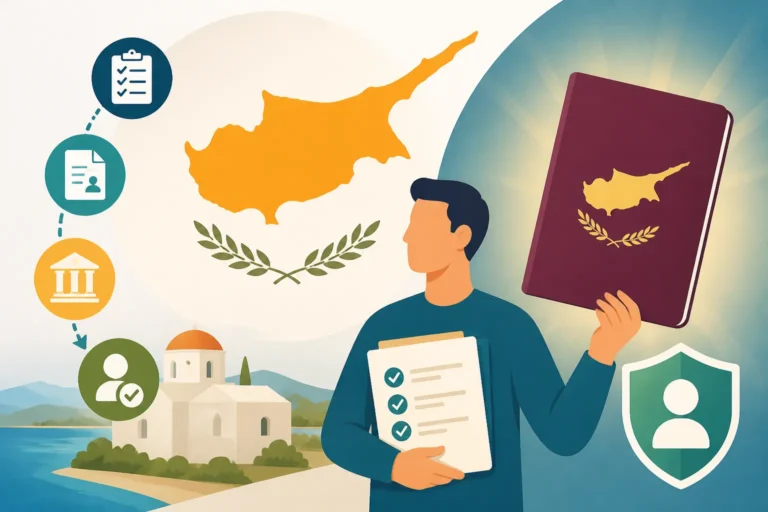
The Complete Guide to Permanent Residency in Cyprus (2027)
Living in Cyprus long-term often feels like a constant dance with temporary residence permits, those familiar 'pink slips' that demand frequent renewal and bring a creeping sense of insecurity. For many of us who've built a life here, the idea of permanent residency isn't just a luxury; it's a deep-seated need for stability and belonging. This comprehensive guide is here to walk you through the often-confusing paths to securing your long-term future on this beautiful island, breaking down the requirements, processes, and common hurdles you might face.
Understanding Permanent Residency in Cyprus: More Than Just a Pink Slip
When you first arrive in Cyprus, especially if you're a non-EU citizen, you quickly become acquainted with the world of temporary residence permits – affectionately known as the 'Pink Slip'. These permits are your entry ticket to legally reside here, allowing you to live, work, or study for a fixed period, typically one or two years. But for those of us who envision a life spanning years, if not decades, on this island, these temporary solutions eventually feel… temporary. You find yourself caught in a cycle of gathering documents, booking appointments at the Civil Registry and Migration Department, and holding your breath hoping for renewal. It's a rite of passage, yes, but it’s also undeniably frustrating.
Why Permanent Residency Matters for Expats
Permanent residency (PR) in Cyprus is a game-changer. It offers a level of security and peace of mind that no temporary permit can match. Imagine no longer having that annual or biennial dread of renewal, no more scrambling to prove your financial stability or accommodation status every year. With PR, you gain the right to live indefinitely in Cyprus, removing the bureaucratic anxieties that often plague expat life. This stability extends beyond just your legal status; it impacts your ability to plan for the future, make long-term financial decisions, and truly integrate into the fabric of Cypriot society.
For families, permanent residency is even more crucial. It ensures that your children can grow up without concerns about their legal status, that they can access education seamlessly, and that you can establish roots without the constant threat of having to uproot your life. It means you can invest in property, knowing your right to reside here is secure, rather than always wondering if your permit will be renewed next time. It provides a foundational layer of stability that allows you to focus on building your life, career, and community here, rather than battling administrative paperwork. The difference in mental load is profound, trust me.
The Legal Framework and the Civil Registry and Migration Department
The entire process of obtaining any residency permit in Cyprus, including permanent residency, falls under the jurisdiction of the Civil Registry and Migration Department (CRMD). This is the central governmental body responsible for all immigration matters, from issuing your initial visa to granting you full citizenship. Their offices, located in Nicosia, are where most of the significant decisions are made, although many initial applications and renewals can be processed through district offices in cities like Limassol, Paphos, Larnaca, and Famagusta.
Navigating the CRMD can sometimes feel like stepping into a different dimension. The rules and procedures are laid out in various laws and regulations, primarily the Aliens and Immigration Law, Cap. 105, and subsequent amendments. For permanent residency specifically, the most common routes are often linked to Category F of the Aliens and Immigration Regulations, or through specific investment schemes designed to attract foreign capital. It’s absolutely vital to understand that the CRMD is a government entity, and adherence to their specific requirements is non-negotiable. They are not there to interpret your situation or be flexible; they are there to apply the law as written. This means your application must be meticulously prepared, with every single document in perfect order. Any missing papers, outdated forms, or minor discrepancies can lead to significant delays or even outright rejection. My advice? Treat their guidelines as gospel, and leave no room for ambiguity.
Eligibility Routes: Finding Your Path to Permanent Residency
So, how does one actually get to this promised land of permanent residency? There are a few distinct paths, each with its own set of requirements, timelines, and levels of bureaucratic complexity. The route you take largely depends on your personal circumstances, particularly your financial standing and how long you’ve already been living in Cyprus. It’s not a one-size-fits-all solution, and understanding which path aligns best with your situation is the first crucial step.
The Investment Route (Category F, Fast-Track)
This path is often referred to as the "Fast-Track Permanent Residency" scheme, and it's designed to attract foreign investment into Cyprus. It's essentially a trade-off: you inject a significant amount of capital into the Cypriot economy, and in return, the government fast-tracks your permanent residency application. The most common and popular way to do this is through real estate investment. As of 2026, the general requirement is an investment of at least €300,000 (plus VAT if applicable) in new residential property from a single development, purchased from a developer. This isn't just any property; it must be a first-time sale and usually from a specific list of approved projects. You can also invest in other areas, such as commercial property, share capital of a Cypriot company with operations and staff in Cyprus, or units in Cypriot investment funds, provided the total investment meets the threshold.
Beyond the investment itself, applicants must also prove a stable annual income of at least €50,000, which must originate from abroad (not from employment in Cyprus, unless it's a specific type of investment that allows for it). An additional €15,000 is required for a spouse and €10,000 for each dependent child. This income doesn't have to be from employment; it can be from pensions, dividends, rents, or other sources. The beauty of this route is its speed, with applications often processed within a few months, and it allows for the inclusion of dependent family members (spouse, children up to age 25, and even parents/parents-in-law). It truly offers a direct and relatively swift route to securing your future in Cyprus, making it a very attractive option for those with the means. Think of properties in the new Limassol Marina area or the burgeoning luxury developments in Paphos – these are often the types of investments that qualify, offering both a place to live and a secure residency status. For those considering buying property, it's worth reviewing how this process works in detail in our guide on How to Buy Property in Cyprus as a Foreigner: The Full Guide (2027).
The 5-Year Legal and Continuous Stay Route (Category F, Slow-Track)
This is the traditional, slower, but equally valid route to permanent residency, often referred to as the "long-term resident status." It's typically for non-EU citizens who have already been living legally in Cyprus for a significant period. The key here is proving "legal and continuous" residency for at least five years preceding your application. What does "legal and continuous" mean in practice? It means you must have held valid temporary residence permits (like the Pink Slip) without any significant gaps, and you should not have been absent from Cyprus for more than six consecutive months within that five-year period, and not more than a total of ten months over the entire five years. A common misconception is that simply being present for five years is enough, but it's about holding those valid permits throughout.
To apply under this route, you need to demonstrate that you have sufficient and stable income to support yourself and your dependents without needing to rely on public assistance. This income, often sourced from abroad or from legal employment/business within Cyprus (if your previous permits allowed it), needs to be clearly verifiable. You'll also need proof of adequate health insurance (something like Cigna Global can be a great option, ensuring you meet the comprehensive coverage requirements), and suitable accommodation, whether owned or rented. The application under this category can often take longer to process than the investment route, sometimes stretching to well over a year. It demands patience and meticulous record-keeping of all your previous permits and financial activities. However, for many expats who have been diligently renewing their Pink Slips, this pathway offers a clear and achievable goal for securing their long-term status without a hefty upfront investment. Understanding your previous permits is crucial, so a read of Understanding Residence Permits and the Pink Slip in Cyprus (2027) could be very helpful.
Permanent Residency for EU Citizens (MEU3)
For citizens of the European Union, European Economic Area (EEA), and Switzerland, the path to long-term residency in Cyprus is distinctly different and generally less arduous than for non-EU citizens. As an EU citizen, you have the right to live and work in any other EU country, including Cyprus, without needing a visa or work permit. However, if you plan to stay for more than three months, you are required to register your presence with the Civil Registry and Migration Department. This is where the "Yellow Slip" comes in – specifically, the MEU1 form for initial registration, and the MEU2 for family members who are also EU citizens.
After five years of continuous legal residence in Cyprus, EU citizens become eligible for a permanent residence certificate, known as an MEU3. This essentially formalizes your right to reside permanently in Cyprus under EU law. The criteria are quite straightforward: you need to prove five years of continuous legal residence (which means you've held your Yellow Slip for that duration), and generally, you must have been either employed, self-employed, a student, or have sufficient resources and comprehensive health insurance not to become a burden on the Cypriot social assistance system during this period. The application process for the MEU3 is less about demonstrating huge financial assets and more about confirming your uninterrupted presence and economic activity (or self-sufficiency) over the five-year period. It’s a declaration of your ongoing commitment to living in Cyprus and a recognition of your rights as an EU citizen. It grants you the same rights and access to services as a Cypriot citizen, with the notable exception of voting in national elections.
The Application Process: Navigating the Bureaucratic Labyrinth
Regardless of the route you choose, the application process for permanent residency in Cyprus can feel like a formidable task. It’s a detailed, document-heavy journey that demands patience, precision, and an almost superhuman level of organisation. Having personally navigated these waters, I can tell you that the key is not to underestimate the administrative hurdles and to prepare meticulously.
Essential Documents and Preparation
This is where the rubber meets the road. The Civil Registry and Migration Department operates on documents, and if even one tiny piece of paper is missing or incorrectly formatted, your application will likely be rejected or significantly delayed. Many expats caught out by this, leading to months of frustration. Here’s a breakdown of the typical documents you’ll need, but always check the most current list on the CRMD website for your specific category, as requirements can change:
- Valid Passport(s): Copies of all pages, showing your entry stamps into Cyprus.
- Birth Certificates: For yourself and all dependent family members.
- Marriage Certificate: If applicable, for your spouse.
- Criminal Record Certificate: A clean police clearance certificate from your country of origin and any country you've resided in for more than six months in the last 10 years. This often needs to be recent (e.g., within 3 months of application).
- Proof of Stable Annual Income: This is critical. Bank statements, pension statements, employment contracts (if applicable for the 5-year route), audited company accounts, share certificates, or other verifiable sources of income. The amount will depend on your chosen route and the number of dependents.
- Proof of Accommodation: A title deed if you own property, or a stamped rental agreement with proof of rental payments if you're renting. The property should be of a suitable size for your family.
- Health Insurance: Comprehensive health insurance coverage. For non-EU citizens, this often needs to be private insurance like Cigna Global that provides inpatient and outpatient coverage, and medical repatriation, until you become eligible for the General Healthcare System (GeSY). EU citizens might need proof of their EHIC or private insurance if not working. You can learn more about Health Insurance in Cyprus: GeSY, Private and Employer Options Explained.
- Bank Statements from a Cypriot Bank: You'll need to demonstrate funds deposited into a Cypriot bank account, often with a minimum balance, particularly for the investment route.
- Curriculum Vitae (CV): For all adult applicants.
- Education Certificates: Copies of your degrees or professional qualifications.
A crucial point about documents: many foreign documents (like birth or marriage certificates, police clearances) will need to be apostilled or officially legalized in your country of origin and then officially translated into Greek or English by a certified translator in Cyprus. Do not skip this step. Imagine the frustration of having your entire application held up because your child's birth certificate isn't properly authenticated! Start gathering these documents well in advance, as some can take weeks or months to obtain from abroad.
Submitting Your Application and the Waiting Game
Once you’ve meticulously gathered and prepared all your documents, the next step is submission. For non-EU citizens, applications are typically submitted directly to the Civil Registry and Migration Department in Nicosia, or sometimes through a district office if permitted for your specific category. For the fast-track investment route, a lawyer or service provider usually handles the submission on your behalf. EU citizens applying for their MEU3 can generally submit at their local district immigration office.
After submission, the "waiting game" truly begins. This is where your patience will be tested. Processing times can vary wildly depending on the type of application, the current workload of the CRMD, and even the time of year. For the fast-track investment route, it can be a matter of a few months. For the 5-year continuous stay route, it could easily be a year or more. During this period, you might receive requests for additional information or clarification. It’s essential to respond promptly to these requests to avoid further delays.
While waiting, it's generally advised not to make significant changes to your living or financial situation if possible, as this could complicate your application. You're effectively in a state of limbo, relying on your previous temporary permits or visa status until a decision is made. Tracking the status of your application can be difficult as there isn't always a publicly accessible online portal, so communication often happens via your legal representative or directly through registered mail. It’s a test of endurance, but a necessary one.
Biometrics, Interviews, and Potential Hurdles
After your application has been processed, typically the CRMD will invite you for a biometrics appointment. This involves taking your fingerprints and a digital photograph, which will be used for your permanent residency card. This is a standard procedure and usually quite quick. For EU citizens applying for MEU3, biometrics might be taken at the district office.
Interviews are less common for permanent residency applications, especially for the standard routes, but they are not entirely out of the question. If you are called for an interview, it's usually to clarify aspects of your application, verify documents, or discuss your intentions in Cyprus. It's nothing to be overly concerned about, but treat it seriously and be prepared to answer questions honestly and consistently with your submitted documentation.
Potential hurdles are numerous in the immigration process. The most common reasons for rejection or significant delays include:
- Incomplete documentation: As mentioned, this is the biggest culprit.
- Insufficient funds: Not meeting the financial requirements, or not being able to prove the source of your funds.
- Gaps in continuous residency: For the 5-year route, any significant periods outside Cyprus or expired temporary permits can be problematic.
- Criminal record: Even minor infractions can sometimes cause issues.
- False information: Any misrepresentation can lead to immediate rejection and potentially blacklisting.
To avoid these, double-check every single document. If you're unsure about any aspect, it's almost always worth consulting with an experienced immigration lawyer in Cyprus. They can review your application, ensure compliance, and often anticipate potential issues before they arise. This professional guidance can save you immense stress and prevent costly mistakes down the line.
Financial Requirements: Proving Your Self-Sufficiency
The Cypriot government wants to ensure that individuals granted permanent residency can support themselves and their families without becoming a burden on the state. This means that financial stability is a cornerstone of every permanent residency application, whether you’re coming in via the fast-track investment route or the slower, continuous stay method. The specific amounts and how you prove them will differ, but the underlying principle remains the same: you need to demonstrate robust, sustainable income or assets.
Demonstrating Stable and Sufficient Income
For any permanent residency application, a stable and sufficient income is paramount. The exact figures are subject to change, but generally, for the 5-year continuous stay route (Category F), applicants need to show an annual income that is adequate to cover their living expenses and those of their dependents. This income typically needs to originate from outside Cyprus, or from legal sources within Cyprus if your previous permits allowed you to work here.
What counts as stable and sufficient income?
- Pensions: If you're retired, regular pension payments are an excellent way to prove income. You'll need statements showing consistent deposits.
- Dividends and Interest: Income from shares, bonds, or other investments can count, provided they are verifiable and consistent.
- Rental Income: If you own properties abroad that generate rental income, this can be included.
- Employment or Self-Employment Income: For those applying under the 5-year route, if your prior permits allowed you to work in Cyprus, your Cypriot salary or business income can be considered. For the investment route, the primary income generally needs to come from abroad.
You’ll need to provide bank statements, tax returns, and official income statements to substantiate these claims. The CRMD will want to see clear evidence that these funds are readily available and will continue to be so. For a single applicant, a common benchmark (which you should verify with current CRMD guidelines) might be around €10,000-€15,000 per year, with additional amounts for each dependent. For example, if you have a spouse and two children, you might need to show closer to €30,000 or more per year in stable income. This is not just a nominal figure; they genuinely want to see that you can sustain your life here comfortably. For a deeper dive into budgeting, you might find our guide on The Complete Guide to Cost of Living in Cyprus for Expats (2026) useful.
Investment Specifics for Fast-Track Permanent Residency
The Fast-Track Permanent Residency (often referred to as Category 6.2) has much more rigid and higher financial requirements, directly tied to investment. The core principle is that you're investing a substantial amount in the Cypriot economy, thereby showing your financial commitment and self-sufficiency. As of early 2026, the main investment options are:
- Residential Real Estate: This is the most popular choice. You must invest at least €300,000 (excluding VAT) in a new residential property (house or apartment) purchased from a development company. It must be a first sale. You can purchase up to two residential properties provided the total purchase value is €300,000 or more. Proof of payment of at least €200,000 (excluding VAT) of the investment amount must be submitted with the application.
- Commercial Real Estate: An investment of €300,000 (excluding VAT) in other types of real estate, such as offices, shops, hotels, or tourism-related projects. This can include secondary market purchases.
- Share Capital of a Cypriot Company: An investment of €300,000 in the share capital of a company registered and operating in Cyprus, with a demonstrable physical presence and at least five employees in Cyprus.
- Units in a Cypriot Collective Investment Organisation: An investment of €300,000 in units of a Cyprus-registered Alternative Investment Fund (AIF) or other collective investment funds, whose investments are made in Cyprus.
In addition to the investment, you must also demonstrate a secured annual income of at least €50,000 from sources outside Cyprus. This requirement is separate from the investment amount itself. For each dependent spouse, you need an additional €15,000, and for each minor child, an additional €10,000. For adult dependent children (up to 25) or parents/parents-in-law, the additional income requirement is also €10,000 per person.
Crucially, you'll need to provide a clean criminal record from your country of origin and a declaration that you do not intend to be employed in Cyprus (unless it's in a company where you are investing, in which case there are specific conditions). The funds for the investment must also be proven to have originated from outside Cyprus and be transferred to a Cypriot bank account. This route is typically handled with the assistance of lawyers or financial consultants who specialise in the scheme, given its complexity and the significant sums involved.
Comparison of Permanent Residency Routes
Here's a quick overview of the main pathways to permanent residency:
| Feature | Fast-Track (Investment) Permanent Residency (Category 6.2) | 5-Year Continuous Stay Permanent Residency (Category F) | EU Citizen Permanent Residency (MEU3) |
|---|---|---|---|
| Eligibility | Non-EU citizens making a significant investment in Cyprus. | Non-EU citizens who have legally and continuously resided in Cyprus for 5 years. | EU/EEA/Swiss citizens who have legally and continuously resided in Cyprus for 5 years with a Yellow Slip. |
| Investment Required | Min. €300,000 in qualifying property, company shares, or investment funds. | No direct investment requirement, but must prove stable income. | No investment requirement. |
| Annual Income Req. | Min. €50,000 (from abroad), plus €15k for spouse, €10k for each dependent. | "Sufficient and stable" income to support family (can be from within or outside Cyprus). Typically lower than Fast-Track. | Sufficient resources to avoid burden on social system (can be from within or outside Cyprus), or proof of employment/self-employment. |
| Processing Time | Relatively fast, often 2-4 months. | Can be lengthy, 12-18 months or more. | Relatively quick, often a few weeks to a few months after 5 years. |
| Family Inclusion | Spouse, dependent children (up to 25), parents, parents-in-law. | Spouse, minor children. Adult dependent children may have separate requirements. | Spouse, direct dependent family members (EU/non-EU). |
| Right to Work in Cyprus | Generally, not allowed to work in Cyprus, unless investing in a company where the investment qualifies them to do so. | Can work if previous permits allowed it and income from work is part of sufficient funds. | Full right to work, establish business. |
| Main Benefit | Fast processing, security for high-net-worth individuals, ability to include wider family. | Long-term stability for those who have built a life in Cyprus, without large investment. | Automatic right to permanent residence after 5 years, no specific income levels required if working/self-employed. |
Life After Approval: Maintaining Your Permanent Residency
Congratulations! You've navigated the administrative hurdles, endured the waiting game, and finally received that coveted permanent residency approval. This is a huge milestone, bringing immense relief and a genuine sense of belonging. However, it's important to understand that while "permanent" sounds absolute, there are still certain rights, obligations, and periodic administrative tasks to keep in mind to ensure you maintain your status in Cyprus.
Understanding Your Rights and Obligations
With permanent residency, your life in Cyprus becomes significantly easier. You gain the right to live indefinitely in the country, which means you're no longer subject to the annual or biennial renewals that plague temporary permit holders. This newfound stability impacts many aspects of your life:
- Freedom of Movement: As a permanent resident of Cyprus (a non-Schengen EU member state), you have significant freedom of movement within Cyprus and also easier access to other EU countries, although you may still need a visa for Schengen travel depending on your nationality.
- Access to Healthcare (GeSY): Once you become a permanent resident and are either working or registered with the social insurance services, you will be eligible to register for the General Healthcare System (GeSY), giving you access to public healthcare services. This is a massive benefit, as private healthcare can be costly. For more information, check out How to Register for GeSY (General Healthcare System) in Cyprus (2027).
- Education: Your children can attend public schools, and you have access to various educational opportunities without the complexities of temporary permit restrictions.
- Long-Term Planning: You can plan your finances, investments, and property ownership with greater confidence, knowing your status is secure.
However, "permanent" does not mean unconditional. You have obligations too:
- Maintain Residency: For non-EU permanent residents, you generally cannot be absent from Cyprus for a continuous period exceeding two years, otherwise your permanent residency permit may be revoked.
- Report Changes: You are usually required to report significant changes in your personal circumstances (e.g., change of address, marital status, birth of children) to the Civil Registry and Migration Department.
- Abide by Law: Like any resident, you must comply with Cypriot laws and regulations.
Renewing Your Permanent Residency Card
This is a common point of confusion. While your permanent residency status is generally indefinite, the physical permanent residency card itself has an expiry date, typically 5 or 10 years. This doesn't mean your permanent residency is expiring; it simply means the document proving your status needs to be updated, similar to renewing a passport. The renewal process for the card is usually much simpler than the initial application.
You’ll typically need:
- Your expiring permanent residency card.
- Your valid passport.
- Recent passport-sized photos.
- Proof of current address (e.g., utility bill).
- A completed renewal form.
- The applicable fee.
The renewal is primarily an identity and status verification process. You'll submit these documents to the CRMD or your local district immigration office, and a new card with an updated validity period will be issued. It’s crucial to initiate this renewal well before your current card expires to avoid any issues or unnecessary complications. Don't let your card expire – it can cause headaches when dealing with banks, authorities, or even travelling.
Path to Citizenship: The Next Step
For many permanent residents, the ultimate goal is Cypriot citizenship. Permanent residency is a significant stepping stone on this journey. After holding permanent residency for a certain period, you may become eligible to apply for naturalisation.
Generally, for non-EU citizens who have acquired permanent residency, you can apply for Cypriot citizenship by naturalisation after completing seven years of legal and continuous residence in Cyprus within the last eight years, with the last 12 months immediately preceding the application being continuous residence. For those who acquired permanent residency through the investment scheme, the eligibility period for citizenship might differ.
The citizenship application process is rigorous, involving language tests (proving a basic knowledge of Greek), knowledge of Cypriot history and culture, proof of good character, and an interview. It’s a separate, more complex application, but permanent residency clearly paves the way. If citizenship is your long-term aim, you'll definitely want to explore Cyprus Citizenship: How to Apply After Permanent Residency (2027) for a detailed overview.
Common Pitfalls and Expert Tips for a Smooth Process
Navigating the Cypriot immigration system, even for something as desirable as permanent residency, can be riddled with potential pitfalls. Careful preparation and strategic thinking are among the best allies for anyone navigating this process, as the approvals and rejections many applicants report show. Here are some insights to help you avoid common mistakes and make your journey as smooth as possible.
Avoiding Application Errors and Delays
The Civil Registry and Migration Department is a stickler for detail, and even seemingly minor errors can lead to significant delays or a flat-out rejection. These aren't personal affronts; they're simply the result of a system designed to process a high volume of applications according to strict guidelines.
- Incomplete Documentation: This is, hands down, the most frequent reason for problems. Did you forget a stamp? Is a certificate not apostilled? Is a copy blurry? The CRMD will not chase you for missing documents; they will simply return your application or put it on hold. Always use the most current application forms directly from their website.
- Outdated Information: Ensure all your supporting documents, like bank statements or police certificates, are current and within the validity period specified by the CRMD (often 3-6 months).
- Financial Discrepancies: Your declared income or investment funds must be clearly verifiable and match the evidence. Any unexplained gaps or inconsistencies in bank statements will raise red flags.
- Gaps in Residency (for 5-year route): If you've been in Cyprus on temporary permits, ensure there are no periods where your permit expired before renewal, or that you haven't exceeded the allowed absences from the country.
- Incorrect Translations or Certifications: Many documents require certified translations into Greek or English by a sworn translator in Cyprus, and foreign public documents often need an Apostille. Don't try to cut corners here; it will come back to bite you.
- Not Keeping Copies: Always, always make certified copies of everything you submit, and keep them organised. This is your personal backup in case of queries or lost documents.
The best strategy is to create a checklist and tick off each item meticulously. Assume nothing, and verify everything against the official CRMD requirements for your specific permanent residency category.
The Value of Professional Assistance
While some expats successfully navigate the permanent residency application on their own, the complexity, constantly evolving requirements, and sheer volume of paperwork often make professional assistance a wise investment, especially for the Fast-Track Investment route.
- Immigration Lawyers and Consultants: These professionals specialise in Cypriot immigration law. They can:
- Assess your eligibility for the different routes.
- Provide an up-to-date, comprehensive checklist of required documents.
- Review all your documents to ensure they meet CRMD standards (apostille, translations, validity).
- Prepare and submit your application correctly.
- Liaise with the CRMD on your behalf, often speeding up communication.
- Offer advice on how to structure your financial proofs or investment.
- Help anticipate and address potential issues before they become problems.
For the investment route, an immigration lawyer is almost indispensable. They navigate the property purchase, investment verification, and the intricate CRMD processes. They understand the nuances of the law and how to present your case most effectively. Their fees might seem substantial upfront, but the peace of mind and the increased likelihood of a successful and timely application often outweigh the costs.
When choosing a professional, look for firms with a strong reputation, clear communication, and transparent fee structures. Ask for references or testimonials from other expats they’ve assisted. It’s not just about finding someone who can fill out forms; it’s about finding a trusted advisor who understands the system inside out.
-
Relocation Services: For a smoother overall move, companies like Sirelo can assist with the logistics of relocating your belongings to Cyprus, which, while not directly tied to PR, is an essential part of settling in. They can manage international shipping, customs, and delivery, freeing you up to focus on the immigration paperwork.
-
Health Insurance Providers: As mentioned, robust health insurance is a requirement for most non-EU residency applications. Companies like Cigna Global offer international health insurance plans specifically designed for expats, ensuring you meet the comprehensive coverage criteria set by the Cypriot authorities. Having reliable insurance not only fulfills a legal requirement but also gives you essential protection in your new home.
Ultimately, remember that permanent residency in Cyprus is a significant legal status that solidifies your life on the island. Approaching the application process with diligence, patience, and a willingness to seek expert help when needed will greatly improve your chances of a successful outcome. Good luck – it's a journey worth taking for the stability it brings!
Disclaimer
Please note that the information provided in this guide is intended for general informational purposes only and does not constitute legal, financial, or immigration advice. Immigration laws and regulations in Cyprus are subject to change, and requirements can vary based on individual circumstances. It is essential to consult with a qualified legal professional or immigration advisor in Cyprus for advice tailored to your specific situation before making any decisions related to permanent residency or other immigration matters. The author and publisher of this guide are not responsible for any actions taken based on the information presented herein.