The Expat Guide to Public Transport in Cyprus
Oh, the joy (and sometimes, utter confusion) of trying to figure out public transport in Cyprus as an expat! You arrive, full of optimism, perhaps imagining a comprehensive network whisking you from one stunning village to the next, only to quickly realise that Cyprus has a rather… unique relationship with public transportation. Many of us expats have been there, standing at a bus stop wondering if the bus is actually coming or if we've just misread the entire universe. This guide is going to strip away the mystery, validate your frustrations, and arm you with everything you need to know to navigate the island without always relying on four wheels.
Navigating the Reality: Public Transport in Cyprus for Expats
Let's be brutally honest from the get-go: Cyprus is a car-centric island. Period. If you've just moved here from a major European city with an efficient metro, tram, and bus network, the public transport system here might feel like a step back in time. It's an adjustment, and it can be frustrating, especially in the initial stages of your relocation when you're still finding your feet and perhaps haven't yet committed to buying a car. But don't despair! While it's not perfect, the bus system has seen significant improvements over the years, and there are absolutely ways to get around without always needing your own vehicle.
The Car-Centric Culture Shock
When you first arrive, you’ll quickly notice that nearly everyone drives. From teenagers to grandmothers, having a car is deeply ingrained in Cypriot culture. Public transport was historically quite limited, especially outside the main city centres, leading generations to depend on personal vehicles. This mindset still largely prevails. The infrastructure, too, reflects this: many areas lack proper sidewalks, bus shelters can be rudimentary, and connections can sometimes feel circuitous. This reliance on cars means that while the buses exist, they aren't always designed for the most direct or frequent routes that a tourist or new expat might expect.
It's a stark contrast to many other European nations, and it’s completely normal to feel a bit overwhelmed or even isolated if you don't immediately get a car. Many expats who have felt feeling stuck because they underestimated the car-dependency. The first thing you'll probably wonder is, "Do I Need a Car to Live in Cyprus?" The answer, as you'll see, isn't a simple yes or no, but rather a nuanced "it depends on where you live and what your lifestyle is like."
Why Public Transport Matters Even if You Drive
Even if you eventually decide to purchase a vehicle, understanding and utilizing public transport still holds significant value. For one, it's often more economical for short trips within city centres, helping you avoid parking hassles and costs, especially in busy areas like Limassol's beachfront or Nicosia's old town. Think about those evenings out when you'd rather not worry about driving after a glass of local wine – the bus can be a lifesaver.
Secondly, for newcomers, learning to navigate the bus system provides a fantastic opportunity to familiarise yourself with the local geography, discover hidden gems, and immerse yourself in daily Cypriot life. It’s also a more environmentally friendly option, contributing to less traffic congestion and a smaller carbon footprint. And let's not forget those times your car might be in the garage for its MOT or a routine service; knowing the bus routes means you won't be stranded. It's an important tool in your expat toolkit, regardless of your long-term transport plans.
Understanding Cyprus's Bus System: The Backbone of Public Transport
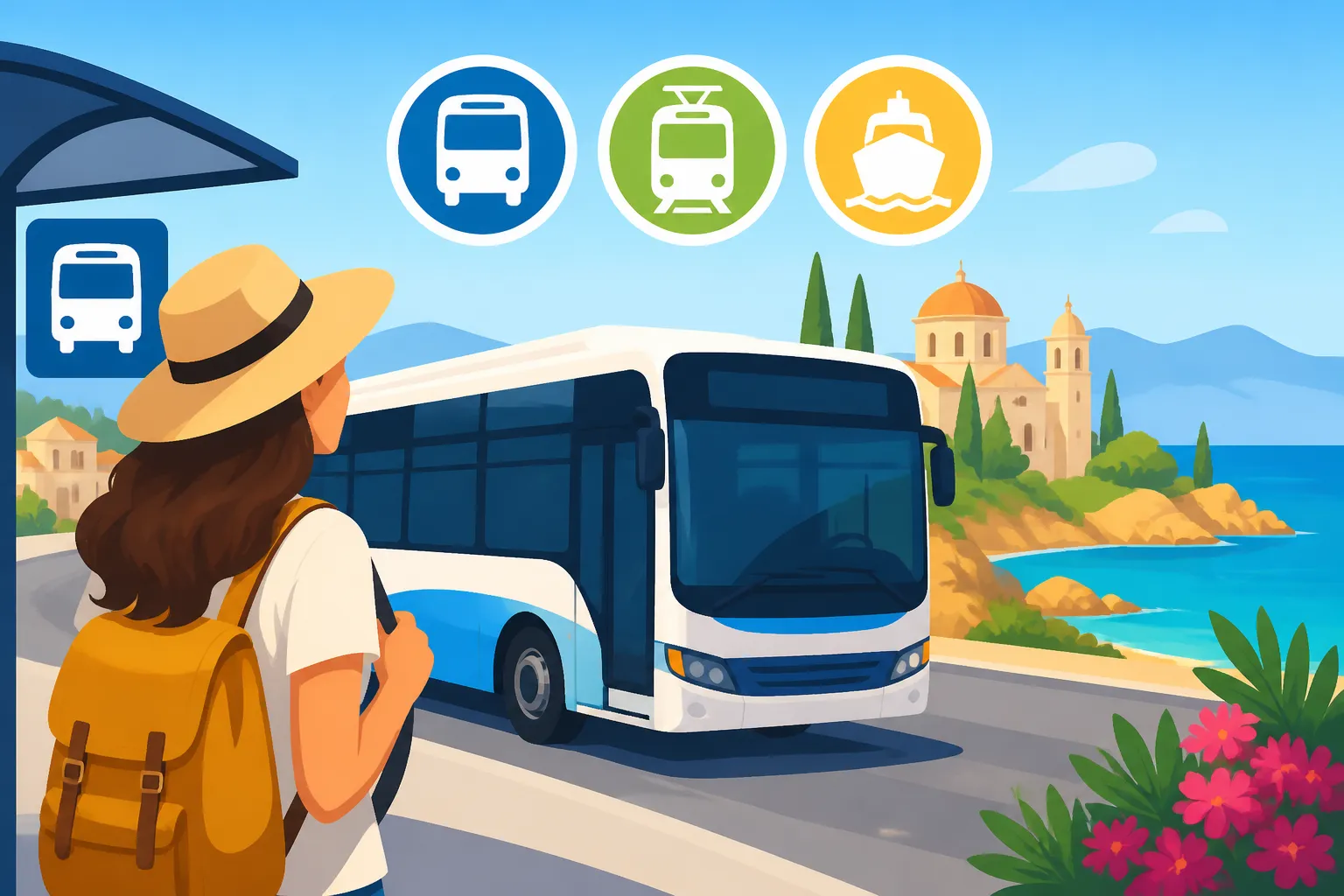
When people talk about "public transport" in Cyprus, they are almost exclusively referring to the bus system. There are no trains, trams, or metros here. The bus network is primarily managed by regional transport organizations, each covering a specific district, and a separate intercity bus service connects these districts. Knowing which company operates where is key to finding schedules and routes.
City Buses: Getting Around Urban Centres
Each major city in Cyprus has its own urban bus network, designed to connect different neighbourhoods, key attractions, and services within that municipality. These services generally operate more frequently than intercity or rural routes, especially during peak hours, but still might not run as late into the night as you'd expect from a bustling European city.
- Nicosia (Lefkosia): The capital city's buses are operated by OSEL (Organismos Sygkoinonion Eparxias Lefkosias, or Nicosia Public Transport). OSEL's network is quite extensive within Nicosia itself, reaching most residential areas, the university campuses, and the major shopping districts. You'll find the main bus terminals near the Eleftheria Square (Platia Eleftherias) and at the Solomos Square.
- Limassol (Lemesos): EMEL (Limassol Urban Buses) handles the public transport in Limassol. Their routes often cover the long coastal road, connecting the bustling tourist areas with the city centre, the Old Port, the Limassol Marina, and residential suburbs. This is one of the more frequently used networks by tourists and expats due to the linear nature of the city's development along the coast.
- Paphos (Pafos): OSYPA (Paphos Transport Organisation) serves the Paphos district. Their buses connect Paphos town (Kato Paphos, Geroskipou) with the airport, Coral Bay, and other surrounding villages and archaeological sites. It's particularly useful for tourists staying in the resort areas.
- Larnaca (Larnaka): ZINON (Larnaca Public Transport) operates the buses in Larnaca. Their routes connect the airport to the city centre, the Finikoudes promenade, and various residential zones. Many expats find these services particularly handy for airport transfers without the need for a taxi or private car.
- Famagusta (Ammochostos) / Paralimni / Ayia Napa: The eastern part of the island, including the popular tourist resorts of Ayia Napa and Protaras, is served by OSEA (Famagusta Public Transport). This network is crucial for tourists moving between the various beaches and attractions in the region, and for residents in towns like Paralimni and Deryneia.
Frequencies typically range from every 15-30 minutes on popular routes during the day to hourly or less frequently in evenings or on less travelled lines. Always check the specific schedule for your chosen route, as timings can change seasonally.
Intercity Buses: Connecting the Districts
If you're looking to travel between the major cities – say, from Nicosia to Limassol, or from Larnaca to Paphos – you'll use the intercity bus service. These routes are generally efficient, comfortable, and a much more affordable alternative to driving, especially if you're travelling alone. The main operator for these routes is Cyprus Public Transport (CPT), which has largely integrated the previous intercity services.
Intercity buses usually run hourly or every two hours between the main district capitals, with more frequent services connecting Nicosia, Larnaca, and Limassol. They typically use modern, air-conditioned coaches, making for a pleasant journey. The main bus terminals in each city are the departure and arrival points, and sometimes there are a few designated stops along the way, particularly at university campuses or major junctions. It's a great way to explore the island without the stress of navigating unfamiliar roads, which can be particularly useful if you're still figuring out the local driving rules, as covered in this guide: Driving in Cyprus: Licences, Registration and Rules for Expats.
For instance, a trip from Nicosia to Limassol can take about an hour and a half, depending on traffic, and will drop you at the main bus station in Limassol, from where you can often connect to the local EMEL buses. It’s a convenient and cost-effective option for day trips or visiting friends and family in other districts.
Regional and Rural Routes: The Lesser-Known Options
Beyond the major city and intercity routes, there are also regional and rural bus services that connect smaller towns and villages to their respective district capitals. These are often the most challenging to navigate for expats, as they tend to be less frequent, sometimes operating only a few times a day, and might not run on weekends or public holidays. The schedules can be a bit harder to find online and might require a call to the local bus company.
These routes are invaluable for residents living in more remote areas who don't have personal transportation. They can also be a fantastic way for adventurous expats to discover the authentic heart of Cyprus, away from the tourist hubs. Imagine taking a bus up into the Troodos mountains for a hike, or visiting a charming wine village – it's possible, but it requires diligent planning.
For example, from Paphos, OSYPA operates routes to villages like Polis Chrysochous, and from Limassol, EMEL has services reaching areas like Erimi or Kolossi. While not as robust as their urban counterparts, these routes demonstrate a commitment to connecting the wider population. It’s important to remember that these services are primarily designed for local villagers, so patience and a flexible schedule are your best friends here. Don't expect express service or frequent stops; embrace the journey and the opportunity to see more of the island's quieter corners.
Ticketing, Fares, and Payment Systems: What You Need to Know
Navigating the payment system for public transport in Cyprus is relatively straightforward once you get the hang of it, though it varies slightly between urban and intercity services. The goal is to make it as easy as possible, but like many things here, it helps to be prepared.
Single Tickets and Day Passes
The most basic option is buying a single-journey ticket directly from the bus driver. For urban routes, the standard fare for a single trip is usually around €1.50 for daytime services and slightly higher, around €2.50, for night services (typically after 9 PM or 10 PM, depending on the operator). For intercity routes, a single ticket can range from €4 to €9 depending on the distance, for example, Nicosia to Limassol usually costs around €5-€7. Always have small denominations of cash ready, as drivers sometimes don't have change for large notes.
Day passes are an excellent option if you plan to make multiple bus trips within a single city or district on the same day. These typically cost around €5 for unlimited travel on urban routes within that district for one day. This can quickly save you money if you're doing a bit of sightseeing or running several errands. Intercity services also offer day passes, but these are often limited to specific routes or districts, so inquire at the bus station.
It's also worth noting that special fares apply for students, children, and pensioners, often requiring proof of eligibility (e.g., student ID). These reduced fares can make public transport even more economical for certain groups.
Weekly, Monthly, and Annual Cards
For regular commuters or long-term expats, investing in a multi-day or multi-month pass is the most economical solution. These passes are usually purchased at major bus terminals or sometimes at designated kiosks.
- Weekly Passes: Valid for seven consecutive days, these offer unlimited travel within a specific urban network. Prices are typically around €20-€25.
- Monthly Passes: Ideal for those who rely heavily on buses for their daily commute. These offer unlimited travel for a calendar month and usually cost between €40-€50.
- Annual Passes: The most cost-effective for long-term residents, providing unlimited travel for a full year. These can run anywhere from €400-€500, offering significant savings over buying monthly passes.
To obtain a weekly, monthly, or annual pass, you'll generally need to fill out an application form and provide a passport-sized photo. It's a quick process at the main bus stations. The Motion Card is what Cyprus Public Transport uses for its intercity services and some urban routes. You can load it with credit or specific passes. For those living and working in Cyprus, this can drastically reduce your The Complete Guide to Cost of Living in Cyprus for Expats (2026) related to transportation.
Here's a quick comparison of approximate fares for urban routes (prices can vary slightly by district and operator):
| Ticket Type | Approximate Price (Day) | Approximate Price (Night) | Validity | Where to Buy |
|---|---|---|---|---|
| Single Journey | €1.50 | €2.50 | One trip | From driver (cash only) |
| Day Pass | €5.00 | N/A | Unlimited trips in one district for one day | From driver or major bus stations |
| Weekly Pass | €20.00 – €25.00 | N/A | Unlimited trips in one district for 7 days | Major bus stations |
| Monthly Pass | €40.00 – €50.00 | N/A | Unlimited trips in one district for 1 month | Major bus stations |
| Annual Pass | €400.00 – €500.00 | N/A | Unlimited trips in one district for 1 year | Major bus stations (requires application) |
| Intercity Single | €5.00 – €9.00 | N/A | One trip between specified cities | From driver or main intercity bus stations |
Digital Payments and Mobile Apps
While cash is still king for single tickets on many buses, there's a growing push towards digital solutions, particularly with Cyprus Public Transport. The Pame App is becoming more central for planning journeys and purchasing tickets for CPT services. It allows you to view schedules, real-time bus locations (sometimes, it's Cyprus after all!), and buy various ticket types.
For urban services, some operators might also have their own apps. It's always a good idea to download the specific app for the district you're in (e.g., EMEL for Limassol, OSEL for Nicosia) as they often provide the most accurate and up-to-date information for their respective routes. While not all buses have card readers for direct tap-and-go payments, the trend is moving in that direction. Always have a bit of cash as a backup, especially when exploring less travelled routes or during the early morning/late night hours. Staying connected with reliable mobile data is key for using these apps and navigating, so consider setting up an eSIM with services like Airalo to ensure you always have internet access without roaming charges.
Mastering the Schedules and Routes: Tools and Tips
Getting to grips with the bus schedules and routes can feel like a mission, especially when you're new to the island. However, with the right tools and a bit of patience, you'll be navigating like a local in no time. The key is knowing where to look and understanding that flexibility is often required.
Official Websites and Apps
The most reliable source for up-to-date information is always the official website or dedicated app of the specific bus company operating in your area. As mentioned before, for Nicosia it's OSEL, Limassol is EMEL, Paphos is OSYPA, Larnaca is ZINON, and Famagusta/Ayia Napa is OSEA. For intercity travel, head to the Cyprus Public Transport website. These sites provide detailed timetables, route maps, and fare information.
Many of these companies have improved their digital presence, offering apps that allow you to plan your journey, view stops, and sometimes even track buses in real-time. It’s not always perfectly precise, but it’s a massive step up from squinting at faded paper timetables. Make it a habit to check these resources before you leave, particularly if you're travelling on weekends, public holidays, or late in the evening, as services are often reduced during these times.
Google Maps and Third-Party Navigation
Google Maps has become incredibly useful for public transport in Cyprus. It integrates most of the urban and intercity bus routes and schedules, offering comprehensive journey planning. Simply enter your start and end points, select the public transport option, and it will suggest routes, estimated travel times, and even tell you when the next bus is due. This is a game-changer for expats and tourists alike, providing a familiar interface for a somewhat unfamiliar system.
Beyond Google Maps, there might be other local or regional navigation apps that incorporate public transport data. The "Pame App" by Cyprus Public Transport is a notable example, aiming to be a one-stop solution for bus travel across the island. While Google Maps is excellent for overall planning, sometimes these dedicated apps offer more granular detail or real-time updates directly from the operators, so it's worth having both. Remember to ensure your phone has a good data connection for these apps to work effectively, which is where a service like Airalo comes in handy for seamless connectivity.
Understanding Bus Stop Signage and Information
Unlike some countries where every bus stop has a digital display showing real-time arrivals, in Cyprus, information at bus stops can be quite basic. Many stops will simply have a sign indicating it's a bus stop, sometimes listing the bus numbers that serve that stop. Detailed timetables are not always present at every single stop, especially in smaller towns or rural areas. This means you often need to do your homework beforehand using apps or websites.
When you do find a timetable, it's usually in Greek and English. Pay close attention to the days of operation (weekdays, Saturdays, Sundays/public holidays often have different schedules). Also, note whether it's an 'exact time' or 'estimated time' table, as buses can sometimes run a few minutes early or late, especially with traffic. If you're unsure, ask a local; Cypriots are generally very helpful. Don't be shy about flagging down a bus as it approaches if you're standing at a designated stop – while not always necessary, it can sometimes ensure the driver sees you, particularly if the stop is less busy.
Beyond Buses: Taxis, Ride-Sharing, and Other Options
While buses form the backbone of public transport, they are by no means the only option for getting around. Taxis, ride-sharing apps, and even shared taxis offer alternatives, especially when buses are infrequent, unavailable, or simply not convenient for your specific needs. These options often come with a higher price tag but offer greater flexibility and comfort.
Traditional Taxis: Hailing, Stations, and Apps
Traditional taxis are abundant in Cyprus, especially in urban centres and tourist areas like Ayia Napa, Limassol, and Paphos. You can usually find them at designated taxi stands (e.g., at airports, main squares, or major hotels), hail them on the street (though this is less common outside of very busy areas), or call a local taxi company for a pick-up.
- Taxi Meters: By law, taxis must use a meter, but it's always wise to confirm this or agree on a fare beforehand, particularly for longer journeys or airport transfers. Night tariffs are higher, usually applying from late evening until early morning.
- Safety: Cypriot taxis are generally safe and drivers are usually professional. However, as with anywhere, it's good practice to ensure the driver is licensed (look for the taxi licence displayed).
- Airport Taxis: Taxis from Larnaca or Paphos airports are readily available and operate on fixed, pre-approved rates to various destinations across the island. These are posted at the airport taxi ranks.
- Taxi Apps: Companies like NTA (Nicosia Taxi Association) and other local associations often have their own apps for booking, which can offer convenience and price estimation. This brings a bit of modern convenience to the traditional taxi experience, allowing you to bypass calling and potentially overcome language barriers.
While more expensive than buses, taxis offer door-to-door service and are invaluable for late-night travel, carrying heavy luggage, or when speed and directness are paramount.
Emerging Ride-Sharing Services
In recent years, ride-sharing apps have gained significant traction in Cyprus, offering a convenient and often more affordable alternative to traditional taxis. The most prominent player in this space is Bolt.
- Bolt: Widely available in major cities like Limassol, Nicosia, Larnaca, and Paphos, Bolt operates similarly to other international ride-sharing platforms. You simply download the app, enter your destination, and a driver will pick you up. The fare is estimated upfront, and payment is handled through the app, providing transparency and ease of use. Many expats find Bolt to be a reliable and cost-effective solution for short to medium-distance trips, especially when the buses aren't running or when you prefer a private ride.
- Other Local Apps: Beyond Bolt, some local startups or taxi companies have also launched their own versions of ride-sharing apps, such as CABCY. These might have varying levels of coverage and driver availability, so it's worth checking which ones are popular in your specific area.
These services fill a crucial gap, particularly in evenings and on weekends when bus services are sparse. They provide an excellent middle-ground between the cost of a bus ticket and the higher price of a traditional taxi, all with the convenience of a smartphone app.
Shared Taxis and Minibuses
Historically, shared taxis (known as "Service Taxis" or "Travel Express") were a popular way to travel between cities, offering a slightly faster and more convenient option than buses, but at a higher price, by pooling passengers. While the "Service Taxi" concept has largely faded in its traditional form, some private companies or small operators still offer minibus services for specific routes, usually tailored for airport transfers or group excursions.
These services might not be as formally structured or widely advertised as the main bus network or ride-sharing apps, but they can be found through local enquiries or by looking up private transfer companies. They often require pre-booking and depart once the vehicle is full. For expats moving to Cyprus, especially during the initial phase of relocation, understanding all these transport options is part of The Complete Guide to Moving to Cyprus: Your First 90 Days (2027). Exploring these lesser-known options can sometimes reveal tailored solutions that suit your specific needs, particularly if you're travelling with luggage or a small group.
Pros and Cons of Relying on Public Transport in Cyprus
Deciding how much to rely on public transport in Cyprus involves weighing several factors. As with any system, it has its strengths and weaknesses, especially when viewed through the lens of an expat who might be used to different standards. It's about finding the balance that works for your lifestyle and location.
Advantages: Cost Savings, Environmental Impact, Stress Reduction
One of the most obvious advantages of using public transport is the cost savings. Owning and running a car in Cyprus comes with expenses: purchase price, registration, insurance, road tax, fuel, maintenance, and the MOT test. If you're single or a couple living in a city, using buses for most trips can significantly reduce your The Complete Guide to Cost of Living in Cyprus for Expats (2026). A monthly bus pass is a fraction of what you’d spend on fuel alone, let alone all the other car-related costs. For a detailed comparison, you might want to look into How to Buy a Car as a Newcomer in Cyprus.
Beyond your wallet, choosing buses contributes positively to the environmental impact. Fewer cars on the road mean less air pollution and reduced traffic congestion, especially in the busy city centres. It's a small but meaningful way to support sustainability on the island.
Finally, there's a significant element of stress reduction. Driving in Cyprus can be an experience, to say the least. Traffic can be heavy in major cities, parking can be a nightmare, and the local driving style takes some getting used to. Relying on public transport means you can sit back, relax, read a book, catch up on emails, or simply enjoy the scenery without the stress of navigating, finding parking, or dealing with the occasional aggressive driver. It's a chance to truly unwind and let someone else do the work.
Disadvantages: Limited Coverage, Frequency, Night Services
Now for the realistic part. The primary disadvantage of public transport in Cyprus, especially for expats used to more extensive networks, is its limited coverage, particularly outside urban areas. While intercity buses connect the main towns, many charming villages and even some residential suburbs are poorly served or not served at all by buses. This means that if you live in a more rural area or wish to explore the island's interior, a car often becomes essential. This is a common point of discussion, and many expats wonder How Do I Get Around Cyprus Without a Car? – often concluding it's very challenging without one.
Frequency is another major hurdle. While city buses during peak hours can be reasonably frequent, off-peak, evening, weekend, and public holiday services can be significantly reduced or even non-existent on some routes. Waiting 30-60 minutes for a bus is not uncommon, and if you miss your bus, you could face a long delay. This lack of frequency can severely impact your flexibility and spontaneity, making planning your day around bus schedules a necessity rather than a convenience.
Lastly, night services are generally very limited. Outside of a few main routes in tourist hotspots like Ayia Napa or Limassol during the high season, buses typically stop running late in the evening. This means if you want to enjoy a night out, attend an evening event, or work late, you’ll almost certainly need to rely on taxis, ride-sharing, or a private vehicle. This aspect alone often pushes expats towards car ownership, as the freedom to come and go as you please at any hour is highly valued. It's part of why many people feel that a car is a virtual necessity here.
Practical Tips and Insider Advice for Expats
As a seasoned expat who has navigated the good, the bad, and the utterly baffling aspects of Cypriot life, I've picked up a few tricks when it comes to public transport. These tips aren't just about reading a schedule; they're about embracing the local way and making your life a little easier.
Planning Your Journey: Best Practices
My number one piece of advice for public transport in Cyprus is: always plan ahead. Don't assume a bus will be there when you need it, especially if you're venturing off the most popular routes. Use the official apps and Google Maps before you leave your home. Double-check the times for your return journey as well, paying close attention to weekend and public holiday schedules, which often differ significantly.
- Buffer Time: Always build in extra buffer time. Buses can be a few minutes late (or occasionally, a few minutes early!). If you have an important appointment, don't cut it too close.
- Alternative Routes: Have a backup plan. What if the bus doesn't show up, or you miss it? Know which taxi services or ride-sharing apps operate in that area, or if there's another bus route, even if it's less direct.
- Offline Access: Screenshot schedules or download maps if you're heading to an area with patchy mobile reception. This also saves data, which is useful for expats keeping an eye on their Understanding Water and Utility Bills in Cyprus and overall expenses.
Remember, flexibility is your friend. Trying to stick to a rigid schedule using only public transport outside the main intercity routes might lead to frustration.
Essential Phrases and Etiquette
While many Cypriots, especially in tourist areas and cities, speak English, knowing a few basic Greek phrases can go a long way. It shows respect for the local culture and can be incredibly helpful if you need to ask a bus driver or a local for clarification.
- "Parakalo" (Παρακαλώ): Please / You're welcome
- "Efcharisto" (Ευχαριστώ): Thank you
- "Kali Mera" (Καλημέρα): Good morning
- "Kali Spera" (Καλησπέρα): Good afternoon/evening
- "Pou paei afto to leoforio?" (Πού πάει αυτό το λεωφορείο;): Where does this bus go?
- "Posa kanei?" (Πόσα κάνει;): How much does it cost?
When on the bus, common courtesy applies: offer your seat to the elderly or pregnant, don't play loud music, and try to keep conversations at a reasonable volume. If you're paying with cash, try to have exact change or small notes to avoid holding up the line. And if you're waiting at a less busy stop, don't be afraid to give a little wave to the driver to ensure they see you! Learning some basic Greek is always a good idea for overall integration, as discussed in Learning Greek for Living in Cyprus: A Complete Guide for Expats.
Staying Connected on the Go
In today's world, our smartphones are our lifelines, especially when navigating new places. Having reliable mobile data is absolutely essential for using navigation apps, checking schedules, looking up information, or booking a ride-share if your bus plans go awry.
Consider getting a local SIM card as soon as you arrive, or even better, setting up an eSIM. Services like Airalo offer convenient and affordable eSIM data plans that activate instantly, allowing you to stay connected from the moment your plane lands. This means you can immediately access Google Maps, check bus schedules, or hail a Bolt without worrying about expensive roaming charges or hunting for Wi-Fi. It’s a small investment that offers huge peace of mind for navigating and staying in touch.
Handling Luggage and Special Needs
For most urban and intercity buses, there's ample space for standard luggage. Larger suitcases can usually be stored in designated luggage compartments under the bus on intercity routes or in the accessible areas near the doors on city buses. However, if you're travelling with oversized items or a lot of bags, it might be challenging during peak hours.
For passengers with special needs, newer buses are generally equipped with ramps for wheelchair access and dedicated seating areas. However, not all bus stops are fully accessible, and older buses might lack these features. If you have specific accessibility requirements, it's advisable to check with the local bus company in advance or consider alternative transport options like accessible taxis. When relocating, especially with family or specific needs, planning transport for your move is a big consideration, so services like Sirelo can help coordinate your logistics, including how you and your belongings will get around once you're on the island.
Making the Choice: Public Transport vs. Owning a Car
The big question for most expats in Cyprus boils down to this: should I rely on public transport, or should I get a car? There’s no single right answer, and it truly depends on your individual circumstances, location, and lifestyle.
Factors to Consider for Your Lifestyle
- Location: If you live in the absolute heart of a major city like Nicosia or Limassol, especially near main bus routes, and your daily life revolves around that central area, public transport might be sufficient for most of your needs. However, if you live in a suburb, a village, or an area slightly off the main routes, a car becomes almost indispensable.
- Work Commute: Where do you work? Is it on a direct bus route? What are the hours? If your job requires early mornings, late nights, or travelling to industrial zones or areas poorly served by buses, a car will offer unparalleled convenience.
- Family Needs: If you have children, school runs, extracurricular activities, and weekend outings often necessitate a car. Even simple grocery runs can be cumbersome on the bus with kids and bags.
- Exploration: Do you plan to explore the island extensively, visit remote beaches, hike in the mountains, or discover hidden tavernas? While intercity buses connect major towns, truly discovering Cyprus often requires the freedom of a personal vehicle.
- Budget: Public transport is undoubtedly cheaper than car ownership. If you're on a tight budget, enduring some inconveniences of bus travel might be a trade-off you're willing to make. Compare the cost of monthly passes versus fuel, insurance, and maintenance.
Ultimately, the choice comes down to how much value you place on convenience, flexibility, and independence versus cost savings. For many, the freedom a car provides in Cyprus outweighs the expense. This is why the question Do I Need a Car to Live in Cyprus? often comes up, and for most, the answer eventually leans towards "yes" for a fulfilling expat life here.
The Hybrid Approach: When to Use Both
A smart approach for many expats is to adopt a hybrid strategy: owning a car for the majority of your daily needs and longer trips, but supplementing it with public transport when it makes sense.
For instance, you might drive your car for your daily commute to work and for weekend adventures, but then take the bus for:
- City Centre Visits: Avoiding parking nightmares and traffic in busy urban areas.
- Evenings Out: When you want to enjoy a meal and drinks without worrying about driving.
- Airport Transfers: If you live near an airport bus route, it can be a convenient and cheaper alternative to parking your car for extended periods.
This approach offers the best of both worlds: the freedom and flexibility of car ownership combined with the cost-saving and stress-reducing benefits of public transport for specific situations. Many expats eventually find this balance to be the most practical and enjoyable way to navigate life on the island. It allows you to embrace the benefits of both systems, adapting your mode of transport to the specific requirements of each journey. When you first move here, it's perfectly normal to experiment with all options before settling into a routine, and services like Sirelo can assist with the logistics of moving your vehicle, should you decide to bring one.
Disclaimer
Please note that while every effort has been made to provide accurate and up-to-date information, public transport schedules, fares, and services in Cyprus can change. It is always advisable to check the official websites of the relevant bus companies or contact them directly for the most current details before planning your journey. This guide is for informational purposes only and does not constitute official advice.