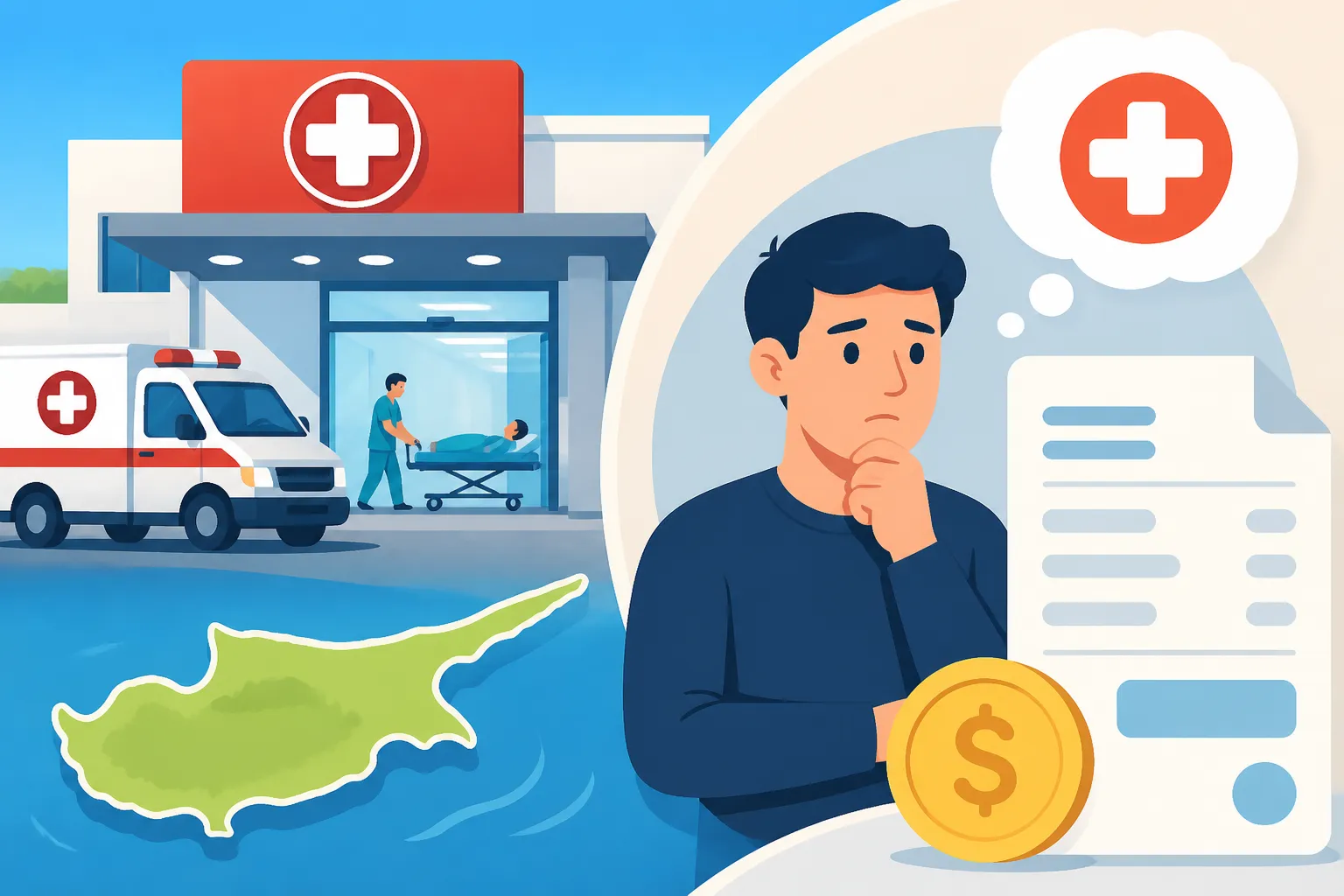
How Much Does an Emergency Room Visit Cost in Cyprus?
Finding yourself in a medical emergency in a foreign country is one of the most stressful experiences imaginable, and the first thing that often flashes through your mind, after concern for your health, is "How much is this going to cost me?" Here in Cyprus, navigating the healthcare system, especially in an emergency, can feel like a labyrinth, particularly if you’re new to the island. This guide is designed to demystify the costs associated with an emergency room visit in Cyprus, covering both public and private options, so you're better prepared should the unexpected happen.
Navigating Emergency Care in Cyprus: Public vs. Private Hospitals
When a medical emergency strikes, your first decision, if you’re able to make one, might be whether to head to a public or private hospital. This choice often has significant implications for both the immediate care you receive and, crucially, the bill that follows. Cyprus offers a dual healthcare system, with the General Healthcare System (GeSY) providing comprehensive coverage within public hospitals and a growing number of private providers, alongside a robust private hospital sector. Knowing the distinctions before you're in a crisis can save you a lot of anxiety and expense.
The Immediate Response: Calling 112
In any genuine emergency, whether it's a sudden severe illness, an accident, or any situation requiring immediate medical attention, the most critical step is to call 112. This is the pan-European emergency number, and it will connect you to ambulance services, police, and fire departments in Cyprus. When you call, clearly state your location, the nature of the emergency, and any relevant details. Speak slowly and clearly. The dispatchers are generally English-speaking, so don't worry about language barriers when every second counts. They will guide the ambulance to the nearest appropriate public hospital emergency department. While you can technically go directly to a private hospital's emergency department, if your situation is critical and requires an ambulance, 112 is always the safest and most efficient route. Remember that the ambulance service primarily transports patients to public hospitals, especially for life-threatening conditions.
Initial Assessment and Your Status
Once you arrive at an emergency room, whether by ambulance or on your own, the first step will be a triage assessment. This is where medical staff quickly evaluate your condition to determine the urgency of your case. Patients with life-threatening conditions will always be prioritised, regardless of their insurance status. This is standard practice globally, and Cyprus is no exception. While waiting, you'll be asked for identification and information about your residency status and health coverage. This is where the cost implications begin to kick in.
If you are a resident of Cyprus and have registered for GeSY, you'll provide your ARC (Alien Registration Card) number or your GeSY beneficiary number. This will allow the hospital to check your eligibility. For those who are not GeSY beneficiaries – perhaps you're a tourist, a new expat still awaiting your GeSY registration, or someone working under a specific visa that doesn't grant GeSY access – you will be treated as a private patient, even in a public hospital, or expected to pay out-of-pocket. It’s crucial to understand How Cyprus's Health System Works: GeSY vs Private Explained (2027) before you even face an emergency. The system can be a bit confusing at first glance, but grasping these fundamentals can save you a world of trouble down the line.
Emergency Room Costs Under GeSY: What to Expect
The General Healthcare System (GeSY) in Cyprus aims to provide universal access to healthcare for its residents, but "free" isn't quite the right word for everything, especially when it comes to emergency care. While consultations with your personal doctor (GP) or referrals to specialists have very low co-payments, emergency room visits have their own structure. This is where many expats, even those with GeSY, can get a bit surprised.
GeSY Member Co-Payments
If you are a registered GeSY beneficiary, your emergency room visit to a public hospital will typically involve a co-payment. This is a small fee you pay at the point of service. As of early 2026, the standard co-payment for an emergency department visit in a public hospital for GeSY beneficiaries is €10. This fee covers the initial consultation with the emergency doctor, but it doesn't necessarily cover everything that might follow.
Here’s where it gets a little more nuanced:
- Diagnostics and Treatments: While the initial €10 covers the basic visit, if you require specific diagnostic tests (like blood tests, X-rays, or CT scans), or certain procedures and medications administered in the ER, these are usually covered by GeSY without additional co-payments at the public hospital, assuming they are deemed medically necessary during the emergency. This is a huge benefit of GeSY and often alleviates the fear of escalating costs for complex care.
- Admission to Hospital: If your emergency visit leads to an admission to a public hospital ward, there is no additional co-payment for the hospital stay or treatment, as this falls under the comprehensive coverage of GeSY for registered members. This means that after the initial €10, your costs are generally capped for the acute phase of treatment in a public facility.
It's vital to have your GeSY beneficiary number or ARC card with you, or at least remember your ARC number, as this is how the hospital will verify your eligibility. Without it, even if you are registered, they might initially treat you as a private patient until your status is confirmed, potentially leading to an upfront demand for payment that can be sorted out later. This is why Understanding GeSY Co-Payments and Out-of-Pocket Fees in Cyprus is so important for all residents.
Non-GeSY Eligible and Tourists
Now, this is where things get significantly different. If you are not a registered GeSY beneficiary, whether you're a tourist, a new expat still processing your residency and GeSY registration, or perhaps an EU citizen without an EHIC, you will be expected to pay for your emergency room visit out of pocket. Even in public hospitals, non-GeSY patients are charged according to a set fee schedule, which is considerably higher than the GeSY co-payment.
Let's look at some examples (these are approximate figures and can vary, so always confirm directly with the hospital if possible):
| Service Category | Public Hospital (Non-GeSY/Tourist) | Public Hospital (GeSY Member) | Private Hospital (Approximate) |
|---|---|---|---|
| Initial ER Consultation (Minor Case) | €60 – €100 | €10 | €80 – €150 |
| Initial ER Consultation (Moderate/Serious) | €100 – €200+ | €10 | €150 – €250+ |
| Blood Tests (Basic Panel) | €40 – €80 | Covered by GeSY | €60 – €120 |
| X-Ray (Single Area) | €50 – €90 | Covered by GeSY | €70 – €130 |
| CT Scan (Single Area) | €150 – €300 | Covered by GeSY | €200 – €400+ |
| Minor Procedure (e.g., stitches) | €100 – €250+ | Covered by GeSY | €180 – €400+ |
| Overnight Stay (if admitted from ER, per night) | €150 – €300+ | Covered by GeSY | €300 – €800+ |
Note: These figures are estimates and can fluctuate based on the specific hospital, time of day, complexity of the case, and current pricing policies. Always factor in additional charges for medications, consumables, and specialist consultations if required.
For tourists, it's absolutely vital to have robust travel insurance. Without it, a simple fall or sudden illness requiring an ER visit could leave you with a bill running into hundreds, if not thousands, of euros. EU citizens should remember their European Health Insurance Card (EHIC), which allows access to medically necessary care in public hospitals at the same cost as a local GeSY beneficiary (i.e., the €10 co-payment). However, the EHIC typically does not cover private healthcare. You might find it useful to read about Can Tourists Access Emergency Care in Cyprus? to understand the nuances of emergency care coverage when you're just visiting.
If you are a new expat, perhaps still waiting for your residency or GeSY registration to complete, this period is especially vulnerable. It’s highly recommended to secure private health insurance or a comprehensive travel insurance policy like SafetyWing that covers emergencies during this transitional phase. Relying on out-of-pocket payments during this time can be financially devastating if a serious medical event occurs.
Private Hospital Emergency Room Costs and Insurance Considerations
While public hospitals handle the bulk of emergencies under GeSY, many expats and locals opt for private hospitals due to perceived shorter waiting times, more comfortable facilities, and often, English-speaking staff being more readily available. However, this convenience comes at a higher price, and understanding that pricing structure is crucial.
Understanding Private ER Pricing
Private hospitals in Cyprus operate on a different financial model compared to public ones. They are not part of GeSY (though some individual doctors working in private clinics may be GeSY-registered for their consultations, this typically doesn't extend to the full private hospital ER service). When you step into a private hospital's emergency room, you are essentially a paying customer.
The cost structure generally includes:
- Consultation Fee: This is the base fee for seeing the emergency doctor. It's usually higher than the GeSY co-payment and can range anywhere from €80 to €150 or more, depending on the hospital and the complexity of the initial assessment.
- Diagnostic Tests: Any blood tests, X-rays, ultrasounds, CT scans, or MRI scans will be charged separately at their private rates. These can quickly add up. For example, a basic blood panel might cost €60-€120, an X-ray €70-€130, and a CT scan €200-€400+.
- Procedures and Treatments: If you need stitches, a cast, minor surgery, or specific medications, each item will have its own cost. A simple procedure like suturing a wound could range from €180 to €400, depending on its complexity and the materials used.
- Medication and Consumables: Any medication administered in the ER, along with bandages, IV fluids, and other consumables, will be added to your bill.
- Specialist Consultations: Should the ER doctor deem it necessary for you to see a specialist immediately, that consultation will also be charged separately at private rates, which can be €80-€150 per specialist.
- Admission: If your condition requires hospital admission, each night will be billed, along with all treatments, medications, and doctors' fees during your stay. A single night in a private hospital could easily run from €300 to €800+, excluding doctors' fees and other services.
It's common for private hospitals to ask for an upfront payment or a guarantee of payment (e.g., credit card details) before proceeding with extensive treatment, especially if you don't have recognised private health insurance. Be prepared for this.
The Lifeline of Private and Travel Insurance
This is where private health insurance becomes not just a convenience, but a financial necessity for many expats and tourists opting for or requiring private emergency care. If you have a comprehensive private health insurance plan, either local or international, it will typically cover emergency room visits and subsequent treatments, diagnostic tests, and hospital admissions in private facilities.
Here’s how it generally works:
- Direct Billing: Some insurance providers have agreements with specific private hospitals in Cyprus, allowing for direct billing. This means the hospital sends the bill directly to your insurer, and you only pay any deductible or co-insurance portion. This is the smoothest option, reducing your upfront financial burden.
- Reimbursement: More commonly, especially for less severe emergencies or if your insurer doesn't have direct billing agreements, you might have to pay the full bill upfront and then submit a claim to your insurance provider for reimbursement. This requires you to keep all invoices, medical reports, and payment receipts. Ensure you understand your policy's claims process thoroughly before you need it. It’s a good idea to research How to Claim Reimbursement from Private Insurance in Cyprus for future reference.
For tourists or new expats without established private health insurance, travel insurance is your safety net. Policies from providers like SafetyWing are designed specifically for digital nomads and travellers, often covering emergency medical expenses, including ER visits, hospitalisation, and even emergency evacuation. Having such a policy can turn a potentially ruinous bill into a manageable one, typically requiring you to pay upfront and then claim reimbursement, or in severe cases, they might arrange direct payment.
It’s crucial to remember that not all private insurance plans are created equal. Always check the specifics of your policy, including:
- Deductibles and Excesses: The amount you need to pay yourself before your insurance coverage kicks in.
- Coverage Limits: Maximum amounts the insurance will pay for certain services or overall.
- Network of Hospitals: Whether your plan restricts you to certain hospitals or allows you to choose.
- Exclusions: What your policy doesn't cover (e.g., pre-existing conditions, specific types of accidents).
Without adequate insurance, even a seemingly minor emergency in a private hospital can quickly accumulate into a hefty sum, making the public system, even with its potential waiting times, a more financially viable option for some. Understanding Private Health Insurance Options in Cyprus can help you make an informed decision for your peace of mind.
Key Factors Influencing Your Final Emergency Bill
The ultimate cost of an emergency room visit in Cyprus isn't just a flat fee; it's a dynamic sum influenced by several variables. Understanding these factors can help you anticipate potential expenses, especially if you're navigating the system without comprehensive insurance.
Diagnostic Tests, Procedures, and Admissions
The core of your emergency room bill will largely depend on what needs to be done to diagnose and treat your condition.
- Initial Assessment vs. Full Workup: A simple consultation for a minor ailment (like a common cold or a small cut that doesn't require stitches) will naturally be cheaper than an investigation into sudden severe abdominal pain, which might require blood tests, urine tests, an ultrasound, and perhaps even a CT scan. Each test adds a separate line item to your bill if you're paying privately or are not covered by GeSY.
- Complexity of Procedures: A basic set of stitches will cost less than, say, a reduction of a dislocated joint or a more intricate wound repair. Surgical interventions, even minor ones performed in the ER, involve costs for the surgeon's fee, anaesthesia, and theatre time if applicable, alongside consumables.
- Medications Administered: Any medication given to you in the emergency room (e.g., pain relief, antibiotics, anti-inflammatories, intravenous fluids) will be charged. These are often generic but can still add up.
- Hospital Admission: This is perhaps the biggest cost driver. If the ER doctor decides your condition is serious enough to warrant admission to a hospital ward, your emergency room bill will be followed by daily hospitalisation charges, doctors' rounds fees, nursing care, meals, and any further tests or treatments you receive during your stay. This is where costs can skyrocket into thousands of euros very quickly in private hospitals, making robust insurance coverage absolutely essential.
For GeSY beneficiaries, most of these additional costs within a public hospital are absorbed after the initial €10 co-payment, which is one of the system's biggest advantages. However, for non-GeSY patients, every single item and service will be itemised and charged.
Ambulance Services and Hidden Costs
While an ambulance is a critical service in an emergency, its cost can sometimes be a surprise for those not familiar with the Cypriot system, particularly in private scenarios.
- Public Ambulance Service: If you call 112, the ambulance will typically transport you to the nearest public hospital. The cost of a public ambulance ride in Cyprus is generally minimal or, in many true emergency cases, effectively covered by GeSY or the state. For GeSY beneficiaries, there is typically no separate charge. For non-GeSY individuals, there can be a fee, but often the focus is on urgent medical transport, and the bill might arrive later or be relatively low compared to the ER visit itself. However, it's worth noting that if an ambulance is called for a non-emergency situation, charges will definitely apply.
- Private Ambulance Service: Some private hospitals or clinics also offer their own ambulance services or have agreements with private providers. If you explicitly request a private ambulance or are transported to a private hospital by their service, expect a significant charge. This can easily be €100-€300 or more, depending on the distance and urgency, and is almost always an out-of-pocket expense unless your private insurance explicitly covers it.
- "Hidden" Costs: These aren't really hidden but can be overlooked. They include things like parking fees at the hospital, taxi fare if you leave by taxi, or any follow-up appointments or medications prescribed that you then have to purchase from a pharmacy. While minor, these add to the overall financial impact of an emergency. Also, remember that if an emergency happens outside of major cities, transport might be more complex or costly. Knowing How Much Does an Ambulance Cost in Cyprus? can help you understand this specific charge.
The best way to minimise financial surprises is to be proactive. Understand your insurance policy inside out, know your GeSY status, and always keep a copy of your insurance details and identification handy.
Practical Advice for Expats and Tourists Facing a Medical Emergency
Experiencing a medical emergency can be unsettling, especially in a foreign country. While we hope you never have to face one, being prepared can make a world of difference. Here's some seasoned advice from one expat to another.
Firstly, always carry identification and your health insurance details. This is non-negotiable. Whether it’s your ARC, GeSY beneficiary number, EHIC, or private insurance card, have it easily accessible. A photo on your phone is a good backup, but a physical card is often preferred. This small step can significantly streamline your registration process and clarify your billing status immediately. Imagine trying to explain your GeSY eligibility when you're in pain and disoriented. Don't leave it to chance.
Secondly, familiarise yourself with your nearest hospitals. Take a moment to know the location of both the nearest public hospital and any reputable private hospitals in your area. For instance, if you're in Limassol, you'll want to know about Limassol General Hospital (public) and perhaps Ygia Polyclinic or Mediterranean Hospital (private). In Nicosia, it’s Nicosia General Hospital and the American Medical Center, among others. Knowing these locations in advance, and even how to get there, can save precious time in an emergency. You might find it useful to know What Should I Do in a Medical Emergency in Limassol? if you're based there.
Thirdly, don't hesitate to seek care. While the thought of cost can be daunting, your health and safety are paramount. In a genuine emergency, always call 112 or get to the nearest ER. Doctors in Cyprus are professional and will treat urgent conditions regardless of your ability to pay upfront. Financial discussions often happen after the immediate crisis is stabilised. It’s better to deal with a bill later than to suffer long-term health consequences from delayed treatment.
Fourthly, understand the billing process. If you are uninsured or underinsured, especially in a private setting, ask for an itemised bill. Don't be afraid to ask questions about the costs. If you need to pay upfront for services and claim reimbursement, ensure you collect all necessary documentation: detailed invoices, medical reports, and receipts. Your insurance company will need these. If you have international travel insurance like SafetyWing, make sure you understand their specific claim procedures and what documents they require. Getting an initial understanding of The Cost of Healthcare in Cyprus: A Complete Breakdown for Foreigners (2026) before any emergency strikes can also help you mentally prepare for potential expenses.
Finally, for new arrivals or those considering moving to Cyprus, prioritise getting your health coverage sorted as soon as possible. How to Register for GeSY (General Healthcare System) in Cyprus (2027) is a critical step for residents, and securing private insurance to bridge any gaps, or for those not eligible for GeSY, is essential. An emergency is never the time to discover you're uninsured or underinsured.
Being an expat in Cyprus is an amazing experience, but like anywhere, it comes with its administrative hurdles and the need for preparedness. When it comes to your health, being informed about emergency care costs can significantly reduce stress if you ever find yourself needing urgent medical attention.
Disclaimer
The information provided in this guide is for general informational purposes only and does not constitute medical, legal, or financial advice. Healthcare costs and regulations in Cyprus can change, and individual situations vary greatly. While every effort has been made to provide accurate and up-to-date information as of early 2026, it is essential to verify specific costs, eligibility criteria, and insurance coverage directly with the relevant healthcare providers, the Health Insurance Organisation (HIO), and your insurance company. Always consult with a qualified professional for personalised advice.