Can Foreigners Buy Property in Cyprus?
Oh, the dream of owning a little piece of sunshine in Cyprus! It’s a wonderful aspiration, and honestly, for many of us expats, it’s a big part of feeling truly settled here. But let’s be real, the path to property ownership in a new country can feel like navigating a labyrinth blindfolded, full of unique quirks and unexpected twists. This guide is going to walk you through everything you need to know about whether foreigners can buy property in Cyprus, breaking down the hurdles, dispelling myths, and giving you a realistic roadmap to turning that dream into a tangible reality.
The Dream vs. Reality: Initial Considerations for Foreign Buyers
When you first start dreaming of that villa overlooking the sea or a charming apartment in a bustling town square, the first question that pops into most foreigners' heads is, "Can I even do this?" The short answer is yes, absolutely! But like almost everything else in Cyprus, the how depends heavily on where you're from and what kind of property you're eyeing. It’s not as straightforward as just picking a place and signing on the dotted line, but it’s certainly achievable with the right guidance.
Who Can Buy Property in Cyprus? EU vs. Non-EU Citizens
This is the very first and most significant distinction you'll encounter. For citizens of European Union member states, buying property in Cyprus is remarkably simple, almost as if you were a local. There are no restrictions on the number of properties you can buy, the size of the land, or the type of property. You pretty much have the same rights as a Cypriot citizen. This is thanks to the fundamental principles of the EU, allowing free movement of capital and persons. You'll still need a lawyer, of course, and you'll go through the standard legal and financial processes, but the administrative hurdles are minimal.
Now, if you're a non-EU citizen, the process is a bit more involved, but by no means impossible. The main difference is that non-EU citizens need to obtain a permit from the Council of Ministers to acquire immovable property. This isn't a rubber stamp, but it's generally a formality for most residential purchases, as long as you meet certain criteria. Typically, non-EU citizens are limited to purchasing one property, which can be a house, an apartment, or a plot of land not exceeding 4,014 square meters (approximately one acre). If you’re looking to buy a second property, such as a holiday home in addition to your main residence, or a commercial property, you’d need a special justification and a separate application. This process adds a layer of bureaucracy and a bit of time to your overall timeline, which can be frustrating, but it's a well-trodden path that countless expats have successfully navigated. For more detailed information, you can also check out What Are the Rules for Non-EU Buyers Purchasing Property in Cyprus?.
Understanding Property Types and Locations
Cyprus offers a diverse range of properties, from modern high-rise apartments in cities like Limassol and Nicosia to sprawling villas in coastal resorts and quaint village homes nestled in the hills. Your choice of property type and location will significantly impact not only the price but also your lifestyle here.
In the bustling coastal city of Limassol, for example, you'll find a mix of luxury apartments, residential complexes, and some older, more traditional homes. It's a vibrant hub, popular with businesspeople and families due to its international schools and dynamic economy. Paphos, on the other hand, is renowned for its archaeological sites, beautiful coastline, and a more relaxed, retirement-friendly atmosphere, offering many standalone villas and townhouses, often within larger developments. Larnaca provides a balance, with its international airport, expanding marina, and more affordable housing options compared to Limassol. The capital, Nicosia, being landlocked, focuses on city living with a strong emphasis on business and education, offering mostly apartments and houses in residential neighbourhoods. Even the beautiful, quieter areas around Famagusta and Ayia Napa, while primarily tourist-centric, offer opportunities for holiday homes that could become permanent residences.
Consider what matters most to you: proximity to work or international schools, access to beaches, a quiet village life, or the vibrant pulse of city living. Each area has its own unique charm and challenges. For instance, living in a smaller village might offer a lower cost of living and a more authentic Cypriot experience, but it almost certainly means you'll need a car to get around for daily errands.
Navigating the Cypriot Property Purchase Process
Once you’ve got a clear picture of what you’re looking for and where, the real work begins: navigating the actual purchase process. This can feel daunting, especially with legal jargon and procedures that differ from your home country. But with the right approach and, crucially, the right professionals by your side, it becomes a manageable sequence of steps.
The Role of Lawyers and the Purchase Agreement
Let me tell you, this is NOT an area to skimp on. Engaging an independent, reputable lawyer who specializes in property law is paramount. Do not rely solely on the developer's or seller's lawyer. Your lawyer's job is to protect your interests, ensuring the property is free from any encumbrances, reviewing contracts, and guiding you through the entire legal process. They will also manage the application for a permit from the Council of Ministers if you are a non-EU citizen. Finding an English-speaking lawyer is generally easy in all major cities.
The process typically starts with a reservation agreement and a small deposit (usually 1-2% of the purchase price) to take the property off the market. This gives your lawyer time to perform due diligence. Following that, a formal Sales Agreement (Contract of Sale) is drafted and signed by both parties. This document outlines all the terms and conditions of the purchase, including the purchase price, payment schedule, delivery date, and specifications if it’s an off-plan property. Crucially, your lawyer will then register this Sales Agreement at the District Land Registry Office. This registration is a critical step because it legally protects your ownership rights, even before the title deed is issued to your name, making it impossible for the seller to sell the property to anyone else, or to encumber it further.
Due Diligence and Title Deeds: What You MUST Know
This is perhaps the most anxiety-inducing part for many foreign buyers, and for good reason, given some historical issues. Due diligence, conducted by your lawyer, involves a thorough investigation into the property. This includes checking for any existing mortgages or other encumbrances on the property, verifying that the seller is the rightful owner, and ensuring that all necessary planning and building permits are in place. Your lawyer will also check for compliance with local planning zones and any outstanding communal fees for apartments.
Now, about those infamous "title deeds." Historically, there were issues in Cyprus where buyers would purchase a property, often from a developer, but the individual title deed for their specific unit or plot would be delayed for years, sometimes even decades, or not issued at all due to developer debts or irregularities. This was a massive headache for many expats. However, it's vital to understand that the Cypriot government has made significant strides in recent years to rectify these problems and streamline the process. New legislation has been introduced, and the Land Registry Department has worked hard to clear backlogs. While delays can still happen, especially for older properties or those with complex histories, the risk for new builds from reputable developers is significantly lower.
Your lawyer will confirm the status of the title deed. Ideally, you want a property with an immediate, clear title deed ready for transfer. If the title deed isn't yet available (e.g., for off-plan or new properties), your lawyer will ensure that the developer has secured a Final Approval Certificate, which is a prerequisite for the issuance of individual title deeds. The registration of your Sales Agreement at the Land Registry, as mentioned, provides substantial legal protection, even if the title deed isn't immediately transferable. It’s crucial to understand Understanding Property Ownership and Title Deeds in Cyprus (2027) fully before you proceed.
Understanding the True Costs and Financing Your Purchase
Beyond the sticker price of the property itself, there are several additional costs, taxes, and fees that you need to budget for. Failing to account for these can lead to nasty surprises down the line, so a clear understanding upfront is essential for a smooth financial journey.
Upfront Costs and Hidden Fees
This is where things can get a bit complicated, as the total percentage can vary depending on the property's value and whether it's new or resale. Here’s a breakdown of the typical costs you can expect:
-
Property Transfer Fees: These are paid to the Land Registry Department upon transfer of the title deed into your name. They are calculated on a sliding scale based on the property's market value at the time of purchase. Currently, the rates are:
- Up to €85,000: 3%
- From €85,001 to €170,000: 5%
- Over €170,000: 8%
If the property is bought by joint purchasers (e.g., a married couple), the purchase value is divided, potentially reducing the overall fee. For example, if a couple buys a €200,000 property, each is assessed on €100,000, bringing them into the 3% and 5% brackets, resulting in lower total fees than if one person bought it alone.
-
Stamp Duty: This is a one-off tax paid on the purchase agreement.
- For property value up to €5,000: €0
- From €5,001 to €170,000: 0.15%
- Over €170,000: 0.20%
The maximum stamp duty is capped at €20,000. This must be paid within 30 days of signing the Sales Agreement.
-
VAT (Value Added Tax): This is a big one. If you are buying a new property (one for which a Town Planning Permit application was submitted after May 1, 2004, and which has not been previously inhabited or used), it is subject to 19% VAT. However, for a first-time buyer purchasing a primary residence, a reduced VAT rate of 5% can apply to the first 130 square meters of the property, provided the total area does not exceed 200 square meters. This reduced rate is a significant saving, but strict conditions apply, so your lawyer will guide you. Resale properties are generally exempt from VAT.
-
Legal Fees: These typically range from 0.5% to 1% of the purchase price, plus VAT, depending on the complexity of the transaction and the lawyer you choose.
-
Real Estate Agent Fees: If you use a real estate agent, their fee (usually paid by the seller) is typically 5% of the purchase price plus VAT. However, some agents may try to charge the buyer, so clarify this upfront in writing.
Here’s a quick summary table for typical purchase costs for a non-VAT property:
| Cost Type | Calculation/Rate | Notes |
|---|---|---|
| Property Transfer Fees | 3% for first €85k, 5% for next €85k, 8% above €170k | Paid to Land Registry. Can be split for joint buyers. |
| Stamp Duty | 0.15% (up to €170k), 0.20% (above €170k) | Paid on Sales Agreement. Max €20,000. |
| Legal Fees | 0.5% – 1% of purchase price (+VAT) | Essential for due diligence and contract review. |
| Real Estate Agent Fees | 5% of purchase price (+VAT) | Usually paid by seller, but confirm. |
| VAT (if new property) | 19% standard, 5% reduced for first primary residence | Reduced rate has strict conditions (e.g., first 130 sqm). |
For a comprehensive breakdown of all these figures and scenarios, you should really delve into How Much Are the Costs to Buy Property in Cyprus?.
Mortgages for Foreigners and Financing Options
Securing a mortgage in Cyprus as a foreigner is certainly possible, but it can be a bit more challenging than in your home country. Cypriot banks like Bank of Cyprus and Hellenic Bank do offer mortgages to non-residents, but the criteria can be stringent. Expect banks to require a higher down payment (often 30-40% or even more for non-EU citizens), a stable income, and proof of funds. The application process will involve a lot of paperwork, including proof of income, tax returns from your home country, bank statements, and often a credit check.
Interest rates can be variable or fixed, and terms generally range from 15 to 30 years. It's always a good idea to speak with multiple banks and compare their offerings. Your lawyer or a financial advisor can also provide guidance here. While the process can be slow and feel intrusive, many expats successfully secure financing. If you're pondering this step, read How to Get a Mortgage to Buy a Home in Cyprus for an in-depth look.
Some foreigners opt for alternative financing, either by securing a mortgage in their home country (if allowed and feasible) or by purchasing with cash. This avoids the Cypriot banking bureaucracy but requires substantial liquid assets. It’s also worth noting that the property market values can fluctuate, so always ensure you’re comfortable with the investment.
Making Your House a Home: Post-Purchase Essentials & Residency Links
Congratulations, you've bought your property! But the journey doesn't end there. Making your new house a home involves connecting utilities, understanding ongoing costs, and for many non-EU citizens, understanding how property ownership links to residency.
Utility Connections and Maintenance
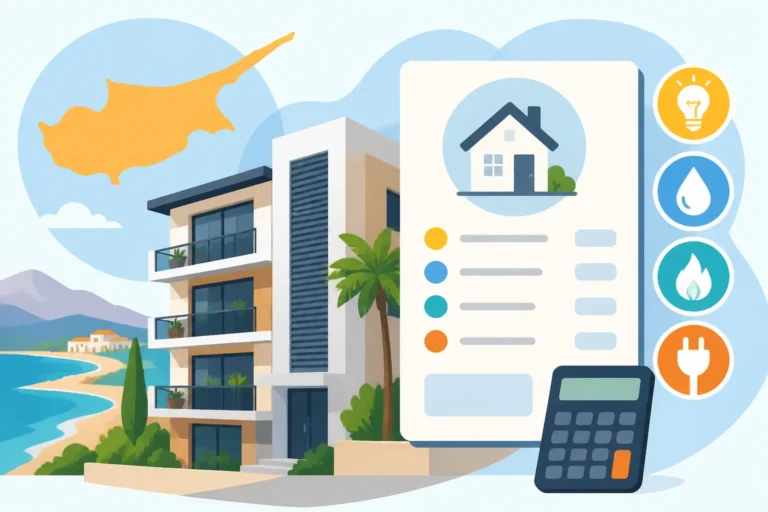
Once you have the keys, one of your first tasks will be setting up utilities. This typically involves connecting electricity with the Electricity Authority of Cyprus (EAC), water with the local Water Board, and arranging internet and potentially TV services.
- Electricity (EAC): You'll need your sales agreement or title deed, your passport, and often your Alien Registration Card (ARC) or Yellow Slip. You'll visit the local EAC office, pay a security deposit, and they'll arrange connection. For a deep dive, check out How to Set Up Electricity EAC in Your Cyprus Home.
- Water: Similar to EAC, you'll visit the local Water Board office with your documents and pay a deposit.
- Internet and TV: There are several providers like Cyta, Epic, and Primetel. You can often bundle internet and TV packages. While getting connected might take a few days, having immediate data on your phone can be a lifesaver. This is where something like Airalo comes in handy. It is wise for new arrivals to grab an eSIM from them for immediate internet access on their phone the moment they land. It takes the stress out of finding Wi-Fi while sorting out your home internet.
Beyond initial setup, remember ongoing maintenance costs. If you buy an apartment or a property within a complex, you will almost certainly pay communal fees. These cover shared services like pool maintenance, garden upkeep, lift maintenance, and common area cleaning. These fees can vary significantly, so always inquire about them before committing to a purchase. You also have annual property taxes, local municipal taxes (for refuse collection, street lighting, etc.), and depending on your property, a sewerage tax. All these add up, so factor them into your monthly budget. For a broader perspective, understanding The Expat Guide to Setting Up Utilities Electricity Water Internet in Cyprus will serve you well.
When you're finally ready to move your belongings, especially if you're bringing everything from another country, planning is crucial. Services like Sirelo can be invaluable. They provide a platform to compare quotes from various international moving companies, which can save you a ton of hassle and money when coordinating shipping your life's possessions to your new Cypriot abode.
Residency and Property: The Link for Non-EU Buyers
For non-EU citizens, purchasing property often ties into their residency plans. While simply buying a property does not automatically grant you residency, it can be a significant step towards obtaining certain types of permits.
The most common route connected to property purchase is the Category F Residence Permit, also known as the "Pink Slip" for financially independent persons. While you don't have to own property for this, it certainly strengthens your application as proof of stable accommodation. For more robust residency options, especially those seeking permanent residency through investment, property plays a central role. Cyprus previously had a well-known "Golden Visa" or Citizenship by Investment scheme, which has undergone significant changes and restrictions. However, the Permanent Residency by Investment scheme is still very much active. This scheme typically requires a minimum investment in new immovable property, usually starting from €300,000, plus VAT, among other criteria like a stable annual income. This is a much more direct route to permanent residency.
It's critical to understand that the rules and requirements for these schemes can change, so always consult with your lawyer or an immigration specialist for the most up-to-date information. While your beautiful new home might feel like permanent residency, officially, it's a separate administrative process. Don’t forget to research Do I Need to Buy Property to Get Residency in Cyprus? and The Complete Guide to Permanent Residency in Cyprus (2027) if this is part of your plan.
Disclaimer
The information provided in this guide is for general informational purposes only and does not constitute legal, financial, or real estate advice. While we strive to keep the information accurate and up-to-date, laws, regulations, and market conditions in Cyprus are subject to change. It is essential to consult with qualified legal, financial, and real estate professionals in Cyprus before making any decisions related to property purchase or residency.