How to Set Up Electricity (EAC) in Your Cyprus Home
Ah, the electricity connection! Moving into a new home in Cyprus is exciting, but that moment you realise the lights are off, and you're surrounded by boxes, it hits you: you need to tackle the Electricity Authority of Cyprus (EAC). It’s a rite of passage for every expat, and while it might feel like navigating a labyrinth, I promise you, it's entirely doable. This guide will walk you through every single step, from understanding what EAC is all about to finally flipping that switch and settling into your brightly lit Cypriot abode.
Understanding Electricity in Cyprus: The Basics
Let's start with the big picture. When you think "electricity" in Cyprus, you're essentially thinking of one entity: the Electricity Authority of Cyprus, or EAC (Αρχή Ηλεκτρισμού Κύπρου – AHK in Greek). They're the sole provider, meaning you won't be shopping around for different electricity companies like you might in other countries. This simplifies things in one way, but also means their process is the process you need to follow.
The Role of EAC (Electricity Authority of Cyprus)
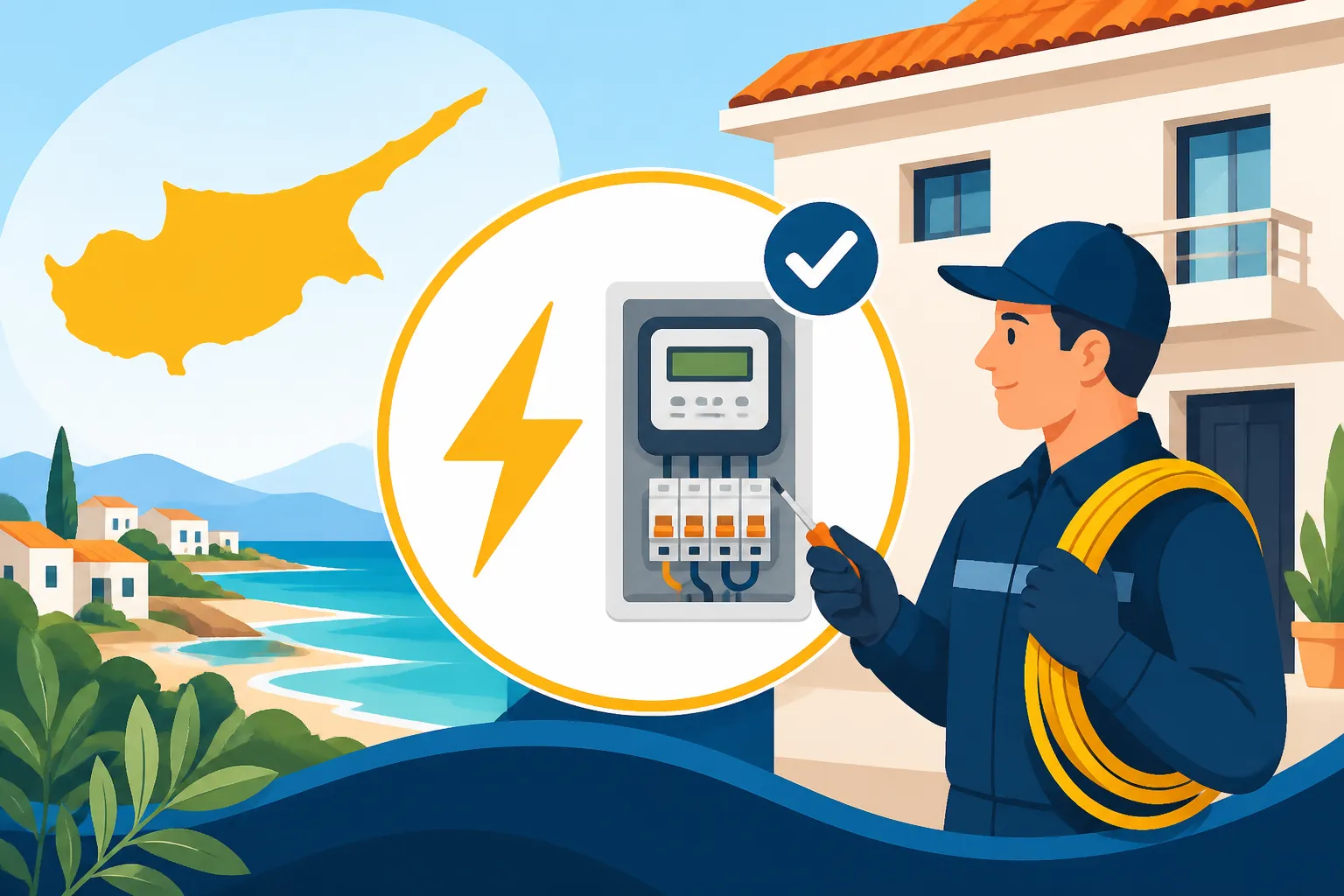
EAC is the state-owned public utility that generates, transmits, and distributes electricity across the entire island. From the massive power stations to the individual meter on the side of your house, it's all managed by them. For us expats, this means that any interaction regarding your electricity – connection, disconnection, billing, or repairs – will be directly with EAC. There are no middlemen, no alternative suppliers to consider. This can feel a bit strange if you're used to a competitive market, but once you get your head around it, it's fairly straightforward.
They're responsible for maintaining the grid, addressing power outages, and ensuring that electricity flows reliably to homes and businesses. Understanding their role is key because it means you’ll be heading to one of their district offices for most initial setups, and their website or call centre for inquiries. While they've made strides in offering online services, for new connections, a face-to-face visit is almost always required.
Power Outages and Reliability
Now, let's talk about the reality on the ground. For the most part, Cyprus enjoys a pretty reliable electricity supply. However, like any island nation, there are times when outages occur. These can range from planned maintenance (usually announced in advance on the EAC website) to unexpected disruptions due to weather, technical issues, or the sheer strain on the system during peak summer months.
The scorching Cypriot summer, with everyone’s air conditioning blasting, does put a significant demand on the grid. It’s not uncommon to experience short, localised power cuts during intense heatwaves. Knowing this in advance can help you prepare. Many expats invest in small UPS systems for their internet routers or have power banks charged up for their phones. While you’re at it, make sure your phone plan is sorted. Having a good data connection, maybe through an eSIM from a service like Airalo, can be a lifesaver for navigating maps, translating documents, or simply staying in touch during this initial setup phase. Generally, EAC is quite efficient in restoring power, and their outage map on their website can be a useful tool for tracking progress if you know your district.
Essential Documents and Information for EAC Registration
The Cypriot administrative system, bless its heart, loves its paperwork. Setting up your electricity is no exception. Walking into an EAC office unprepared can lead to multiple trips and a lot of wasted time. Trust me, I’ve been there. So, let’s make sure you have everything you need before you even set foot out the door.
What You Absolutely Need to Bring
This is the non-negotiable list. Make sure you have both the originals and at least one set of photocopies. Sometimes they just need to see the original, other times they'll keep a copy. Better safe than sorry!
- Your Identification Document: For EU citizens, your national ID card or passport is fine. For non-EU citizens, your passport and your Alien Registration Card (ARC) or temporary residence permit (Pink Slip) are essential. This proves who you are and your legal right to reside in Cyprus. This is similar to the documents needed when you're sorting out your general residence, which you can learn more about in the guide to Understanding Residence Permits and the Pink Slip in Cyprus (2027).
- Proof of Address / Property Occupancy: This is crucial.
- If you’re renting: You'll need your rental agreement (tenancy contract). Make sure it’s signed by both you and the landlord. It should clearly state the property address.
- If you’ve bought a property: You'll need the title deed or the sale agreement. This proves ownership.
- Proof of Tax Identification Number (T.I.N.): Every resident in Cyprus needs a Tax Identification Number. This is typically issued by the Tax Department. If you've already registered for tax purposes, you'll have a document showing your TIN. If you haven't, you might need to register for one first. This is a common requirement across many administrative tasks, much like when you're looking into The Complete Guide to Taxes in Cyprus for Expats (2027).
- The Previous Tenant’s or Owner’s EAC Bill (if possible): This isn't strictly mandatory but can be immensely helpful. It will have the specific meter number and possibly the account number for that property, which streamlines the process. If you can get it from your landlord, do so.
Without these core documents, you're likely to be turned away, and nobody wants that extra hassle.
The Importance of Your Property's Meter Number
The meter number is arguably the most vital piece of information you need for your EAC application. It uniquely identifies the electricity meter serving your specific property. Think of it as the property's electricity fingerprint.
How to find it:
- Physically on the meter: Head outside your property. The electricity meter is usually housed in a small box on an exterior wall, often near the entrance or driveway. In apartment buildings, there might be a bank of meters in a communal area. The meter number (usually a string of digits) will be clearly printed on the meter itself. Take a photo of it, just in case.
- On a previous bill: As mentioned, if your landlord or the previous tenant can provide an old EAC bill, the meter number will be prominently displayed there.
- Ask your landlord: If you're struggling, your landlord should definitely know this. Don't be shy about asking them to find it for you.
Why is it so crucial? Because when you apply for a new connection, EAC needs to link your account directly to that specific meter. Without it, they don't know which property's electricity you want to connect. It helps them accurately bill you for consumption from that exact meter. If you're moving into a property that's had previous occupants, this number ensures a smooth handover from their account to yours.
The Step-by-Step Process of Connecting Electricity
Alright, you’ve gathered your documents, you know your meter number. Now comes the actual application process. Unlike some modern utility providers, setting up EAC usually requires an in-person visit.
Visiting the EAC Customer Service Centre
This is where the magic (or the waiting game, depending on your perspective) happens. You'll need to locate your nearest EAC Customer Service Centre. These are usually found in the main cities and larger towns. For example, in Limassol, there’s a prominent office downtown. A quick search on EAC’s official website or Google Maps for "EAC Customer Service [Your City]" should give you the exact address and operating hours.
What to expect:
- Queueing: Depending on the time of day and year, there might be a queue. Early mornings tend to be better. Bring a book, your phone (with Airalo-powered data, of course!), or just practice your patience.
- Language: While many staff members, especially in larger urban centres, will speak English, it's not guaranteed. Having a few key phrases in Greek ready or, even better, bringing a Greek-speaking friend, can smooth things over. Remember, a smile and politeness go a very long way, regardless of language.
- The application desk: Once it’s your turn, you'll present your documents. The staff member will review them, likely ask for the meter number, and then provide you with an application form.
This in-person step is a classic example of Cypriot bureaucracy, which often values direct interaction. While it can feel a bit old-school, it ensures everything is verified correctly. For more details on other official registrations, you might find the guide on The Complete Visa and Immigration Guide for Relocating to Cyprus (2027) helpful.
Filling Out the Application and Paying the Deposit
The application form itself isn't overly complicated, but it will ask for standard personal details, your contact information, the property address, and of course, the all-important meter number. Double-check everything before submitting.
The deposit: This is a standard procedure. EAC requires a security deposit for new connections. This deposit is essentially a safeguard for them, in case you accumulate unpaid bills.
- How it's calculated: The deposit amount isn't arbitrary. It's usually based on the size of the property and an estimated consumption. For a typical two-bedroom apartment, you might expect it to be in the range of €100-€300, but this can vary. Larger properties with higher expected usage will require a higher deposit. They might also factor in whether the property is residential or commercial.
- Payment: You'll typically pay the deposit right there at the customer service centre. They usually accept cash, credit/debit cards, or sometimes a cheque. Be prepared with your preferred payment method.
- Refundable? Yes, the deposit is generally refundable. When you eventually move out and disconnect your service, after your final bill is paid, the deposit will be returned to you. Keep your receipt for the deposit in a safe place!
Once the application is filled out and the deposit paid, you'll receive a confirmation receipt. This is your proof that the process has begun.
The Connection Timeline: What to Expect
Now, the waiting game begins. The good news is that for most standard connections to existing properties, the electricity activation is usually quite quick.
- Standard timeframe: Typically, EAC aims to connect your electricity within 1 to 3 business days after you've completed the application and paid the deposit. If you apply on a Monday morning, you could realistically expect power by Wednesday or Thursday.
- Factors influencing timeline:
- Workload: During peak moving seasons (e.g., summer, end of academic year), their workload might increase, potentially pushing the timeline a bit.
- Existing infrastructure: If the property has been vacant for a very long time, or if there's any pre-existing issue with the meter or wiring (rare for a reconnection), it could take longer.
- Public holidays: Always factor these in. If you apply just before a long weekend, it will naturally extend the waiting time.
- What to do if there are delays: If the stated timeframe passes and you're still without power, don't hesitate to call the EAC customer service line. Have your application receipt and property details ready. Be polite but persistent. You can usually find the customer service numbers on their website or on your receipt.
Moving to Cyprus often involves coordinating a lot of logistics, and dealing with companies like Sirelo for international removals can make that first hurdle much smoother, letting you focus on things like getting your electricity connected rather than chasing boxes.
Managing Your Electricity Account: Bills and Payments
Once your electricity is up and running, the next step is understanding how to manage your account and, of course, pay those bills! Cypriot electricity bills might look a little different from what you're used to, but they’re logical once you break them down.
Understanding Your EAC Bill
EAC typically issues bills every two months (bimonthly). The bill itself will contain several components, and it’s good to know what you’re looking at:
- Consumption Charges (kWh): This is the core of your bill – what you actually used. It's measured in kilowatt-hours (kWh). Cyprus uses a tiered tariff system, meaning the more electricity you consume, the higher the rate you pay per kWh for higher consumption bands. This is designed to encourage energy conservation.
- Fixed Charges: These are recurring charges that cover the cost of maintaining the network and providing the service, regardless of how much electricity you consume.
- Fuel Adjustment Clause: This is a variable charge that reflects the fluctuating cost of fuel used to generate electricity. It can make your bill slightly higher or lower depending on global fuel prices.
- VAT (Value Added Tax): Standard VAT is applied to your total electricity charges.
- GeSY Contribution (General Healthcare System): Yes, you read that right. A small percentage of your electricity bill actually goes towards the national healthcare system, GeSY. This is part of the broader funding mechanism for GeSY, which you can read more about in our detailed guide on How Cyprus's Health System Works: GeSY vs Private Explained (2027). It's a small deduction but good to be aware of where your money is going.
- Meter Readings: Your bill will show the current meter reading and the previous reading, allowing you to see your consumption for the billing period. Most meters are still read manually by EAC staff, who visit your property every two months.
Payment Methods and Options
You’ve got several convenient ways to pay your EAC bill, so choose the one that suits you best:
- Direct Debit: This is often the easiest and most worry-free option. You authorise EAC to automatically deduct the bill amount from your bank account on the due date. You'll still receive a bill showing the amount, so you can check it before payment. You can set this up at your bank or at an EAC office.
- Online Banking: Most Cypriot banks (like Bank of Cyprus or Hellenic Bank) allow you to pay your EAC bill directly through their online banking portals. You'll need the account number from your bill. This is a secure and convenient option.
- JCC Smart: This is a popular online payment platform in Cyprus for various bills, including EAC. You can register an account, add your EAC bill details, and pay securely with a debit or credit card. It's accessible 24/7.
- EAC Customer Service Centres: You can always pay in person at any EAC office during working hours.
- Banks and Co-operative Banks: Many banks also accept EAC bill payments over the counter.
- Post Offices: The Cyprus Post offices also offer bill payment services.
| Payment Method | Convenience | Speed | Cost | Recommendation for Expats |
|---|---|---|---|---|
| Direct Debit | High | Automatic | Free | Best for long-term residents, set it and forget it. |
| Online Banking | High | Instant/Same-day | Free | Great for those who prefer manual control, quick and easy. |
| JCC Smart | High | Instant | Small fee | Excellent for credit card payments, also covers other bills. |
| EAC Office | Medium | Instant | Free | Good for initial setup or if you prefer face-to-face interaction. |
| Banks/Post Office | Medium (physical) | Same-day | Small fee | Useful if already at a bank or post office for other tasks. |
A word of caution: Always pay your bills on time! Unpaid bills can lead to service disconnection, and getting reconnected involves additional fees and hassle. You don't want to find yourself in the dark due to an oversight.
Smart Metering and Online Services
While many countries have widely adopted smart meters, Cyprus is still in the earlier stages of this rollout. Many homes still have traditional analogue or older digital meters that are read manually every two months. However, EAC does have an online portal that allows you to view your bills, track consumption history, and manage your account. It's worth registering for this once your account is active, as it provides a convenient way to keep tabs on your usage. This move towards digitisation is part of the overall strategy to make utilities more accessible, much like how banks are improving their online services, as detailed in How to Set Up Online Banking with a Cypriot Bank.
Common Challenges and Expat Tips for EAC
Navigating bureaucracy in a new country always comes with its unique set of challenges. EAC, while essential, can sometimes present a few hurdles for expats. Here's how to tackle them.
Language Barriers and How to Overcome Them
This is probably the most frequent concern for newcomers. While staff in major tourist areas or city centres are likely to speak English, don't assume it for every EAC office or every individual you encounter.
- Be prepared: Have your key phrases written down in Greek if you know them. "Θέλω να συνδέσω το ηλεκτρικό ρεύμα" (Thelo na syndeso to ilektriko revma – I want to connect the electricity) is a good start.
- Bring a friend: If you have a Cypriot friend or a Greek-speaking expat who's willing to accompany you, it can make a world of difference. They can translate and help bridge any communication gaps.
- Translation apps: Google Translate or similar apps can be helpful, especially for deciphering documents or communicating simple requests.
- Patience and politeness: A calm, friendly demeanour will get you much further than frustration. Remember, you're in their country, and while English is widely spoken, it's not their native language.
Deposit Refunds and Account Transfers
When you eventually move out of your property, you'll want your security deposit back.
- Deposit Refund: To get your deposit back, you'll need to formally request a disconnection of service at an EAC office. They will take a final meter reading, issue a final bill, and once that's settled, process the refund of your deposit. Make sure your bank details are up-to-date with them for a smooth transfer. This process requires a bit of planning and shouldn't be left until the very last minute before you leave the island.
- Account Transfers: If you're moving into a property and the previous tenant or owner wants to transfer the account directly to you (rather than disconnect and reconnect), this can sometimes be arranged. Both parties would typically need to attend an EAC office together with their IDs and the relevant property documents. This is less common for rentals but might occur in property sales.
Energy Saving Tips for the Cyprus Climate
Living in Cyprus, especially during the long, hot summers, means your electricity bill can quickly become a significant expense, particularly if you rely heavily on air conditioning. Here are some expat-tested tips to keep those costs down:
- Efficient AC Usage:
- Set the temperature wisely: Don't crank it down to Arctic levels. Aim for a comfortable 24-26°C. Every degree lower uses significantly more energy.
- Use timers: Turn on the AC for a couple of hours before you go to bed, and let it turn off after you've fallen asleep.
- Clean filters: Dirty filters make your AC work harder. Clean them regularly.
- Service annually: Get your AC units professionally serviced each spring to ensure they run efficiently.
- Insulation and Shading:
- Close windows and doors: When the AC is on, this is obvious, but also close them during the hottest parts of the day to keep hot air out.
- Use external blinds/shutters: Many Cypriot homes have these for a reason! Close them during the day to block direct sunlight.
- Heavy curtains: Inside, use thick, light-coloured curtains or blackout blinds.
- Appliance Efficiency:
- Unplug unused electronics: "Phantom load" can add up. Chargers, TVs, and other devices still draw power even when turned off but plugged in.
- Energy-efficient appliances: If you’re buying new, look for high energy efficiency ratings.
- Washing machine/Dishwasher: Run them on a full load and use cooler settings where possible. Avoid the dryer if you can use the abundant Cypriot sun!
- Lighting: Switch to LED bulbs, which consume significantly less electricity and last much longer.
These efforts can make a real dent in your monthly expenditure, helping you manage your overall The Complete Guide to Cost of Living in Cyprus for Expats (2026).
Disconnecting or Transferring Service
Life in Cyprus is rarely static, and eventually, you might find yourself moving homes or even leaving the island. Knowing how to properly disconnect or transfer your electricity service is just as important as setting it up. It ensures you don't keep paying for electricity you're not using and helps recover your deposit.
When You're Moving Out
When your time in a property comes to an end, whether you're moving to a new rental, buying your own place, or heading off to new horizons, you must formally disconnect your EAC service. This isn't something your landlord automatically handles unless you've made specific arrangements, and even then, it's best to be present or verify the process yourself.
- Notify EAC: Head to your local EAC customer service centre a few days to a week before your planned move-out date. Inform them you wish to disconnect your service. You'll need your ID and your latest EAC bill.
- Final Meter Reading: EAC will arrange for a final meter reading to be taken on your specified date. It’s a good idea to take a photo of the meter yourself on that day, just for your records, as proof of the reading.
- Final Bill: Based on this reading, EAC will issue a final bill for your last period of consumption. This bill needs to be settled.
- Deposit Refund: Once your final bill is paid, EAC will process the refund of your initial security deposit. This is typically transferred to your bank account, so ensure they have the correct details. It might take a few weeks for the refund to appear.
It's critical to complete this process thoroughly. If you simply leave without formally disconnecting, you could remain liable for future electricity consumption at that property, potentially leading to headaches down the line, especially if the next tenant doesn't connect quickly.
Transferring Service to a New Tenant/Owner
In some instances, particularly when a property is changing hands or a new tenant is moving in immediately after you leave, it might be possible to transfer the existing EAC account directly to the new occupant.
- Mutual Agreement: This usually requires mutual agreement between you and the new tenant/owner. Both parties typically need to go to an EAC office together.
- Required Documents: You'll both need your identification, and the new occupant will need their proof of residency/tenancy agreement and their TIN. You'll also need the existing EAC account number or a recent bill.
- Benefits: A direct transfer means no interruption of service for the new occupant, and you can sort out your final bill and deposit refund on the spot. For the new tenant, it can be a quicker way to take over the electricity, rather than starting a brand new connection process.
This process is generally smoother if all parties are cooperative and have all their documents in order. Proper planning for disconnecting your utilities is just one of the many considerations when you're moving out, much like the steps involved in ensuring you get your How Do I Get My Rental Deposit Back in Cyprus?
Disclaimer
The information provided in this guide is for general informational purposes only and does not constitute legal, financial, or professional advice. While we strive to keep the information up-to-date and accurate, regulations and procedures in Cyprus can change. Always verify information with the official Electricity Authority of Cyprus (EAC) or a qualified professional before making any decisions. We are not liable for any loss or damage arising from reliance on this content.