Understanding the EHIC and Travel Health Cover in Cyprus
Landing in Cyprus, whether for a quick holiday or a longer adventure, often comes with a swirling mix of excitement and, let’s be honest, a good dose of administrative anxiety. Among the top worries for many foreigners is healthcare: what happens if you get sick or have an accident? This question often brings up the European Health Insurance Card (EHIC) and the seemingly endless options for travel health cover. Let's cut through the confusion and give you the real lowdown on how to protect yourself while enjoying this beautiful island.
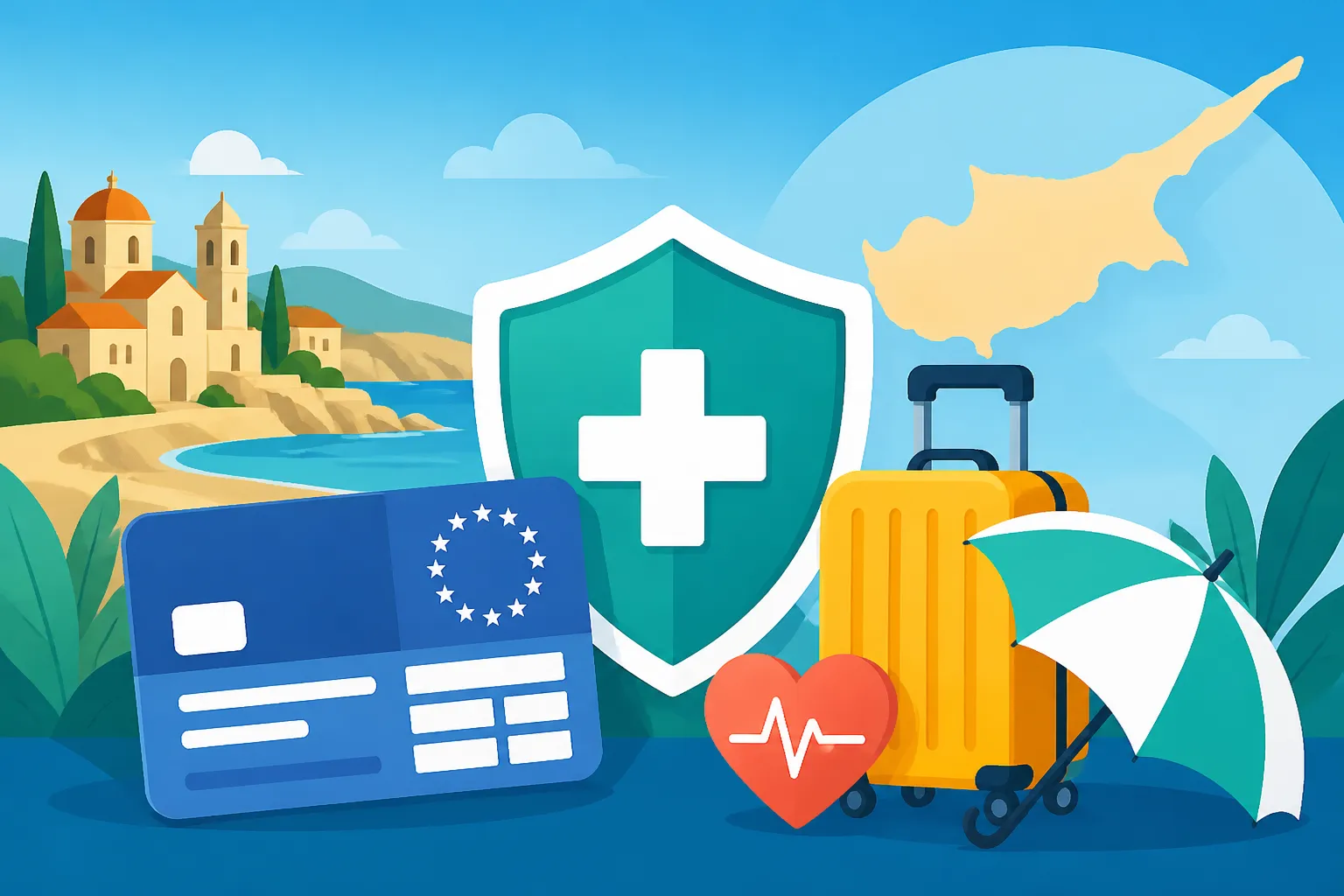
The European Health Insurance Card EHIC in Cyprus: What It Really Means for You
Ah, the EHIC. It sounds like a magic card, doesn't it? Something that will whisk away all your healthcare worries across Europe. And while it's certainly a valuable document to have if you're eligible, its powers in Cyprus, much like anywhere else, have very specific limits. It's not a golden ticket to free, comprehensive healthcare, and understanding this is absolutely crucial for your peace of mind and your wallet.
Who Is Eligible for an EHIC and How It Works
First things first, eligibility. The EHIC is available to citizens of EU countries, the European Economic Area (EEA), and Switzerland. If you hail from one of these nations and are temporarily visiting Cyprus, then yes, you should absolutely make sure your EHIC is valid and tucked safely in your wallet. It grants you access to medically necessary, state-provided healthcare during your temporary stay on the same terms and at the same cost as a Cypriot citizen.
What does "medically necessary" actually mean here? Well, it covers situations where your condition requires immediate attention and cannot wait until you return to your home country. Think sudden illness, accidents, or chronic conditions that unexpectedly flare up. For example, if you develop a severe ear infection while on holiday, your EHIC should cover the visit to a public doctor and any necessary prescription. It essentially allows you to access the public healthcare arm of Cyprus’s General Healthcare System, or GeSY as we call it here. This means you’d typically visit a public hospital or a GeSY-registered Personal Doctor (GP) who operates within the public system. It’s important to remember that Cyprus, like many EU countries, has a co-payment system, even for those under GeSY, so while your EHIC covers the bulk, you might still incur a small fee for certain services or prescriptions, just like a local would. For a deeper dive into the overall health system, you might want to read our guide on How Cyprus's Health System Works: GeSY vs Private Explained (2027).
Limitations and Real-World Scenarios with EHIC in Cyprus
Now for the dose of reality. While useful, the EHIC has significant limitations that often catch visitors off guard. As mentioned, it covers "medically necessary" treatment within the state healthcare system. This means it won't cover planned medical procedures or elective treatments that you've come to Cyprus specifically to receive. If you're hoping for a cheap dental check-up or cosmetic surgery, your EHIC won't be helping you there.
Furthermore, the EHIC doesn't provide for private healthcare services. Cyprus boasts a robust private healthcare sector, often chosen by expats and tourists for its shorter waiting times, English-speaking staff, and more modern facilities. If you end up in a private clinic or hospital – which is often the default if you call an ambulance or visit a local clinic without specifying public care – your EHIC will be entirely useless, and you'll be footing the full bill. Imagine twisting your ankle on a hike and getting rushed to a private hospital in Limassol; that EHIC in your pocket won't magically convert it to a public visit. You’d be looking at potentially significant out-of-pocket expenses.
The biggest blind spot of the EHIC is arguably its complete lack of coverage for non-medical emergencies. What if you need to be flown home due to a serious illness or injury (medical repatriation)? What if your luggage goes missing? What if your trip gets cancelled last minute due to a family emergency? The EHIC offers absolutely no protection for these scenarios. Many visitors have been caught in these predicaments, facing astronomical bills because they solely relied on their EHIC. While it’s good for a sudden doctor’s visit, it leaves you very exposed to the bigger, more costly "what ifs." So, while having an EHIC is a sensible baseline, it’s truly just that – a baseline.
Why Travel Insurance Isn't Just an Option, It's a Necessity for Cyprus
I cannot stress this enough: travel insurance is not a luxury, it's a fundamental part of responsible travel, especially when you're far from home. Relying solely on your EHIC for a trip to Cyprus is like building a house with just a roof – it protects from some things, but leaves you vulnerable to so many others. For anyone visiting or even contemplating a longer stay before their residency is sorted, comprehensive travel health cover is your safety net.
The Gaps EHIC Leaves: Private Care and Comprehensive Coverage
As we just discussed, the EHIC is strictly for state-provided, medically necessary care. But what if you prefer, or even need, private medical treatment? Cyprus has a thriving private healthcare sector, with excellent hospitals and clinics, particularly in major cities like Limassol, Nicosia, and Paphos. These private facilities often have English-speaking staff readily available, cutting-edge equipment, and significantly shorter wait times than their public counterparts. For many expats and tourists, the ease of access and communication in the private sector is a huge draw, especially when you’re feeling unwell and just want straightforward help.
This is where comprehensive travel insurance truly shines. It bridges the critical gap left by the EHIC by allowing you to access private medical facilities and services. Imagine needing to see a specialist – say, a dermatologist or an orthopaedic surgeon – quickly. With good travel insurance, you can often go directly to a private specialist or a private hospital, bypassing the referral system and potential queues of the public sector. This kind of flexibility and choice is invaluable when you're in an unfamiliar country. Many robust travel insurance plans, like those offered by providers such as SafetyWing, specifically cater to the needs of international travelers and digital nomads, offering coverage for private medical care that the EHIC simply doesn't touch. Understanding the distinctions between public and private options is key, and our article on Public vs Private Healthcare in Cyprus: Which Should Expats Choose? offers a comprehensive comparison.
Beyond Medical: Repatriation, Luggage, and Trip Cancellations
The benefits of travel insurance extend far beyond just medical bills. This is where you truly appreciate the "comprehensive" aspect of a good policy. One of the most critical, yet often overlooked, components is emergency medical evacuation and repatriation. If you suffer a severe injury or illness in Cyprus that requires specialized treatment unavailable on the island, or if you simply need to be flown home due to medical reasons, the costs can be staggering – easily tens of thousands of euros. Without travel insurance, this immense financial burden falls squarely on you or your family. Some accounts describe people scrambling to raise funds for emergency flights back home. It's a nightmare scenario you absolutely want to avoid.
Beyond medical emergencies, travel insurance offers a lifeline for a host of other common travel mishaps. Picture this: your airline loses your luggage on the way to Larnaca, filled with all your holiday essentials. Or, a sudden family emergency back home forces you to cancel your much-anticipated trip to Cyprus at the last minute. Or, perhaps, you accidentally cause damage to someone else’s property or injure someone – personal liability coverage steps in. These aren't just minor inconveniences; they can lead to significant financial losses and emotional stress. A comprehensive travel insurance policy mitigates these risks, providing compensation for lost belongings, covering non-refundable trip costs, and protecting you from personal liability claims. It's about ensuring that your hard-earned holiday or planned long-term stay doesn't turn into a financial catastrophe for reasons completely out of your control.
Navigating Cyprus Healthcare: EHIC, Travel Insurance, and GeSY Interactions
Understanding how your EHIC, your travel insurance, and Cyprus's national health system (GeSY) interact can feel like solving a complex puzzle. It's not always straightforward, but with a clear picture, you can navigate it with confidence. The key is knowing which system applies to you and how to activate its benefits when you need them.
How to Access Care with an EHIC in Cyprus
If you're an eligible EU/EEA/Swiss citizen relying on your EHIC for a temporary stay, accessing care involves primarily the public healthcare sector. Your first port of call for non-emergencies would typically be a GeSY-registered Personal Doctor (GP). You can find a list of these doctors on the official GeSY portal or by asking locals for recommendations for public doctors. When you visit, you'll need to present your valid EHIC and your passport or ID. Be prepared for a small co-payment, usually a few euros, for the consultation, just as a Cypriot citizen would pay. This co-payment also applies to prescribed medications from public pharmacies.
For more urgent, but not life-threatening, situations, you can head to the Accident & Emergency (A&E) department of a public hospital. In Cyprus, these are often referred to by their district hospital names, such as Limassol General Hospital or Nicosia General Hospital. Again, present your EHIC and ID. For serious emergencies, dial 112. While ambulances will take you to the nearest public hospital, always explicitly state you wish to use your EHIC and access public services upon arrival, as sometimes private options might be presented by default, especially if there's any ambiguity. While the EHIC helps with immediate medical needs, remember its limitations. For a full picture of what to do in a medical crisis, our guide Emergency Medical Care in Cyprus: What Every Expat Needs to Know is an excellent resource.
Making the Most of Your Travel Insurance in Cyprus
Using your travel insurance effectively in Cyprus is generally a more straightforward process, especially if you've opted for a policy that covers private medical care. The absolute first step, whenever possible, is to contact your insurance provider before seeking non-emergency treatment. Many insurers have 24/7 helplines and can guide you to approved clinics or hospitals that have direct billing agreements with them. This means the hospital bills the insurer directly, saving you the hassle of upfront payments and lengthy reimbursement processes.
If direct billing isn't an option, or if it's an emergency where you can't contact them beforehand, make sure to pay for services yourself and meticulously keep all receipts, medical reports, and any other documentation. This includes doctor's notes, pharmacy receipts, and hospital bills. Your insurer will require these for reimbursement. When choosing a private facility, which your travel insurance will cover, you’ll find that communication is usually easier, with English widely spoken by medical professionals. Providers like SafetyWing are well-regarded because they are often accustomed to the flexible nature of travel and digital nomad lifestyles, making their claims process quite user-friendly for people moving between countries. This seamless integration with the private system is a huge advantage and a key reason why many expats opt for private health insurance or comprehensive travel policies from the outset, especially if they are new arrivals and not yet eligible for GeSY. Our article How to Use Private Hospitals and Clinics in Cyprus provides more practical advice on this.
Choosing the Right Travel Health Cover for Your Stay in Cyprus
Deciding on the right travel health cover for your time in Cyprus can feel a bit overwhelming, with so many variables to consider. It’s not a one-size-fits-all situation. What works for a week-long beach holiday might be completely inadequate for a six-month remote work stint or the initial period of your relocation as an expat. Taking the time to evaluate your specific needs and circumstances will save you immense stress and potential financial woes down the line.
Factors to Consider: Duration, Activities, and Pre-Existing Conditions
First, the duration of your stay is paramount. A standard holiday travel insurance policy might cover you for 30, 60, or 90 days. If you're planning a longer trip, or if you're a digital nomad hoping to embrace the Cypriot sunshine for several months, you'll need a policy designed for extended travel or even a specific digital nomad insurance plan. These policies are structured differently, often allowing for continuous coverage over a longer period, sometimes even with options to renew from abroad. Providers like SafetyWing specialize in this flexible, long-term travel coverage.
Next, consider your planned activities. Are you simply lounging by the pool, or do you intend to partake in adventure sports like scuba diving, hiking, or off-road quad biking? Many basic travel insurance policies exclude "high-risk" activities. If you plan to be adventurous, ensure your policy explicitly covers these activities. If not, you could find yourself uninsured for an accident that occurs while pursuing your passion.
Finally, and this is a critical one: pre-existing medical conditions. This cannot be stressed enough. If you have any pre-existing medical conditions (e.g., asthma, diabetes, heart conditions, or even conditions for which you take regular medication), you must declare them when purchasing your travel insurance. Failure to do so could completely invalidate your policy if you need treatment related to that condition. While it might slightly increase your premium, it’s a small price to pay for genuine peace of mind. Trying to save a few euros here could cost you thousands if a related medical emergency arises. Always read the fine print regarding age limits, exclusions, and what constitutes a pre-existing condition in your policy. For newcomers, understanding How to Buy Private Health Insurance as a Newcomer in Cyprus might also be helpful as a short-term solution.
Comparing Options: EHIC, Standard Travel Insurance, and Digital Nomad Plans
To help clarify your choices, let's break down the different types of cover available when you're considering a trip to Cyprus. Each has its strengths and weaknesses, making one more suitable than another depending on your situation.
| Feature / Coverage Area | European Health Insurance Card (EHIC) | Standard Holiday Travel Insurance | Digital Nomad / Long-Term Travel Insurance (e.g., SafetyWing) |
|---|---|---|---|
| Eligibility | EU/EEA/Swiss citizens | Any nationality (residency often required) | Any nationality, often designed for non-residents of home country |
| Medical Care Coverage | Medically necessary state care | Emergency private & public care | Emergency private & public care, often broader non-emergency options |
| Co-Payments | Yes (as per local residents) | Potentially, depending on policy/excess | Potentially, depending on policy/deductible |
| Repatriation | No | Yes | Yes |
| Trip Cancellation | No | Yes | Often limited, as it’s continuous travel |
| Lost Luggage | No | Yes | Yes |
| Personal Liability | No | Yes | Yes |
| Pre-Existing Conditions | No special provision | Usually covered if declared & approved | Usually covered if declared & approved |
| Duration | Temporary stays (up to 3-6 months usually accepted) | Short trips (e.g., 1-30 days) | Long-term, renewable (e.g., 1 month to multiple years) |
| Cost | Free | Varies (affordable for short trips) | Varies (competitive for long-term flexibility) |
As you can see, the EHIC is essentially a basic medical safety net for emergencies within the public system. Standard travel insurance expands this significantly, covering private care and crucial non-medical risks for shorter periods. Digital nomad plans, exemplified by providers like SafetyWing, offer the comprehensive coverage of standard travel insurance but are tailored for the flexibility and longer duration required by remote workers and perpetual travelers, often allowing you to purchase and renew policies while already abroad.
For those of you planning to move to Cyprus and become residents, remember that the EHIC is not a substitute for GeSY or comprehensive private health insurance. It’s a temporary measure. Once you establish residency and begin making social insurance contributions through employment or self-employment, you will become eligible for GeSY. However, there’s often a gap between arrival and full GeSY registration. During this interim period, a robust travel or private health insurance policy is absolutely essential. Don't risk being caught out! Our article on Health Insurance in Cyprus: GeSY, Private and Employer Options Explained will help you understand your long-term options.
Specific Scenarios and Practical Advice for Expats and Tourists
Moving to a new country or even just visiting brings unique challenges, especially when it comes to unexpected health issues. Having a plan, knowing who to call, and understanding your options can make a world of difference when you're feeling vulnerable. Let's look at a couple of key scenarios.
Medical Emergencies: What to Do and Who to Call
In a genuine medical emergency in Cyprus, whether you're a tourist or a new expat, the number to call is 112. This is the pan-European emergency number and will connect you to an operator who can dispatch an ambulance, police, or fire services. It's multi-lingual, so don't worry about language barriers when making the initial call.
When the ambulance arrives, they will typically transport you to the nearest public general hospital's Accident & Emergency department. Upon arrival, if you have a valid EHIC, present it along with your identification. If you have private travel insurance, it’s crucial to inform the hospital staff that you have private cover and, if possible, contact your insurance provider’s emergency helpline immediately. Your insurer can then coordinate with the hospital regarding billing. Having your insurance details, including policy number and emergency contact, readily available (perhaps a note in your wallet or phone) is a smart move.
What happens if you're unconscious? This is why having someone with you who knows your medical history, allergies, and insurance details is incredibly helpful. Otherwise, medical staff will prioritize stabilizing you, and your financial arrangements can be sorted out later. However, the costs can mount quickly without proper insurance if you end up in a private facility unintentionally. Remember, while the state system handles emergencies, for severe conditions requiring specialized treatment or repatriation, the costs without comprehensive travel insurance can be truly prohibitive. Our guide on What Should I Do in a Medical Emergency in Limassol? provides specific local advice.
For Long-Term Stays or Moving to Cyprus: Bridging the Gap
This is where the EHIC absolutely falls short. It is strictly for temporary stays and is not designed to cover you if you're residing in Cyprus long-term. If you're moving to Cyprus to work, retire, or generally settle, you'll eventually become eligible for the General Healthcare System (GeSY). However, this isn't instantaneous.
There's often a significant gap between your arrival in Cyprus, registering for your residency permit (like a Pink Slip for non-EU citizens or a Yellow Slip for EU citizens), obtaining your Tax Identification Number (TIN), and finally registering for GeSY. During this transitional period, which can stretch for weeks or even months depending on various factors, you are essentially without state-provided health coverage. This is the critical time when comprehensive private health insurance or an extended travel health plan (like those from SafetyWing) becomes indispensable.
Many new expats choose to purchase a private health insurance policy that covers them from day one of their arrival, or they opt for a flexible travel insurance policy that can be extended until their GeSY eligibility is confirmed and activated. This ensures that any doctor's visits, hospital stays, or prescription costs are covered during this often-stressful period. Once you're employed and contributing to social insurance, your employer will register you for GeSY. If you're self-employed, you'll register yourself. For more details on this transition, refer to How to Register for GeSY After Moving to Cyprus and The Complete Guide to Healthcare in Cyprus for Expats (2027). Don't ever underestimate the importance of ensuring continuous health coverage, especially in a new country. Getting sick before your GeSY registration is complete is a very real concern for many, and having a plan for it is crucial.
Disclaimer
The information provided in this guide is for general informational purposes only and does not constitute medical, legal, or financial advice. While we strive to provide accurate and up-to-date information, rules and regulations in Cyprus, particularly concerning healthcare and immigration, can change. It is always recommended to consult with relevant professionals (e.g., healthcare providers, insurance agents, legal counsel, or the Cypriot Civil Registry and Migration Department) for advice tailored to your specific situation. Reliance on any information in this guide is solely at your own risk.