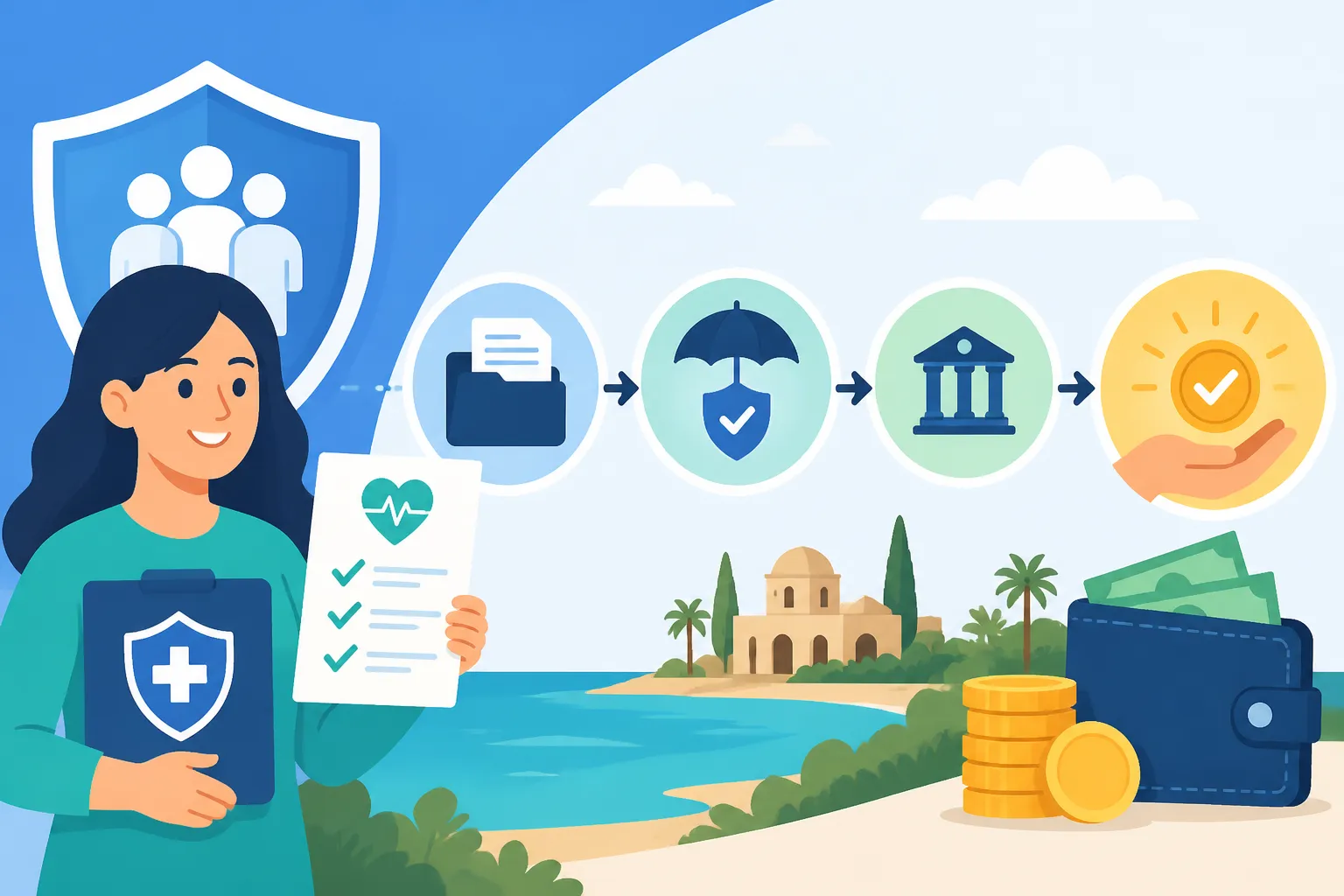
How to Claim Reimbursement from Private Insurance in Cyprus
Trying to navigate the healthcare system as an expat in Cyprus is already a steep learning curve, but then add the layer of private health insurance claims and it can feel like you've stumbled into a bureaucratic labyrinth. From deciphering policy jargon to gathering the right paperwork, the process of getting reimbursed for your medical expenses can be confusing and frankly, quite frustrating, especially when you're just trying to get your money back. This guide is here to demystify how to claim reimbursement from private insurance in Cyprus, offering you a clear, step-by-step roadmap so you can get what you're owed without the headache.
Understanding Your Private Health Insurance Policy in Cyprus
Before you even think about submitting a claim, it's absolutely crucial to have a deep understanding of your private health insurance policy. I know, I know, insurance documents are often denser than a Cypriot halloumi pie, but trust me, taking the time to read through it will save you countless headaches down the line. Many expats, myself included, often sign up for a policy and then put it away, only to pull it out in a crisis and realise they don't quite understand the intricacies.
Key Policy Terms and Coverage Details
When you're sifting through your policy documents, whether it’s a local Cypriot plan or an international one, there are several key terms you need to be intimately familiar with. These aren't just fancy words; they directly impact how much you pay out of pocket and what you can claim back. Firstly, look for your deductible (sometimes called an excess). This is the fixed amount you have to pay for covered medical expenses before your insurance company starts paying. For example, if your deductible is €500, you'll pay the first €500 of your medical bills each year before your insurer contributes.
Next, understand co-insurance or co-payment. This is a percentage of the cost of a covered service you're responsible for after you've met your deductible. So, if your co-insurance is 20% and your bill is €1000 after your deductible, you'd pay €200 and your insurer would pay €800. These figures can vary wildly, so knowing yours is vital. Then there are exclusions – what your policy absolutely doesn't cover. These could be pre-existing conditions, specific types of elective surgery, or even certain medications. Always check for these, as they can lead to nasty surprises if you assume everything is covered. Finally, understand if your policy has a network of approved providers or if you can see any doctor or hospital. Some policies offer full reimbursement for in-network care but reduced benefits or no coverage for out-of-network services. This really matters when you're deciding where to seek treatment. For a broader perspective on your options, you might want to read our guide on Health Insurance in Cyprus: GeSY, Private and Employer Options Explained.
Knowing these terms inside and out means you'll walk into any medical appointment with a clearer idea of your financial responsibilities. It helps you budget, prevents shock when a bill arrives, and empowers you to ask the right questions about costs upfront. Don't be shy about calling your insurance provider's customer service line – most have English-speaking agents – to clarify any doubts you have about these terms as they apply to your specific situation.
Differentiating Between Reimbursement and Direct Billing
This is a crucial distinction that often confuses new expats in Cyprus. When you have private health insurance, there are generally two ways your medical bills are handled: direct billing or reimbursement. Understanding the difference will save you a lot of hassle.
Direct billing, sometimes called cashless treatment, is the holy grail for many expats. This is where your healthcare provider (a hospital, clinic, or even a specialist doctor) bills your insurance company directly for the services rendered. You pay little to nothing out of pocket, beyond perhaps your deductible or co-payment, at the time of service. This system usually requires prior arrangement or for the provider to be part of your insurer's direct billing network. Many larger private hospitals in Cyprus, especially in cities like Limassol and Nicosia, have agreements with major international and local private insurance companies. This is incredibly convenient, as it removes the burden of paying large sums upfront and then waiting to get your money back. If you're wondering about the overall healthcare landscape, our article The Complete Guide to Healthcare in Cyprus for Expats (2027) offers a great overview.
Reimbursement, on the other hand, is when you pay for the medical services upfront, and then you submit a claim to your insurance company to get that money back. This is often the case with smaller clinics, independent doctors, pharmacies, or if you see a provider who doesn't have a direct billing agreement with your specific insurer. While it offers more flexibility in choosing your healthcare provider, it does mean you need to have the funds available to cover the cost initially, and you'll have to go through the administrative process of filing the claim yourself. This is the process we'll primarily focus on in this guide, as it's often where expats face the most challenges. It's a trade-off: convenience versus choice. Many expats choose a blend, using direct billing for hospital stays or major procedures, and then managing reimbursement for routine doctor visits or medication. For more on this, check out Public vs Private Healthcare in Cyprus: Which Should Expats Choose?.
The Step-by-Step Process for Filing a Claim
Filing a claim for reimbursement might seem daunting, especially when you're dealing with a new country's healthcare system. But by breaking it down into manageable steps, you'll find it's less of a mountain and more of a hill. The key is organisation and attention to detail.
Gathering Necessary Documentation
This is perhaps the most critical step, and where many claims fall apart. Without the right paperwork, your insurance company simply can't process your claim. Think of yourself as a meticulous detective, collecting every scrap of evidence.
First and foremost, you'll need itemised invoices and receipts. These are not just any old receipts; they must clearly show the date of service, the type of service provided, the cost of each item, and the name and registration number of the healthcare provider. For example, if you visit a doctor, the invoice should detail the consultation fee, any tests performed, and the cost of each test. A simple cash register receipt might not cut it. Make sure these are always original documents, unless your insurer explicitly states that copies are acceptable.
Secondly, medical reports or referral letters are often required, especially for specialist visits, diagnostic tests (like X-rays or MRI scans), or hospital stays. If your policy requires a general practitioner's referral to see a specialist, you must have that referral. Without it, your claim might be denied because it wasn't a "covered expense" as per your policy terms. Always ask your GP for a copy of the referral if you intend to claim. Even a brief note from the doctor outlining the diagnosis or reason for treatment can be incredibly helpful. If you're navigating the ins and outs of private care, our article on How to Use Private Hospitals and Clinics in Cyprus provides useful insights.
Lastly, you'll need your policy details (your policy number, group number if applicable) and some form of personal identification (a copy of your passport or Cypriot ID). Some insurers might also ask for your bank details for direct deposit of the reimbursement. Keep all these documents in a dedicated folder, both physical and digital. If you’re ever unsure about what documents you need, don’t guess – call your insurer’s customer service line and ask them explicitly. It’s far better to gather too much information than too little.
Completing the Claim Form
Once you have all your documents in hand, the next step is to accurately complete your insurance company's claim form. This isn't the time to rush; mistakes here can lead to delays or even claim denials.
Most insurance companies provide their claim forms online for download, or they might send you a physical copy. Some even have online portals where you can submit the information directly. No matter the format, ensure you fill out every section completely and legibly. This includes your personal details, policy number, the date(s) of service, the name of the healthcare provider, the nature of the illness or injury, and the total amount you paid. Double-check all numerical entries – even a single digit wrong can cause a headache. If a section doesn't apply to you, write "N/A" rather than leaving it blank, which can sometimes be interpreted as an incomplete form.
A common mistake expats make is failing to provide a clear and concise description of the medical service received. Instead of just writing "doctor visit," try "Consultation for persistent cough and fever." If you had multiple services on different dates, list them all clearly, matching them to their respective invoices. Ensure the date of service on the form exactly matches the date on your receipt. If there's a medical professional section, make sure your doctor fills it out accurately, or if you're filling it out yourself based on medical reports, be precise. Remember that the company behind SafetyWing, for instance, prides itself on streamlined digital claims, so always check if your provider has similar user-friendly online tools. Accuracy and completeness are your best friends here.
Submitting Your Claim
You've gathered your documents, filled out the form – now it's time to send it off. How you submit your claim can depend on your insurer and their preferred methods.
Many modern insurance providers now offer online portals or dedicated email addresses for claim submissions. This is usually the fastest and most trackable method. When submitting online, you'll typically scan and upload all your documents. Make sure your scans are clear and readable. If emailing, combine all documents into a single PDF file if possible, and include your policy number in the subject line. Always keep a digital copy of everything you send, including the email itself or a screenshot of the online submission confirmation.
If your insurer requires submission by post, this often means sending original documents. In this case, always make photocopies of everything for your own records before mailing. Use registered or tracked mail services (like the Cyprus Post Office's registered mail) so you have proof that your claim was sent and received. This is especially important for larger claims. The timeframe for submission is also crucial; most policies have a window (e.g., 30, 60, or 90 days from the date of service) within which you must submit your claim. Missing this deadline could result in your claim being rejected, so don't procrastinate! While the Cyprus healthcare system is unique, general principles for claims remain consistent. Our guide Navigating the Cypriot Healthcare System: An Expat's Roadmap (2027) can help you understand the broader context.
Navigating Common Challenges and Delays
Even with the best preparation, claiming reimbursement can hit a snag. It's almost part of the expat experience in Cyprus – things rarely go exactly as planned. Knowing how to react to these challenges can make all the difference.
Dealing with Denied Claims and Appeals
Receiving a letter stating your claim has been denied can be disheartening, but it's not always the final word. Many denials are due to administrative errors or a lack of specific information.
Common reasons for denial include: missing information on the claim form, insufficient documentation (e.g., a simple receipt instead of an itemised invoice), services not covered by your policy (pre-existing conditions, exclusions), exceeding the submission deadline, or treatment received from an out-of-network provider if your policy requires in-network care. It could also be that you didn't obtain pre-authorisation for a procedure that required it. Always read the denial letter carefully; it should state the specific reason for the rejection.
If your claim is denied, don't just give up. Most insurers have an appeal process. Gather all the original documentation again, rectify any identified errors, and write a concise, clear letter of appeal. Explain why you believe the claim should be paid, referencing your policy terms if possible. For example, if it was denied for "insufficient documentation," provide the missing medical report. If it was denied because of a coding error by the provider, get the provider to issue a corrected invoice. Send your appeal via registered mail or through their online portal, keeping copies of everything. Be persistent, but polite. Sometimes, a simple phone call to discuss the denial can clear things up quickly, especially if it's a minor administrative oversight. Always remember to check your policy's specific appeal procedures and deadlines.
Language Barriers and Communication
Cyprus is very English-friendly, particularly in expat-heavy areas like Limassol and Paphos. Most medical professionals and insurance company staff will speak English. However, forms or specific medical terms might still occasionally be in Greek.
If you encounter documents or forms in Greek that you don't understand, don't guess. Many insurance companies, especially international ones, have customer service representatives who can guide you through the Greek sections or even provide English versions. If you're dealing with a local Cypriot insurer, they almost certainly have English-speaking staff. You might also find that many doctors provide invoices and medical reports in English as a standard practice for their expat patients. If not, politely ask if they can provide one, or at least a brief English summary. If not, you might need to use a certified translation service for critical documents, though this is rare for routine claims.
When communicating with your insurer, always keep a record of who you spoke to, the date, and a summary of the conversation. This can be invaluable if a dispute arises. Be clear and concise in your questions and explanations. Sometimes, simply repeating your request or explaining your situation in a different way can help overcome communication hurdles. Many expats use private insurance to avoid the sometimes more complex nuances of How Cyprus's Health System Works: GeSY vs Private Explained (2027).
Understanding Reimbursement Timelines and Payments
Once you've submitted your claim, the waiting game begins. Understanding typical timelines and how payments are made will help manage your expectations.
Reimbursement timelines can vary significantly depending on your insurance company, the complexity of your claim, and the method of submission. Generally, expect anywhere from 15 to 45 business days for a claim to be processed. Online submissions tend to be quicker than postal ones. If you haven't heard anything after the expected timeframe, don't hesitate to follow up. Many online portals allow you to track the status of your claim, which is very helpful. If not, a quick phone call to customer service is in order.
As for payments, most private insurers will reimburse you directly into your bank account. Ensure you provide accurate bank details (IBAN and SWIFT/BIC codes) on your claim form. If you're using an international bank account, be aware of potential currency conversion fees or delays. Some insurers might issue a cheque, though this is less common now. Once reimbursed, always cross-reference the amount received with your original claim to ensure accuracy. If there's a discrepancy, contact your insurer immediately. For expats new to Cyprus, understanding The Cost of Healthcare in Cyprus: A Complete Breakdown for Foreigners (2026) can provide valuable context for these reimbursement amounts.
Maximising Your Reimbursement Success
Beyond just following the rules, there are proactive steps you can take to make the reimbursement process smoother and more successful. Think of it as mastering the art of the insurance claim.
Proactive Communication with Your Insurer and Providers
The golden rule of insurance is: when in doubt, ask. Being proactive with communication can prevent many issues before they even arise.
Before undergoing any significant medical procedure, expensive test, or specialist consultation, always check with your insurance provider to confirm coverage. Many policies require pre-authorisation for certain treatments (e.g., hospital stays, surgeries, some specialist procedures). Skipping this step can lead to a denial, even if the treatment would otherwise be covered. A quick phone call or email to your insurer can clarify whether pre-authorisation is needed and what the process entails. SafetyWing, for example, is known for its clear communication, often reminding users about pre-authorisation where applicable.
Similarly, communicate clearly with your healthcare providers in Cyprus. When booking an appointment or receiving a service, explicitly state that you have private insurance and will require itemised invoices and detailed medical reports for reimbursement. Don't assume they know what you need. Many clinics are well-versed in providing the necessary documentation for expats, especially those dealing with international insurers. A simple "I need a detailed, itemised receipt and a brief medical report in English for my insurance claim" can save you a follow-up trip. Remember, your healthcare provider wants you to get reimbursed too, as it often means they get paid, even if indirectly.
Maintaining Thorough Records
I cannot stress this enough: keep impeccable records. This might sound like a pain, but when you're facing a denied claim or need to check something from months ago, you'll thank yourself.
Create a dedicated system for your medical and insurance documents. This could be a physical folder for hard copies, a specific folder on your computer for digital scans, or both. For every medical visit or expense, ensure you have:
- The original (or clear scan) of the itemised invoice/receipt.
- Any accompanying medical reports, referral letters, or test results.
- A copy of the completed claim form.
- Proof of submission (e.g., registered mail receipt, email confirmation, online portal screenshot).
- Notes from any phone conversations with your insurer (date, time, person spoken to, summary).
It is helpful to keep a simple spreadsheet where you log each medical expense, the date, the amount, the date claimed, and the reimbursement status. This helps you track your deductible, see what's outstanding, and ensures nothing falls through the cracks. It also serves as an excellent reference when you're looking back at your annual health spending. When it comes to managing your prescription medications and pharmacies, our guide on Prescription Medications and Pharmacies in Cyprus: The Complete Guide will help you keep track of those expenses too.
Tips for Choosing a Private Insurance Provider
If you're still in the market for private health insurance or considering switching, choosing the right provider can significantly impact your reimbursement experience.
Look for providers with a strong reputation for expat-friendly services. This includes readily available English-speaking customer support, clear policy documents, and a streamlined claims process, ideally with online submission options. Consider how flexible the policy is in terms of provider choice; do they have a wide network of direct billing partners in Cyprus, or will you mostly be dealing with reimbursements? This ties back to your preference for convenience versus choice.
Also, examine their reimbursement track record – how quickly do they typically process claims and make payments? Reading reviews from other expats can be very insightful here. Some providers, like SafetyWing, are specifically designed for nomads and expats, offering policies that are easier to manage globally, often with direct claims through their platform which simplifies the process considerably. Another factor is the geographical coverage – does your policy cover you only in Cyprus, or also when you travel to other countries, or even back to your home country? This is particularly relevant for expats who travel frequently. For a deep dive into your options, our article Understanding Private Health Insurance Options in Cyprus is an essential read.
Comparing Private Insurance Reimbursement with GeSY
As an expat in Cyprus, you’ll undoubtedly come across GeSY, the General Healthcare System. Understanding how private insurance reimbursement differs from GeSY can help you make informed choices about your healthcare.
Key Differences in Claiming and Costs
The fundamental difference between GeSY and private insurance when it comes to "claiming" is that GeSY operates on a co-payment system, while private insurance often involves deductibles and reimbursement.
Under GeSY, once you are registered and eligible (which typically happens if you are employed or self-employed and contributing social insurance), you pay a small co-payment directly at the point of service. This might be €1 for a prescription, €6 for a GP visit, or €10 for a specialist consultation. There’s no complex claims form to fill out afterwards; the payment is made then and there. This simplicity is a major draw for many. For hospital care within GeSY, generally, there are no out-of-pocket payments for covered services, making it very straightforward. If you're curious about GeSY, our guide on How to Register for GeSY (General Healthcare System) in Cyprus (2027) will walk you through the process.
With private insurance, as discussed, you often pay the full cost upfront and then go through the reimbursement process. This can mean larger initial outlays, requiring you to have sufficient funds available. The costs also include your monthly or annual premiums, plus any deductibles and co-insurance percentages. While GeSY co-payments are fixed and transparent, private insurance costs can be more variable depending on your chosen policy and medical needs. The upside of private insurance, for many, is the faster access to specialists, choice of doctors, and shorter waiting times, which is why many expats choose to combine both or rely solely on private. You can delve deeper into GeSY co-payments in Understanding GeSY Co-Payments and Out-of-Pocket Fees in Cyprus.
When Private Insurance is the Better Option for Specific Needs
While GeSY provides excellent fundamental coverage, there are specific scenarios where private insurance, and the reimbursement process it entails, might be a superior choice for expats in Cyprus.
One of the most common reasons expats opt for private insurance is access to specialists and shorter waiting lists. While GeSY aims to provide timely access, private hospitals and clinics often have immediate availability for specialist appointments and diagnostic tests. If you need to see a dermatologist, cardiologist, or orthopaedic surgeon without delay, private healthcare can be invaluable. This faster access means less time waiting in discomfort and quicker diagnoses and treatment plans.
Another aspect is choice of doctor and hospital. With private insurance, you have the flexibility to choose any private doctor or hospital in Cyprus, even if they're not part of a specific GeSY network. This means you can seek out English-speaking practitioners or those with specific expertise that aligns with your needs. For some specific treatments, or if you prefer a certain level of comfort (e.g., a private room in a hospital), private insurance is typically the only way to cover these preferences. While GeSY covers a comprehensive range of services, private insurance can fill gaps in desired service levels or access. Many expats choose a blended approach, using GeSY for routine care and private insurance for emergencies or specialist needs. Our article Understanding the Difference Between Public and Private Hospitals in Cyprus can shed more light on these distinctions.
Essential Considerations for Expats
Living abroad always comes with unique situations, and healthcare is no exception. As an expat in Cyprus, there are a few extra layers to consider when it comes to your private health insurance and reimbursement.
Handling International Claims and Travel Insurance
Being an expat often means travelling, and understanding how your private health insurance handles claims when you're outside Cyprus, or how travel insurance fits in, is crucial.
Many comprehensive private health insurance policies, especially international ones, will offer worldwide coverage, or at least coverage within a specified geographical area (e.g., EU-wide). If your policy includes international coverage, the reimbursement process for medical expenses incurred outside Cyprus will generally follow the same steps as claims made within Cyprus: pay upfront, gather documentation, fill out the form, and submit. However, always check the specific terms and conditions for international claims, as there might be different deductibles, co-payments, or specific networks to adhere to when abroad. Some policies might also have clauses regarding emergency treatment vs. planned treatment abroad.
For shorter trips or holidays, dedicated travel insurance can be an excellent complement, even if you have a private health insurance policy for Cyprus. Travel insurance typically covers emergency medical treatment, repatriation, lost luggage, and trip cancellations, offering broader protection specific to travel risks. Companies like SafetyWing, which focus on travel and remote work, often provide policies that blend aspects of travel and expat health insurance, making it easier to manage claims no matter where you are. Just remember, travel insurance is usually for unexpected emergencies while travelling, not routine medical care in your country of residence. Always ensure there's no overlap or gaps between your expat health insurance and any travel insurance you purchase. Our article Emergency Medical Care in Cyprus: What Every Expat Needs to Know discusses medical emergencies in Cyprus.
Here’s a handy comparison of common documentation needs for claims:
| Claim Type | Essential Documents | Supplementary Documents |
|---|---|---|
| GP Visit | Itemised invoice/receipt (original), Diagnosis/treatment summary from GP. | Referral letter (if applicable). |
| Specialist Visit | Itemised invoice/receipt (original), Diagnosis/treatment summary from specialist, GP referral letter (mandatory). | Medical reports, lab results. |
| Prescription Meds | Itemised pharmacy receipt (original), Prescription from doctor (copy). | Doctor's note indicating medical necessity. |
| Diagnostic Tests | Itemised invoice/receipt (original), Doctor's order for test (referral), Test results/report. | Pre-authorisation from insurer. |
| Hospital Stay/Surgery | Itemised hospital bill (original), Discharge summary, Detailed medical report from surgeon/doctor. | Pre-authorisation from insurer, Anaesthetist/other specialist bills, Lab/radiology reports. |
| Emergency Treatment | Itemised emergency room bill/invoice (original), Medical report detailing emergency. | Police report (if accident-related), Ambulance invoice. |
Keeping Up-to-Date with Policy Changes
Insurance policies are not static documents; they can and do change over time. It's vital for expats to stay informed about any updates to their private health insurance policy.
Typically, your insurance provider will send you a notification ahead of your policy renewal date outlining any changes to terms, conditions, coverage, or premiums. These notifications are often sent via email or post. Don't just file them away unread. Take the time to review them carefully. Changes could include alterations to your deductible, new exclusions, updates to network providers, or adjustments to reimbursement percentages. Missing these updates could mean you're caught off guard when you next make a claim.
If you have questions about any policy changes, contact your insurer directly. It’s also a good idea to annually review your own healthcare needs. Has your family situation changed? Do you have new medical conditions? Are you travelling more or less? Your current policy might have been perfect a year ago, but it might not be the best fit now. Using this guide to help you compare your existing policy's reimbursement process against any new options or changes can ensure you always have the most appropriate and cost-effective coverage.
Disclaimer
The information provided in this guide is for general informational purposes only and does not constitute professional medical, legal, or financial advice. While we strive to keep the information up-to-date and accurate, healthcare systems and insurance policies are subject to change. Always consult with your specific insurance provider, a qualified healthcare professional, or a legal/financial advisor for advice tailored to your individual circumstances.