The Expat Guide to the Cyprus Digital Nomad Visa (2027)
Dreaming of escaping the daily grind and setting up your remote office under the Cypriot sun? You're not alone. Many of us expats have envisioned working from a café overlooking the Mediterranean, but the actual process of making that dream a reality, especially with something as specific as a Digital Nomad Visa, can feel like navigating a labyrinth. This comprehensive guide will cut through the confusion, demystifying everything you need to know about securing and thriving on the Cyprus Digital Nomad Visa, offering practical, real-world advice every step of the way.
What Exactly is the Cyprus Digital Nomad Visa?
When you first hear "digital nomad visa," it sounds like a passport to freedom, right? And in many ways, it is, particularly here in Cyprus. This isn't just a fancy new stamp in your passport; it's a dedicated pathway for non-EU/EEA citizens to legally reside and work remotely from our beautiful island, contributing to the local economy without competing for local jobs. It's a testament to Cyprus's commitment to becoming a hub for international talent and innovation.
The Concept of Digital Nomadism in Cyprus
Before the Digital Nomad Visa (DNV), if you weren't an EU citizen, your options for extended stays while working remotely were pretty limited and often involved navigating complex residency permits not quite suited for your situation. The DNV changed that. It acknowledges a growing global trend: people are no longer tied to a physical office, and they want the flexibility to choose where they live and work. For Cyprus, this means attracting skilled individuals who spend locally, enrich our diverse communities, and help put the island on the map as a modern, forward-thinking destination.
Think about it: you're working on projects for clients back in London, New York, or Berlin, but your "office" is a sun-drenched veranda in Limassol or a quiet village house in Paphos. You're not taking a job from a Cypriot local; you're simply bringing your international work and income here. This distinction is crucial to understanding the spirit of the DNV. It's about leveraging global opportunities from a local base.
The government introduced this visa not just as a temporary solution but as a strategic move to boost the tech and services sector, recognizing the value that diverse, skilled professionals bring. It's designed to be a win-win, offering nomads a desirable lifestyle and Cyprus a new stream of residents who consume local services, rent property, and inject foreign capital.
Key Benefits for Expats
For us expats, the benefits of the Cyprus DNV are numerous and genuinely appealing. Firstly, it provides a legitimate, relatively straightforward route to long-term residency. No more hopping between short-stay visas or worrying about overstaying your welcome. You get the peace of mind that comes with legal status.
Secondly, you get to live in Cyprus, which, let's be honest, is a huge draw. The Mediterranean climate, the vibrant culture, the delicious food, the stunning beaches, and the slower pace of life – it’s a lifestyle many dream of. Being able to experience all this while maintaining your international career is a truly unique proposition. Imagine finishing your workday and heading straight to the beach, or exploring ancient ruins on the weekend.
Then there's the tax advantage. While you'll need to understand The Complete Guide to Taxes in Cyprus for Expats (2027), Cyprus offers attractive tax incentives, especially for new residents. Depending on your specific situation and tax residency status, you might find your overall tax burden significantly reduced compared to your home country. This can mean more disposable income for enjoying your new life here.
Finally, the DNV allows for family reunification. You don't have to choose between your career and your loved ones. Your spouse and children can join you, making it a viable option for families seeking a fresh start. We'll delve deeper into how to include family in your application a bit later, but it's a significant perk that sets this visa apart from many other temporary work permits.
Who is This Visa Designed For?
The Cyprus Digital Nomad Visa is explicitly targeted at individuals who can perform their work remotely using telecommunications technology. This isn't for just anyone who wants to live in Cyprus; it's for a specific demographic. Typically, this includes professionals in tech, marketing, design, writing, consulting, finance, and other knowledge-based industries.
You need to be a non-EU/EEA national. If you hold an EU passport, you have the right to live and work in Cyprus without a specific visa like this, though you'll still need to register as an EU citizen and get your Yellow Slip / MEU1. This visa is designed to attract talent from countries like the USA, Canada, UK, Australia, India, South Africa, and beyond.
Crucially, you must be employed by a company registered outside of Cyprus, or be self-employed with clients based outside of Cyprus. The intention is to bring foreign income into the Cypriot economy, not to create competition for local jobs. This is a vital distinction. If you plan to work for a Cypriot company, you'll need a different type of work permit, not the DNV.
So, if you're a software developer coding for a Silicon Valley startup from your home in Limassol, a freelance graphic designer creating campaigns for international brands while enjoying the Paphos sunshine, or a consultant advising clients globally from your Nicosia apartment, then the Cyprus Digital Nomad Visa is likely tailor-made for you. It's for those independent spirits who have embraced remote work and are looking for a beautiful, strategic base to call home.
Eligibility Criteria for the Cyprus Digital Nomad Visa
Alright, let's get down to brass tacks: who actually qualifies for this coveted visa? The Cypriot authorities have laid out clear requirements, and understanding them fully is your first major hurdle. It's not enough to simply want to be a digital nomad here; you need to meet the specifics, especially as we look ahead.
Nationality and Residency Requirements
As touched upon earlier, the Cyprus Digital Nomad Visa is exclusively available to non-EU/EEA nationals. If your passport is from one of the European Union member states, Iceland, Liechtenstein, or Norway, then you already have the right to live and work in Cyprus, and this visa isn't for you. You'd instead focus on securing your Yellow Slip (MEU1).
For everyone else, this is your golden ticket. It opens up opportunities for individuals from countries such as the United Kingdom (post-Brexit), the United States, Canada, Australia, South Africa, India, and many more. The idea is to diversify the expat community and attract talent from beyond Europe's borders.
You must not currently hold any other form of residency or work permit in Cyprus. This visa is a new entry route, not a conversion for existing statuses. If you're already here on, say, a visitor visa, you might need to leave and apply from your home country or a Cypriot embassy/consulate abroad. Always check the latest guidelines from the Civil Registry and Migration Department (CRMD) as rules can sometimes be updated regarding in-country applications. This is why understanding The Complete Visa and Immigration Guide for Relocating to Cyprus (2027) is so crucial.
It's also essential that you intend to make Cyprus your primary residence for the duration of the visa. While you have the freedom to travel, this isn't designed for individuals looking for a temporary holiday home; it's for those genuinely establishing their life here.
The All-Important Income Threshold and Proof of Funds
This is often the most critical and scrutinized part of any DNV application: your income. The Cypriot government wants to ensure that digital nomads can comfortably support themselves and their families without becoming a burden on the state. For 2026, the minimum income requirement for the main applicant is currently set at €3,500 net per month. Yes, that's net, meaning after tax.
This isn't just a number you state; you must prove it. You'll need to provide bank statements (covering the last 6-12 months), employment contracts or client agreements, and proof of regular income transfers. If you're self-employed, comprehensive financial statements, invoices, and a robust portfolio of client contracts demonstrating ongoing work are essential. The authorities are looking for stability and consistency, not just a one-off large payment. They want to see that this income is reliably recurring.
For example, if you're a freelance web developer, you might submit contracts with three different clients, along with corresponding bank statements showing consistent monthly payments. Or, if you're employed, a letter from your non-Cypriot employer confirming your remote work status and salary will be needed, alongside your payslips and bank statements. They're trying to ascertain that your income is genuinely sourced from outside Cyprus.
Important consideration: The €3,500 net income is for the main applicant. If you're bringing dependents, this threshold increases. For a spouse, you'll need an additional 20% (€700) on top of the main applicant's income. For each child, it's an additional 15% (€525). So, for a family of four (applicant, spouse, two children), the total net monthly income required would be €3,500 + €700 + €525 + €525 = €5,250. This is a significant amount, so be sure to factor it into your financial planning. Understanding The Cost of Living in Cyprus for Expats (2026) will help you budget effectively against this income.
Health Insurance and Other Mandatory Requirements
No matter where you choose to live as an expat, comprehensive health insurance is non-negotiable, and Cyprus is no exception. For the Digital Nomad Visa, you are required to have private health insurance that covers inpatient and outpatient care, as well as repatriation of remains. This policy must cover the entire duration of your stay in Cyprus. You won't be eligible for GeSY (the General Healthcare System) immediately upon arrival as a DNV holder, at least not in the same way as employed residents.
The policy needs to demonstrate adequate coverage, usually a minimum of €30,000 to €50,000 for medical expenses. It's not just about having any insurance; it needs to meet the specific requirements of the CRMD. Many expats opt for international providers like Cigna Global, who are familiar with expat needs and can provide policies specifically tailored for residency applications. Make sure your policy clearly states its coverage limits and includes repatriation.
Beyond health insurance, you'll need a clean criminal record certificate from your country of origin. This document usually needs to be apostilled (or super-legalized, depending on your country's agreement with Cyprus) and officially translated into Greek or English. This proves that you're a law-abiding individual and won't pose a risk to the local community.
You'll also need proof of accommodation in Cyprus. This can be a rental agreement for an apartment or house, or even a temporary hotel booking if you're initially arriving and then plan to secure long-term housing. However, for the full visa approval, a long-term rental contract is usually expected. Showing that you have a place to call home is a key part of demonstrating your intention to reside in Cyprus.
Finally, a valid passport with at least six months' validity beyond your intended stay is a fundamental requirement. You'll need photocopies of all passport pages, including any previous visas or entry stamps.
Step-by-Step Application Process
Navigating immigration procedures can be daunting, and the Cyprus Digital Nomad Visa application is no different. It requires meticulous attention to detail and a good dose of patience. Let's break down the journey into manageable steps.
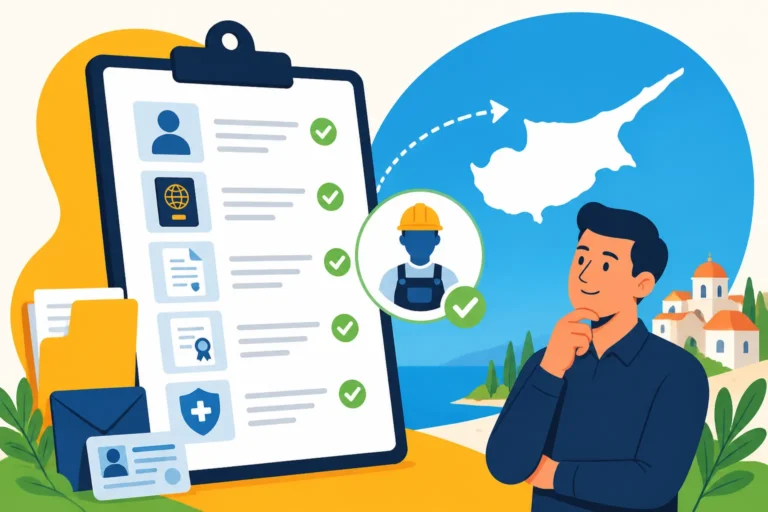
Gathering Your Documents: A Checklist
The key to a smooth application is thorough preparation. Missing even one minor document can lead to frustrating delays. Here's a general checklist of what you'll need, but always double-check the official Civil Registry and Migration Department (CRMD) website for the most up-to-date list, as requirements can sometimes be tweaked.
- Application Form: The official M.61 form, duly completed and signed.
- Passport: Original and photocopies of all pages. Ensure it's valid for at least six months beyond your intended stay.
- Passport-Sized Photos: Usually two, biometric, recent, and in color.
- Proof of Income: As discussed, this is critical.
- For employed: Employment contract, letter from your non-Cypriot employer confirming remote work, payslips for the last 6-12 months, bank statements showing salary deposits.
- For self-employed/freelancers: Service contracts with non-Cypriot clients, invoices, bank statements showing consistent income, proof of business registration (if applicable in your home country).
- Bank Statements: Personal bank statements covering the last 6-12 months, demonstrating sufficient funds to cover your living expenses and the required monthly income.
- Private Health Insurance: Policy document clearly stating coverage (minimum €30,000-€50,000, including inpatient, outpatient, and repatriation), valid for the entire duration of your stay. As mentioned, international providers like Cigna Global are a good option.
- Criminal Record Certificate: Original, apostilled/legalized, and translated into Greek or English. This must be a recent document, typically issued within the last three months.
- Proof of Accommodation: Rental agreement (long-term preferred), or a deed of sale if you've purchased property. Temporary booking might suffice initially, but longer-term proof will be needed.
- Proof of Educational Qualifications/Professional Experience: While not always strictly mandatory for the DNV, providing your CV and relevant diplomas can strengthen your application by demonstrating your professional skills.
- Declaration: A signed declaration confirming that you will not work for any Cypriot employer or provide services to Cypriot businesses (unless specifically permitted by other legislation or agreements).
- Application Fee: Be prepared to pay the non-refundable application fee.
Remember to get all non-English documents officially translated into English or Greek by a certified translator in Cyprus, and ensure all copies are clear and legible.
Submitting Your Application: Where and How
The application process usually begins by submitting your documents to the Civil Registry and Migration Department (CRMD) in Nicosia. You can apply either from abroad, through a Cypriot embassy or consulate in your home country, or in some cases, directly in Cyprus if you entered legally and meet certain conditions (though rules on in-country applications can change, so verify this with the CRMD).
If applying from abroad, once your visa is approved, you'll typically receive a temporary entry visa (often a 'D' visa) to travel to Cyprus. Upon arrival, you'll then proceed to the CRMD to finalize your residence permit application.
If applying directly in Cyprus, you will usually submit your complete dossier to the CRMD. It's often highly recommended to have an appointment, and walking in might lead to long waits. Due to the specifics and potential complexities, especially with a new visa category, many expats opt to engage a local immigration lawyer or consultant. While it adds to the cost, it can significantly streamline the process, ensuring all documents are correct and submitted efficiently. This can save you countless hours of stress and potential rejections.
Once your application is submitted, you'll likely receive a receipt. This receipt is important as it proves you have a pending application. You might be asked to provide biometric data (fingerprints and photograph) at a later stage.
What to Expect After Application: Processing Times and Interviews
Ah, the waiting game. This is where your patience will truly be tested. Processing times for residence permits in Cyprus can vary significantly, often ranging from 2 to 3 months, but sometimes extending to 6 months or even longer depending on the volume of applications and the CRMD's current workload. Don't expect a quick turnaround; immigration departments anywhere in the world aren't known for their speed.
During this period, you might be contacted for additional information or clarification on your documents. It's crucial to respond promptly and thoroughly. Sometimes, an interview might be requested, either at the CRMD or at a Cypriot embassy/consulate if you applied from abroad. These interviews are typically to verify the information you've provided and to ascertain your genuine intent to reside in Cyprus as a digital nomad. They might ask about your work, your clients, your plans in Cyprus, and how you intend to support yourself.
Once your application is approved, you'll be invited to the CRMD to collect your residence permit card, often referred to as a "Pink Slip" in expat circles, though technically the DNV is its own specific permit. This card is your official proof of legal residency in Cyprus and will state your visa type and validity period. Make sure all the details on the card are correct before you leave the office.
This permit typically grants you the right to reside in Cyprus for one year, renewable annually, provided you continue to meet the eligibility criteria. During your waiting period, especially if you applied in Cyprus, it's wise to be cautious about international travel, as leaving the country might complicate your application status. Always consult with the CRMD or your legal advisor before making travel plans while your permit is pending.
Bringing Your Family: Dependents and the Digital Nomad Visa
One of the most attractive aspects of the Cyprus Digital Nomad Visa is its provision for family reunification. Unlike some visas that only allow the main applicant, Cyprus understands that many digital nomads have partners and children they wish to bring along on their adventure. This means you won't have to leave your loved ones behind.
Eligibility and Application for Spouses and Children
If you're the proud holder (or soon-to-be holder) of a Digital Nomad Visa, you can apply for your spouse and minor children (under 18 years old) to join you in Cyprus. The term "spouse" generally refers to legally married partners. While common-law partnerships might be considered in some specific cases, a legal marriage certificate is the most straightforward way to demonstrate your relationship.
Each dependent will need to submit their own separate application, often using the same M.61 form or a slightly modified version for family members. They'll need to provide many of the same documents as the main applicant, tailored to their situation:
- Valid Passport: Original and photocopies.
- Passport-Sized Photos: Biometric and recent.
- Criminal Record Certificate: For any dependent over 16 years old. Apostilled/legalized and translated.
- Proof of Relationship: Marriage certificate for spouses, birth certificates for children. These must be apostilled/legalized and officially translated.
- Private Health Insurance: Each dependent must have their own comprehensive private health insurance policy covering the duration of their stay. Again, providers like Cigna Global are well-versed in these requirements for expat families.
- Proof of Funds: This is linked to the main applicant's income, as you are responsible for their financial support.
It's crucial that your family's applications are robust and clearly demonstrate their relationship to you, the main DNV holder. Any discrepancies or missing documents can cause significant delays for the entire family. For a deeper dive into this, check out How to Add Dependents to Your Health Coverage in Cyprus.
Financial Requirements for Family Members
As mentioned earlier, the income threshold for the Digital Nomad Visa increases with each dependent. For your spouse, you need an additional 20% of your net monthly income (€700 on top of the €3,500), and for each child, it's an additional 15% (€525 per child). This isn't just a guideline; it's a strict requirement. The authorities need to see that you have the financial capacity to comfortably support your entire family in Cyprus without them needing to rely on public funds or seek local employment.
When submitting your financial proof, ensure your bank statements and income documentation clearly show that your total net monthly income meets these increased thresholds. For example, if you declare €5,000 net per month and apply for a spouse and one child, you'd be comfortably above the €3,500 + €700 + €525 = €4,725 requirement.
The intention here is to ensure self-sufficiency. Dependents on a Digital Nomad Visa generally do not have the right to work in Cyprus under their dependent visa status. They are here under the sponsorship of the main applicant. If a dependent wishes to work, they would need to apply for a separate work permit or another appropriate visa category, which is an entirely different process with its own set of requirements. This is a common point of confusion for many expat families, so be absolutely clear about this before making plans.
Healthcare and Education for Dependents
Just like the main applicant, all dependents on the Digital Nomad Visa must have comprehensive private health insurance. They will not automatically be covered by GeSY upon arrival. You'll need to research and secure appropriate family health insurance plans from a reputable provider. This ensures that your children have access to medical care, including pediatric services, and your spouse is also covered.
When it comes to education for children, Cyprus offers a range of options. There are excellent public schools that teach in Greek, which can be a fantastic way for your children to integrate and learn the local language. However, for many expat families, international schools are the preferred choice, offering curricula like the British, American, or International Baccalaureate (IB) systems. These schools typically teach in English and cater specifically to expat children, making the transition smoother. You'll need to factor in the potentially significant tuition fees for international schools into your overall cost of living budget. To learn more about this, you can look into Schools and Education in Cyprus: A Complete Guide for Expat Families.
For younger children, there are also various kindergartens and daycare facilities. Researching these options before you arrive, or shortly after, is highly recommended to ensure a smooth transition for your children into their new Cypriot life. The good news is that Cyprus is generally a very family-friendly country, and there are plenty of activities and communities geared towards families.
Life as a Digital Nomad in Cyprus: Practicalities and Perks
Getting the visa is just the beginning. The real adventure starts when you actually move here and begin living and working in Cyprus. There are practicalities that every expat faces, and for digital nomads, some aspects are unique.
Navigating Tax Obligations for Digital Nomads
This is an area where it's crucial to get proper advice. While Cyprus is known for its attractive tax regime, especially for newcomers, your tax obligations as a digital nomad will depend on your specific circumstances, particularly your tax residency status.
Upon arriving in Cyprus, you won't automatically become a tax resident. Cyprus has both a "183-day rule" and a "60-day rule" for tax residency.
- The 183-day rule is straightforward: if you spend more than 183 days in Cyprus within a tax year, you become a tax resident.
- The 60-day rule is a bit more nuanced and allows individuals to become tax residents if they spend at least 60 days in Cyprus, do not reside in any other country for more than 183 days in the same tax year, and have other ties to Cyprus (like owning or renting a home, and being employed or carrying out a business in Cyprus).
For many digital nomads, the 60-day rule often applies. Once you become a tax resident, your worldwide income could theoretically be subject to Cypriot income tax. However, here's where the perks come in. Cyprus has an attractive Non-Dom (Non-Domiciled) status available to new tax residents. If you qualify for Non-Dom status, you can be exempt from Special Defence Contribution (SDC) on certain types of income, notably dividends and interest income, for a period of 17 years. This is a huge benefit for those with income streams from investments. To understand the nuances, you should absolutely read Understanding the Non-Dom Regime and Tax Benefits in Cyprus.
As a DNV holder, your income is typically sourced from abroad, which simplifies things in some ways but doesn't exempt you from reporting. You will need to Register with the Tax Department and Get a TIN in Cyprus and file an annual income tax return. It’s highly recommended to consult with a local tax accountant specializing in expat taxation. They can help you navigate the system, ensure compliance, and maximize any available tax benefits. Don't leave this to chance – the Cypriot tax authorities are keen on ensuring everyone pays their fair share, even if their income originates from overseas.
Finding Accommodation and Setting Up Your Home Office
Finding a place to live is often one of the first big tasks upon arrival. The popular cities for expats and digital nomads tend to be Limassol, Nicosia, Larnaca, and Paphos, each offering a different vibe and cost of living. Limassol is the bustling business hub with a cosmopolitan feel, Nicosia is the capital with more cultural depth, Larnaca offers a relaxed coastal lifestyle, and Paphos is known for its history and beautiful scenery. Take a look at The Complete Guide to Renting a Home in Cyprus (2027) for more insights.
Rental prices vary significantly by city and property type. Limassol tends to be the most expensive, especially for modern apartments, while areas in Larnaca or Paphos might offer more affordable options. Be prepared for a rental market that can move quickly, particularly for desirable properties. You'll likely need to pay a security deposit (usually one to two months' rent) and the first month's rent upfront. Estate agents can be helpful, but be aware of their fees.
Once you have your home, setting up your workspace is paramount. Many apartments in Cyprus come unfurnished, so you'll need to consider the cost and logistics of furnishing. Local furniture stores offer a range of options, and second-hand markets can be a good source for budget-friendly items. For international moves, consider using a reputable moving company like Sirelo to help you transport your belongings, including any essential office equipment.
Think about your office setup: do you need a dedicated room, or can you work from a corner of your living area? Ensure you have good lighting, a comfortable chair, and a reliable power supply. The great thing about Cyprus is the climate – you can often work from your balcony or a garden, enjoying the fresh air and sunshine, which is a definite perk of the nomad lifestyle here.
Connectivity and Infrastructure: Is Cyprus Up to Speed?
For a digital nomad, reliable internet is like oxygen – absolutely essential. The good news is that Cyprus's internet infrastructure has improved significantly over the years and continues to develop. Fibre optic broadband is becoming more widely available, particularly in urban areas and newer developments. Speeds can vary, but generally, you can expect decent and reliable internet for most remote work needs, including video calls and large file transfers.
Major providers like Cyta, Epic, and PrimeTel offer a range of packages for both home internet and mobile data. Competition among them helps keep prices somewhat reasonable and services improving. You'll want to ensure you choose a package with sufficient speed and data allowance for your work. Don't forget to factor in the time it takes to Set Up Internet and TV in Cyprus when you first move in.
Beyond internet, Cyprus has a modern banking system. While opening a bank account as a newcomer can sometimes involve a bit of paperwork and patience, it's a necessary step for managing your finances locally. Utility services (electricity and water) are reliable, though costs can add up, especially with air conditioning use during the hot summer months. Refer to The Expat Guide to Setting Up Utilities (Electricity, Water, Internet) in Cyprus for a detailed breakdown.
The country uses Type G electrical sockets (the same as the UK), so remember your adapters if you're coming from elsewhere. Mobile phone coverage is excellent across the island, and local SIM cards are readily available and affordable. Overall, Cyprus provides a solid technological backbone for digital nomads, allowing you to focus on your work without constant connectivity worries.
Renewing Your Digital Nomad Visa and Future Prospects
The initial Digital Nomad Visa is typically granted for one year. But the beauty of it is that it's renewable, allowing you to extend your stay and continue enjoying life in Cyprus. However, renewal is not automatic and requires continued adherence to the criteria.
The Renewal Process: What You Need to Know
Just like the initial application, renewing your Digital Nomad Visa requires preparation and timely submission. You should start gathering your documents well in advance of your current permit's expiration date – ideally, at least two to three months before. The renewal process largely mirrors the initial application, but with a few key differences.
You'll need to submit an updated application form, recent passport photos, and a valid passport. Crucially, you'll need to re-demonstrate your financial solvency. This means providing up-to-date bank statements and proof of consistent income meeting the threshold for 2026 (which, as discussed, is €3,500 net per month for the main applicant, plus increments for dependents). The authorities want to see that your remote work and income streams are ongoing and stable.
Your private health insurance policy must also be renewed and provide continuous coverage without any gaps. Ensure your policy documents are current and meet all the minimum requirements. Any lapse in coverage could jeopardize your renewal.
You'll also need current proof of accommodation in Cyprus. If you've moved since your initial application, you'll need your new rental agreement. If you've extended your current lease, provide the updated contract. The CRMD wants to see continuous, legal residency.
Any criminal record certificates will likely need to be recent if requested, usually within three months of the renewal application date. It's best to confirm this specific requirement with the CRMD or your legal representative, as not all renewal applications strictly require a new one, but it's good to be prepared.
Maintaining Eligibility for Renewal
The golden rule for DNV renewal is simple: continue to meet all the original eligibility criteria. This means consistently earning the minimum required income from non-Cypriot sources, maintaining comprehensive private health insurance, and having a legal place of residence in Cyprus.
Beyond the formal requirements, it's also about demonstrating genuine residency. While the DNV grants you flexibility, it's not a holiday visa. The authorities expect you to be primarily residing in Cyprus. Maintaining your tax residency status and fulfilling your tax obligations (like filing your annual tax return) also contributes to demonstrating your commitment to living here.
Any significant changes in your circumstances – such as a change in employment status, a substantial drop in income, or relocation to another country for an extended period – could impact your renewal application. If such changes occur, it's always best to seek advice from an immigration lawyer to understand the implications and how best to proceed. Transparency with the authorities, coupled with accurate documentation, is always the best approach.
Another point to remember is your family's status. If your dependents are also renewing their permits, their applications will be tied to yours and will also need updated documentation, including renewed health insurance and proof of your continued financial capacity to support them.
Pathways Beyond the Digital Nomad Visa
The Digital Nomad Visa is a fantastic stepping stone, but it's important to understand what happens after a few years. It's typically a short-to-medium-term solution. While you can renew it annually, it doesn't automatically lead to permanent residency or citizenship in the same way some other visa categories might.
After residing in Cyprus for several years (usually five, uninterrupted, under legal residency), you may become eligible to apply for Permanent Residency in Cyprus (2026) under certain categories. However, the DNV itself is generally not considered a direct path. You might need to transition to another type of residency permit (e.g., if you were to establish a Cypriot business or secure employment with a Cypriot company) that offers a clearer path to PR. The requirements for permanent residency are often more stringent and involve different income or investment criteria.
For example, if during your time as a digital nomad, you decide to establish a company in Cyprus and become locally employed, you would then need to explore How to Get a Work Permit to Work in Cyprus (2027) works. This would then restart your clock towards permanent residency under a different category.
Cyprus citizenship by naturalisation typically requires 7 years of legal residency within the last 10 years, with the final year being continuous. Again, while your time on a DNV contributes to your legal residency, the path to citizenship often involves more specific integration requirements. Understanding Cyprus Citizenship: How to Apply After Permanent Residency (2027) is something you can explore down the line, but it's not a direct, immediate outcome of the DNV.
The DNV is best viewed as a temporary residence permit designed for a specific lifestyle. If your long-term goal is permanent settlement, you'll need to actively research and plan for a transition to other residency categories as your circumstances evolve.
Common Challenges and How to Overcome Them
No move is without its bumps, and becoming a digital nomad in Cyprus is no exception. While the dream of sun-drenched workdays is very real, so are the practical challenges. Being prepared for these can make all the difference.
Bureaucratic Hurdles and Patience is a Virtue
Let's be frank: Cypriot bureaucracy can test even the most patient individual. It's a running joke among expats, but there's a kernel of truth to it. Processes can seem slow, sometimes illogical, and often require multiple visits to various departments. This isn't unique to Cyprus, of course, but it's a reality you need to mentally prepare for.
Example Scenario: You've submitted your DNV application, and weeks pass. You call the CRMD, but nobody answers, or the person who answers can't give you a clear update. You decide to visit in person, only to be told you're missing a minor stamp on a document. You then have to go to another office, get the stamp, and return, potentially waiting in line again. It can feel like a game of administrative ping-pong.
Overcoming this:
- Patience and Persistence: These are your most valuable tools. Approach every interaction with a calm demeanor, even when you're frustrated. A smile and a polite tone can go a long way.
- Over-Preparation: Always bring more documents than you think you'll need, and have photocopies of everything. Keep all original documents safe.
- Timeliness: Submit everything well in advance of deadlines, especially for renewals. Don't leave things to the last minute.
- Professional Help: For complex immigration matters, consider hiring an immigration lawyer or consultant. They understand the system, speak the language, and can navigate the bureaucracy on your behalf, saving you immense stress and time. While it's an investment, many expats find it worthwhile.
It's a system that values adherence to process, even if that process seems circuitous to outsiders. Embrace it, prepare for it, and you'll get through it.
Language Barriers and Cultural Nuances
While English is widely spoken in Cyprus, especially in tourist areas and among younger generations, Greek is the official language. In government offices, banks, and more traditional settings, you might encounter staff who speak limited English. This can lead to misunderstandings, especially during important administrative tasks.
Example Scenario: You're trying to set up your electricity bill (EAC) or query a tax notice, and the person you're speaking to struggles with English, or you miss a crucial nuance in their explanation. This can lead to incorrect payments, late fees, or simply a feeling of helplessness.
Overcoming this:
- Learn Basic Greek: Even a few phrases like "parakaló" (please), "efharistó" (thank you), "kaliméra" (good morning), and numbers can make a huge difference. Locals appreciate the effort, and it can smooth interactions.
- Translation Apps: Have a reliable translation app on your phone. Google Translate, for instance, offers real-time translation and can be a lifesaver.
- Bring a Local Friend: If you have a Cypriot friend or an expat who's been here longer and speaks Greek, ask them to accompany you for important appointments. This can bridge the communication gap effectively.
- Understand the "Siga Siga" (Slowly Slowly) Mentality: Things don't always happen at the fast pace you might be used to in other countries. Appointments might run late, and processes take time. Adjust your expectations.
- Social Customs: Embrace the local culture. Cypriots are generally warm and hospitable. A friendly approach and respecting local customs will enhance your experience.
Staying Connected with the Expat Community
Moving to a new country, even a welcoming one like Cyprus, can be isolating at first. You're away from your usual support network, and while working remotely offers flexibility, it can also limit daily social interaction.
Example Scenario: You've been working from your apartment for weeks, and you start to feel a bit cut off. You miss casual chats by the water cooler or popping out for a coffee with colleagues. Making new friends can feel daunting.
Overcoming this:
- Join Expat Groups: Facebook groups like "Expats in Cyprus" or "Digital Nomads Cyprus" are vibrant communities. They're great places to ask questions, share experiences, and find out about local meetups.
- Co-working Spaces: Consider renting a desk at a co-working space. Cities like Limassol and Nicosia have several, offering a professional environment and fantastic opportunities to meet other digital nomads and local entrepreneurs.
- Meetup Apps: Platforms like Meetup.com often have groups dedicated to hobbies, sports, or social gatherings for expats.
- Local Activities: Get involved in local life. Join a sports club, take a Greek language class, volunteer, or participate in local festivals. This is often the best way to meet both expats and Cypriots with shared interests.
- Online Communities: Beyond Cyprus-specific groups, there are many global digital nomad communities where you can share tips and connect.
Building a social circle takes time and effort, but it's incredibly rewarding. The expat community in Cyprus is diverse and supportive, and there are many opportunities to forge new friendships and feel at home.
| Aspect | Eligibility Criteria for Main Applicant | Notes |
|---|---|---|
| Nationality | Non-EU/EEA Citizen | Must not hold other Cypriot residency/work permits. |
| Employment | Employed by non-Cypriot company OR Self-employed with non-Cypriot clients | Work must be entirely remote via telecommunications. No work for Cypriot entities permitted. |
| Minimum Income | €3,500 net per month | Proof required (bank statements, contracts, payslips for 6-12 months). Increases for dependents. |
| Health Insurance | Comprehensive Private Health Insurance | Minimum €30,000-€50,000 coverage, including inpatient, outpatient, and repatriation. Valid for entire stay. |
| Criminal Record | Clean Criminal Record Certificate | Must be recent (e.g., within 3 months), apostilled/legalized, and translated. For main applicant and dependents over 16. |
| Accommodation | Proof of Accommodation in Cyprus | Rental agreement or property ownership. |
| Dependents | Spouse (legal marriage) & Minor Children (under 18) | Spouse: +20% income (€700). Each Child: +15% income (€525). Dependents require separate applications, health insurance, and do not have the right to work in Cyprus under this status. |
| Passport Validity | At least 6 months beyond intended stay | Photocopies of all passport pages. |
| Application Fee | Yes (non-refundable) | Varies, check current CRMD fees. |
| Declaration | Non-engagement in Cypriot employment | Formal declaration stating you will not work for Cypriot employers or provide services to Cypriot businesses. |
Disclaimer
The information provided in this guide is for general informational purposes only and is subject to change. While we strive to keep the content up-to-date and accurate, immigration laws, visa requirements, and tax regulations in Cyprus can be complex and are subject to amendments by the relevant authorities. We strongly recommend consulting with the official Civil Registry and Migration Department (CRMD) of Cyprus or a qualified immigration lawyer and tax advisor for personalized advice regarding your specific situation and for the most current information applicable to 2026. This guide does not constitute legal or financial advice.