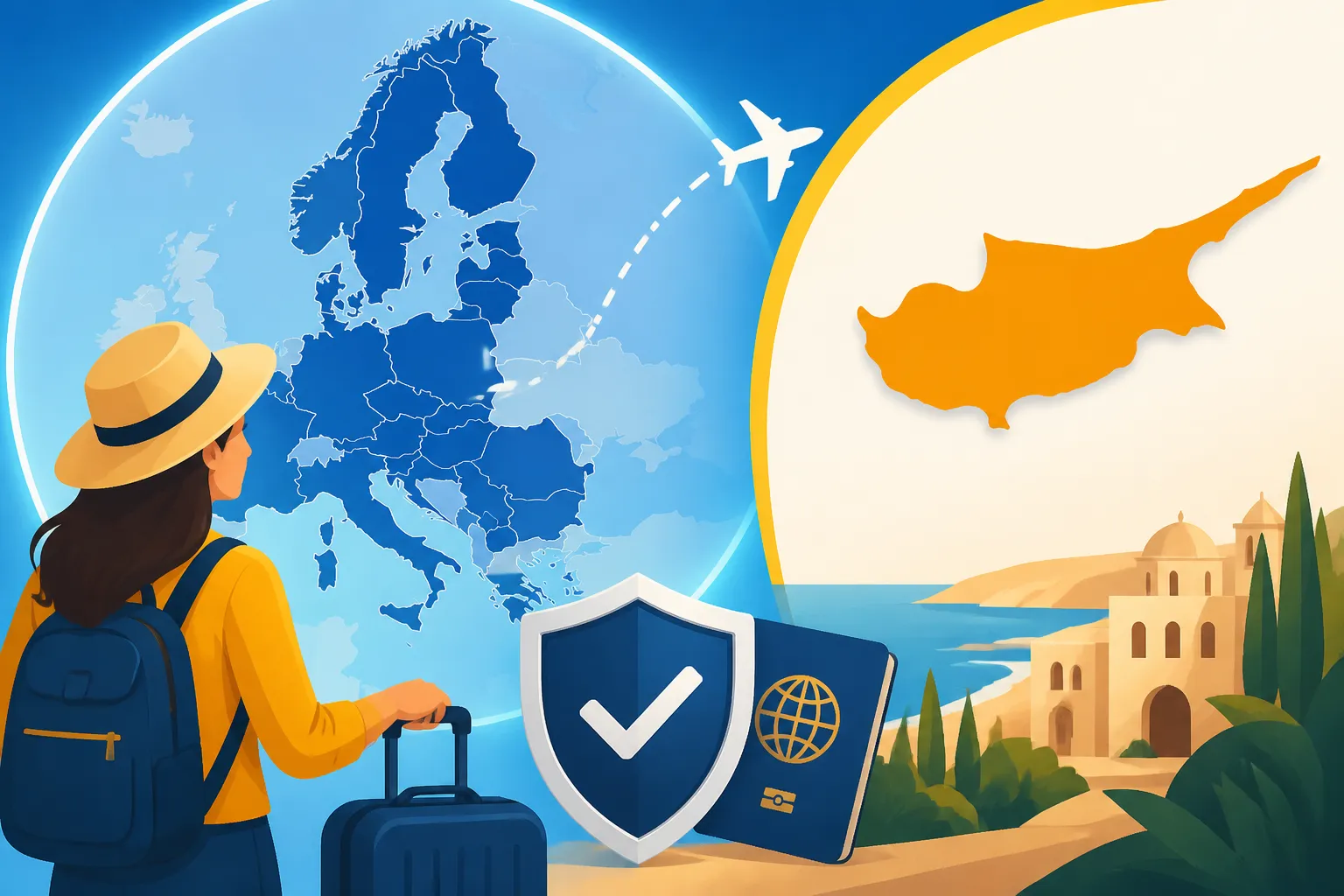
Understanding the Schengen and EU Travel Rights from Cyprus
One of the most common head-scratchers for us expats living in Cyprus is figuring out exactly what our travel rights are, especially when it comes to the vast expanse of the European Union and the elusive Schengen Area. It's not as straightforward as you might assume, given Cyprus is an EU member but still outside the Schengen Zone. This guide is here to untangle that web, offering practical, real-world advice on how to navigate Europe and beyond from your Cypriot base, regardless of your nationality.
Cyprus's Unique Position: EU Member, but Not Schengen
Ah, Cyprus. Our beloved island in the sun. It's been a full member of the European Union since 2004, which brings with it a whole host of rights and responsibilities. However, when you start looking at travel within the EU, you quickly hit a snag: Cyprus isn't actually part of the Schengen Area. This little detail causes endless confusion and can really trip up even the most seasoned expats if they're not fully aware of the implications.
The Cyprus-EU Relationship
Being an EU member state means a lot for those of us living here. It means access to the single market, participation in EU policies, and for EU citizens, the fundamental right to freedom of movement and residence. If you're an EU citizen living in Cyprus, you've likely gone through the process of getting your Yellow Slip, which is essentially your registration certificate as an EU national residing here. This allows you to live, work, and retire on the island with relative ease. For non-EU citizens, Cyprus residency, whether it’s a work permit or a Pink Slip for temporary residence, still grants certain rights and access to Cypriot services under EU law, but it doesn't automatically open all the doors to continental Europe without a second thought. It's a dual identity that can feel a bit like having one foot in two different worlds. We're part of the big European family, but we've got our own distinct entry and exit requirements when it comes to travel.
Why Cyprus Isn't Fully in Schengen Yet
You might wonder why, after all these years, Cyprus hasn't joined the Schengen Area. It's not for lack of trying or desire on Cyprus's part. The Schengen Area is a zone comprising 27 European countries that have officially abolished all passport and all other types of border control at their mutual borders. To join, a country needs to meet specific criteria, including robust border control measures, data protection capabilities, and police cooperation. Cyprus has been working towards this for years, undergoing evaluations and implementing necessary reforms. However, political factors, particularly the ongoing division of the island, have historically played a role in delaying full accession. There are concerns about controlling the 'Green Line' with the Turkish-occupied north, which isn't an external EU border but complicates the concept of a unified border control system. So, while Cyprus aligns with Schengen rules in many respects and is keen to join, it hasn't quite crossed that finish line yet.
Impact on Expats' Travel Plans
This "EU-but-not-Schengen" status has significant practical implications for anyone planning to travel from Cyprus. For starters, when you fly from Larnaca or Paphos to, say, Germany or France, you will go through passport control both leaving Cyprus and entering the Schengen Area. It's not the seamless, walk-through experience you might expect between two EU countries that are both within Schengen. This means always having your passport or national ID card (for EU citizens) ready, and for non-EU citizens, ensuring you understand the specific visa requirements for the Schengen destination you're heading to. Your Cypriot residence permit (Pink Slip, Yellow Slip, work permit, etc.) is valid for residence in Cyprus, but it is not a Schengen visa. This is a crucial distinction that many expats only learn the hard way, often at an airport check-in counter. It's vital to remember that your right to reside in Cyprus does not automatically grant you the same rights to freely enter or reside in other Schengen countries for extended periods.
Schengen Area Explained for Cyprus Residents
So, let's get down to the nitty-gritty of the Schengen Area and how it impacts you when you're living in Cyprus. It’s a completely different beast than the general EU travel framework, and misunderstanding it can lead to frustrating situations, from being denied boarding to overstaying fines.
What Exactly is the Schengen Area?
The Schengen Area is a group of European countries that have essentially done away with internal border checks. Think of it as one big territory for international travel purposes. It includes most EU countries, but also a few non-EU nations like Switzerland, Norway, Iceland, and Liechtenstein. The idea is that once you're in Schengen, you can travel between these countries without further passport checks. This makes travel incredibly convenient for tourists and businesspeople alike. However, for those of us in Cyprus, getting into the Schengen Area itself still involves a formal entry process, as Cyprus isn't a part of it. This means every time you plan a trip to a Schengen country, you're essentially entering a new "zone" and the rules of that zone apply from the moment you land. Understanding this fundamental difference is the first step in avoiding travel headaches.
How the 90/180-Day Rule Applies to Cyprus Residents
This is perhaps the single most critical piece of information for non-EU citizens residing in Cyprus who wish to travel to the Schengen Area. The infamous "90/180-day rule" dictates that non-EU nationals can stay in the Schengen Area for a maximum of 90 days within any 180-day period. Crucially, this rule applies to you even if you hold a residence permit for Cyprus. Your Pink Slip or work permit for Cyprus does not exempt you from the Schengen 90/180-day rule. Each entry and exit from the Schengen Zone is recorded, and overstaying can lead to serious consequences, including fines, deportation, and future entry bans.
For example, if you live in Limassol with your Cypriot residence permit and decide to take a month-long trip through Italy, France, and Spain, those 30 days will count towards your 90-day allowance. If you then return to Cyprus for a couple of months and decide to visit Germany for another 60 days, you will have used up your full 90 days for that 180-day period, and you won't be able to re-enter Schengen until a new 180-day period begins and you have available days. It's a rolling calculation, which can make planning tricky. Always track your days meticulously! You can find online Schengen calculators to help you keep tabs.
Visa Requirements for Non-EU Cyprus Residents
If you're a non-EU citizen holding a Cypriot residence permit (like a Pink Slip, work permit, or even a Digital Nomad Visa), your ability to travel to the Schengen Area depends largely on your nationality. Many non-EU nationalities are still required to obtain a Schengen visa before travelling, even with a valid Cypriot residence permit. For instance, if you're from a country like India or Pakistan, you'll need to apply for a Schengen visa at the embassy or consulate of the Schengen country you intend to visit, or the one where you'll spend most of your time. This application process is entirely separate from your Cypriot residency application.
On the other hand, citizens of certain non-EU countries, like the USA, Canada, Australia, and the UK, are typically visa-exempt for short stays (up to 90 days within the 180-day period) in the Schengen Area. However, even for these nationalities, the upcoming ETIAS (European Travel Information and Authorisation System) will introduce a new pre-travel authorisation requirement, much like the ESTA for the USA. This isn't a visa, but it's an essential step you'll need to complete before you travel. Always double-check the specific requirements for your nationality and your destination well in advance of your trip. Don't assume anything, because rules can change. You can find more comprehensive information about visa types and requirements in articles like The Complete Guide to Cyprus Visas and Immigration for Expats (2026).
EU Travel Rights Beyond Schengen
While the Schengen puzzle is often the biggest hurdle, remember that the European Union is a much broader entity. Even though Cyprus isn't in Schengen, its EU membership still provides certain travel advantages, particularly for EU citizens, and some facilitations for their non-EU family members.
Freedom of Movement for EU Citizens in Cyprus
For those of us holding passports from EU member states, your 'Yellow Slip' in Cyprus confirms your right to reside here, but your EU citizenship itself is your golden ticket for travel within the entire EU, regardless of Schengen status. You can move freely between Cyprus and any other EU country, including those in the Schengen Area, for any length of time, provided you're exercising your treaty rights (e.g., working, studying, or being self-sufficient). When you travel from Cyprus to another EU country (even a Schengen one), you’ll still go through passport control in Cyprus because it's not Schengen, but your EU passport or national ID card is all you need for entry into other EU states. The border checks are primarily administrative to ensure you are indeed an EU citizen, rather than a full visa check. This is a fundamental right that makes life so much easier for EU nationals living here.
Travel to Non-Schengen EU Countries
It's easy to forget that not all EU countries are in the Schengen Area. Beyond Cyprus, other EU nations like Ireland, Bulgaria, and Romania are also not fully integrated into Schengen yet. This means that if you're travelling from Cyprus to one of these countries, the travel experience will be similar to flying into a Schengen country – you'll go through passport control upon entry.
For EU citizens, again, your EU passport or national ID card is sufficient. For non-EU citizens residing in Cyprus, you'll need to check the specific visa requirements for your nationality for each of these non-Schengen EU destinations. For example, some nationalities might be visa-free for Ireland but require a visa for Romania, even if they hold a valid Cypriot residence permit. Always verify entry rules directly with the embassy or consulate of the destination country, as their policies can differ significantly from Schengen rules. It's another layer of complexity that keeps you on your toes when planning travel from our sunny island.
The EHIC Card and Travel Insurance for EU Travel
One massive perk of Cyprus being an EU member is access to the European Health Insurance Card (EHIC). If you're an EU citizen or a legally residing third-country national contributing to the General Healthcare System (GeSY) in Cyprus, you are eligible for an EHIC. This card isn't a substitute for travel insurance, but it gives you access to medically necessary, state-provided healthcare during a temporary stay in any of the 27 EU countries, Iceland, Liechtenstein, Norway, and Switzerland, under the same conditions and at the same cost (free in some countries) as people insured in that country. It’s incredibly useful to have, especially for unexpected emergencies. You can find more information about this in our guide to Understanding the EHIC and Travel Health Cover in Cyprus.
However, even with an EHIC, you should always have comprehensive private travel insurance, especially when travelling outside of Cyprus. The EHIC only covers state healthcare and won't help with things like repatriation, lost luggage, trip cancellation, or private medical treatment abroad. Many expats in Cyprus opt for robust global travel insurance policies. Brands like Cigna Global offer excellent coverage for expats, ensuring you're protected for a wide range of medical and travel-related eventualities, whether you're popping over to Greece or venturing further afield. It's peace of mind that’s truly invaluable, because unforeseen medical emergencies can be incredibly costly abroad. This is particularly important for non-EU residents whose Cypriot health coverage doesn't extend easily outside the island. Make sure your insurance covers all your destinations and planned activities.
Practicalities for Travel: Documentation and Borders
Now that we've covered the rules, let's talk about the practical side of getting from Cyprus to anywhere else in Europe. It's about having your ducks in a row – the right documents, understanding border procedures, and planning your itinerary carefully.
Essential Travel Documents for Different Nationalities
This is where things can get confusing, so let’s break it down by your status in Cyprus:
-
EU Citizens (with Yellow Slip): For travel within the EU (Schengen or non-Schengen), your national passport or national ID card is generally sufficient. While you’ve got your Yellow Slip for Cyprus, it's not a travel document for other countries. Always carry your actual EU passport or ID. When departing Cyprus, you'll present your EU ID at the Cypriot border control. Upon arrival in a Schengen country, you'll show your EU ID again, often passing through a separate "EU/EEA/Swiss citizens" lane, which is usually much quicker. For any non-EU travel, your passport is mandatory, and you'll need to check the visa requirements for that specific country.
-
Non-EU Citizens (with Pink Slip, Work Permit, Digital Nomad Visa, etc.): Your passport is your primary travel document, and it must be valid for at least three to six months beyond your intended return date (check specific destination requirements). Your Cypriot residence permit (Pink Slip, work permit, etc.) proves your legal right to reside in Cyprus, but as discussed, it doesn't automatically grant you entry rights to other countries.
- Schengen Area: If your nationality requires a Schengen visa, you must obtain one beforehand. Present your passport, Schengen visa, and Cypriot residence permit at both Cypriot exit control and Schengen entry control. Your Cypriot residence permit might allow you to transit through a Schengen airport without an airport transit visa, but again, verify this for your specific nationality.
- Non-Schengen EU Countries (e.g., Ireland, Bulgaria, Romania): Check visa requirements for your nationality for each specific country.
- Non-EU/Non-Schengen Countries: Your passport and any required visas for that specific country.
It might seem like a lot to juggle, but getting into the habit of checking these details before every trip saves a lot of stress. I remember once forgetting to check my UK passport validity for a trip to a non-EU country, and it nearly ended in tears at the check-in desk! Thankfully, I had just enough time left. Don’t be like me.
Border Control Experiences for Cyprus Residents
Navigating border controls from Cyprus to other European destinations can be a bit of a mixed bag.
-
Departing Cyprus: Whether you're an EU or non-EU citizen, you will always go through passport control when departing Larnaca or Paphos for any international destination. This is because Cyprus isn't in Schengen, so all flights out are treated as external border crossings. Have your passport or EU ID card ready. The process is usually efficient, but queues can form, especially during peak travel times.
-
Entering the Schengen Area: As a non-EU citizen, you’ll typically be directed to the 'All Passports' or 'Non-EU' lane. Here, border officers will stamp your passport (if applicable to your nationality), verify your Schengen visa (if you needed one), and sometimes ask about the purpose and duration of your visit. This is where they start counting your 90/180 days. They might also ask for proof of onward travel or sufficient funds. Don’t be surprised if they also ask to see your Cypriot residence permit; while it doesn't grant you Schengen rights, it shows your legal residence in an EU country. Be polite, clear, and have all your documents organised. For EU citizens, you'll generally use the faster EU lanes.
-
Exiting the Schengen Area and Re-entering Cyprus: When leaving the Schengen Area, your passport will be stamped again, marking your exit and stopping the 90-day count. Upon returning to Cyprus, you'll go through Cypriot passport control once more. For EU citizens, this is usually a quick check of your EU passport/ID. For non-EU citizens with Cypriot residence permits, they will scan your permit along with your passport to verify your right to re-enter Cyprus. It feels a bit like a double whammy of passport controls, but it's just the reality of Cyprus's current status.
Planning Your Itinerary: Calculating Days
This part is vital for non-EU citizens, especially concerning the 90/180-day Schengen rule. It's not just about planning where you go, but how long. Every single day you spend in a Schengen country counts towards your 90-day limit. This includes your arrival and departure days. The rolling 180-day period means you look back 180 days from each day you are in the Schengen Area. Within that 180-day window, you cannot have exceeded 90 days of stay.
A good example: if you enter Schengen on January 1st and stay for 30 days, then return to Cyprus. You then re-enter Schengen on March 1st. On March 1st, you look back 180 days (to September 3rd of the previous year). All your days in Schengen within that period count. If you were only in Schengen for those 30 days in January, you still have 60 days left. But if you plan to stay another 70 days, you'll overstay.
It can be a mind-bender, especially if you're making multiple short trips. My advice? Use one of the many online Schengen calculators. They are a lifesaver. You input your entry and exit dates, and they tell you how many days you have left. This planning is just as important as packing your bags or arranging for a moving company like Sirelo if you eventually decide to move within Europe. Always double-check your calculations before booking non-refundable flights or accommodation!
Special Considerations: Digital Nomads and Non-EU Spouses
Cyprus is a magnet for all sorts of people, including a growing number of digital nomads and families with mixed nationalities. These groups often have unique travel considerations that require a bit more understanding.
Digital Nomads and Remote Workers: Travel Implications
Cyprus has recently introduced its own Digital Nomad Visa (DNV), which is fantastic for those of us who work remotely. This permit allows you to live and work from Cyprus for up to a year, renewable, and provides a clear pathway for independent workers. However, just like other Cypriot residence permits, the DNV primarily grants you the right to reside in Cyprus. It does not automatically grant extensive travel rights to the rest of the Schengen Area beyond the standard 90/180-day rule for your nationality.
Many digital nomads dream of "European hopping," and while living in Cyprus puts you geographically closer to the action, you still need to respect the Schengen rules. If you're a non-EU digital nomad living in Cyprus, every trip you take into the Schengen Area will count towards your 90 days within 180. This means you need to be strategic. You might spend three months exploring mainland Europe, then return to Cyprus (or another non-Schengen country) for three months before you can re-enter Schengen. This requires careful planning and tracking. The Cypriot DNV also doesn't exempt you from any visa requirements for other countries; you still need to check your specific nationality's requirements for any destination outside Cyprus. If you're considering the digital nomad lifestyle, make sure you thoroughly understand The Expat Guide to the Cyprus Digital Nomad Visa (2026) to manage expectations for wider European travel.
Non-EU Spouses and Family Members: Facilitated Entry
This is an area where EU law offers some significant facilitations. If you are a non-EU citizen and a family member (spouse, child, dependent parent) of an EU citizen residing in Cyprus, you often benefit from "facilitated entry" rights into the Schengen Area and other EU countries. This is based on the principle of freedom of movement for EU citizens and their families.
Typically, if you are travelling with your EU spouse (or joining them in a Schengen country), you may be exempt from Schengen visa requirements or at least benefit from an expedited, free visa process. You would usually need to present your valid passport, your Cypriot residence permit (which should clearly state you are a family member of an EU citizen, often called a MEU2 for non-EU family members of EU citizens), and proof of your relationship to the EU citizen (e.g., marriage certificate). It is still advisable to apply for a Schengen visa if you need one, but the process should be more straightforward.
However, a crucial point: if you travel alone without your EU family member, you generally do not automatically benefit from these facilitated entry rights, and standard visa rules for your nationality will apply. Always carry original or certified copies of your marriage/birth certificates. It's confusing, and border guards sometimes don't fully understand these nuances, so be prepared to politely explain your situation and present documentation. Our guide on How to Include Family in Your Cyprus Residency Application provides more details on registering your family's status in Cyprus, which is key for these travel rights.
The European Travel Information and Authorisation System (ETIAS)
Soon, there will be a new system to consider for many non-EU citizens, even those who are currently visa-exempt for the Schengen Area. The European Travel Information and Authorisation System (ETIAS) is expected to be implemented in mid-2025 (though the date has shifted before). It will require citizens of over 60 visa-exempt countries (including the UK, USA, Canada, Australia, etc.) to obtain pre-travel authorisation before entering the Schengen Area.
This is not a visa. It's a security screening similar to the ESTA for the United States. You'll apply online, and once approved, the ETIAS authorisation will be valid for three years or until your passport expires, whichever comes first. It allows for multiple short stays (up to 90 days within any 180-day period) within the Schengen Area. Even if you reside in Cyprus with a Pink Slip or work permit and are from a visa-exempt country, you will likely need an ETIAS to enter the Schengen Zone. Make sure to keep an eye on the official EU announcements for the exact implementation date and application process, as this will become a mandatory step for many of us.
Navigating Travel Challenges from Cyprus
Living on an island, even a European one, can sometimes present its own set of unique travel challenges. Beyond the paperwork, there are practical aspects of staying safe, informed, and prepared for the unexpected.
Common Pitfalls and How to Avoid Them
We’ve all been there, standing at a counter, realizing we’ve missed a crucial detail. When travelling from Cyprus to the wider EU, particularly the Schengen Area, here are some common pitfalls and how to steer clear of them:
- Overstaying the 90/180-day rule (non-EU citizens): This is the biggest one. Don't eyeball it. Use an online Schengen calculator religiously. Remember, days spent in any Schengen country count.
- Assuming Cypriot residence equals Schengen access: As we’ve drilled in, your Pink Slip or work permit for Cyprus is not a Schengen visa. Always check if your nationality requires a separate Schengen visa.
- Invalid passport: Ensure your passport has at least six months' validity beyond your intended return date, and enough blank pages. Some countries require more.
- Lack of travel insurance: Even if you have GeSY and an EHIC, private travel insurance is non-negotiable. The EHIC won't cover private hospitals, repatriation, or lost luggage. Get a comprehensive policy; Cigna Global is a popular choice among expats for its extensive coverage tailored to international living.
- Not checking visa requirements for each destination: Don't assume all non-Schengen EU countries have the same rules. Treat each as a separate entity for visa purposes.
- Forgetting your residence permit: While not a travel document for other countries, your Cypriot residence permit is vital for re-entering Cyprus. Keep it safe with your passport.
- Not having proof of onward travel/sufficient funds: Border guards, especially for non-EU citizens, can ask for proof that you intend to leave the Schengen Area and can support yourself during your stay.
What to Do in a Travel Emergency Abroad
Even with the best planning, emergencies happen. If you find yourself in a sticky situation while travelling from Cyprus in another EU country:
- Medical Emergency: If it’s a life-threatening emergency, call the local equivalent of 112 (the pan-European emergency number). Present your EHIC card (if you have one) at a public hospital, but remember it covers state-provided care. Then contact your travel insurance provider (like Cigna Global) immediately for guidance on private healthcare options, direct billing, or evacuation if necessary. Read our guide on How to Handle a Medical Emergency While Travelling from Cyprus for more in-depth advice.
- Lost/Stolen Passport: Contact your country’s embassy or consulate in the country you are in immediately. They can help you get an emergency travel document. You’ll also need to file a police report.
- Legal Issues: Contact your embassy or consulate. They can provide a list of local lawyers and offer consular assistance, though they cannot intervene in legal proceedings.
- Lost Funds: If your bank cards are lost or stolen, report them immediately to your Cypriot bank (like Bank of Cyprus or Hellenic Bank) or your international financial service provider. You might need to arrange a money transfer from a trusted friend or family member, or use services like Wise (formerly TransferWise) for quick international transfers. If you want to know more about this, check out How to Transfer Money Into and Out of Cyprus as an Expat.
Staying Informed About Travel Rule Changes
Travel regulations are not set in stone, particularly in Europe. The Schengen Area is constantly evolving, and the introduction of ETIAS is a prime example of impending changes. The geopolitical landscape also means rules can be introduced or altered with little notice.
- Official Sources: Always rely on official sources. Check the websites of the Ministry of Foreign Affairs of your destination country, their embassy/consulate in Cyprus, or the official European Union websites. Avoid relying solely on forums or unofficial travel blogs (except for helpful, well-researched ones like this, of course!).
- Airlines: Your airline's website often has specific travel requirements for your destination, though these are usually basic.
- Regular Checks: Make it a habit to check travel advisories and visa requirements a few weeks before any planned trip, and again a few days before departure. This is especially crucial for non-EU citizens who often face more stringent checks.
- Renewing Your Cyprus Permit: Don't let your Cypriot residence permit expire. An expired permit can cause issues not only for re-entering Cyprus but also potentially raise red flags when trying to leave the Schengen Area. Plan ahead for your renewal by consulting guides like How to Renew Your Residence Permit in Cyprus.
Navigating travel from Cyprus requires attention to detail and a willingness to stay informed. But with the right approach, living on our beautiful island doesn't mean you can't explore the wonders of Europe. It just means you need to be a savvy traveller, and that's something we expats excel at, isn't it?
Disclaimer
The information provided in this guide is for general informational purposes only and does not constitute legal or professional advice. Travel regulations, visa requirements, and immigration policies are subject to frequent change. Readers are strongly advised to consult official government websites, embassies, consulates, or qualified legal professionals for the most accurate and up-to-date information pertaining to their specific circumstances before making any travel plans or decisions.