How to Renew or Replace Your Cyprus Residence Permit
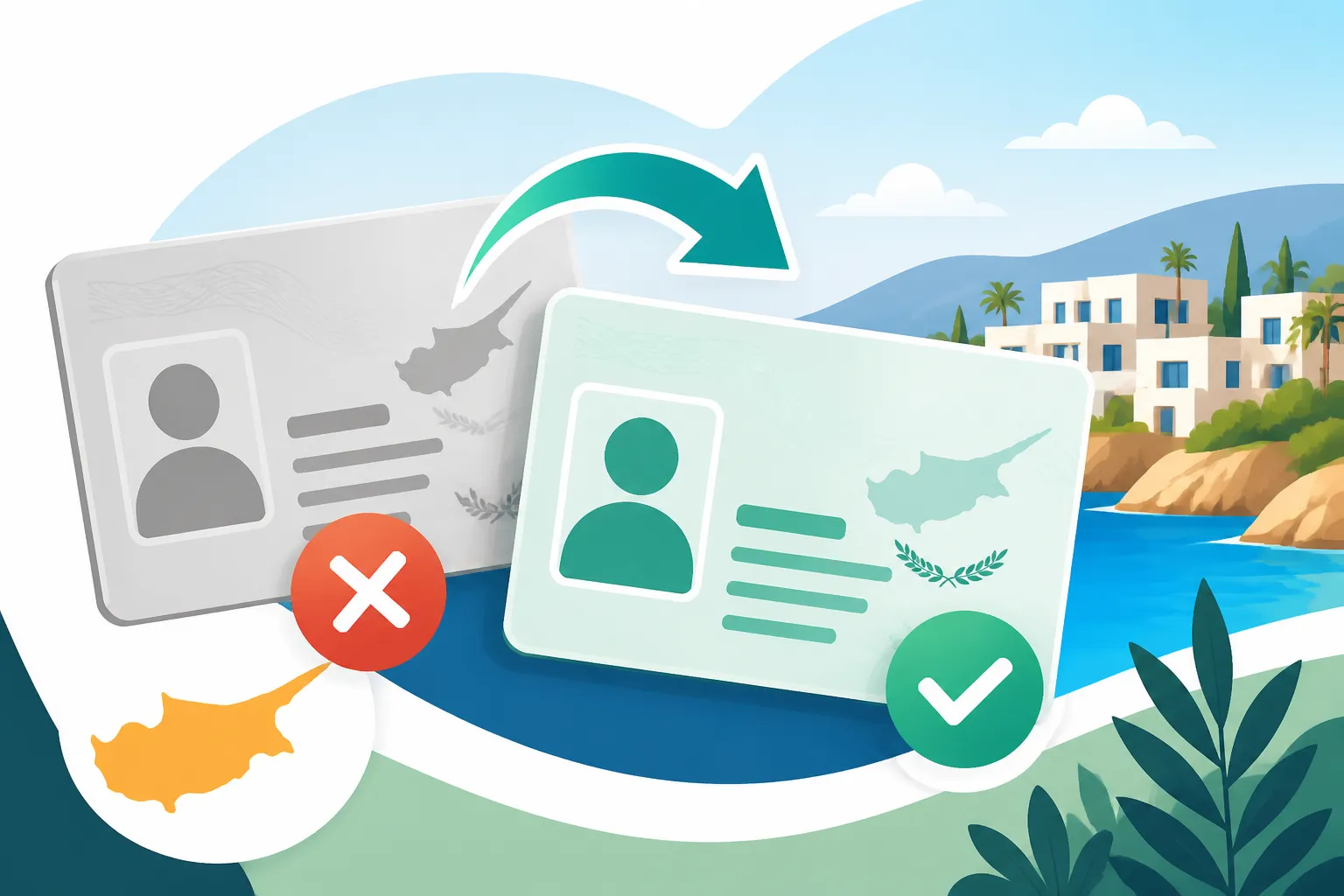
Oh, the joy of Cypriot paperwork! If you've been here for any length of time, you'll know that navigating the bureaucracy around residence permits can feel like trying to herd cats. It's a rite of passage for every expat, and the thought of renewing or, heaven forbid, replacing that precious card can send shivers down your spine. This guide is here to cut through the confusion, offering a realistic, step-by-step walkthrough to make sure your stay in Cyprus remains legally sound and stress-free.
Understanding Your Cyprus Residence Permit
Before we dive into the nitty-gritty of renewals and replacements, it's really important to understand what kind of residence permit you actually hold. Cyprus has a few different types, and the process varies significantly depending on whether you're an EU citizen or a non-EU citizen, and what the purpose of your stay is. Knowing the specifics of your permit is the first, crucial step.
Different Types of Residence Permits
For non-EU citizens, the most common type of temporary residence permit is often referred to informally as the "Pink Slip." This is issued for various reasons, such as employment, self-employment, study, or simply as a visitor permit if you have sufficient independent means. These permits typically have an expiry date, usually one or two years, and require regular renewal. Think of it as your official stamp of approval to live here for a set period. Each category, be it an employee, a student, or someone on the Cyprus Digital Nomad Visa, will have a slightly different application form and set of requirements, but the underlying principle of a temporary stay is the same.
EU citizens, on the other hand, don't technically apply for a "residence permit" in the same way non-EU citizens do. Instead, after three months of residing in Cyprus, they must register their presence by obtaining a "Yellow Slip," officially known as a Registration Certificate for EU Citizens (MEU1). This document confirms your right to reside in Cyprus as an EU citizen. It doesn't usually have an expiry date in the same way a Pink Slip does, though the physical card might need updating after a decade. There's also the MEU3, which is the Permanent Residence Certificate for EU citizens, generally issued after five years of continuous legal residence. These yellow slips are more about confirming your existing rights rather than granting temporary permission.
Then we have the big one for non-EU citizens: Permanent Residency, often referred to as a Category F permit, or obtained through various investment routes. This is the golden ticket for many, signifying a long-term commitment to the island. While the permanent residency status itself is, well, permanent (provided you meet certain maintenance criteria), the physical card issued to prove this status will still have an expiry date, usually every five years. This can sometimes confuse people, making them think their permanent residency has expired when it's just the card itself that needs to be updated. It's a subtle but vital distinction.
Why Renewing or Replacing is Crucial
Letting your residence permit expire, or not replacing it promptly if it's lost or stolen, is a headache you absolutely want to avoid. The legal implications are significant: you could technically be considered an illegal resident, which can lead to hefty fines, difficulties with re-entering Cyprus, or even deportation. Imagine building a life here, only for a missed renewal deadline to throw it all into jeopardy. It’s a terrifying prospect that, thankfully, can be easily avoided with a bit of planning.
Beyond the legal aspect, your residence permit is your key to so many essential services and aspects of daily life here. Without a valid permit, you might find your bank freezing your accounts, as banks are legally required to verify your right to reside in the country. Trying to set up utilities (electricity, water, internet) in Cyprus or renew your car registration can become impossible. You won't be able to apply for new mobile phone contracts, or even get a Cypriot driving licence if yours is linked to your residency status. It impacts almost every facet of your life here, making timely renewal or replacement not just a bureaucratic task, but a necessity for smooth living.
The Renewal Process for Temporary Residence Permits (Pink Slip, Digital Nomad, Student)
Renewing a temporary residence permit in Cyprus, particularly the Pink Slip for non-EU citizens, requires foresight and meticulous preparation. Unlike some countries where a grace period is generously offered, Cyprus tends to stick to its rules, and delays can cause significant inconvenience. You absolutely need to be proactive, not reactive, when it comes to this.
When to Start Your Renewal Application
The general rule of thumb, and one you should adhere to strictly, is to initiate your renewal application approximately three months before your current permit is due to expire. This might sound like a long lead time, but trust me, it’s not an exaggeration. The Civil Registry and Migration Department (CRMD) offices, particularly in busier districts like Nicosia and Limassol, can experience significant backlogs. Appointments can be difficult to secure, processing times fluctuate, and unexpected requests for additional documents are not uncommon. Starting early gives you a buffer against these common bureaucratic hurdles.
Imagine you leave it to the last minute, say, a month before expiry. You might struggle to get an appointment, meaning your permit expires while you're still waiting. While an application submitted before expiry generally grants you a temporary legal status while awaiting processing, being without a submission can lead to complications. It's far better to have that peace of mind. Plan ahead, mark your calendar, and aim for that three-month window. It's one less thing to stress about in a country where patience is often tested.
Required Documents for Renewal
This is where the infamous Cypriot paperwork really comes into play. The exact list can vary slightly depending on your permit type (employment, student, digital nomad, visitor, etc.), but there’s a core set of documents you'll almost certainly need. Always check the official CRMD website for the most up-to-date checklist for your specific category, but here’s a comprehensive rundown of what to typically prepare:
- Application Form (M.61 or specific form): Duly completed and signed. Don't leave any blanks.
- Passport: Your valid passport, including copies of all pages with personal data and valid visas/stamps. Ensure your passport has at least six months' validity remaining beyond your intended permit renewal period.
- Previous Residence Permit Card: The expired or soon-to-expire physical card.
- Proof of Stable Income: This is critical. For employees, this means recent payslips (usually 6 months), your employment contract, and a confirmation letter from your employer. For self-employed or those on a visitor's permit, this means detailed bank statements (Cypriot and/or international, showing sufficient funds to support yourself and your dependents without resorting to public funds), proof of foreign income, or business financial statements. The authorities want to see that you are financially self-sufficient.
- Proof of Accommodation: A valid rental agreement, utility bills in your name, or title deeds if you own property. If you're staying with friends or family, you'll need a declaration from the property owner, along with a copy of their ID and proof of their property ownership/rental agreement.
- Health Insurance: This is non-negotiable. You need comprehensive health insurance that covers inpatient and outpatient care, and repatriation, for the duration of your renewed permit. While many expats opt for the General Healthcare System (GeSY) once eligible, a private policy is often required for the renewal itself, especially if you're not yet fully integrated into GeSY or need to cover the period before full GeSY access. Brands like Cigna Global are popular choices among expats for their comprehensive international coverage, which can often be tailored to meet Cypriot residency requirements. Remember, your health coverage is a cornerstone of your legal residence. Read more about Health Insurance in Cyprus: GeSY, Private and Employer Options Explained.
- Bank Statements: Recent statements from your Cypriot bank account, showing consistent activity and sufficient funds. The CRMD usually wants to see a minimum balance, which can fluctuate, so always check.
- Marriage Certificate/Birth Certificates: If you're applying for family reunification or renewing permits for dependents, these will be needed, often apostilled or officially translated. This is particularly important for How to Add Dependents to Your Health Coverage in Cyprus.
- Two Passport-Sized Photos: Meeting specific biometric standards.
- Police Clearance Certificate: For some categories or if specifically requested. Ensure it's recent.
- Receipt of Payment for Application Fees: Keep this safe!
Crucially, many non-Cypriot documents will need to be apostilled or legalised and then officially translated into Greek or English by a certified translator in Cyprus. Don’t underestimate this step; it can add time and cost to your process. Always make photocopies of everything you submit, as you never know when you might need them again, or when the CRMD might misplace something (it happens!).
Step-by-Step Renewal Application
Once you have your documents in order, the actual application process unfolds in a few key stages. It's not always straightforward, but following these steps should help keep you on track.
First, you'll need to secure an appointment at the district office of the Civil Registry and Migration Department (CRMD) that corresponds to your place of residence. In some districts, appointments can be booked online, while in others, you might need to call or even visit in person. Given the high demand, it’s advisable to book your appointment as soon as you decide to start the renewal process, even before you've gathered every single document. This gives you a fixed date to work towards. Ensure you understand Understanding the Role of the Civil Registry and Migration Department in Cyprus.
On the day of your appointment, arrive early with all your original documents and their respective photocopies. The officer will review your application, verify your documents, and collect any necessary biometrics (fingerprints and photo). This is usually a swift process if your paperwork is complete. Be polite, be patient, and answer all questions clearly. You’ll pay the application fee at this stage, so be prepared for that. Once everything is submitted, you'll receive a receipt, which serves as proof that your application is pending. Keep this receipt safe, as it’s your temporary proof of legal residency while your new permit is being processed. This can be important if you need to travel or interact with other official bodies.
After submission, it’s a waiting game. Processing times can range from a few weeks to several months, depending on the volume of applications and the complexity of your case. Unfortunately, there isn't always a real-time online tracking system for all permit types. If you need to check your status, you might have to call the CRMD or visit in person, which, as any expat will tell you, can be an exercise in patience. Once approved, you'll be notified to pick up your new residence permit card from the CRMD office. When you pick it up, double-check all the details – your name, date of birth, and expiry date – to ensure everything is correct. It's a small victory, but a significant one, to hold that renewed permit in your hand! For more detailed insights on the overall process, consult The Complete Visa and Immigration Guide for Relocating to Cyprus (2027).
Replacing a Lost, Stolen, or Damaged Residence Permit
Losing your residence permit or having it stolen is one of those expat nightmares we all hope to avoid. It’s incredibly frustrating and can be quite unsettling. However, panic won't help; a systematic approach will. Knowing the right steps to take immediately can save you a lot of grief and ensure you remain legally compliant.
Immediate Steps After Loss or Damage
The moment you realise your residence permit is gone, whether lost or stolen, your very first action should be to report it to the local police. This isn't just a suggestion; it's a mandatory requirement. You'll need an official police report to submit with your replacement application to the Civil Registry and Migration Department (CRMD). Go to the nearest police station and explain what happened. They will take down the details and issue you a report number, and eventually, the full report itself. Make sure to keep this report, and multiple copies, safe. If your permit was stolen, this step is even more critical, as it serves as official documentation of the theft.
If the permit was simply damaged, perhaps it went through the wash or got torn, a police report might not be strictly necessary, but it’s always best to err on the side of caution. You should still notify the CRMD directly and explain the situation. The goal is to establish an official record of the incident as quickly as possible. This immediate reporting protects you against any potential misuse of your lost permit and helps to kickstart the replacement process without unnecessary delays. This initial administrative hurdle, while annoying, is a critical safeguard.
Documents and Procedure for Replacement
Once you have your police report (if applicable) or have notified the CRMD of the damage, you'll need to gather the necessary documents for a replacement application. The process for replacement is generally similar to a renewal, but with a few key distinctions.
You will need:
- Application Form (M.61 or relevant form): Again, ensure it's fully completed. You'll indicate that you're applying for a replacement due to loss, theft, or damage.
- Police Report: The original report from the Cypriot police station detailing the loss or theft.
- Valid Passport: Original and copies of all relevant pages.
- Proof of Income and Accommodation: Similar to a renewal, you need to show you still meet the criteria for your residence permit type. This includes bank statements, employment contracts, rental agreements, etc.
- Health Insurance Proof: Valid health insurance is always a requirement.
- Two Passport-Sized Photos: Meeting the specified biometric standards.
- Any Other Supporting Documents: This could be copies of your previous permit (if you had them – a great argument for scanning all your important documents!), or other proofs of identity.
- Receipt of Payment for Application Fees: There is a fee for replacing a permit, which is typically lower than a full renewal fee but still needs to be paid.
The procedure involves booking an appointment at the CRMD, submitting your application and documents, and providing new biometrics. While the replacement process can sometimes be faster than a full renewal, as the underlying residency approval is already in place, it's not instantaneous. Expect some waiting time. The CRMD will process your application, and upon approval, you'll be called to pick up your new physical permit card. It's reassuring to note that Cyprus, like many EU countries, has a system for replacing documents, but it does require your diligent follow-through.
What to Do While Waiting for Your New Permit
Being without your physical residence permit can be incredibly stressful, especially if you need to travel or conduct official business. While your replacement application is pending, you should receive a stamped receipt from the CRMD. This receipt is crucial. It acts as temporary proof that you have a valid application in progress and are legally residing in Cyprus. Always carry this receipt with your passport.
However, be aware of the limitations. While this receipt generally validates your stay within Cyprus, it does not typically permit international travel. If you absolutely must travel outside Cyprus while awaiting your new permit, you'll need to consult with the CRMD about obtaining temporary travel documentation or understanding the risks involved. Re-entry to Cyprus without a valid residence permit (or the necessary visa, if applicable to your nationality) and only a receipt can be problematic at best, and impossible at worst. It's always best to avoid international travel during this interim period if at all possible. Additionally, while the receipt should be sufficient for most local administrative tasks, some institutions (like banks for certain transactions) might still be hesitant without the actual card. Patience and carrying all your available documentation are your best tools during this waiting period.
Special Considerations for Permanent Residency (Category F) and EU Citizens (Yellow Slip)
The world of residence permits in Cyprus isn't just about temporary stays. For those who have made Cyprus their long-term home, or for EU citizens, there are different nuances to consider when it comes to keeping their status and documents up-to-date. It's important to understand these specific situations to avoid any unexpected issues down the line.
Maintaining Permanent Residency Status
For non-EU citizens who have successfully obtained Permanent Residency (such as through the Understanding the Investment Routes to Permanent Residency in Cyprus or the traditional Category F route), the word "permanent" can sometimes be a little misleading. While the status of permanent residency is indeed indefinite, the physical residence card issued to prove this status will still have an expiry date, typically every five years. This means you will need to renew the physical card periodically, even if your underlying permanent residency status doesn't expire.
The renewal process for the physical permanent residence card is usually less complex than a temporary permit renewal. It primarily involves submitting an application form, your valid passport, your expiring permanent residence card, new passport-sized photos, and proof that you have maintained your residency conditions. For Category F, this typically means demonstrating sufficient income and continuing to reside in Cyprus. Crucially, permanent residency can be revoked if you spend too much time outside Cyprus. For example, some permanent residency permits stipulate that you cannot be absent from Cyprus for a continuous period exceeding two years. Always check the specific conditions of your permanent residency grant. Failing to adhere to these can mean losing your precious status, which would be a catastrophic outcome after years of building a life here. Always be mindful of How to Maintain Your Permanent Residency in Cyprus.
Yellow Slip (MEU1) – Replacement Not Renewal
For our fellow EU citizens, the concept of "renewing" a Yellow Slip (MEU1 or Registration Certificate for EU Citizens) doesn't really apply in the same way as a non-EU permit. Your right to reside in Cyprus stems from your EU citizenship, not from a permit that needs to be regularly renewed. The Yellow Slip is essentially a registration document confirming that right.
However, the physical Yellow Slip document can still get lost, stolen, or damaged. In such cases, you will need to apply for a replacement, not a renewal. The process for this is relatively straightforward: you'll need to submit a replacement application form, your valid passport or ID card, potentially a police report if it was stolen, and new passport-sized photos. There might be a small administrative fee. The CRMD will then issue you a new Yellow Slip. Similarly, if you have an MEU3 (Permanent Residence Certificate for EU citizens), the physical card might also have an expiry date, requiring a replacement application to get an updated card, even though your permanent residency status itself remains. It's a subtle but important distinction that often catches people out.
Changing Personal Details on Your Permit
Life happens, and sometimes your personal details change after your residence permit has been issued. Whether it's a new name following marriage, a new passport number, or the birth of a child, these changes need to be officially updated on your residence permit. Failure to do so can lead to discrepancies between your official documents and potentially cause issues with authorities, banks, or travel.
To update personal details, you'll generally need to visit the Civil Registry and Migration Department with your current residence permit, your new passport (if applicable), and the official document proving the change (e.g., marriage certificate, birth certificate, official name change deed). You'll fill out a specific form for amendment or replacement due to changes in particulars. For example, if you get a new passport, it’s critical to update your permit to reflect the new passport number, as the old one will no longer be valid. If you have a child while residing in Cyprus, you'll also need to consider How to Add Dependents to Your Health Coverage in Cyprus and, eventually, apply for their own residence permit or Yellow Slip depending on their citizenship. It’s an administrative step that, while often overlooked, is crucial for maintaining the integrity of your legal status.
Common Pitfalls and Expert Tips for a Smooth Process
Navigating the Cypriot immigration system, even for something as seemingly routine as renewing or replacing a permit, can be fraught with unexpected challenges. After years of dealing with this myself and seeing countless expats go through it, I've picked up a few insights. Avoiding the common missteps and arming yourself with some practical tips can make all the difference between a smooth experience and a drawn-out ordeal.
Avoiding Common Mistakes
The number one pitfall expats fall into is incomplete applications. It sounds obvious, but you’d be surprised how often people miss a document, forget a signature, or provide a photocopy when an original was explicitly required. This will inevitably lead to your application being returned or rejected, wasting precious time. Take the time to meticulously go through the checklist, even double-checking the CRMD website right before your appointment, as requirements can sometimes change without wide announcement.
Another major mistake is missing deadlines. We've talked about the three-month window for renewals, and it cannot be stressed enough. Leaving it to the last minute puts you in a vulnerable position. Furthermore, ensuring you have sufficient funds or proof of stable income is absolutely critical. Many applications are rejected because applicants cannot adequately demonstrate financial self-sufficiency. This isn't just about having money in the bank; it’s about showing a consistent and reliable source of income. For those relocating, remember that services like Sirelo can help manage the logistics of moving your belongings, but your financial stability is purely your responsibility.
Finally, not keeping copies of everything is a rookie error. Every single document you submit, from application forms to bank statements, should have a copy in your personal file. If anything gets lost or if there's a dispute, having your own records is invaluable.
Navigating Bureaucracy and Delays
Let's be honest: Cypriot bureaucracy, like in many Mediterranean countries, operates at its own pace. Patience is not just a virtue; it's a survival skill. Expect delays. Processing times are estimates, not guarantees. Don't plan critical travel or commitments based on the earliest possible completion date of your permit. Building in extra time for everything will significantly reduce your stress levels.
When dealing with CRMD, or any government department, always be polite and respectful. A friendly attitude goes a long way, even if you’re feeling frustrated. If you encounter an issue or a rejection, try to understand the exact reason. Ask for clarification in writing if possible. If your case is complex, or if you're struggling with the language barrier and feel overwhelmed, don't hesitate to consider legal assistance. There are many reputable immigration lawyers and consultants in Cyprus who specialise in helping expats navigate these processes. While it’s an added cost, the peace of mind and assurance that your application is being handled correctly can be well worth the investment, especially if your livelihood depends on your residency status. For a broader overview of the immigration landscape, refer to The Complete Guide to Cyprus Visas and Immigration for Expats (2027).
Here’s a quick summary table to help keep things clear:
| Permit Type | Who it's For | Typical Validity | Action for Expiry/Issue | Key Requirement |
|---|---|---|---|---|
| Pink Slip (M.61) | Non-EU Citizens (Workers, Students, Visitors, Digital Nomads) | 1-2 years | Renewal before expiry | Proof of stable income, accommodation, health insurance |
| Yellow Slip (MEU1) | EU Citizens | Indefinite | Replacement if lost/damaged | EU Passport/ID |
| Permanent Residency (Category F / Investment Schemes) | Non-EU Citizens | Indefinite status, 5-year card validity | Card Renewal (not status) | Maintain income/investment, continuous residence |
| Digital Nomad Visa Permit | Non-EU Digital Nomads | 1 year | Renewal before expiry | Minimum income, health insurance, remote work proof |
This table should give you a good overview, but always remember that the specifics matter. Each case can be slightly different, and the rules, while generally stable, are subject to change.
Disclaimer
This article is for general informational purposes only and does not constitute professional advice. Laws, prices and regulations vary by location and change over time. Consult a qualified professional for guidance on your specific situation.