Schools and Education in Cyprus: A Complete Guide for Expat Families
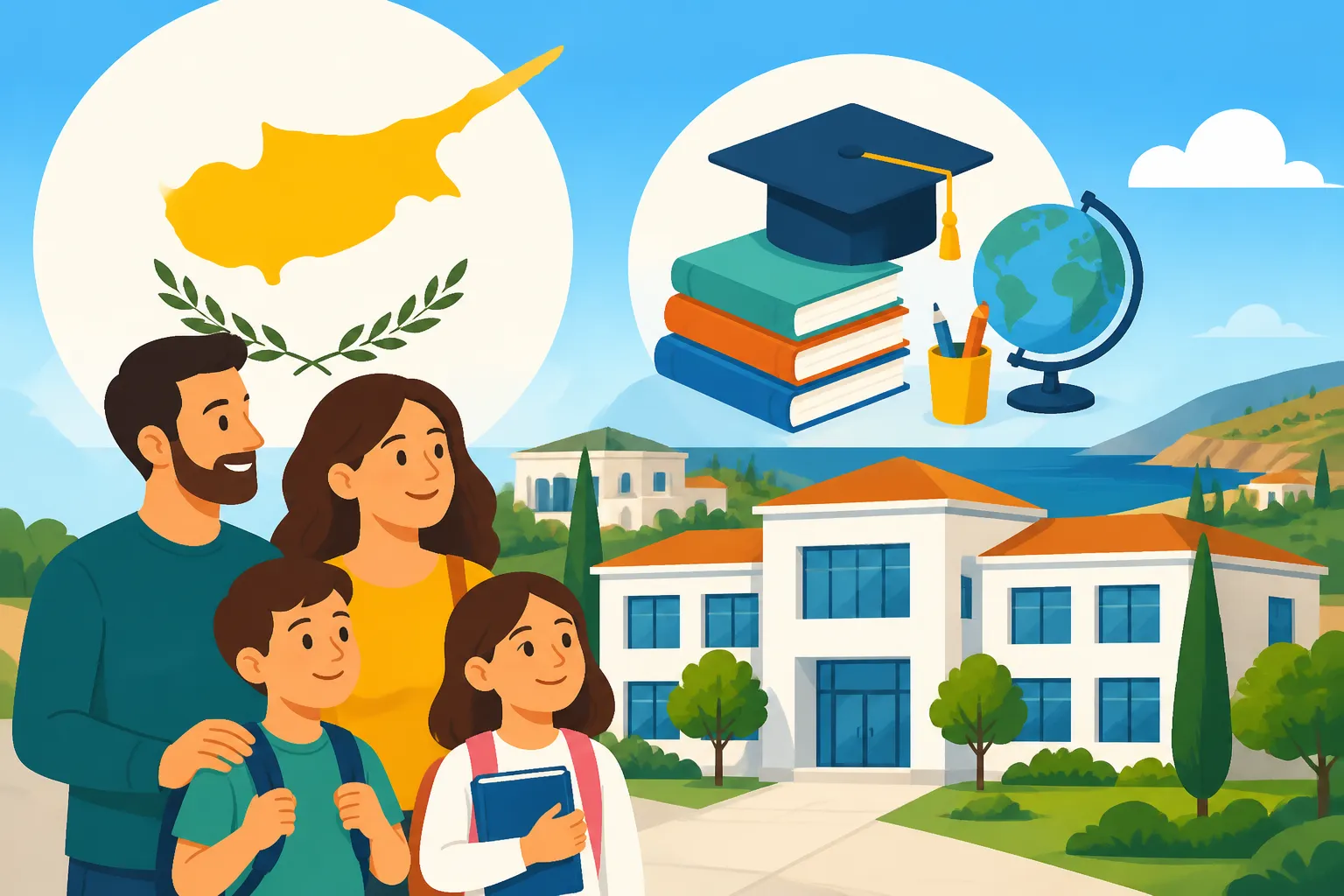
One of the biggest anxieties for expat families moving to Cyprus is undoubtedly the education of their children. The thought of navigating an unfamiliar school system, language barriers, different curricula, and figuring out where your kids will fit in can feel like climbing Mount Olympus itself. This comprehensive guide is here to demystify the Cypriot education landscape, offering realistic insights and practical advice for every expat parent, from toddler stage to university-bound teens.
Navigating the Cypriot School System as an Expat
When you first land in Cyprus with children in tow, the sheer thought of picking a school can be utterly overwhelming. It’s not just about finding a building; it’s about finding a community, a curriculum that aligns with your values, and a place where your child will thrive. For many, this is more complex than securing a visa or even finding a home. You’re not alone in feeling this way; every expat parent has wrestled with these choices.
The Initial Culture Shock and System Overview
The education system in Cyprus can feel quite different from what you might be used to in your home country. Broadly, it's divided into pre-primary, primary, secondary, and higher education. Public schools are largely taught in Greek, adhering to the national curriculum, while private schools offer a mix, some following the Cypriot curriculum with enhanced English, and others, the international schools, following British, American, or other curricula. It's a tripartite system that offers choices but also complexity.
What often catches newcomers off guard is the strong emphasis on rote learning in some local settings, a stark contrast to more inquiry-based approaches in many Western systems. The school calendar also might have subtle differences, and public holidays often revolve around Greek Orthodox religious observances, which can be new for many families. Understanding these foundational differences early on can help manage expectations.
The initial days of researching schools can involve a lot of calls, emails, and sometimes even physical visits, often uncovering conflicting information or a slower pace of response than you’re accustomed to. This is where patience becomes your best friend. Remember, you’re not just enrolling a child; you’re integrating them into a new culture, and the school is often the first gateway.
Public vs. Private vs. International Schools: An Early Dilemma
This is perhaps the first major fork in the road for expat parents. Do you immerse your child in the local culture and language through a public school? Do you opt for a private local school that might offer a more diverse environment and bilingual instruction? Or do you choose the familiar comforts of an international school, often with higher fees but a curriculum your child might already be used to? Each option has its own set of advantages and challenges.
Public schools are free and provide excellent integration into Cypriot society and the Greek language, but they can be a steep learning curve for non-Greek speaking children. Private Cypriot schools offer a middle ground, often featuring bilingual education and a more diverse student body, but they come with tuition fees. International schools, while expensive, provide continuity with international curricula and typically a very multicultural environment.
Your choice here will heavily depend on your long-term plans for Cyprus, your budget, and most importantly, your child's personality and adaptability. There's no single "right" answer, and what works for one family in Limassol might not work for another in Nicosia. It’s a decision that often requires deep conversations with your children and sometimes even trial periods if possible.
Age and Grade Equivalencies: A Common Confusion
One of the first practical hurdles you'll face is figuring out where your child fits into the Cypriot school system based on their age and previous schooling. The cut-off dates and grade numbering can differ significantly from country to country, leading to confusion and, sometimes, an unexpected grade placement for your child. Generally, primary education starts at age 6, and children attend for six years. Secondary education then follows for another six years, split into Gymnasium (lower secondary) and Lyceum or Technical School (upper secondary).
For instance, what might be "Year 5" in the British system could equate to a different grade number in the Cypriot system, or even in an American-curriculum international school here. Schools will usually ask for detailed reports from your child’s previous school, including transcripts and age verification documents. It’s crucial to have these ready and translated if necessary.
Don't be afraid to ask for a clear explanation of their age-to-grade placement policy and how it aligns with your child's educational background. A bit of proactive research into "how to enrol your child in a Cypriot school" can save you a lot of headaches, especially if you're trying to match school years precisely. Sometimes, schools may even recommend a slightly different placement based on language proficiency or academic assessment, so be prepared for a degree of flexibility.
Public Education in Cyprus: The Local Experience
Opting for public education in Cyprus is a significant step towards full immersion in Cypriot life. It’s a brave choice for many expat families, offering a truly authentic local experience, but it’s not without its initial trials. Think of it as a crash course in Cypriot culture for your entire family, where your child becomes your unofficial Greek tutor!
Understanding the Greek-Cypriot Curriculum
The public school curriculum in Cyprus is centrally managed by the Ministry of Education, Culture, Sports and Youth. It focuses heavily on Greek language and literature, mathematics, history (particularly Cypriot and Greek history), religious education (Greek Orthodox), and environmental studies. English is taught as a second language from primary school, but the primary language of instruction for all other subjects is Greek. This can be a huge hurdle for children arriving with no prior Greek language knowledge.
While the curriculum is robust and aims to provide a well-rounded education, it can be quite traditional in its approach. Emphasis is often placed on memorisation and standardised testing, which might feel rigid if your child is accustomed to a more creative or project-based learning environment. However, it also instils a strong sense of national identity and cultural values, which can be invaluable for children growing up here.
Parents often find themselves trying to support homework in a language they don't understand, relying on Google Translate or older siblings. This is where patience and perhaps investing in some supplementary Greek lessons for both you and your child can be incredibly beneficial. The community around public schools is often very tight-knit, offering a genuine glimpse into Cypriot daily life.
Enrolment Process and Required Documents
Enrolling in a public school generally involves registering at your local municipality (known as a "dimos") or community council ("koinotita") first, as enrolment is typically based on your residential address. You'll then proceed to the specific school. The process, while not overly complicated, requires meticulous attention to detail and a good dose of paperwork.
You’ll typically need proof of residence (e.g., rental agreement, utility bills), your child’s birth certificate (often translated and apostilled), their previous school records, a valid passport or identity card for both parent and child, and sometimes a health certificate or vaccination record. Remember, public schools are generally free, but you might have small contributions for supplies or activities. Getting your documents in order and potentially translated into Greek beforehand will make the process smoother.
It's advisable to start this process well in advance of the new academic year, which typically begins in September. While places are generally available, familiarising yourself with the local school and its specific requirements early on can prevent last-minute rushes. Don't hesitate to ask for help from local expat groups or even the school secretary, many of whom are accustomed to assisting foreign families.
The Language Barrier and Support for Non-Greek Speakers
The biggest elephant in the room for many expat parents considering public schools is, without a doubt, the language barrier. For children arriving without Greek, the first few months can be incredibly challenging, even isolating. Imagine being dropped into a classroom where you understand very little of what is being said, both by the teacher and your peers. It's a tough ask for any child.
While public schools are generally not equipped with dedicated English as a Second Language (ESL) programmes as international schools might be, some schools, especially in more multicultural areas like Limassol or Nicosia, may have teachers who can offer some informal support. However, it's largely expected that children will pick up the language through immersion. This can be incredibly effective for younger children, who are like sponges, often becoming fluent within a year or two. Older children might struggle more and require additional support outside school hours.
Many expat families supplement public schooling with private Greek lessons to accelerate language acquisition. There are numerous tutors and language schools across Cyprus that cater to foreigners. The payoff, however, is immense: full integration into Cypriot society, deeper friendships with local children, and a true sense of belonging. It's a steep climb, but the view from the top is absolutely worth it for those who make the effort.
Private Cypriot Schools: A Hybrid Approach
For many expat families, private Cypriot schools offer a compelling middle ground between the full immersion of public schools and the often-higher costs of international schools. These institutions often blend the local curriculum with more international elements, providing a softer landing for foreign children while still embedding them within the Cypriot cultural context.
Blending Local and International Curricula
Private Cypriot schools typically follow the national curriculum but often augment it with a stronger emphasis on English language instruction and other subjects taught in English. Some schools might also offer additional subjects or extracurricular activities that align more closely with international educational standards. This bilingual environment can be incredibly beneficial, allowing children to develop strong Greek language skills while maintaining proficiency in English.
These schools often attract a mix of Cypriot families looking for enhanced English education and expat families seeking cultural integration without the immediate full immersion into a Greek-only environment. You'll find a more diverse student body compared to public schools, which can also ease the transition for expat children. The class sizes might also be slightly smaller, allowing for more individual attention from teachers.
It's worth noting that while English is prominent, the primary language of instruction for core subjects usually remains Greek, especially in the later years. Parents should clarify with each school exactly what proportion of the curriculum is taught in which language. This dual focus can sometimes mean children are balancing two linguistic learning environments simultaneously, which can be demanding but ultimately rewarding.
Costs and Application Process for Private Local Schools
Unlike public schools, private Cypriot schools come with tuition fees, which can vary significantly depending on the school's reputation, facilities, and location. While generally more affordable than international schools, these costs are a significant consideration for families, and they typically increase with the child's grade level. Beyond tuition, you might also factor in costs for uniforms, books, school trips, and extracurricular activities. "The cost of healthcare in Cyprus: A complete breakdown for foreigners (2026)" details general expenses, but schooling is a specific line item that needs careful budgeting.
The application process usually involves submitting an application form, your child's birth certificate, previous school reports, and sometimes undertaking an entrance exam or interview, especially for older children. They will be assessing academic readiness and, often, English language proficiency. Spaces can be competitive, particularly in popular schools in major cities like Limassol and Nicosia, so it's wise to apply early.
Many of these schools will have clearer communication channels in English and a more streamlined application process geared towards international families. This can be a huge relief compared to navigating the more bureaucratic public system. Always request a full breakdown of all fees and charges to avoid any surprises.
Benefits and Drawbacks of a Private Cypriot Education
The benefits of a private Cypriot education are numerous. Children gain strong bilingual skills, making them more adaptable globally. They integrate into the local culture while retaining a connection to international standards. The smaller class sizes and potentially more individualised attention can be advantageous, and the diverse student body fosters a multicultural perspective. It’s often seen as a gateway to both Cypriot higher education and potentially international universities.
However, there are drawbacks. The fees, while less than international schools, are still substantial. While English is spoken, the predominant language of instruction remains Greek for many subjects, meaning a significant language learning curve for new arrivals. The blend of curricula can sometimes feel like a compromise rather than a definitive path, and the teaching methodologies might still lean towards more traditional Cypriot approaches rather than fully embracing modern international pedagogies.
Ultimately, choosing a private Cypriot school means embracing a unique blend of local and international. It’s a commitment to a dual cultural and linguistic education, which for many expat families, offers the best of both worlds, preparing their children for a future that is both globally connected and locally rooted.
International Schools: The Familiar Path for Expat Children
For many expat families, international schools represent a familiar and often comforting choice. These institutions offer continuity of curriculum, a lingua franca that their children already understand, and a diverse, multicultural environment that mirrors their own expat experience. While they come with a hefty price tag, the perceived benefits often make them the preferred option.
Overview of Major International Schools and Curricula
Cyprus is home to several well-established international schools, particularly in the major cities of Limassol, Nicosia, and Paphos. These schools typically follow renowned international curricula such as the British National Curriculum (leading to IGCSEs and A-Levels), the International Baccalaureate (IB) Programme, or American curricula. This consistency is a huge draw for families who anticipate further international moves or want to ensure their child's qualifications are globally recognised.
Prominent schools like The Heritage Private School or The English School in Nicosia are well-regarded and attract students from various nationalities. They often boast excellent facilities, a wide range of extracurricular activities, and a strong focus on holistic development. The teaching staff is usually international, bringing a wealth of diverse experience, and English is the primary language of instruction throughout.
When researching, it's essential to look beyond the name and understand the specific curriculum offered, as well as the school's philosophy. Some might be more academically rigorous, while others focus on a broader skill set. For those planning to stay long-term, consider the progression from primary through to secondary education within the same institution.
The Application Gauntlet and Waiting Lists
Applying to international schools in Cyprus can feel like a competitive sport. Due to their popularity among both expat and affluent local families, many of the top international schools have waiting lists, especially for certain year groups. It’s not uncommon for parents to apply a year or even two in advance, particularly for entry into early years or popular primary grades. This is one of those crucial steps you should tackle as part of your "first 90 days" in Cyprus.
The application process typically involves a formal application form, submission of previous school reports and transcripts, a copy of the child's passport/birth certificate, and sometimes a non-refundable application fee. Many schools will also require an entrance assessment or interview to gauge the child's academic level and English language proficiency. It’s a thorough process designed to ensure a good fit for both the student and the school community.
Don't wait until the last minute. As soon as you know you're moving to Cyprus, start researching and making enquiries. Even if you're just weighing options, getting your child on a waiting list can provide peace of mind. Flexibility with your moving date might even be necessary if you're aiming for a highly sought-after spot.
Understanding the High Costs and Value Proposition
This is where the rubber meets the road for many families. International schools are, without a doubt, the most expensive educational option in Cyprus. "How much are international school fees in Cyprus?" is a question that often causes sticker shock. Fees can range from €5,000 to well over €10,000 per year, sometimes even more for the older grades, and these figures don't include extras like uniforms, books, school trips, lunches, and transportation.
However, for many, the value proposition justifies the cost. The benefits include a familiar curriculum, high academic standards, excellent facilities, a wide array of extracurricular activities, smaller class sizes, and often a truly global outlook that prepares children for university worldwide. The seamless transition for children moving between international schools in different countries is also a significant advantage. The diverse student body and staff mean children are exposed to many cultures, which is invaluable for expat kids.
It's a financial commitment that requires careful budgeting. Some employers in Cyprus offer educational allowances as part of their expat packages, so it’s worth checking if this applies to your situation. For those without such support, a deep dive into your finances is essential. While the price is high, for continuity, academic excellence, and a truly international environment, many families find it to be a worthwhile investment in their child's future.
Early Childhood Education and Special Needs Support
Moving to Cyprus with young children, or children requiring special assistance, introduces a different layer of considerations when it comes to schooling. The focus shifts from curriculum continuity to finding nurturing environments and adequate support systems.
Nurseries and Kindergartens: Finding the Right Fit
For the littlest expats, Cyprus offers a range of nurseries (for babies and toddlers) and kindergartens (for children typically aged 3-5). These can be private, public, or municipal. Public kindergartens are typically free for children from age 4 and 8 months (pre-primary), but places can be limited, and the language of instruction is predominantly Greek. Private nurseries and kindergartens offer more flexibility, often cater to a more international clientele, and many offer bilingual or English-only programmes.
Finding the 'right fit' for early childhood education is incredibly personal. Some parents prioritise language immersion from a young age, opting for local Greek-speaking kindergartens. Others seek a more structured, familiar environment provided by international nurseries. Many private options combine a playful, nurturing atmosphere with an introduction to basic literacy and numeracy in English, often following international early years frameworks.
When looking, consider factors such as teacher-to-child ratios, daily routines, facilities (outdoor play areas are a must in Cyprus!), and the school's approach to communication with parents. A trial period, if available, can be invaluable for both parent and child. Remember to check what documents you need, similar to primary school, but often including a health booklet.
Navigating Special Educational Needs in Cyprus
Navigating special educational needs (SEN) in any new country is complex, and Cyprus is no exception. While the Cypriot education system is committed to inclusive education, the level and type of support available for children with SEN can vary significantly across public, private, and international schools. In public schools, support is primarily offered through Special Education Teachers within mainstream classrooms or in dedicated units, and services are free. However, resources can be stretched, and the language barrier can add another layer of complexity.
Private and international schools often have more dedicated SEN departments, learning support teachers, and resources. They might offer individualised education plans (IEPs) and cater to a broader range of learning differences. However, the extent of support can vary wildly, and it's critical to have direct, detailed conversations with the school’s SEN coordinator about your child's specific needs and the resources they can provide before committing to enrolment.
Parents might also need to seek external private therapists or specialists for support, such as speech therapists, occupational therapists, or educational psychologists, which can add to the cost of living. Connecting with expat parent groups can be an invaluable source of recommendations and shared experiences for finding adequate SEN support in Cyprus.
Language Learning and Extracurricular Activities
Regardless of the school type, language learning extends beyond the classroom. For children in public or private Cypriot schools, immersion is key, but supplementary Greek lessons can significantly boost their confidence and progress. For children in international schools, they might miss out on deep Greek immersion, so enrolling them in local sports clubs or cultural activities can bridge that gap. Learning Greek for living in Cyprus: A Complete Guide for Expats can be helpful for both parents and children.
Extracurricular activities are widely available across all types of schools. International schools often boast the broadest range, from drama clubs and music lessons to various sports. Private Cypriot schools also offer a good selection. Public schools might have fewer formal clubs but often integrate cultural activities and local sports into their programmes. These activities are crucial for fostering friendships, developing new skills, and easing the transition into a new environment.
It's vital to encourage your child to explore these opportunities. They are not just about keeping busy; they are about building a social network, developing a sense of belonging, and discovering new passions in their new Cypriot home.
Beyond Primary and Secondary: Higher Education and Vocational Training
For expat families planning a long-term stay in Cyprus, or those with older children nearing the end of secondary education, understanding the pathways to higher education and vocational training within the country becomes paramount. Cyprus offers diverse options, from well-regarded universities to practical vocational schools.
Cypriot Universities and Colleges for Expats
Cyprus boasts several reputable public and private universities and colleges, attracting both local and international students. The University of Cyprus and Cyprus University of Technology (TEPAK) are public institutions offering a wide array of undergraduate and postgraduate programmes, primarily in Greek, though some postgraduate courses are available in English. Private universities, such as the University of Nicosia, European University Cyprus, and Frederick University, offer a significant number of programmes entirely in English, making them popular choices for expat students.
The quality of education at these institutions is generally high, and degrees are recognised across the EU and internationally. Many universities have vibrant international student communities and provide support services for foreign students. Admissions typically require a recognised secondary school leaving certificate (e.g., A-Levels, IB Diploma, or equivalent) and often proof of English language proficiency (e.g., IELTS, TOEFL scores).
For non-EU citizens, securing a student visa is a necessary step. The process is outlined in "How to get a student visa and study in Cyprus: The full guide (2026)." Tuition fees at private universities can range from €8,000 to €15,000 per year, while public universities are generally more affordable, particularly for EU citizens. Choosing a Cypriot university allows students to continue their life on the island, potentially leading to work opportunities after graduation.
Vocational and Technical Schools: Alternative Pathways
Not every student is destined for a traditional university degree, and Cyprus recognises the importance of practical skills. Vocational and technical schools offer alternative pathways for students seeking to enter the workforce directly or pursue specialised trades. These institutions provide hands-on training in fields such as tourism and hospitality, mechanics, electrical engineering, information technology, and various crafts.
These programmes are often more practically oriented, with a strong emphasis on apprenticeships and real-world experience. They can be an excellent option for students who prefer a less academic and more applied learning style. Graduates often find employment quickly within the Cypriot economy, especially in sectors like tourism and construction.
Information on these schools might be less readily available in English compared to universities, so it may require a bit more digging or even assistance from a Greek-speaking friend. However, for a student keen on a specific trade, these schools provide a valuable route to a fulfilling career in Cyprus.
The Transition to Higher Education or Employment
The transition from secondary education, whether from a public, private Cypriot, or international school, to higher education or employment in Cyprus involves several considerations. Students from international schools with globally recognised qualifications generally have a smooth path to universities abroad or in Cyprus. Graduates of Cypriot Lyceums and Technical Schools typically follow the local university entrance examination system or apply to private institutions.
For those looking to enter the workforce directly, networking is key. Cyprus has a relatively small job market, and personal connections often play a significant role. Students might consider internships or part-time work during their final years of schooling to gain experience and build contacts. Understanding Cypriot employment law and worker rights (2026) can be very helpful for young individuals entering the workforce.
Regardless of the chosen path, preparing for the next stage is crucial. Career counselling services are available at most secondary schools and universities. Encouraging your child to explore their interests, identify their strengths, and proactively plan their future, whether in Cyprus or abroad, is a key role for expat parents.
Practical Tips and Parental Advice for Expat Families
Moving your family and setting them up in a new education system is a marathon, not a sprint. Here are some seasoned tips to help you navigate the process with a bit more grace and a lot less stress.
Engaging with the School Community and Teachers
One of the most important things you can do as an expat parent is actively engage with your child's school. This doesn’t mean hovering, but rather showing interest, volunteering where possible, and making an effort to connect with teachers and other parents. In public and private Cypriot schools, parent-teacher associations (PTAs) might be less formal than in some Western countries, but showing up for parent meetings and school events is highly valued.
For public schools, even a simple "kalimera" (good morning) to the teachers and staff can go a long way. If you don't speak Greek, learning a few basic phrases will demonstrate your commitment. For international schools, communication is often more formalised through emails and parent portals, but attending events and social gatherings is still important for building community. These connections can provide invaluable support and insights into the school's inner workings.
Don't be shy about asking questions, especially if something isn't clear due to language or cultural differences. Teachers in Cyprus generally appreciate engaged parents. Establishing a good rapport early on can make a significant difference in your child's school experience and your own peace of mind.
Managing Logistics: Transport, Lunches, and After-School
The daily logistics of school life can present unexpected challenges. Transport to school is a big one. While some international and larger private schools offer bus services (often at an additional cost), many public schools do not. This means parents are often responsible for drop-offs and pick-ups, which can be tricky if you're trying to manage work schedules or have multiple children at different schools. Therefore, knowing "how to buy a car as a newcomer in Cyprus" might become a priority.
School lunches are another area to consider. Many Cypriot schools do not have full canteens in the same way as, say, a UK or US school. Children often bring packed lunches from home, or they might buy snacks and simple meals (like toasties or pastries) from a small canteen or nearby kiosk. This means planning nutritious meals at home is usually necessary.
After-school care varies. Some private and international schools offer extracurricular activities or extended day programmes. Public schools typically finish earlier, and parents often rely on family, private babysitters, or organised activity clubs for after-school care. Research these options in advance, especially if both parents are working. Staying connected with your family and using services like Airalo for eSIMs can ensure you're always reachable for school pick-ups or emergencies.
Preparing Your Child for a New Educational Journey
The emotional aspect of moving schools in a new country cannot be underestimated. Children process change differently, and some may struggle with the language, new routines, or making friends. Open communication is key. Talk to your child about what to expect, validate their feelings, and reassure them that it's okay to feel overwhelmed.
Encourage them to embrace the new culture and language, even if it's just a few words a day. Point out the exciting aspects, like new foods, holidays, or school trips. If your child is struggling, seek support from the school's counsellor or reach out to expat support networks. Sometimes, just knowing other kids have gone through the same thing can be a huge comfort.
Consider planning some fun activities outside of school to help them settle in and make friends. Exploring the local parks, beaches, or community centres can provide opportunities for socialisation. Remember, you’re on this journey together, and your positive attitude can significantly influence your child’s adaptation. Moving your household with experts like Sirelo can simplify the physical move, allowing you more emotional bandwidth for your children.
Key Differences and Unexpected Realities of Cypriot Education
Even with all the research, some aspects of the Cypriot education system might still surprise you. Understanding these subtle, and sometimes not-so-subtle, differences can help you manage expectations and truly integrate.
Curriculum Focus and Teaching Styles
As mentioned, public and many private Cypriot schools often lean towards a more traditional, teacher-centred approach, with a strong emphasis on foundational knowledge, rote learning, and preparing for national exams. This can contrast sharply with the more student-centred, inquiry-based, or project-based learning approaches prevalent in many Western educational systems. While critical thinking is encouraged, the method of instilling it might feel different.
The curriculum, particularly in public schools, has a significant focus on national identity, history, and the Greek Orthodox faith. Religious instruction is a compulsory subject. For families from different religious or cultural backgrounds, this might require some adjustment or discussion with the school if they have concerns.
It’s not necessarily better or worse, just different. Parents coming from systems that prioritise creativity and critical thinking above all else might find the Cypriot system rigid initially. However, it also builds a strong academic foundation in core subjects. Understanding these underlying philosophies will help you appreciate the local educational values.
Parental Involvement and Communication Expectations
Parental involvement in Cyprus can sometimes feel less formalised than what expats might be used to. In public schools, direct, proactive engagement might be required from parents, especially regarding language barriers or specific concerns. Don't expect regular, detailed progress reports automatically; often, you need to initiate contact for specific updates. However, when you do engage, Cypriot teachers are generally very welcoming and willing to discuss your child's progress.
In international schools, communication is often more frequent and structured, with parent-teacher conferences, newsletters, and online portals. However, even here, building personal relationships with teachers and administration can enhance your experience. Cultural nuances in communication are important; a direct email might be effective, but a face-to-face chat during pick-up can sometimes resolve issues faster.
The key is to adapt your communication style to the school's culture. Showing respect for the teachers and their expertise, while advocating for your child, will build a strong foundation for a positive relationship. Remember, you're part of a new community, and understanding its unspoken rules is part of the journey.
The Importance of Language and Cultural Integration
Perhaps the most underestimated reality is the profound impact of language and cultural integration on your child's overall well-being and academic success in Cyprus. For children in public or private Cypriot schools, learning Greek isn't just about understanding lessons; it's about forming friendships, participating in playground games, and feeling a true sense of belonging. The faster they grasp the language, the smoother their integration will be.
Even for children in international schools, understanding and appreciating Cypriot culture is vital. They live in Cyprus, after all! Encouraging them to learn some Greek phrases, try local foods, participate in local festivals, or even join a local sports club will enrich their experience exponentially. These experiences move them beyond the expat bubble and into the heart of the island. "The best places to live in Cyprus for expats: A complete guide" often considers areas with good schools and family-friendly amenities, which often facilitate cultural integration too.
A child who feels culturally integrated is a happier, more confident child. This deeper connection to their new home will shape their identity in profound ways, giving them a unique perspective and a broader understanding of the world. It’s not just about textbooks and grades; it’s about growing up in a place that feels like home.
Disclaimer
The information provided in this guide is intended for general informational purposes only and does not constitute legal, financial, or educational advice. While we strive to provide up-to-date and accurate information, regulations and circumstances in Cyprus can change. Always consult with official government sources, educational institutions, or professional advisors for specific, personalised advice regarding your family’s situation.