How Do I Get a Residential Parking Permit in Cyprus?
Ah, the joys of navigating daily life in Cyprus! You've found a lovely spot, you've settled in, and now you're facing the daily conundrum that every expat eventually encounters, especially in bustling cities like Limassol, Nicosia, or Larnaca: parking. It can quickly turn from a minor inconvenience into a major headache, especially if you're constantly circling the block, battling for a spot, and dreading those little yellow slips under your windshield wipers. If you're wondering "How do I get a residential parking permit in Cyprus?", you've come to the right place. This guide will walk you through the often-confusing process, sharing tips from a veteran expat who's been there, done that, and probably paid a few parking fines along the way.
Understanding the Need for a Residential Parking Permit in Cyprus
Let's be brutally honest: parking in the urban centres of Cyprus can be a nightmare. It’s not just about convenience; it’s about avoiding unnecessary stress and those dreaded fines that chip away at your carefully planned budget. A residential parking permit isn't just a piece of paper; it's your ticket to sanity and a small slice of local peace in an otherwise competitive concrete jungle.
The Parking Predicament: Why You'll Want One
Picture this: You've had a long day at work, the kids are squabbling in the back, and all you want to do is get home, unload the groceries, and relax. But as you turn onto your street, you see it – no parking spaces anywhere near your apartment. You drive around the block, then another, then another, your frustration mounting with every passing minute. Sound familiar? This isn't an isolated incident; it's a daily reality for many residents in high-density areas of Cyprus. Without a designated spot, you're at the mercy of sheer luck, and trust me, luck often runs out when you need it most.
Beyond the sheer inconvenience, there's the financial aspect. Parking fines in Cyprus, while perhaps not astronomical, certainly add up. One moment you're thinking you'll just nip into a spot for "five minutes," and the next you're handed a ticket for parking illegally or overstaying your welcome in a paid zone. A residential parking permit is designed to alleviate this exact stress, giving you peace of mind that there will (usually) be a designated area for you to park near your home. It’s particularly invaluable if your apartment doesn't come with its own dedicated parking bay, which is a common scenario in older buildings or popular city districts.
The urban landscapes of places like Limassol, Nicosia, and even the popular areas of Larnaca are constantly evolving, with more cars hitting the roads and less available space. What might have been an easy street to park on a few years ago is now often a battleground. For expats who are still finding their feet, dealing with parking regulations in a foreign language can add another layer of complexity. Getting a permit streamlines this part of your life, allowing you to focus on the myriad of other adjustments you're making to life on the island.
Who is Eligible for a Residential Parking Permit?
The eligibility criteria for a residential parking permit in Cyprus are generally quite straightforward, but they are strictly enforced by the municipal authorities. At its core, you must be a legitimate resident of the area where you are applying for the permit. This isn't something you can simply apply for if you work in one area but live in another; the permit is tied directly to your primary place of residence. The purpose is to ensure that local residents have priority access to parking in their immediate vicinity, preventing visitors or commuters from monopolizing limited spaces.
Typically, eligibility extends to individuals who permanently reside within a defined residential parking zone. This means your official address, as registered with government bodies, must fall within one of these specific zones. You'll also need to be the registered owner or primary user of the vehicle for which you're seeking the permit. Municipalities want to ensure that permits are issued to genuine residents for their everyday vehicles, not for multiple vehicles per household where parking is already scarce, or for vehicles that aren't primarily used by the applicant.
It's also worth noting that while the general principles are consistent across the island, specific nuances can vary slightly from one municipality to another. For instance, the exact boundaries of residential zones, the types of vehicles eligible, or even the maximum number of permits per household might differ between Limassol, Nicosia, or Paphos. Therefore, a crucial first step is always to check the specific requirements of your local municipal authority. This proactive approach can save you a lot of time and potential headaches down the line, ensuring you gather precisely what's needed for your unique situation.
The Step-by-Step Process to Obtain Your Permit
Getting a residential parking permit in Cyprus can feel like a mini-administrative quest. It requires patience and a good grasp of what documents are needed. Trust me, showing up unprepared is a surefire way to be sent home, only to repeat the journey later. Let's break down how to get it done efficiently.
Gathering Your Documents: The Cypriot Paperwork Odyssey
This is perhaps the most critical part of the entire process, and where many expats stumble. The Cypriot administrative system loves its paperwork, and the municipality is no exception. You'll need to present a collection of documents that unequivocally prove who you are, where you live, and that the vehicle in question belongs to you and is legally on the road. Don't just bring originals; always have a full set of photocopies ready, as this can often speed things up significantly.
Here's a detailed list of what you'll typically need to prepare:
- Completed Application Form: This is always the starting point. You can usually download this from your specific municipality's website (e.g., Limassol Municipality, Nicosia Municipality) or pick one up directly from their offices. Fill it out accurately and completely, often in Greek, so get help if you're not confident in the language.
- Proof of Residence: This is paramount. You'll need a copy of your current rental agreement or property title deeds if you own your home. The agreement should clearly state your name, address, and be signed by all parties. To further solidify your proof of address, you might also need recent utility bills (electricity from EAC, water bill, or even an internet bill) in your name, linking you directly to the address. For guidance on getting these set up, check out our guide on The Expat Guide to Setting Up Utilities (Electricity, Water, Internet) in Cyprus.
- Vehicle Registration Certificate (V5): This document proves ownership of the vehicle. Ensure it's current and registered in your name. If the car belongs to a company and you're the primary user, you'll need a letter from the company confirming this, along with the company's registration details.
- Your Driving Licence: A valid driving licence is essential. If you've recently moved to Cyprus, you might still be using your foreign licence, but you'll eventually need to convert it to a Cypriot one, especially if you plan to stay long-term. Our guide on How Do I Convert My Foreign Driving Licence in Cyprus? has all the details on that.
- Proof of Vehicle Insurance: A current insurance policy for your vehicle is non-negotiable. This demonstrates that your car is legally insured to be on the road. You can usually get a printout of your policy from your insurance provider. For more on car insurance, you might want to read How Much Is Car Insurance in Cyprus?.
- Road Tax Receipt: Proof that your annual road tax is paid up to date. You can typically find this online or provide a physical receipt. We've got more information on this in How Much Is Road Tax for a Car in Cyprus?.
- MOT Certificate: For vehicles over a certain age, an MOT (Ministry of Transport) certificate is required annually to ensure roadworthiness. Make sure yours is valid.
- Passport or ID Card: Your primary identification document. If you're a non-EU citizen, you'll likely need to show your residence permit as well, commonly known as a Pink Slip. For a comprehensive overview of residency, see The Complete Guide to Cyprus Visas and Immigration for Expats (2027).
It truly cannot be stressed enough: double-check everything before you head out. A missing document, even a seemingly minor one, will mean a wasted trip. As you're gathering these documents, you might recall the similar mountain of paperwork you encountered when first moving here. Services like Sirelo can be invaluable during initial moves, helping you organize the sheer volume of documents needed for establishing residency, which then indirectly aids processes like this.
Navigating Your Local Municipality
Once you have your meticulous stack of documents, the next step is to head to your local municipality office. Each city or large town in Cyprus has one, and this is where all the local administrative magic (or sometimes, administrative purgatory) happens. For instance, if you live in the capital, you’d visit the Nicosia Municipality, while those in the south would go to the Limassol Municipality.
Here are a few pointers for your visit:
- Go Early: Like many government offices in Cyprus, they tend to get busy, especially first thing in the morning. Arriving shortly after they open can save you a significant amount of waiting time.
- Be Patient and Polite: This is universal advice when dealing with bureaucracy anywhere, but especially so in Cyprus. A friendly demeanour, even when things are moving slowly, can make a difference. The staff are often dealing with a high volume of requests, and showing respect for their process goes a long way.
- Language Barrier: While many municipal employees in tourist and expat-heavy areas speak English, it's not guaranteed. If your Greek isn't up to par, consider bringing a Greek-speaking friend or colleague along. Alternatively, having a translation app ready on your phone (ensuring you have data – perhaps through a service like Airalo for instant eSIM connectivity) can be a lifesaver for specific terms or questions.
- Specific Counters: Once inside, you'll likely need to find the specific department or counter that handles residential parking permits. Don't be shy to ask the information desk (if there is one) or other visitors where you need to go. Look for signs that might say "Άδειες Στάθμευσης Κατοίκων" (Residents Parking Permits).
The process itself usually involves presenting your documents, having them verified, and then paying the applicable fee. The official will typically review your application, ensure your address falls within a designated residential parking zone, and then process your request. Remember that different municipalities might have slightly different internal procedures, so what worked for a friend in Paphos might not be identical in Larnaca. Just be prepared to adapt and follow their instructions carefully. This experience is just one part of the broader administrative setup when you move here; our guide The Complete Guide to Moving to Cyprus: Your First 90 Days (2027) covers many other initial hurdles.
Fees, Processing Times, and Validity
So, you've submitted your application and patiently navigated the municipal office. What's next? Well, like all good things in life, securing your residential parking permit comes with a small cost. The fees for residential parking permits in Cyprus are generally quite modest, designed to cover administrative costs rather than generate significant revenue. Typically, you can expect an annual fee ranging from €20 to €50, though this can vary slightly by municipality and whether it's for a first or second vehicle at the same address. It's always best to check the exact figure on your municipality's website or directly with the office when you apply. Compared to the potential cost of repeated parking fines, this annual fee is a truly insignificant investment for the peace of mind it brings, especially when you consider the overall The Complete Guide to Cost of Living in Cyprus for Expats (2026).
Regarding processing times, this is where the famous Cypriot "siga siga" (slowly, slowly) might come into play. While some municipalities might issue your permit on the spot, others could take a few days, or even up to a couple of weeks, especially during peak periods. Don't expect instant gratification; factor in this potential delay when you apply. It's a good idea to apply well in advance of any particular need, rather than waiting until you've already received a few tickets! Once your permit is ready, you'll typically be notified to pick it up, or in some cases, it might be mailed to your registered address.
The validity of a residential parking permit is almost always annual. This means you'll need to renew it each year. The renewal process is usually simpler than the initial application, as your details are already on file. However, you'll still need to provide updated proofs of residence, vehicle registration, and road tax to ensure everything is current. It's crucial to mark your calendar and set reminders for renewal, as letting it expire can lead to fines, even if you were just a few days late. Don't fall into the trap of thinking it's a one-and-done process; it's an ongoing commitment to parking legally and stress-free.
Life with a Parking Permit and Common Pitfalls
Congratulations, you've got your residential parking permit! It feels great, doesn't it? But having the permit is just the first step; understanding how to use it correctly and what pitfalls to avoid is equally important to truly benefit from it.
Where Can You Park? Understanding the Zones
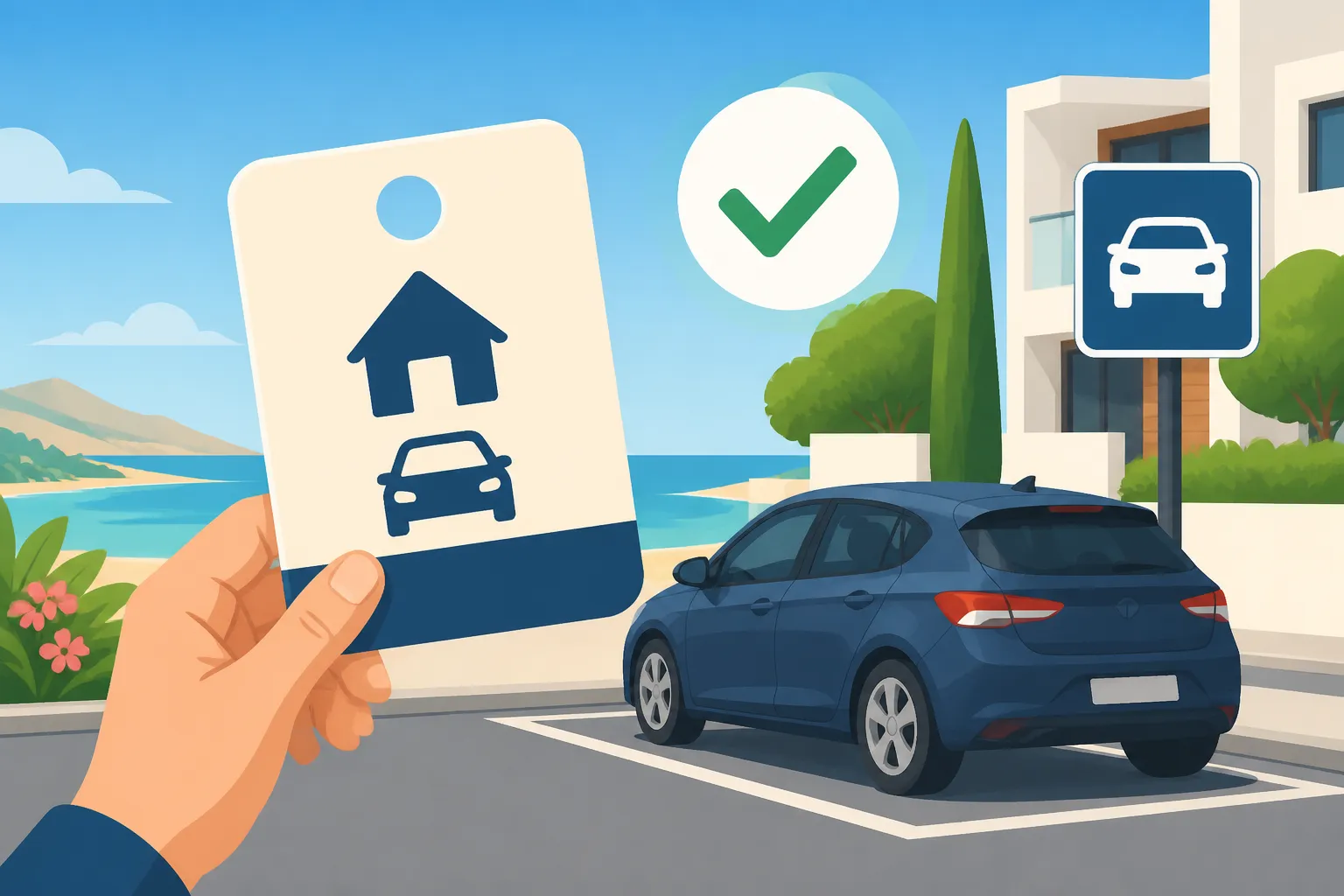
Your residential parking permit is not a golden ticket to park anywhere you fancy in Cyprus. Far from it! It grants you specific privileges within clearly defined residential parking zones, usually in the immediate vicinity of your registered address. These zones are typically marked with specific road signs indicating "Resident Parking Only" or similar wording, often accompanied by a designated time frame or vehicle category. You'll often see specific street markings, like white lines with blue dashed markings or different coloured parking bays, indicating permitted areas.
It's vital to carefully read and understand the signage in your designated zone. Your permit typically allows you to park in specific designated bays or areas within your residential zone, usually free of charge and often without time limits, unlike regular paid parking zones. However, this absolutely does not extend to:
- Commercial Parking Areas: Areas designated for businesses, shops, or offices, even if they're close to your home.
- Restricted Zones: Yellow lines (no stopping), double yellow lines (no parking), bus stops, taxi stands, disabled parking bays (unless you have a valid disabled permit), or loading/unloading zones.
- Private Property: Any area that is clearly private, even if it looks empty.
- Other Residential Zones: Your permit is valid only for your specific residential zone. Parking in an adjacent residential zone, even if it's just across the street, might still result in a fine unless otherwise specified.
Enforcement in Cyprus can be surprisingly strict, especially in high-traffic areas. Parking wardens and police are vigilant, and illegally parked vehicles are prime targets. A fine for incorrect parking can range from €85 upwards, and in some cases, your vehicle might even be towed, incurring significant additional costs and hassle. Always display your permit clearly on your dashboard or windscreen as instructed, ensuring it's visible to enforcement officers. Treat the permit as a privilege, not an carte blanche, and always err on the side of caution when in doubt about a parking spot.
Common Challenges and Troubleshooting for Expats
Even with your permit in hand, life in Cyprus can throw a few curveballs your way. As an expat, you might encounter specific challenges that others don't, and knowing how to troubleshoot them can save you a lot of grief.
One of the most persistent issues for newcomers is language barriers. While municipality staff are often accommodating, complex questions or nuanced situations can quickly get lost in translation. As mentioned, having a Greek speaker with you, or using a robust translation app (which, again, requires reliable internet, making services like Airalo quite useful for tourists and new residents alike), is highly recommended for any interactions beyond simple permit collection. Don't guess; misunderstandings can lead to costly errors.
Missing or outdated documents is another common pitfall. The municipality has little patience for incomplete applications. Always conduct a thorough review of your paperwork before any visit. Remember, the address on your rental agreement needs to match your utility bills, and your vehicle registration needs to be current. If you've moved house, changed cars, or renewed your driving licence, these changes need to be reflected in your permit application. For more on getting your vehicle properly registered and on the road, check out How Do I Register a Car in Cyprus? and Driving in Cyprus: Licences, Registration and Rules for Expats (2027).
Changes of address or vehicle require prompt action. If you move houses, even within the same municipality, your residential parking permit linked to your old address becomes invalid for your new one. You'll need to update your details or apply for a new permit for your new residential zone. The same applies if you change vehicles; the permit is tied to the specific vehicle's registration number. Failure to update these details means you're effectively parking without a valid permit, making you vulnerable to fines.
Finally, renewals are often forgotten until it's too late. The annual validity period means you need to be proactive. Set a reminder in your phone or calendar a month or two before your permit is due to expire. This gives you ample time to gather any updated documents (like new road tax or MOT certificates) and complete the renewal process without stress. Letting your permit lapse, even for a few days, means you're back to square one, risking fines in your own neighbourhood. Keeping abreast of your Understanding Tenant and Landlord Rights in Cyprus might also highlight any responsibilities related to parking spaces if they are part of your rental agreement.
Staying organised, being patient, and understanding the local rules are your best defence against unnecessary parking hassles in Cyprus.
| Document Required | Purpose | Notes |
|---|---|---|
| Application Form | Official request for permit | Obtain from municipality website/office. |
| Proof of Residence | Confirms primary address | Rental agreement, property deed, recent utility bill (EAC, water). |
| Vehicle Registration (V5) | Proves vehicle ownership | Must be current and in applicant's name. |
| Driving Licence | Validates driving eligibility | Cypriot or converted foreign licence. |
| Vehicle Insurance Policy | Shows active car insurance | Full policy details, current validity. |
| Road Tax Receipt | Confirms paid annual road tax | Current year's receipt. |
| MOT Certificate | Proves vehicle roadworthiness | For vehicles over 4 years old. |
| Passport/ID Card | Personal identification | For non-EU citizens, also residence permit (Pink Slip). |
Disclaimer
The information provided in this guide is for general informational purposes only and does not constitute legal or professional advice. While we strive to keep the information up-to-date and accurate, regulations and procedures in Cyprus can change without prior notice. Always consult with the relevant municipal authorities or a legal professional for the most current and specific advice pertaining to your individual situation. We assume no responsibility for any loss, damage, or inconvenience suffered as a result of reliance on the information contained herein.