How Do I Apply for a Credit Card as an Expat in Cyprus?
Trying to get a credit card as an expat in Cyprus can feel like trying to solve a Rubik's Cube blindfolded – especially when you're fresh off the boat and don't have a local credit history. It’s a common frustration many of us have faced, navigating the conservative banking system here. This guide will walk you through the ins and outs, offering practical advice and setting realistic expectations for securing a credit card in your new Cypriot home.
Understanding the Cypriot Banking Landscape for Credit Cards
When you first arrive in Cyprus, you’re often filled with the excitement of a new beginning, maybe a new job, and a desire to get all your financial ducks in a row. Opening a bank account is usually straightforward, but then you hit a snag: credit cards. It’s not like back home in many countries where banks are practically throwing credit at you. Here, the approach is, shall we say, a bit more traditional and cautious.
The Initial Hurdles for Newcomers
One of the biggest hurdles for expats, particularly those new to the island, is the absence of a local credit history. Banks in Cyprus operate differently than, say, banks in the UK or the US, which might access a centralised credit score from agencies like Experian or TransUnion. In Cyprus, a national credit bureau system as comprehensive as those found in many other developed nations doesn't quite exist in the same way. Instead, banks rely heavily on your direct relationship with them, your demonstrated financial stability within their system, and a good old-fashioned assessment of your income and liabilities. This means if you’ve just opened an account and deposited your first salary, you haven't yet built the kind of track record they like to see.
It's a frustrating catch-22, isn't it? You need a credit card to build credit, but you can't get one without credit. Many expats find themselves in this situation, feeling like they're starting from scratch financially. The banks are also a bit more conservative in their lending practices, especially post-2013, which means they scrutinize applications much more closely. They want to see a stable income, a long-term commitment to the island, and a proven ability to manage your finances responsibly within their own institution. Your stellar credit rating from your home country, while impressive, often means little to a Cypriot bank that has no way of verifying it directly.
Key Local Banks and Their Approach to Expats
When it comes to local banking, you'll primarily be looking at institutions like Bank of Cyprus, Hellenic Bank, and to a lesser extent, Eurobank Cyprus. Each has its own internal policies and appetite for risk, but generally, their approach to expat credit card applications follows a similar pattern of prudence.
Bank of Cyprus, being the largest, often has the most established processes. They are typically open to expats, but when it comes to credit cards, they'll want to see a history. This usually means having your salary paid into an account with them for several months, showing consistent deposits and responsible management of your current account. If you’ve been a client for a year or more, with regular income and no issues, your chances significantly improve. They might offer a small credit limit initially, then increase it over time.
Hellenic Bank is another major player and has also made strides in catering to the expat community, particularly in cities like Limassol and Nicosia. Similar to Bank of Cyprus, they'll be looking for proof of sustained income and a demonstrable banking relationship. Sometimes, having other products with them, like a savings account or even a small loan (which you then diligently repay), can help build trust and pave the way for a credit card down the line. It's all about demonstrating reliability. For a deeper dive into the overall banking experience, you might find our guide on The Expat Guide to Opening a Bank Account in Cyprus helpful.
Eurobank Cyprus, while perhaps a smaller footprint than the other two giants, also serves the expat community, especially those with higher net worth or business banking needs. Their credit card offerings might be more tailored, but again, the fundamental requirement will be a solid financial relationship and clear evidence of consistent, substantial income.
The key takeaway here is that no bank is going to hand you a credit card on day one. You need to earn their trust, and that takes time.
Essential Requirements and Documents for Your Application
Applying for a credit card in Cyprus isn't just a matter of filling out a form; it's about presenting a compelling case that you are a reliable, financially stable individual who will honor your commitments. This involves a stack of documents designed to paint a comprehensive picture for the bank.
Proving Your Financial Stability and Residency
The bank's primary concern is your ability to repay debt. Therefore, demonstrating a stable income is paramount. You’ll need to provide:
- Proof of Income: This is usually several months' worth of salary slips (at least the last three, but often six is better). If you're self-employed, tax returns become crucial, showing your declared income. This is where getting your tax affairs in order, perhaps with the help of services like Taxes for Expats, can really strengthen your application. Banks want to see a consistent, verifiable income stream.
- Bank Statements: You'll need statements from your local Cypriot bank account, often for the last 3-6 months. These statements illustrate your spending habits, regular income deposits, and overall financial behaviour. If you're new, having statements from your previous international bank can sometimes help, especially if they show a healthy balance or transfers into your Cypriot account. When you're first setting things up, reliable services like Wise can be invaluable for making those initial transfers to build up your local bank balance, which banks will look at favorably.
- Employment Contract: A copy of your current employment contract, stating your position, salary, and employment duration, is typically required. The longer and more stable your employment, the better.
- Proof of Residency: This is non-negotiable. For EU citizens, this means your Yellow Slip (MEU1). For non-EU citizens, it will be your Pink Slip (Temporary Residence Permit) or a long-term residence permit. If you're still navigating this, our guides on Understanding Residence Permits and the Pink Slip in Cyprus (2027) and How to Register as an EU Citizen (Yellow Slip / MEU1) in Cyprus are essential reading.
- Utility Bills: Recent utility bills (electricity, water, or internet) in your name serve as proof of address.
- Passport/ID Card: Of course, your valid identification document is always needed.
- Tax Identification Number (TIN): You'll need your local tax identification number. This is a fundamental part of the financial system here. If you haven't got one yet, you should definitely apply.
It might seem like an exhaustive list, and indeed it is. Banks are cautious, and for expats, the burden of proof is often a bit higher. They need to mitigate their risk, and comprehensive documentation is their primary tool. Don't be surprised if they ask for more or ask clarifying questions – it's part of their due diligence.
Building a Relationship with Your Bank
It cannot be stressed enough: your relationship with your chosen bank is a significant factor in securing a credit card. It’s not just about depositing your salary; it's about becoming a trusted client.
Think about it from their perspective: they’re much more likely to extend credit to someone they know and have data on, rather than a brand-new customer. This means:
- Longevity of Account: Having your main checking account (current account) with them for at least 6-12 months, ideally longer, significantly increases your chances.
- Regular Deposits: Consistently receiving your salary or business income into this account demonstrates a steady financial flow.
- Direct Debits and Bill Payments: Setting up direct debits for your utility bills, rent, or other regular payments through your account shows financial responsibility and makes you a "sticky" customer.
- No Overdrafts or Bounced Payments: Maintaining a positive balance and never going into unauthorized overdraft is crucial. Any signs of financial mismanagement will be a red flag.
- Other Products: While not mandatory, having other products with the bank (e.g., a savings account, a term deposit, or even a small personal loan that you're repaying diligently) builds your profile as a valuable customer.
Some expats, especially those initially moving significant sums of money, use platforms like Wise to transfer funds to their Cypriot accounts. While Wise itself isn't a bank, the consistent inflow of funds from such platforms into your local account, especially if it helps build a substantial balance, can indirectly contribute to demonstrating your financial footing.
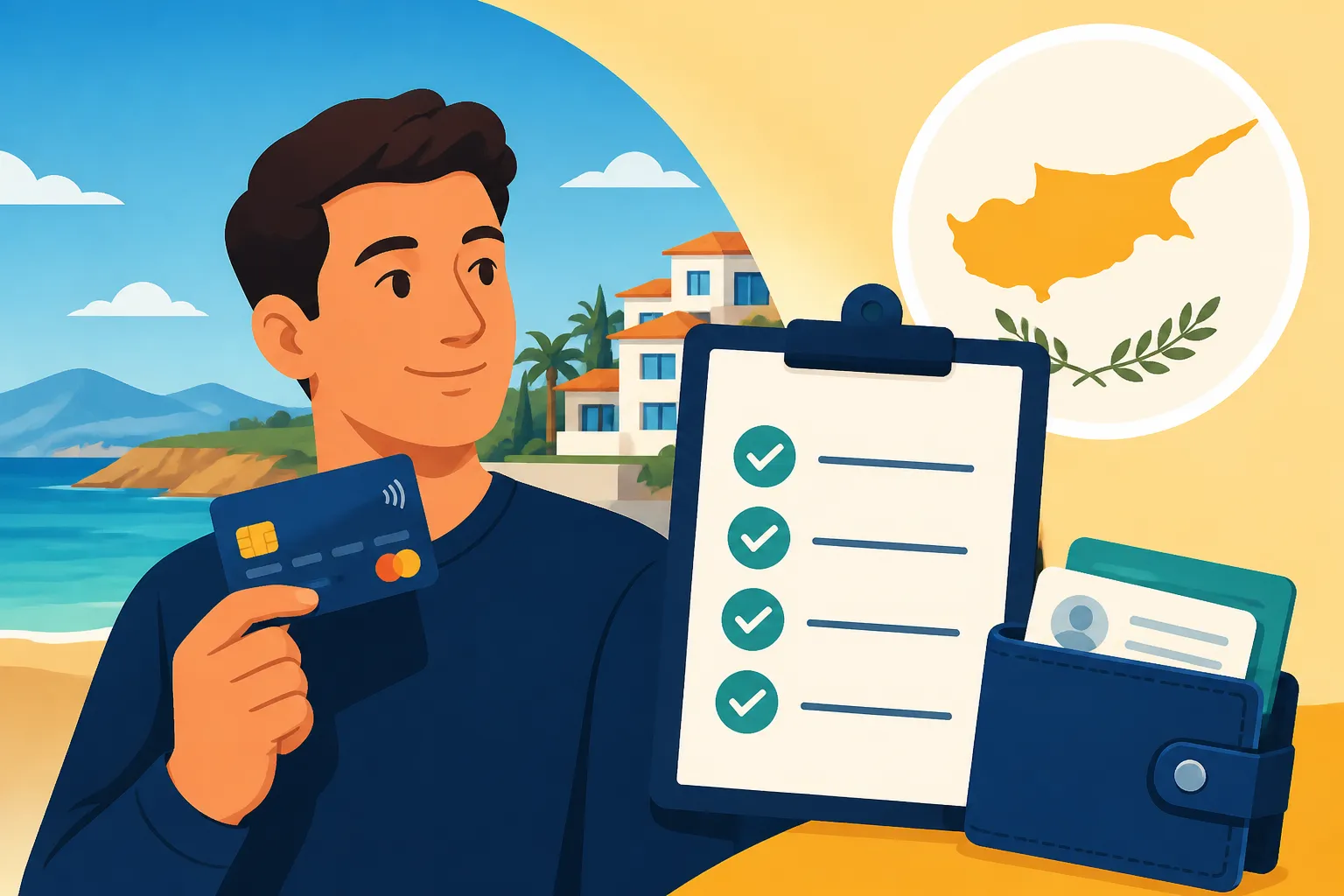
Here's a quick checklist of documents often requested:
| Document Type | Purpose | Notes |
|---|---|---|
| Passport / ID Card | Identity Verification | Valid and up-to-date. |
| Residence Permit (Pink/Yellow Slip) | Proof of Legal Residency | Understanding Residence Permits and the Pink Slip in Cyprus (2027) |
| Tax Identification Number (TIN) | Tax Compliance | Essential for all financial transactions. |
| Employment Contract | Proof of Employment & Salary | Latest version, clearly stating terms. |
| Recent Salary Slips | Proof of Income (3-6 months) | Demonstrates consistent earnings. |
| Cypriot Bank Statements | Financial Activity & Behaviour (3-6 months) | Shows income, expenses, and account management. |
| Foreign Bank Statements (Optional) | Supplementary Proof of Funds/History | Can be helpful if you're new and have substantial overseas funds. |
| Utility Bill (in your name) | Proof of Address (Recent) | Electricity, water, or internet bill. |
| Latest Tax Assessment (if self-employed) | Proof of Income for Self-Employed | Crucial for freelancers. Consider Filing Your Tax Return in Cyprus: The Complete Walkthrough (2027) for guidance. |
Remember, consistency is key. Make sure all your documents are current, clearly legible, and match the information you provide in your application.
Strategies to Improve Your Chances of Approval
So, you've understood the hurdles and gathered your documents. Now, how do you really stand out and convince a Cypriot bank that you're a good credit risk? It often involves a bit of strategic planning and a demonstration of financial maturity.
Starting Small: Secured Credit Cards or Debit Card Alternatives
If you're finding it tough to get approved for a traditional, unsecured credit card, don't despair! There are ways to ease into the Cypriot credit system or find alternatives that serve a similar purpose.
-
Secured Credit Cards (If Available): While not as widely advertised or common as in some other countries, some Cypriot banks might offer secured credit cards. With a secured credit card, you provide a cash deposit to the bank, which then becomes your credit limit. This significantly reduces the bank's risk. If you default, they simply take the money from your deposit. It’s a fantastic way to build a local credit history without the bank taking a huge gamble on you. You'd need to inquire directly with your bank about this possibility. Even if the card itself isn't a full-blown "credit card" in the traditional sense, showing responsible use of a secured facility can pave the way for an unsecured card later.
-
Prepaid Cards: These are not credit cards, but they can function similarly for online purchases and daily spending. You load money onto them, and you can only spend what you've loaded. This helps you manage your budget and means you're not reliant on a credit limit. Many local banks offer their own branded prepaid cards, and international options are also available. While they won't build your credit history, they solve the immediate problem of cashless transactions.
-
Leveraging Your Debit Card: For most day-to-day transactions and online shopping, your Cypriot debit card (Visa or Mastercard) will work perfectly fine. Many expats find they can manage perfectly well without a credit card for quite some time, relying on their debit card and perhaps international services like Wise for larger purchases or online transactions in different currencies. For more on local payment methods, check out How to Use Local Payment Systems and Cards in Cyprus.
The goal here is to show financial responsibility, even if it's not through a traditional credit line. Any positive interaction with your bank about managing funds responsibly can go a long way.
Demonstrating Consistent Income and Financial Responsibility
Beyond the initial documents, your ongoing financial behaviour in Cyprus is crucial. Banks here value stability and predictability above all else.
- Consistent Income Flow: Ensure your salary or business income is consistently deposited into your Cypriot bank account. Avoid large, unexplained cash deposits or frequent transfers in and out that might look suspicious. The steadier your income appears, the more comfortable the bank will be.
- Responsible Account Management: Keep your current account in good standing. Avoid bouncing cheques, incurring overdraft fees, or experiencing situations where payments are rejected due to insufficient funds. These are major red flags for banks.
- Submit Your Tax Returns Diligently: This is absolutely vital. Not only is it a legal requirement in Cyprus, but your annual tax return (Form TD1 or equivalent for self-employed individuals) is the most definitive proof of your income for the tax year. Even if you're a non-domicile resident and enjoy tax benefits, you still need to declare your income. Having a clear, filed tax record, perhaps prepared with the expertise of Taxes for Expats, provides undeniable evidence of your earnings. This is especially true if you have complex income streams or foreign income that needs to be declared appropriately. For a complete understanding, refer to Filing Your Tax Return in Cyprus: The Complete Walkthrough (2027) and How to File Taxes If You Have Both Foreign and Cypriot Income.
- Build Savings: Demonstrating that you can not only earn money but also save it within their institution is a huge plus. Even a modest savings account with a healthy balance shows prudence.
Banks are looking for a pattern of stability. They want to see that you are financially literate and trustworthy.
Considering Alternative Financial Products
Sometimes, despite your best efforts, a credit card might still be out of reach initially. In such cases, it's good to know your other options.
- Personal Loans: If you need a lump sum for a specific purpose and can demonstrate repayment ability, a personal loan might be an option. While it's not a revolving credit line like a credit card, successfully repaying a personal loan can significantly boost your standing with the bank and improve your chances for a credit card application later. This demonstrates your ability to manage and repay borrowed funds. For more insights, our article Can I Get a Personal Loan as a Foreigner in Cyprus? delves into this topic.
- International Digital Banks/Fintechs: Some digital-first banks or fintech companies operating internationally might offer different credit products or a more flexible approach than traditional Cypriot banks. While they may not be a Cypriot credit card, they can fill the gap for online purchases or international travel. Companies like Revolut or N26 (though their offerings and availability change) might provide some solutions, but always check their specific terms for Cyprus residents. When using international platforms for transactions, especially across currencies, a service like Wise can often offer better rates and lower fees compared to traditional bank transfers, making your money go further.
The key is to adapt your financial strategy to the Cypriot banking environment. It's often a slower burn than what you might be used to, but patience and a proactive approach will pay off. For comprehensive advice on navigating the broader financial system, you might find our pillar guide, Banking in Cyprus: A Complete Guide for Foreigners (2027), very useful.
Navigating the Application Process and Post-Approval
So, you've done your homework, built your relationship, and gathered your fortress of documents. Now comes the actual application. This stage, while less about strategy and more about execution, still requires a clear understanding of what to expect.
The Application Journey: What to Expect
Applying for a credit card in Cyprus isn't usually an online, instant approval process, especially for expats. It’s often a more personal, hands-on experience:
- Preparation is Key: Before you even step into the bank, make sure you have every single document listed above, plus any additional ones you anticipate they might ask for, neatly organised. It shows professionalism and saves you multiple trips.
- Make an Appointment: It’s always best to make an appointment with your bank's customer service or personal banking advisor. Walking in without one often means long waits and potentially a less experienced staff member.
- The Interview: Be prepared to discuss your financial situation, your employment, your residency status, and your reasons for wanting a credit card. Be honest and transparent. They might ask about your financial obligations, rent, other loans, etc. This is where your good relationship with the bank and consistent financial behaviour come into play.
- Submission and Waiting Period: Once all documents are submitted and the application form is complete, you enter the waiting period. This can vary significantly, from a couple of weeks to over a month. Don’t expect instant gratification. Banks need time to review, cross-reference, and internally approve your application.
- Follow-up (Politely): If you haven’t heard anything after the expected timeframe, a polite follow-up call or email to your bank contact is acceptable. Avoid pestering them, but a gentle reminder can sometimes nudge things along.
- Dealing with Rejection: It’s tough to hear, but if your application is rejected, try to get feedback. Ask why it was rejected. Was it insufficient income? Not enough history with the bank? Missing documents? Understanding the reason will help you address the issue and reapply successfully in the future, or explore alternatives.
It’s crucial to approach this process with patience. The Cypriot pace is often slower than what many expats are used to, and banking is no exception.
Understanding Credit Card Features in Cyprus
Once you're approved, congratulations! But don't just grab the card and run. Take some time to understand its features and how it works in the Cypriot context.
- Credit Limits: For first-time expat applicants, credit limits tend to be conservative. Don't expect a sky-high limit straight away. This is normal and actually a good way to manage your credit responsibly. Over time, as you use the card and repay diligently, you can request an increase.
- Interest Rates and Fees: Credit card interest rates in Cyprus, much like everywhere else, can be significant if you don’t pay off your balance in full each month. Always be aware of the Annual Percentage Rate (APR). Also, check for annual fees, foreign transaction fees (if you plan to use it abroad), and cash advance fees.
- Reward Programs: Some Cypriot banks offer basic reward programs, such as points on spending that can be redeemed for various items or services. These are generally not as extensive or lucrative as those in larger markets, but they can be a nice bonus.
- Security Features: Cypriot credit cards come with standard security features like EMV chip technology and PIN protection. Many banks also offer mobile banking apps where you can monitor transactions, set spending limits, and temporarily block your card if it’s lost or stolen.
- Payment Cycles: Understand your billing cycle and payment due dates. Setting up a direct debit from your Cypriot current account to pay your credit card bill in full each month is the best way to avoid interest charges and build a positive credit history.
Choosing the right bank for your needs is a big decision when you first arrive. Our article How to Choose the Best Bank for Expats in Cyprus can help you assess your options beyond just credit cards. Remember, responsible use of your credit card is the fastest way to build a strong credit profile in Cyprus, opening doors to more financial products down the line. It's a marathon, not a sprint, but entirely achievable for expats who approach it strategically and patiently.
Disclaimer
Please note that this guide provides general information for expats in Cyprus. Banking policies, requirements, and regulations can change, and individual circumstances vary. It is always advisable to consult directly with your chosen bank or a financial advisor for personalized advice regarding your specific situation. This content is not financial advice.