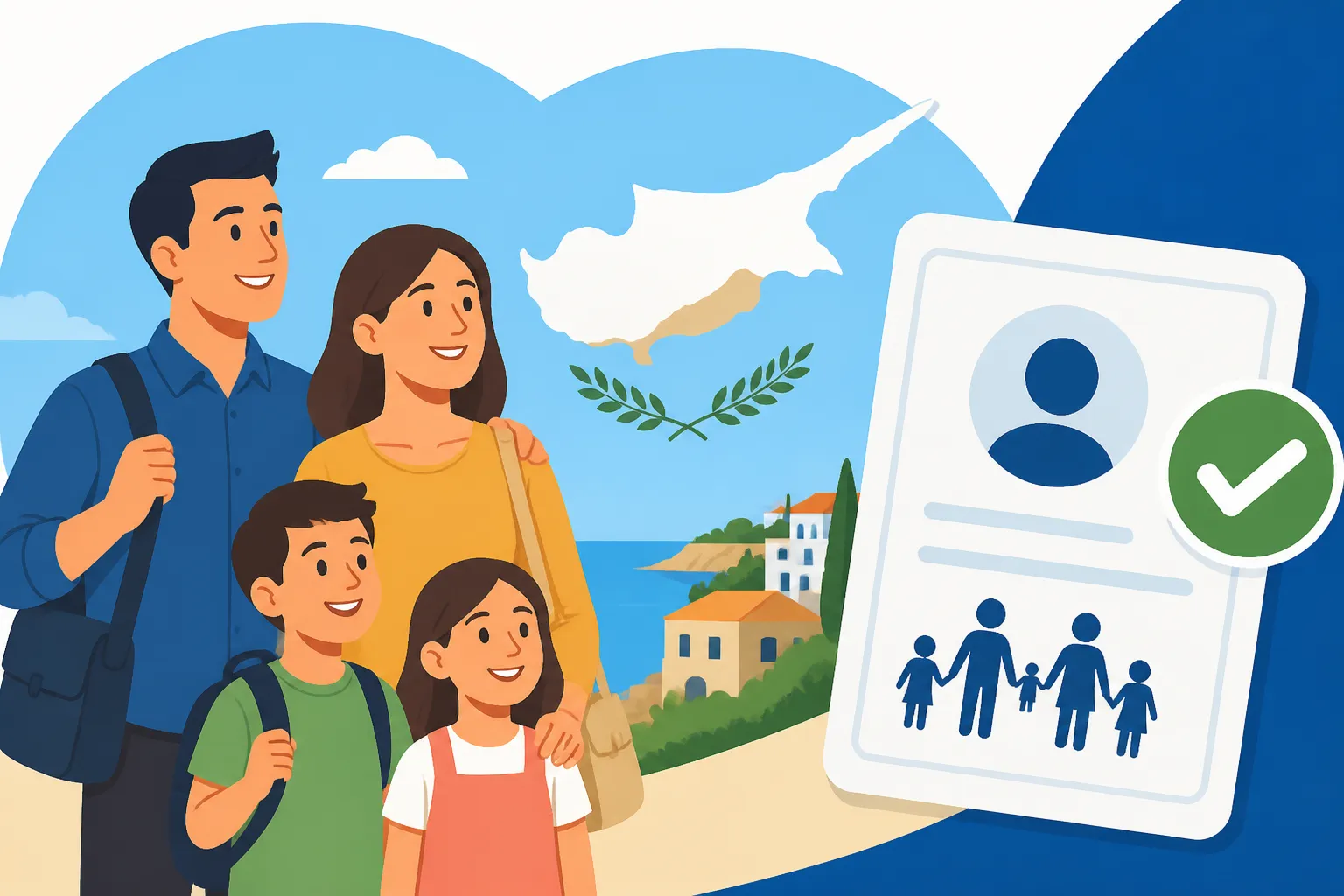
Can I Bring My Whole Family on a Work Permit to Cyprus?
The dream of moving to Cyprus often includes the even bigger dream of bringing your loved ones with you, settling down as a family in this sunny haven. However, the process of navigating the Cypriot immigration system, especially when you're the primary work permit holder, can feel like trying to solve a puzzle with half the pieces missing. This guide will meticulously walk you through the realities, requirements, and common hurdles involved in bringing your entire family to Cyprus on your work permit, helping you understand exactly what to expect.
Understanding the Basics: Your Work Permit and Family Rights
Let's be honest, when you first secure that coveted work permit for Cyprus, your mind is probably buzzing with the excitement of a new job, a new life, and sunshine. But soon, the very real question of "What about my family?" starts to loom large. It's a critical point to understand that your work permit is intrinsically linked to your ability to sponsor your family's move, but it's not a direct 'package deal' in the way some might hope.
The Primary Applicant: Your Work Permit Status
First and foremost, your work permit is for you. It's tied to a specific employer and a specific job in Cyprus. This is the cornerstone of your family's potential journey here. The type of work permit you hold significantly impacts whether and how easily you can bring your family. Generally, long-term employment permits, often for skilled workers or those in specialized sectors like finance or IT, are the ones that open the door to family reunification. If you're coming on a short-term, seasonal, or very specific project-based permit, the odds are much slimmer, if not impossible, for family sponsorship.
Your employer plays a monumental role in this initial stage. They are typically the ones who have sponsored your work permit, submitting all the necessary documentation to the Department of Labour and the Civil Registry and Migration Department (CRMD). Once your permit is approved and you are legally residing and working in Cyprus, then, and only then, can you begin to think about the family reunification process. Many expats come here first, get settled in their job and accommodation, and then start the process for their family. This phased approach, while sometimes emotionally tough, can streamline the administrative side significantly. It allows you to tackle one major immigration hurdle at a time, rather than trying to coordinate multiple complex applications simultaneously from abroad. For a broader look at securing your own status, check out our guide on How to Get a Work Permit to Work in Cyprus (2027).
Who Counts as "Family" for Immigration Purposes?
Now, this is where the definition of "family" gets really specific and, sometimes, a bit restrictive compared to what you might consider your family unit back home. Cyprus immigration law, like many countries, has very clear parameters for who can be sponsored under family reunification.
The core unit that is generally accepted for family reunification includes:
- Your Spouse: This typically refers to a legally married partner. Common-law partnerships or civil unions may be recognized depending on the specifics and documentation, but a marriage certificate is usually the most straightforward proof.
- Your Minor Children: This includes biological children and legally adopted children who are under the age of 18 at the time of application. Both parents usually need to be named on the birth certificate or adoption papers.
When it comes to adult dependent children, or even parents, the criteria become significantly stricter. For instance, adult children (over 18) may only be considered in very specific circumstances, such as if they have a severe disability preventing them from supporting themselves, or if they are still financially dependent and enrolled in full-time higher education. Even then, you would need to provide extensive proof of their dependency and inability to support themselves, which can be a complex and lengthy battle with bureaucracy. Sponsoring parents is exceptionally challenging and usually only possible if you can demonstrate a very high, consistent income over several years and prove their absolute financial dependence on you, with no other means of support in their home country. This often requires a completely separate and arduous application process outside the standard family reunification for immediate family. It's realistic to manage your expectations here; for most work permit holders, family reunification means spouse and minor children.
The Family Reunification Application Process: A Step-by-Step Reality Check
Alright, you've landed in Cyprus, your work permit is sorted, and you've found a place to live. Now comes the next big administrative mountain: bringing your family. This isn't just about filling out a few forms; it's a marathon of document gathering, waiting, and often, re-submitting. Be prepared for a process that demands meticulous attention to detail and a healthy dose of patience.
Initial Steps and Documentation Gathering
The absolute first thing you need to understand is that your work permit must be approved, issued, and active before you can even think about starting the family reunification process. There's no point in rushing ahead; your status is the foundation. Once you're legally established, you'll embark on a journey of documentation that makes many expats sigh deeply.
For each family member – your spouse and each child – you will need a comprehensive dossier of documents. This isn't just a copy-paste job from your own permit application; it's a fresh set of requirements tailored for dependents. Expect to gather:
- Passports: Valid for at least two years beyond the intended stay.
- Marriage Certificate (for spouse): This needs to be original, translated into Greek or English, and crucially, Apostilled or legally certified in your home country. This certification step is often underestimated and can cause significant delays if not done correctly.
- Birth Certificates (for children): Again, originals, translated, and Apostilled/certified.
- Proof of Stable Accommodation: A copy of your rental agreement or property title deeds in Cyprus. It must clearly show that you have adequate housing for your entire family (e.g., enough bedrooms for everyone).
- Proof of Sufficient and Stable Income: This is your income, the primary applicant's. The CRMD needs to see that you earn enough to support your entire family without them becoming a burden on the state. This usually means providing recent payslips, employment contracts, and bank statements showing consistent income flow. The exact threshold isn't always explicitly published but expect it to be well above the minimum wage, factoring in the number of dependents. For a better understanding of what financial stability might look like in Cyprus, consult our guide on The Complete Guide to Cost of Living in Cyprus for Expats (2026).
- Comprehensive Health Insurance: Before your family might become eligible for the General Healthcare System (GeSY) – which depends on your social insurance contributions and their residency status – they will absolutely need private health insurance. This needs to cover inpatient and outpatient care, and repatriation, with significant coverage amounts (e.g., €30,000 per person per year is a common benchmark). This is a non-negotiable requirement. Companies like Cigna Global offer robust international health insurance plans that many expats find suitable for meeting these visa requirements.
- Clean Criminal Record Certificates: For your spouse and any adult children, usually from their country of origin.
- Medical Certificates: Often, new arrivals will need to undergo medical examinations upon arrival or submit certificates from their home country confirming they are free from certain communicable diseases.
Many of these documents, especially birth and marriage certificates, will require official translation into Greek or English by a certified translator in Cyprus or abroad, and then further authentication, often with an Apostille stamp. This can be a time-consuming and expensive part of the process, so budget for it both financially and in terms of your timeline.
Submitting the Applications and Navigating Bureaucracy
With your mountain of meticulously prepared documents, you're ready to submit. The applications for family reunification are typically submitted at the District Unit of the Civil Registry and Migration Department (CRMD) in the district where you reside. While you can technically do this yourself, many expats choose to engage a local lawyer or immigration consultant. This is often a wise investment, as they are familiar with the ever-changing nuances of the Cypriot system, the specific expectations of the local CRMD office, and how to present your case most effectively.
Once submitted, the waiting game begins. And let me tell you, it's a game that requires exceptional levels of patience. Processing times for family reunification can be notoriously long – we're talking many months, sometimes even a year or more. During this time, you might be called in for interviews, or asked to provide additional documentation that wasn't initially requested, adding to the delays. This back-and-forth can be incredibly frustrating, especially when your family is waiting anxiously back home.
It's crucial to maintain open communication with the CRMD (or your lawyer) and keep copies of everything you submit. The good news is that once your family's applications are approved, they will be granted a residence permit, often referred to as a "Pink Slip" for non-EU nationals. This permit allows them to reside with you in Cyprus. For more details on this, you can refer to Understanding Residence Permits and the Pink Slip in Cyprus (2027). This permit will typically be valid for one year initially, renewable annually, mirroring your own work permit's validity.
Practical Considerations and Common Hurdles for Expat Families
Bringing your family to Cyprus is about more than just securing the right visa; it's about building a life. Expats often find there are many practicalities and potential hurdles that extend beyond the immigration office. Thinking about these now can save you a lot of headaches later.
Financial Requirements and Proof of Sustenance
We touched on this briefly, but it deserves a deeper dive because it's often the make-or-break factor. The Cypriot authorities are very clear: you, the primary applicant, must demonstrate sufficient and stable income to support your entire family. This isn't just a vague suggestion; it's a strict requirement designed to ensure that new arrivals don't become a drain on the state's resources.
What constitutes "sufficient"? While there isn't one universal, publicly advertised number, the CRMD will assess your income based on factors like:
- Number of Dependents: More family members mean a higher required income.
- Your Salary and Social Insurance Contributions: They'll look at your employment contract, recent payslips, and proof of consistent social insurance contributions. These contributions are important not just for your own eligibility for GeSY (Cyprus's General Healthcare System) but also for showing long-term stability.
- Savings: While not a substitute for regular income, a healthy savings account can bolster your application, showing a buffer for unforeseen circumstances.
For a family of three (you, spouse, one child), you're likely looking at needing a documented monthly income significantly higher than the average single person's salary in Cyprus. Think in terms of comfortably covering rent, utilities, food, schooling, and general living expenses, with some left over. Your rental agreement or property ownership proof must also demonstrate that you have accommodation suitable for the entire family – a one-bedroom studio, for example, would not be deemed suitable for a family of three. This realistic financial planning is critical. If your income isn't quite there yet, it might be better to wait and build up your financial stability before initiating the family reunification process.
Healthcare, Education, and Integration
Once your family arrives, their well-being becomes paramount. Healthcare and education are two of the biggest considerations for expat families.
Healthcare: Your family's access to healthcare largely depends on your status. If you, as the primary work permit holder, are making regular Social Insurance contributions, your family members will eventually be eligible to register for GeSY, the General Healthcare System. However, this isn't always immediate. There can be a waiting period, and sometimes new arrivals on family permits might need to maintain private health insurance, like the comprehensive plans offered by Cigna Global, for an initial period until their GeSY eligibility is confirmed and activated. Even with GeSY, understanding How Cyprus's Health System Works: GeSY vs Private Explained (2027) or How to Register for GeSY (General Healthcare System) in Cyprus (2027) operates, including co-payments and specialist referrals, is vital. It's a very different system from many other countries, and understanding its nuances is key to avoiding frustration.
Education: If you have children, schooling will be a top priority. Cyprus offers both public and private schooling options. Public schools teach in Greek, which can be an excellent way for children to immerse themselves and learn the language, but it can also be a significant challenge if they arrive with no prior Greek. Private and international schools offer education in English (or other languages) following various curricula (e.g., British, American, International Baccalaureate) but come with substantial tuition fees. Your choice will depend on your budget, your children's age, and your long-term plans. We have a dedicated resource that delves into Schools and Education in Cyprus: A Complete Guide for Expat Families to help you make an informed decision.
Integration: Beyond the essentials, think about social integration. Moving to a new country is a huge adjustment for adults, and it can be even more so for children. Encourage them to join local clubs, sports teams, or activities. Learning some basic Greek can also significantly aid in daily life and community engagement – a journey well worth embarking on, as detailed in Learning Greek for Living in Cyprus: A Complete Guide for Expats. Connecting with other expat families in your area can provide invaluable support and shared experiences.
Moving Logistics and Settling In
Bringing your family isn't just a legal process; it's a logistical marathon. You'll need to consider how to physically move their belongings, set up their new lives, and help them adjust.
Moving Your Belongings: Whether it's a few suitcases or an entire household, planning the physical move needs attention. Companies like Sirelo specialize in international relocation services and can help you compare quotes and manage the complexities of shipping your possessions to Cyprus. Don't underestimate the comfort of having familiar items around when settling into a new home.
The Initial Period: Once your family arrives, the real work of settling in begins. This means getting them registered with a personal doctor, enrolling children in school, helping them navigate local transport, and generally finding their rhythm. The first few months can be exhilarating but also overwhelming. Having a plan for the immediate aftermath of their arrival can make a world of difference. Our comprehensive guide on The Complete Guide to Moving to Cyprus: Your First 90 Days (2027) offers a wealth of practical advice for this crucial initial period.
Establishing a Routine: Try to establish routines quickly, whether it's school drop-offs, grocery shopping at the local supermarket, or discovering nearby parks and activities. The more quickly a sense of normalcy is established, the smoother the transition will be for everyone. Remember, while you might already be somewhat settled, your family is starting from scratch, and they'll look to you for guidance and support during this significant life change.
Family Reunification Requirements Overview
To give you a clearer picture, here's a simplified overview of the general requirements for family reunification based on common scenarios. Always remember that individual circumstances can vary, and official advice from the CRMD or a legal professional is paramount.
| Family Member | Key Requirements | Common Documentation Needed |
|---|---|---|
| Spouse | Primary applicant's valid work permit & sufficient income. Legal marriage. | Valid passport, marriage certificate (apostilled/certified & translated), proof of income, health insurance, accommodation proof. |
| Minor Child | Primary applicant's valid work permit & sufficient income. Legal parent-child relationship (under 18). | Valid passport, birth certificate (apostilled/certified & translated), proof of income, health insurance, accommodation proof. |
| Adult Child | Primary applicant's valid work permit & high income. Strict conditions: severe disability, full-time study, or extreme financial dependency. | Valid passport, birth certificate (apostilled/certified & translated), extensive proof of dependency, health insurance, accommodation proof. |
| Parents | Extremely difficult. Requires exceptionally high, proven income from primary applicant and absolute financial dependency of parents. | Highly extensive proof of income, financial dependency, lack of other support, health insurance. Often not feasible via standard family reunification. |
Please note that this table is a general guide. Specific requirements, forms, and fees are subject to change by the Cypriot authorities.
Disclaimer
The information provided in this guide is intended for general informational purposes only and does not constitute legal or professional advice. While we strive to provide accurate and up-to-date content, immigration laws and procedures in Cyprus can be complex and subject to frequent changes. It is essential to consult with the official Civil Registry and Migration Department (CRMD) of Cyprus or a qualified immigration lawyer for advice tailored to your specific circumstances before making any decisions related to your visa or residency application.