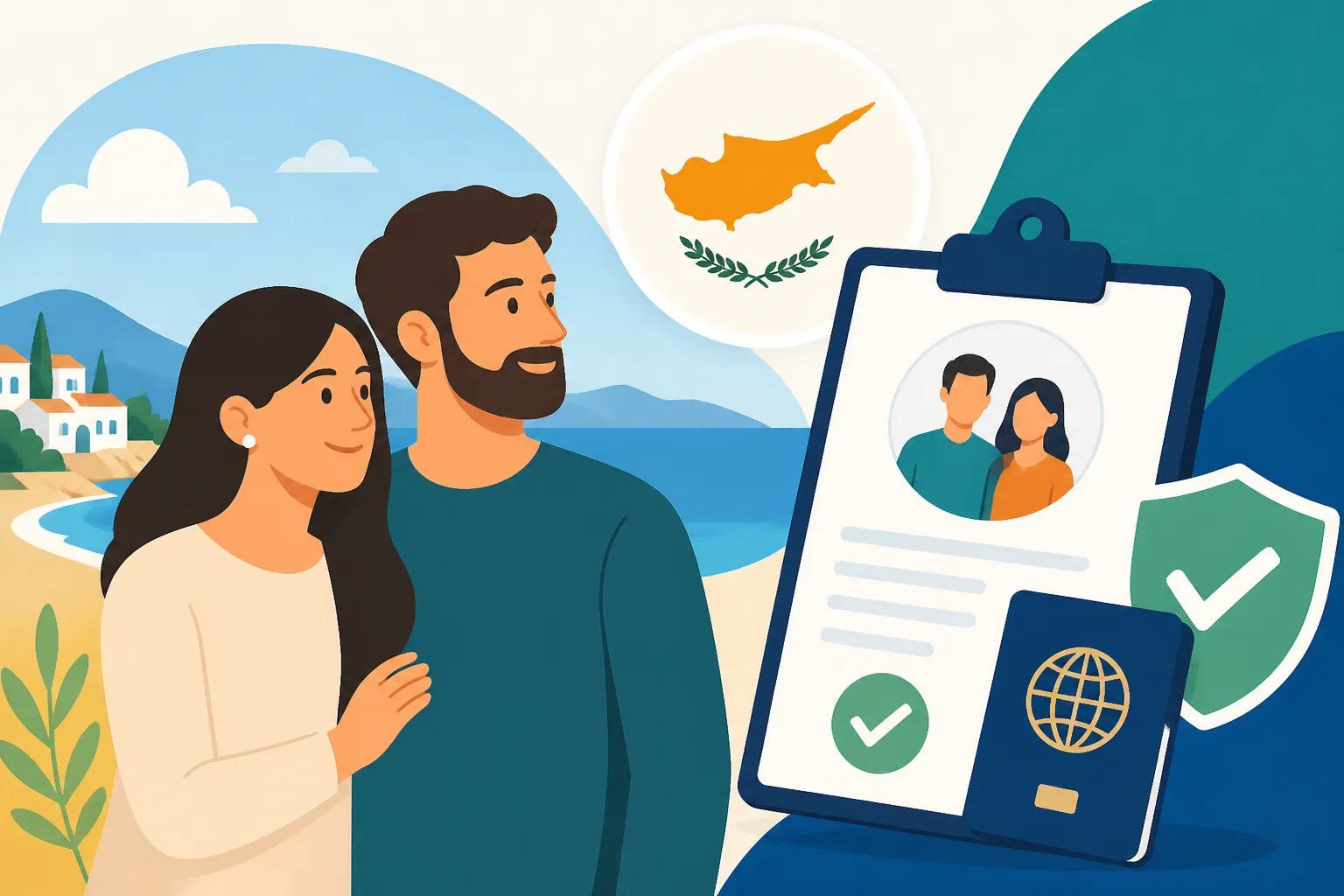
How Do I Apply for a Visa for My Spouse in Cyprus?
Bringing your loved one to live with you in a new country is often one of the most exciting, yet simultaneously terrifying, steps in the expat journey. The bureaucratic maze of applying for a spouse's visa in Cyprus can feel like a never-ending labyrinth, full of confusing forms, unexpected requirements, and agonizing wait times. This guide is here to cut through the noise, offering clear, empathetic, and realistic advice on how to successfully navigate the family reunification process for your spouse in Cyprus.
Understanding Your Own Residency Status
Before you even begin to think about bringing your spouse over, the absolute first thing you need to solidify is your own legal standing here in Cyprus. Your residency status is the bedrock upon which your spouse's application will be built, and any shakiness in your own situation will directly impact theirs. It's a common oversight, but honestly, many expats get so caught up in the excitement of a new life that they don't fully understand the intricacies of their own permits.
Different Residency Statuses and Their Implications
Cyprus offers various pathways for foreigners to reside here, each with its own set of rules and, crucially, its own implications for family reunification. You might be here on a work permit, a temporary residence permit (often called a 'Pink Slip'), or perhaps even a path to permanent residency. Each of these carries specific rights and obligations when it comes to sponsoring family members.
For example, if you're a non-EU citizen holding a standard work permit, your ability to bring your spouse will typically fall under the 'Family Reunification' category of the Aliens and Immigration Law. This usually means demonstrating stable and sufficient income, adequate accommodation, and comprehensive health insurance for both yourself and your spouse. The requirements for someone on a Pink Slip might differ slightly, perhaps with less stringent income demands if you're an independent means resident, but you'll still need to prove you can support your family without relying on public funds. It's a whole different ballgame for EU citizens, of course; they typically apply for a Yellow Slip (MEU1) and then their non-EU spouse applies for an MEU2 permit, which is generally a more straightforward process under EU freedom of movement directives. If you're pondering how to get a work permit to work in Cyprus, ensuring your employer fully understands the implications for family reunification from the outset can save you a world of heartache.
Key Documents for the Primary Applicant
The Civil Registry and Migration Department (CRMD) will want to see that you are a stable, legitimate resident first and foremost. This isn't just about having the right permit; it's about proving you have the financial means and stable living conditions to support another person. They're not just taking your word for it, they want to see the paper trail.
Expect to provide:
- Your valid passport and a copy of your current residence permit: This is your basic proof of identity and legal presence.
- Proof of stable and sufficient income: This is often the biggest hurdle. You'll need recent bank statements (usually for the last 6-12 months), employment contracts, payslips, or tax returns. The minimum income threshold varies, but it needs to be clearly above the cost of living for two people. For instance, if you're on a Pink Slip and need to prove income, you might be looking at a minimum annual income of around €10,000-€15,000 for the primary applicant, plus an additional percentage for each dependent. For employed individuals, your salary needs to reflect an ability to support your family without state aid.
- Proof of accommodation: A rental agreement or property title deed in your name, indicating adequate space for two people. Don't underestimate this; they don't want two adults crammed into a studio apartment.
- Comprehensive health insurance: You'll need to demonstrate that you have valid health insurance covering you and, eventually, your spouse for medical care in Cyprus. While GeSY is fantastic once you're in the system, new arrivals often need private coverage first. Companies like Cigna Global offer robust international health insurance options that are often accepted for visa purposes.
- Clean criminal record certificate: From your home country and sometimes from Cyprus if you've been here for a significant period.
Gathering these documents thoroughly and accurately from the start will save you countless headaches. Remember, the CRMD officials see thousands of applications; making theirs easy to process means a smoother journey for you.
The Core Process: Applying for Family Reunification for Your Spouse
So, you've got your ducks in a row. Excellent! Now it's time to tackle the actual application for your spouse. This is where the real administrative marathon begins. The process for non-EU citizens sponsoring a non-EU spouse through family reunification can be lengthy and requires meticulous attention to detail.
Eligibility Criteria for Spousal Visas
The eligibility criteria are designed to ensure genuine relationships and the financial independence of the family. The main points typically include:
- Valid Marriage: You must be legally married. A marriage certificate is paramount. If married abroad, ensure it's properly legalised and apostilled/certified for use in Cyprus. This is one of those moments where getting your documents apostilled for Cyprus immigration becomes critically important.
- Primary Applicant's Status: As discussed, you, the sponsoring spouse, must hold a valid residence permit in Cyprus for at least one year. For some permits, like a Work Permit or the Category F Residence Permit, there's often a waiting period before you can apply for family reunification.
- Sufficient and Stable Income: You must prove you have a stable and sufficient income to support your spouse (and any other dependents) without relying on the social welfare system. This is non-negotiable. We're talking about a decent salary from employment or proof of substantial funds if you're retired or on independent means. For example, if you are applying for a residence permit under independent means, you'd typically need a minimum annual income of around €10,000 to €15,000 for the main applicant, plus an additional percentage for your spouse. This figure is reviewed annually, so always check the latest requirements from the CRMD.
- Adequate Accommodation: You need to show you have suitable housing. This usually means a property with enough bedrooms for the family size. A one-bedroom flat might be fine for a couple, but if you have children, you'd need more.
- Health Insurance: Your spouse will need health insurance coverage. Again, a good private policy from a provider like Cigna Global is often a requirement until they are eligible for GeSY after a certain period of legal residency and contributions. Understanding health insurance and requirements for Cyprus visas is vital, as this is a common point of contention.
- Clean Criminal Record: Your spouse will need to provide a clean criminal record certificate from their country of origin and any country they've resided in for more than six months in the last few years.
It’s not just about ticking boxes; it's about presenting a clear, undeniable case that your family will be a positive, self-sufficient addition to Cyprus.
Required Documents for Your Spouse
This is where the paperwork really piles up. Prepare for a mountain of documents, all needing to be precisely correct, translated, and often apostilled or certified.
Here’s a general checklist for your spouse's application:
- Application Form: The official M.67 form (or equivalent, always check the latest version from CRMD).
- Valid Passport: Original and photocopies of all relevant pages.
- Original Marriage Certificate: Authenticated and translated into Greek or English by an official authority if not already in one of these languages.
- Birth Certificate: For your spouse, authenticated and translated.
- Police Clearance Certificate: From their country of origin (and any country resided in for over 6 months in the last 10 years). This needs to be recent (usually not older than 3-6 months).
- Medical Certificate: Confirming they are free from certain infectious diseases (e.g., HIV, Tuberculosis, Hepatitis B & C, Syphilis). This is usually obtained in Cyprus, often at a government hospital upon arrival or after the initial application.
- Proof of Financial Means: While your income supports them, it's good practice for them to show their own bank statements if they have any, demonstrating personal financial stability.
- Health Insurance Policy: A comprehensive private health insurance policy for Cyprus, covering inpatient and outpatient care.
- Proof of Relationship: Beyond the marriage certificate, sometimes photos, joint bank accounts (if applicable), or other evidence of a genuine, ongoing relationship can be helpful.
- Accommodation Proof: Shared rental agreement or title deed.
- Passport-sized Photos: Usually 2-4, specified dimensions.
- Processing Fees: Non-refundable application fees.
It's a lot, I know. It can feel overwhelming, but taking it one document at a time, and making sure each is exactly as requested, is the key. You'll likely also need to ensure all non-English or non-Greek documents are officially translated.
Navigating the Application Submission and Interview
Once you have everything, the next step is submission. This typically happens at the local District Unit of the Civil Registry and Migration Department. Depending on where you live, this might be in Nicosia, Limassol, Larnaca, Paphos, or Famagusta.
The Submission:
- Make an Appointment: Always try to book an appointment if possible. Walk-ins can lead to hours of waiting, especially in busier districts like Limassol or Nicosia.
- Submit in Person: Both you and your spouse will likely need to be present for the submission. The officer will verify all original documents against the photocopies.
- Biometrics: Your spouse will have their fingerprints and photograph taken as part of the process for their residence card.
- Receipt: You'll receive a receipt for your application, which acts as proof that you've applied and can be useful in explaining your spouse's status if questioned while waiting for the permit.
The Interview (if applicable):
While not always mandatory for straightforward spousal applications, some cases might require an interview. This is typically to verify the authenticity of the relationship. They might ask questions about:
- How and when you met.
- Details of your wedding.
- Shared living arrangements.
- Future plans in Cyprus.
Just be honest, consistent, and respectful. The aim is not to trick you but to ensure genuine family reunification.
Post-Application Considerations and Common Hurdles
After the painstaking process of gathering documents and submitting the application, it's easy to think the hard part is over. But then comes the waiting game, which can be just as, if not more, frustrating. It's a test of patience, and knowing what to expect can help manage the anxiety.
Processing Times and What to Expect
The official processing times for family reunification applications in Cyprus can vary wildly. While the law often stipulates a certain timeframe, the reality on the ground can be quite different. You could be looking at anywhere from 6 months to over a year, sometimes even longer. This isn't unique to Cyprus, but it's important to set realistic expectations.
During this waiting period, your spouse will usually be issued a temporary stay permit or a receipt confirming their application. This means they are legally allowed to remain in Cyprus while their application is being processed, even if their initial entry visa has expired. However, they typically cannot work until their residence permit is officially approved and issued. This can be a huge financial strain for families, so it's crucial to plan for this period of single-income reliance. Many expats find themselves asking, "Can my spouse work on a family reunification permit in Cyprus?" and the answer, unfortunately, is often 'not until the permit is issued'.
- Ongoing Communication: Don't expect regular updates from the CRMD. If you haven't heard anything after several months, a polite email or a visit (with an appointment) might be in order, but persistent badgering rarely speeds things up.
- Be Prepared for Requests for Additional Documents: It's not uncommon for the CRMD to request further documents or clarifications during the processing period. Respond to these promptly and thoroughly to avoid further delays.
Common Reasons for Delays or Rejections
Understanding why applications get delayed or rejected can help you proactively avoid these pitfalls.
- Incomplete Documentation: This is the number one culprit. Missing a single stamp, an expired certificate, or an uncertified translation can send your application back to square one. Double-check everything before submission.
- Insufficient Funds: If the CRMD believes your stated income isn't enough to comfortably support your family in Cyprus without state aid, they will likely delay or reject the application. Be realistic and transparent about your finances. How do I prove my income for the Pink Slip in Cyprus? This question comes up often because the requirements are strict.
- Inadequate Accommodation: If your rental agreement shows a studio for a couple, or if the property seems too small, this could be an issue.
- Lack of Genuine Relationship Proof: While less common for marriage-based applications, if there are any doubts about the authenticity of your marriage, the CRMD will investigate. This is particularly relevant if there's a significant age gap, cultural differences that raise flags, or a very short marriage history.
- Criminal Record: Any adverse criminal history for either spouse can lead to rejection.
- Health Issues: Failing the medical examination due to certain infectious diseases will lead to rejection.
- Administrative Backlog: Sometimes, it’s simply due to the sheer volume of applications and limited resources at the CRMD. This is frustrating, but unfortunately, it’s outside your control. You can, however, use the time to explore more about Understanding the cost and timeline of the Cyprus immigration process to budget and plan.
Renewing Your Spouse's Residence Permit
Congratulations, your spouse's permit has been approved! But the journey doesn't end there. Residence permits are not indefinite; they have an expiry date, and you'll need to renew them.
The process to renew your residence permit in Cyprus for your spouse is largely similar to the initial application, though often slightly less rigorous. You'll need to:
- Re-submit application forms and supporting documents: This includes proof of continued financial stability, current accommodation, and valid health insurance.
- New police clearance: Sometimes required, especially if your spouse has traveled extensively or been abroad for extended periods.
- Biometrics: May be taken again, especially if there are significant updates to their appearance or if the previous data is old.
It's critical to apply for renewal well in advance of the expiry date, typically within the last two or three months of the permit's validity. Applying late can lead to complications, fines, or even a loss of legal status.
After a few years of continuous legal residence, usually five years, your spouse may become eligible to apply for permanent residency in Cyprus. This is a significant milestone that offers much greater stability and fewer renewal hassles. The path from temporary permits to a long-term future here is a journey, and each step requires careful planning and a good dose of patience.
Here's a quick summary of key documents for your spouse:
| Document Category | Specific Documents | Notes |
|---|---|---|
| Personal Identification | Valid Passport | Original and copies, ensure validity for at least 6 months beyond intended stay. |
| Passport-sized Photos | Recent, specific dimensions (usually 3.5cm x 4.5cm). | |
| Relationship Proof | Original Marriage Certificate | Authenticated/Apostilled, official translation to Greek/English if needed. |
| Birth Certificate | For spouse, authenticated/Apostilled, official translation. | |
| Legal/Background | Police Clearance Certificate | From country of origin and any country resided in >6 months, recent (3-6 months old). |
| Medical Certificate | Confirming freedom from specific diseases, often obtained in Cyprus. | |
| Financial/Support | Health Insurance Policy | Comprehensive private health insurance (e.g., Cigna Global), covering inpatient/outpatient care in Cyprus. |
| Primary Applicant's Income Proof | Employment contract, payslips, bank statements, tax returns (as detailed in your application). | |
| Proof of Accommodation | Rental agreement or property title deed, showing adequate space for both spouses. | |
| Application Specific | Completed M.67 Application Form | Always check the latest version from the CRMD website. |
| Application Fees | Non-refundable, cash payments often required at submission. |
The journey of bringing your spouse to Cyprus is a testament to your commitment, both to your loved one and to your new life here. While it's filled with administrative hurdles, remember that countless expats have successfully navigated this path. Patience, thoroughness, and a bit of local advice can go a long way. If you're planning a big move, companies like Sirelo can help with the logistics of international shipping, ensuring one less headache during this demanding period. For detailed information on specific permit types, you might also want to read Understanding Residence Permits and the Pink Slip in Cyprus, or if you're thinking long-term, The Complete Guide to Permanent Residency in Cyprus.
Disclaimer
The information provided in this guide is for general informational purposes only and does not constitute legal advice. Immigration laws and procedures in Cyprus can change frequently. It is highly recommended to consult with the Civil Registry and Migration Department directly or seek advice from a qualified immigration lawyer in Cyprus for your specific situation.