How to Find and Register with a Local Doctor in Cyprus
One of the most immediate and often overwhelming challenges you'll face when moving to Cyprus is figuring out the healthcare system, especially how to find and register with a local doctor. It's not always straightforward, and the process can feel like a maze, leaving many expats feeling lost and anxious when they need medical attention. This comprehensive guide will walk you through everything, from understanding your options under GeSY to navigating private clinics, ensuring you're well-prepared to access quality medical care.
Understanding the Cypriot Healthcare Landscape for Expats
When you first land in Cyprus, the healthcare system can seem a bit perplexing, especially if you're used to something entirely different back home. It's not a single, monolithic system, but rather a blend of public and private services, each with its own quirks and benefits. Many expats, myself included, have spent countless hours trying to decipher where to go and who to talk to. The key is to understand that you essentially have two main paths, and your eligibility for one over the other often depends on your residency status and employment.
The Dual System: GeSY vs. Private Healthcare
Cyprus operates what's known as the General Healthcare System, or GeSY (ΓεΣΥ), which is the national healthcare scheme. Think of it as the public option, providing universal coverage for residents who contribute to social insurance. If you're employed in Cyprus, or self-employed and making social insurance contributions, you're very likely eligible for GeSY, and it's a huge relief once you're properly registered. It covers a wide range of services, including GP visits, specialist consultations (with a referral), hospital care, and even some medications. It's certainly a game-changer compared to the days before GeSY when private healthcare was pretty much the only viable option for most foreigners.
However, GeSY isn't the only show in town. The private healthcare sector is still very robust and widely used, even by those eligible for GeSY. Some expats prefer private clinics for the perceived shorter waiting times, the ability to choose specialists directly without a referral, and often, a more familiar, Western-style service. Many private doctors in major cities like Limassol, Nicosia, and Paphos are exceptionally skilled and cater specifically to the international community. So, you're not stuck with one option; it's about finding what best fits your needs, budget, and comfort level. You can delve deeper into the specifics of How Cyprus's Health System Works: GeSY vs Private Explained (2027) to get a full picture of the differences.
Initial Steps for New Arrivals
For new arrivals, the first few weeks or months can be a whirlwind of administrative tasks, and healthcare often takes a backseat until you suddenly need it. However, it's crucial to prioritize getting some form of medical coverage in place as soon as possible. If you're an EU citizen, your European Health Insurance Card (EHIC) can cover you for emergency care during your initial stay, but it's not a long-term solution. For non-EU citizens, it's even more critical to have private travel or international health insurance. Many newcomers start with temporary coverage from providers like SafetyWing, which offers flexible, affordable plans ideal for digital nomads and globe-trotters who are still figuring out their long-term residency. This kind of insurance can be a lifesaver for those initial weeks before you're fully integrated into the local system.
Once you've secured your basic residency permits, such as your Understanding Residence Permits and the Pink Slip in Cyprus (2027), your path to registering for GeSY or finding a long-term private doctor becomes much clearer. The process will involve gathering documents, understanding your social insurance status, and making some key decisions about your preferred healthcare route. Don't underestimate the time it takes; bureaucratic processes in Cyprus, while improving, still require patience and persistence.
Navigating GeSY: Your Pathway to Public Healthcare
For most working expats in Cyprus, GeSY is the primary and most cost-effective route to healthcare. It's designed to be a universal system, and once you're in, it offers comprehensive care for a very reasonable contribution. But getting "in" can feel like a quest, especially for those who are new to the island. Remember, the goal is to get your contributions processed and then select your Personal Doctor.
Eligibility and How to Get Started with GeSY
Your eligibility for GeSY is directly tied to your social insurance contributions. If you're legally employed in Cyprus and your employer is deducting social insurance from your salary, you're automatically contributing to GeSY. The same applies if you're self-employed and properly registered with the Social Insurance Services and making your monthly payments. This is fantastic news because it means a significant portion of your medical costs will be covered. However, simply contributing doesn't automatically mean you're "registered" in the practical sense for immediate use; you still need to ensure your details are in the system and that you've selected a personal doctor.
The first step is often ensuring your social insurance number is active and that contributions are indeed being made. You can usually confirm this by contacting the Social Insurance Services or, if employed, checking with your HR department. Once these contributions are confirmed, you can typically proceed with your GeSY registration. Family members can often be added as dependents, provided you meet certain criteria, making it a great option for expat families. Learn more about Understanding Who Is Eligible for GeSY in Cyprus to confirm your status.
Choosing Your Personal Doctor (GP) within GeSY
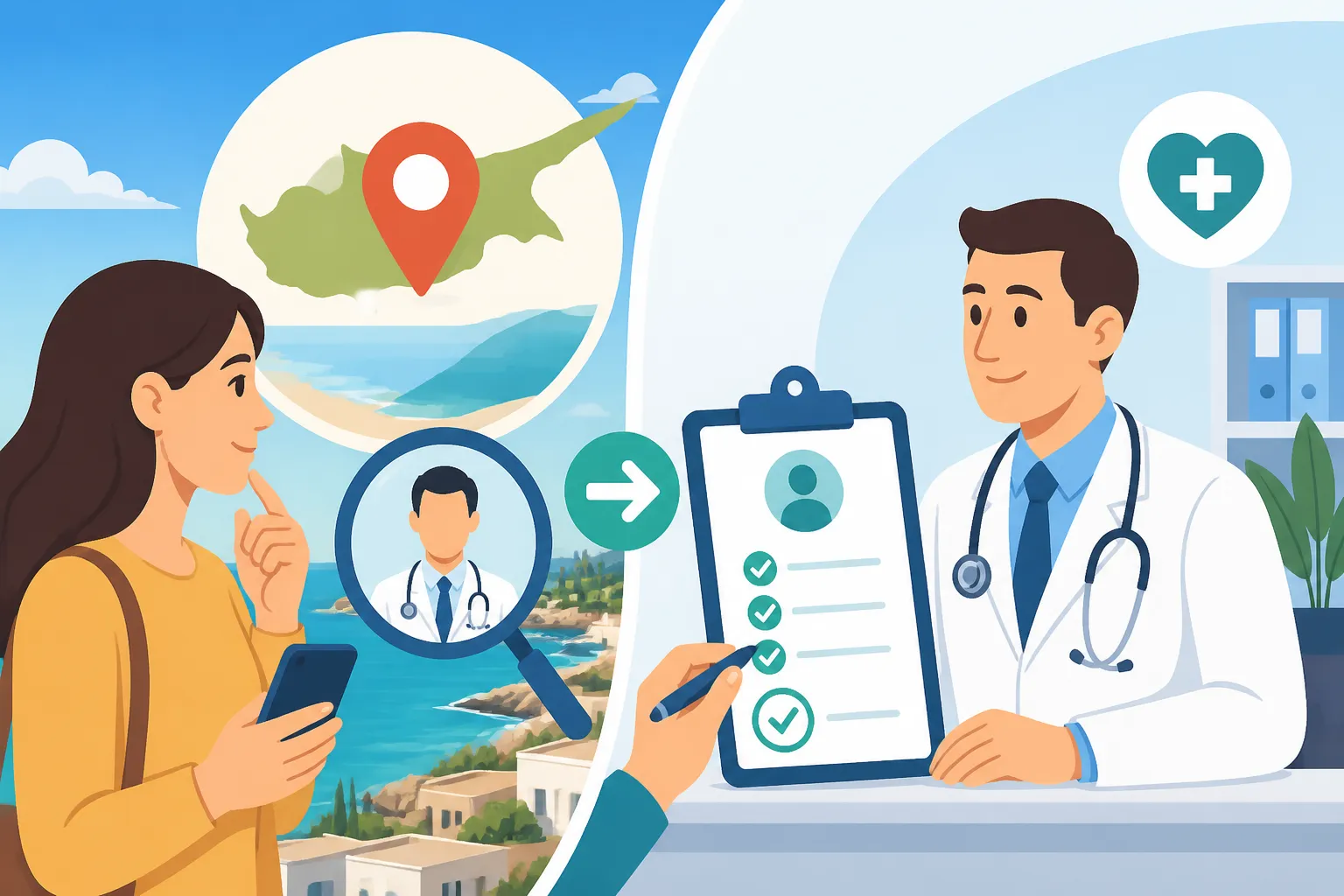
This is where the real "finding a doctor" part comes in for GeSY. Unlike some systems where you're assigned a doctor, GeSY requires you to actively choose and register with a Personal Doctor (GP) yourself. This GP will be your first point of contact for almost all medical issues, much like a gatekeeper to the rest of the healthcare system. They handle routine check-ups, provide initial diagnoses, manage chronic conditions, and, crucially, issue referrals to specialists and hospitals. Without a registered GP, you can't easily access the broader GeSY network.
The process of choosing your GP involves logging into the GeSY patient portal (more on that in the next section) and browsing a list of available doctors. This can be daunting because you'll see hundreds of names. Many expats prioritize finding an English-speaking doctor, which is entirely possible, especially in urban areas. Don't be afraid to ask for recommendations from other expats or check online forums. Some clinics have multiple GPs, so even if the head doctor isn't fluent in English, another GP in the same clinic might be. This step is vital, so take your time. If you want more guidance, check out How to Choose a Personal Doctor (GP) Under GeSY in Cyprus.
The GeSY Portal: Your Digital Gateway
The GeSY patient portal is an indispensable tool once you're eligible. It's where you formally register with GeSY, select your personal doctor, view your medical history, book appointments (with some doctors), and access your referrals and prescriptions. Initially, just getting access to the portal can be a hurdle. You'll need to visit a Citizen Service Centre (KE.PO) or specific GeSY offices to get your initial login credentials, often requiring your ID/passport and your Alien Registration Number (ARC) or Yellow Slip.
Once you have your login, the portal opens up a new world of access. You'll navigate to the section for selecting a Personal Doctor, browse by location or even name if you have a recommendation, and make your choice. The system then sends a notification to the doctor, and once they accept, you're officially registered! It's a significant milestone. Don't worry if the system seems a bit clunky at first; like many government portals, it has a learning curve, but it's invaluable.
Opting for Private Healthcare: Flexibility and Choice
Even with GeSY in place, many expats opt for private healthcare, either exclusively or to supplement their GeSY coverage. This could be for a variety of reasons: shorter waiting times, direct access to specialists, more luxurious facilities, or simply personal preference. The private sector in Cyprus is highly developed, particularly in the major cities, and you'll find excellent doctors and clinics.
Finding a Private GP and Clinic
Finding a private GP is often a more direct process than navigating GeSY. You don't need to be tied to social insurance contributions (though you will still pay them if employed). Many private clinics openly advertise their services, and a simple online search for "English speaking doctor Limassol" or "private GP Nicosia" will yield plenty of results. Word-of-mouth recommendations from other expats are also incredibly valuable here. It’s worth asking around in local expat social media groups – you’ll often get immediate, honest feedback about different practitioners.
Private clinics typically offer appointments much faster than their GeSY counterparts, sometimes even on the same day. You can often call directly to book an appointment without any prior registration. When you visit a private clinic, you'll pay out-of-pocket for each consultation and any procedures. While this means immediate costs, many people appreciate the speed and directness. Private hospitals, such as Ygia Polyclinic in Limassol or American Medical Center in Nicosia, also have extensive networks of private GPs and specialists, making them a one-stop shop for many. For those seeking immediate relief, knowing How Much Does a Private GP Visit Cost in Nicosia? might be a primary concern.
Understanding Private Health Insurance
If you decide to go the private route, having private health insurance is almost a necessity unless you have a substantial budget for medical expenses. While individual GP visits might seem manageable, specialist consultations, diagnostic tests (like MRI scans), and hospital stays can quickly rack up significant bills. Private health insurance comes in many forms, from basic outpatient coverage to comprehensive plans that include inpatient care, maternity, and even dental.
There are numerous local and international providers operating in Cyprus. You can choose from companies offering specific plans for expats. When choosing, look for clarity on what's covered, deductibles, co-payments, and any exclusions. Some expats even use private insurance to cover services not fully supported by GeSY, creating a hybrid approach. For those needing a flexible, international safety net during transitions or for specific trips, brands like SafetyWing offer plans that cover medical emergencies and travel incidents, which can bridge gaps while you secure long-term local private insurance or fully integrate with GeSY. It's truly worth exploring all your options, and Understanding Private Health Insurance Options in Cyprus can help you make an informed decision.
The Registration Process: What to Expect
Whether you choose GeSY or opt for private care, there's a registration process, even if it's just establishing yourself as a patient. Don't expect it to be identical to what you experienced in your home country. Flexibility and a bit of preparatory legwork will save you a lot of headaches.
Required Documents and Practical Tips
For GeSY registration, you'll need several key documents. This usually includes:
- Your Alien Registration Number (ARC) or Yellow Slip (MEU1/MEU3 for EU citizens): This proves your legal residency status.
- Your ID/Passport: For identification purposes.
- Proof of Social Insurance Contributions: This could be recent payslips, a letter from your employer, or proof of self-employed contributions.
- Proof of Address: A utility bill or rental agreement.
For registering with a private doctor, the requirements are typically much simpler: usually just your ID/passport and contact details. However, if you plan to use private insurance, you'll need to provide your policy details.
Practical Tips:
- Make copies: Always have photocopies of your essential documents.
- Be patient: The administrative process can sometimes be slow, so allow ample time.
- Ask questions: If you're unsure about any step, don't hesitate to ask for clarification, whether it's from clinic staff or the GeSY helpline.
- Language barrier: While many doctors and staff in major cities speak English, having a friend who speaks Greek accompany you for initial visits can be helpful if you're concerned about misunderstandings.
- Keep records: Maintain a file of all your medical documents, registration papers, and appointment cards. This is crucial for continuity of care.
Here’s a quick checklist for GeSY registration:
| Document Category | Specific Document/Requirement | Notes |
|---|---|---|
| Residency Proof | Alien Registration Number (ARC) / Yellow Slip (MEU1/MEU3) | Essential for proving legal residency and eligibility. |
| Identification | Valid Passport or EU National ID Card | Required for identity verification. |
| Social Insurance Proof | Latest Payslips (if employed) / Social Insurance Payment Statements (if self-employed) | Confirms your contributions to the GeSY system. |
| Address Verification | Utility Bill (EAC, water) / Rental Agreement / Title Deed | Establishes your current address in Cyprus. |
| GeSY Portal Access | Initial Login Credentials (obtained from KE.PO/GeSY office) | Needed to access the online portal and select your GP. |
| Dependents' Documents | Birth certificates, marriage certificates (if adding family) | For family members to be covered under your GeSY. |
What Happens After You Register
Once you’ve successfully registered with a Personal Doctor under GeSY, you're officially "in the system." This means you can now book appointments with your chosen GP, access referrals, and benefit from the co-payment system for prescriptions and specialist visits. The co-payments are usually small fees, for example, €1 for a prescription or €6 for a specialist visit, making healthcare very affordable. For more detail on these costs, you can read Understanding GeSY Co-Payments and Out-of-Pocket Fees in Cyprus.
If you've opted for a private doctor, registration is usually as simple as your first appointment. They'll create a patient file for you, and you'll typically pay for services on the spot. If you have private insurance, you'll either pay the clinic and claim reimbursement later (be sure to get a detailed invoice!) or, if the clinic has a direct billing agreement with your insurer, your insurance might cover it directly. Always clarify this upfront to avoid surprises. In either case, having a trusted local doctor makes managing your health significantly less stressful, which is a big relief in a new country.
Tips for a Smooth Experience
Navigating healthcare in a new country inevitably comes with its challenges, but a bit of proactive planning and knowing what to expect can make the process much smoother. My personal experience, and that of many other expats, has taught me a few tricks to avoid common frustrations.
Finding English-Speaking Doctors
The good news is that finding English-speaking doctors in Cyprus, especially in the larger cities like Limassol, Nicosia, and Paphos, is generally not difficult. Many Cypriot doctors have studied abroad in the UK, US, or other English-speaking countries, or have a significant portion of their clientele who are expats, leading them to be very proficient in English. This is one less hurdle to worry about, and a huge relief when you’re trying to explain symptoms in an unfamiliar language.
When searching for a GP, whether through GeSY or privately, don't hesitate to check clinic websites, call ahead, or ask for recommendations. Online expat groups are a goldmine for this specific query, as people are always keen to share their positive (and sometimes negative) experiences. Often, clinics will explicitly state if they have English-speaking staff. It's a small detail that makes a huge difference in patient comfort and understanding, ensuring you can fully communicate your needs. You can certainly find specific guides on How to Find an English-Speaking Doctor in Cyprus to narrow down your search.
Overcoming Common Challenges and Frustrations
Even with the best intentions, you might encounter a few bumps along the road. One common frustration with GeSY can be longer waiting times for specialist appointments or certain diagnostic tests. While your GP appointment might be quick, getting in to see a specific consultant can sometimes take weeks or even months, depending on the specialty. This is a primary reason why some expats choose to use private healthcare for specialist visits, even if they're registered with GeSY.
Another challenge can be navigating the bureaucracy itself. Forms, specific office hours, and the need to physically visit an office for certain procedures can feel antiquated if you're used to fully digital systems. My advice? Embrace patience, bring a good book (or fully charged phone), and approach each step with a flexible mindset. Having all your documents organized in a folder, both physical and digital copies, can also significantly speed things up. Remember, you're not alone in these frustrations; it's a shared expat experience, and solutions often exist within the community. Don't be shy about asking for help or clarification from other expats who've been through it already.
Disclaimer
The information provided in this guide is intended for general informational purposes only and does not constitute legal, medical, or professional advice. While we strive to keep the content accurate and up-to-date, regulations and procedures in Cyprus can change. Always consult with official government sources, legal professionals, or healthcare providers for specific advice tailored to your situation.