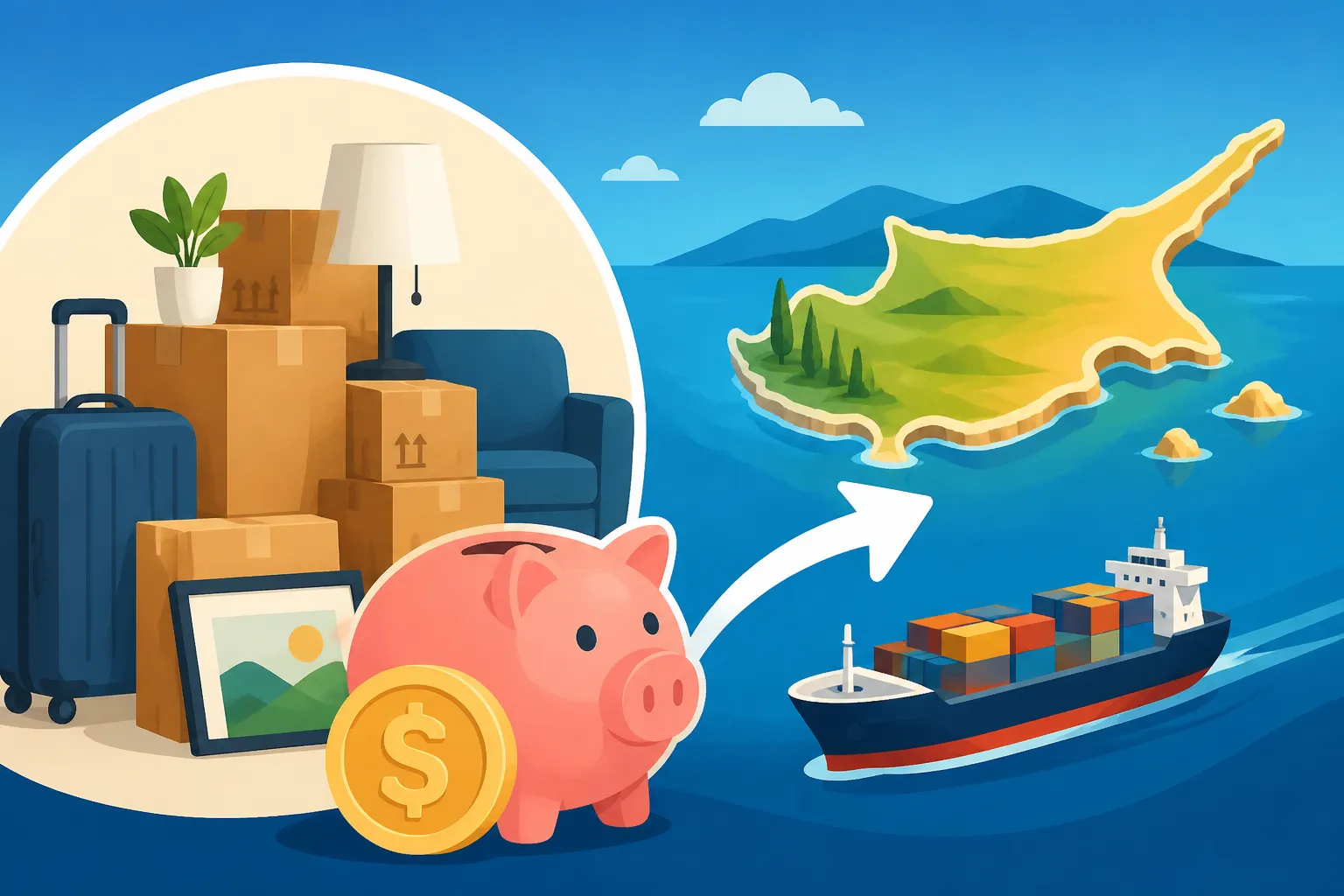
How Much Does It Cost to Ship Belongings to Cyprus?
Moving your entire life to a new country like Cyprus can be an exhilarating adventure, but let's be honest, the logistics of actually getting your stuff here can feel like navigating a minefield. The sheer thought of packing up your home, dealing with customs, and then wondering, "How much is this all going to cost?" can be incredibly daunting. This guide is here to shed some light on the expenses involved in shipping your cherished belongings to Cyprus, helping you budget and plan for a smoother transition.
Understanding the Factors That Influence Shipping Costs to Cyprus
When you start looking into shipping your personal effects to Cyprus, the first thing you'll notice is that there isn't one single, magic price. The cost is a dynamic beast, influenced by a multitude of factors, much like the changing winds over the Mediterranean. Understanding these variables is your first step to getting a realistic quote and avoiding nasty surprises.
Volume and Weight of Your Belongings
This is perhaps the most obvious, yet most crucial, factor. Shipping companies primarily charge based on the volume (cubic meters or cubic feet) of your goods, and sometimes the weight, especially for air freight or if your items are particularly dense. Think about it: a few cardboard boxes filled with clothes and books are going to cost significantly less than an entire three-bedroom house worth of furniture, appliances, and personal items.
For smaller moves, perhaps you’re a student or a single professional just bringing over essentials, you might be looking at a few cubic meters. This could involve using a dedicated parcel service or consolidating your items with other shipments. On the other hand, a family relocating with years of accumulated furniture, kitchenware, and sentimental pieces might need an entire shipping container, or at least a significant portion of one. Each cubic meter adds to the final price, so a ruthless decluttering session before you even start packing can save you a surprising amount of money. Do you really need that antique rocking chair, or could you sell it and buy a new one here? These are the tough questions we all have to ask ourselves.
Shipping Method: Sea vs. Air Cargo
The speed at which you need your belongings directly correlates with the cost. You essentially have two main options: sea freight or air cargo, each with its own set of advantages and drawbacks.
Sea freight is overwhelmingly the most popular and cost-effective method for larger shipments and non-urgent items when moving to an island like Cyprus. It involves packing your goods into large metal containers that are then loaded onto cargo ships. The journey across the sea, particularly from places like the UK or other European countries, can take anywhere from two to six weeks, depending on the route and any transshipments. If you're coming from further afield, say the United States or Australia, expect transit times to be even longer, potentially up to two or three months. While it's slower, sea freight is incredibly economical for bulky items like furniture, appliances, and a large number of boxes. It’s perfect for those who have secured The Complete Guide to Renting a Home in Cyprus (2027) or even decided to How to Buy Property in Cyprus as a Foreigner: The Full Guide (2027) well in advance and can afford to wait for their household goods.
Air cargo, on the other hand, is the sprinter in this race. It’s significantly faster, typically delivering your items within a few days to a a week, even from distant locations. However, this speed comes at a premium. Air freight is priced by weight and volume, and the costs escalate very quickly, making it impractical for an entire household move. It’s usually reserved for essential, urgent, or high-value items that you simply cannot live without for an extended period – perhaps critical work equipment, certain irreplaceable documents, or a small collection of very precious items. Most expats use it sparingly, often just for a few critical boxes they need immediately after they've made The Complete Guide to Moving to Cyprus: Your First 90 Days (2027) and settled into temporary accommodation.
Distance and Origin Country
Geography plays a significant role in pricing. Shipping costs will naturally be higher the further your origin country is from Cyprus. For instance, shipping your belongings from the UK or Germany will be considerably less expensive than shipping them from Canada or South Africa. This is due to longer transit routes, higher fuel costs, and often more complex logistics chains involving multiple ports.
Common routes, particularly from major European hubs, benefit from more regular shipping schedules and competitive pricing due to higher demand. If you're coming from a less common origin, you might find fewer direct routes, potentially leading to higher costs as your goods might need to be transshipped through a larger port first. Always provide your exact origin address when requesting quotes to ensure accuracy.
Additional Services: Packing, Insurance, and Door-to-Door
The base cost of moving your items from point A to point B can be significantly altered by the level of service you opt for. Most international movers offer a range of services, from basic transport to full-service relocation packages.
- Packing Services: You can choose to pack everything yourself, which will save you money on labour and materials. However, professional packing services, while an added cost, offer peace of mind. Experienced movers know how to pack fragile items safely, disassemble furniture, and label everything correctly for customs. Crucially, if you opt for insurance, many policies require professional packing to be valid, especially for more fragile items. It's a trade-off between saving a few hundred euros and potentially losing out on an insurance claim if something gets damaged due to improper packing.
- Insurance: This is not an optional extra; it's a necessity. Accidents happen, and items can get lost or damaged in transit, no matter how reputable the shipping company. Most companies offer various levels of coverage, typically based on a percentage of the declared value of your goods. You can often choose between "total loss" coverage (only covers if the entire shipment is lost) or "all-risk" coverage (covers specific items for damage). Always read the fine print and understand what is and isn't covered. Declaring the full value of your items, even if it adds a little to the insurance premium, is vital.
- Door-to-Door vs. Port-to-Port: A door-to-door service means the shipping company handles everything from collection at your old home to delivery inside your new home in Cyprus, including customs clearance. This is the most convenient option and often includes basic unpacking services. Port-to-port or door-to-port means you'll be responsible for arranging local transport from the port of arrival (e.g., Limassol port) to your residence and handling customs clearance yourself. While cheaper upfront, managing customs and local logistics in a new country can be stressful and lead to unexpected costs if you're unfamiliar with the process. For most expats, especially those navigating life with a new Understanding Residence Permits and the Pink Slip in Cyprus (2027), door-to-door is worth the extra expense for the sheer convenience and reduced hassle.
Typical Cost Ranges for Shipping to Cyprus
Now for the numbers! It’s tough to give exact figures because of all the variables, but I can provide some realistic ranges based on common scenarios for expats moving to Cyprus. These are general estimates for door-to-door services and include basic customs clearance, but always get specific quotes for your situation.
Small Shipments and Personal Effects
If you're only sending a few boxes, maybe up to 1-2 cubic meters, you have a few options.
- Parcel/Courier Services: For very small, urgent items, international courier services like DHL, FedEx, or UPS can deliver quickly but are very expensive per kg. Expect to pay anywhere from €100 to €300+ for a single large box, depending on weight and speed.
- Specialized Small Movers/Groupage: Many international moving companies offer "groupage" or "LCL" (Less than Container Load) services for smaller shipments, where your items share container space with others. This is much more economical than a dedicated courier for volumes up to 2-3 cubic meters. From the UK or Western Europe, you might be looking at €200 to €700 for a shipment of 3-5 large boxes (around 1 cubic meter). If you have more like 2-3 cubic meters, the cost could rise to €700 – €1,500.
- Postal Services: For non-urgent, small items, your national postal service (e.g., Royal Mail in the UK) can be surprisingly affordable, but tracking might be less robust, and transit times can be unpredictable. Costs could be lower than couriers but higher than groupage for similar volumes.
Partial Container Load (LCL) and Full Container Load (FCL)
This is where most household moves fall.
- LCL (Less than Container Load): Ideal for moves that are too large for a few boxes but not enough to fill an entire container – typically 5 to 15 cubic meters (e.g., a one or two-bedroom apartment). With LCL, your goods are consolidated into a shared container with other shipments heading to Cyprus. You pay for the exact volume your items occupy.
- From Europe (e.g., UK, Germany, Netherlands): Expect costs for 5-10 cubic meters to range from €1,000 to €3,000. For 10-15 cubic meters, it might be €2,500 to €4,500. These prices generally include professional packing, basic insurance, and door-to-door service.
- From further afield (e.g., USA, Canada, Australia): LCL costs can be significantly higher due to the greater distance and logistics complexity. For 5-10 cubic meters, you might be looking at €2,500 to €6,000+. For 10-15 cubic meters, it could easily be €4,000 to €8,000+.
- FCL (Full Container Load): This means you rent an entire container for your exclusive use. The most common sizes are 20ft (approximately 33 cubic meters) and 40ft (approximately 67 cubic meters). FCL is suitable for larger homes (three bedrooms or more) or if you want absolute control over your shipment's space and direct transit without consolidation. While the per-cubic-meter cost might be lower than LCL if you fill the container, the total cost is higher because you're paying for the entire container.
- From Europe: A 20ft container might cost €3,000 to €6,000. A 40ft container could range from €5,000 to €10,000+.
- From further afield: A 20ft container could be €6,000 to €12,000+, and a 40ft container might be €10,000 to €20,000+.
These figures are estimates for door-to-door service with professional packing. If you opt for self-packing or port-to-port service, you can reduce these figures, but remember the trade-offs mentioned earlier.
Air Freight Costs
As mentioned, air freight is generally reserved for urgent or very small, high-value shipments due to its high cost. Pricing is usually per kilogram.
- Typical Range: Expect to pay anywhere from €5 to €15+ per kilogram, not including additional fees like handling, security, and customs clearance.
- For a single 20kg box, this could mean €100 to €300+ just for the freight, on top of other charges. For larger air freight shipments (e.g., 100kg), you're quickly looking at €500 to €1,500+.
- It's a niche option but incredibly useful if you need vital items immediately, especially when you're still waiting for How to Register for GeSY (General Healthcare System) in Cyprus (2027) or getting your new home ready.
Navigating Customs, Duties, and Local Charges in Cyprus
This is often the part that catches expats off guard. You've paid for your shipping, your goods arrive in Cyprus, and then you're hit with additional charges you didn't anticipate. Trust me, many of us have been there, standing at the port scratching our heads.
Customs Clearance and Documentation
When your belongings arrive at a Cypriot port, they must go through customs clearance. This involves presenting a raft of documents to the Department of Customs and Excise. The critical documents usually include:
- Your passport copy
- Proof of residence in Cyprus (e.g., Pink Slip, Yellow Slip, or a visa showing your intention to reside)
- A detailed, itemized packing list or inventory of all goods being imported (this needs to be super accurate!)
- A bill of lading (for sea freight) or air waybill (for air freight) from your shipping company
- A declaration form stating that the goods are personal effects and not for commercial use
- Proof of ownership/use for at least six months prior to your move (e.g., purchase receipts, bank statements showing regular use of items)
Any discrepancies or missing documents can lead to significant delays and storage fees at the port. It's crucial to work closely with your shipping agent or a local customs broker (often provided by your door-to-door mover) to ensure all paperwork is immaculate and submitted on time.
Import Duties and VAT
The good news is that for legitimate transfers of normal residence, you can often import your used personal effects free of customs duties and VAT (currently 19%). This exemption is a lifesaver for expats! However, there are strict conditions:
- Prior Ownership: You must have owned and used the goods in your previous country of residence for at least six months before moving to Cyprus. New items (still in their original packaging, or purchased very recently) are typically not covered and may incur VAT and duties. So, don't go on a shopping spree right before you move and expect to bring everything tax-free!
- Genuine Relocation: You must be genuinely transferring your normal residence to Cyprus. This is usually proven by your residence permit (e.g., Understanding Residence Permits and the Pink Slip in Cyprus (2027)) and other documents.
- Non-Commercial Use: The items must be for your personal use and not intended for sale or commercial purposes in Cyprus for at least 12 months after import. If you sell items within this period, you may be liable for the duties and VAT that were originally exempted.
- Vehicles, Alcohol, Tobacco: These items have separate and much stricter import rules, often involving significant duties and taxes, even if they are your personal effects. This guide focuses on household goods; importing a car, for example, is a whole different beast covered in Driving in Cyprus: Licences, Registration and Rules for Expats (2027).
If you don't meet these exemption criteria for certain items, or if you're importing new goods, expect to pay VAT (19%) and potentially customs duties, which vary depending on the item's classification. The customs officers at Limassol or Larnaca port are not lenient, so be prepared!
Port Charges, Handling Fees, and Delivery
Beyond the shipping cost itself and potential duties, there are local charges at the destination port. Even if you've paid for "door-to-door," these might be itemized or bundled into the final price. These typically include:
- Terminal Handling Charges (THC): Fees charged by the port for handling your container or cargo.
- Wharfage: A fee for using the port's wharf facilities.
- Customs Examination Fees: If your shipment is selected for a physical inspection by customs, there will be a fee for this.
- Storage/Demurrage: If your goods aren't cleared from the port within a certain free period (usually a few days), you'll start incurring daily storage or demurrage fees, which can quickly add up. This is why prompt customs clearance is vital.
- Local Delivery: The cost of transporting your cleared goods from the port to your actual home in Limassol, Nicosia, Paphos, or wherever you've settled. This depends on the distance and the size of the truck required.
Always clarify with your chosen shipping company exactly what is included in their quote and what "local charges" you might still be responsible for. A reputable mover will be transparent about these potential additional costs.
Tips for a Smooth Shipping Experience to Cyprus
Moving can be one of life's most stressful events, but with proper planning and realistic expectations, you can make the shipping part a lot less painful. Here are some veteran expat tips for you.
Get Multiple Quotes and Compare Services
Never settle for the first quote you receive. Shipping costs can vary wildly between companies, even for the exact same service. Use online platforms like Sirelo to get quotes from multiple reputable international movers. This allows you to compare not just the price, but also the services included, insurance options, and estimated transit times.
When comparing, ensure you're looking at "apples to apples" quotes. Does one offer full professional packing and door-to-door, while another is just port-to-port with self-packing? Understand precisely what each quote covers to avoid hidden extras. Read reviews, check their certifications, and don't be afraid to ask a lot of questions. Remember, the cheapest quote isn't always the best if it means headaches down the line.
Declutter Ruthlessly
This cannot be stressed enough. Every single item you ship adds to the volume and weight, and thus the cost. Before you even think about packing, go through every room, every cupboard, every drawer. Ask yourself:
- Do I truly need this in Cyprus?
- Can I buy a similar item for less than it would cost to ship this one?
- Is it worth the emotional attachment versus the financial burden?
- Are there things I can sell, donate, or give away to friends and family before I go?
You'd be amazed at how much junk we accumulate! Don't bring items that are near the end of their life or that are easily replaceable for cheap in Cyprus. The less you ship, the happier your wallet will be.
Understand the Timeline
Shipping to Cyprus, especially by sea, is not an overnight affair. From getting quotes, packing, customs clearance, transit, and final delivery, the whole process can take anywhere from a few weeks to several months.
- Plan ahead: Start getting quotes at least 2-3 months before your desired move date.
- Be realistic: Your container might arrive at Limassol port, but it could still take a week or two for customs clearance and local delivery to your home, depending on port congestion and inspections.
- What to do in the interim: Plan for what you'll need during the waiting period. Pack essential clothes, toiletries, important documents (keep these with you!), and some basic entertainment in your checked luggage. You'll probably need to stay in temporary accommodation for a while after you arrive, perhaps a furnished rental, before your own things arrive. Having a reliable way to stay connected, like an eSIM from Airalo, can be incredibly helpful for navigation, communication, and getting local information right from the moment you land.
Prepare for the Unexpected
Even with the best planning, things can go wrong. Shipping delays are common – bad weather, port strikes, customs backlogs, or unforeseen logistical issues can all push back your delivery date. Be patient and have a contingency plan.
- Essential documents: Always keep your most important documents (passports, residence permits, original certificates, critical financial papers) with you in your carry-on luggage. Never put these in your shipped belongings.
- Communication: Maintain open lines of communication with your shipping company. Ask for regular updates and track your shipment if a tracking service is provided.
- Flexibility: Be prepared to adapt. If your furniture is delayed, you might need to buy a temporary air mattress or borrow a few basics from new friends you meet in the expat community.
Moving to Cyprus is an exciting journey, and while the logistics of shipping your belongings can seem overwhelming, breaking it down into manageable steps and understanding the costs involved will make the transition much smoother.
| Factor | Sea Freight (LCL/FCL) | Air Freight |
|---|---|---|
| Cost (Relative) | Lower (best for large volumes) | High (best for small, urgent items) |
| Speed | Slow (2-12 weeks, depending on origin) | Fast (3-7 days) |
| Volume Suitability | High (full household goods, furniture) | Low (few boxes, urgent essentials) |
| Pricing Basis | Per cubic meter (LCL), flat rate per container (FCL) | Per kilogram |
| Typical Use | Entire home contents, non-urgent items | Essential documents, critical equipment, high-value smalls |
| Insurance Importance | High (due to longer transit and handling) | High (due to higher value per kg) |
| Customs Process | Same as Air Freight | Same as Sea Freight |
| Environmental Impact | Lower per item | Higher per item |
Disclaimer
The information provided in this guide is for general informational purposes only and does not constitute professional advice. While we strive to provide accurate and up-to-date information, shipping costs, customs regulations, and processes are subject to change. It is highly recommended that you consult directly with professional international moving companies and the Cypriot Department of Customs and Excise for specific advice tailored to your individual situation before making any decisions. We are not responsible for any actions taken based on the information provided herein.