What Are the Income Tax Bands in Cyprus in 2026?
Ah, the wonderful world of taxes as an expat! One of the biggest head-scratchers for newcomers to Cyprus is trying to wrap your head around the income tax system. It feels like everyone has a slightly different take, and the official jargon can be as dense as a winter fog in Troodos. But don't you worry, because this guide is here to break down exactly what the income tax bands in Cyprus look like for 2026, and how they actually impact your wallet, especially with all those lovely expat benefits floating around.
Understanding Cyprus's Progressive Income Tax System
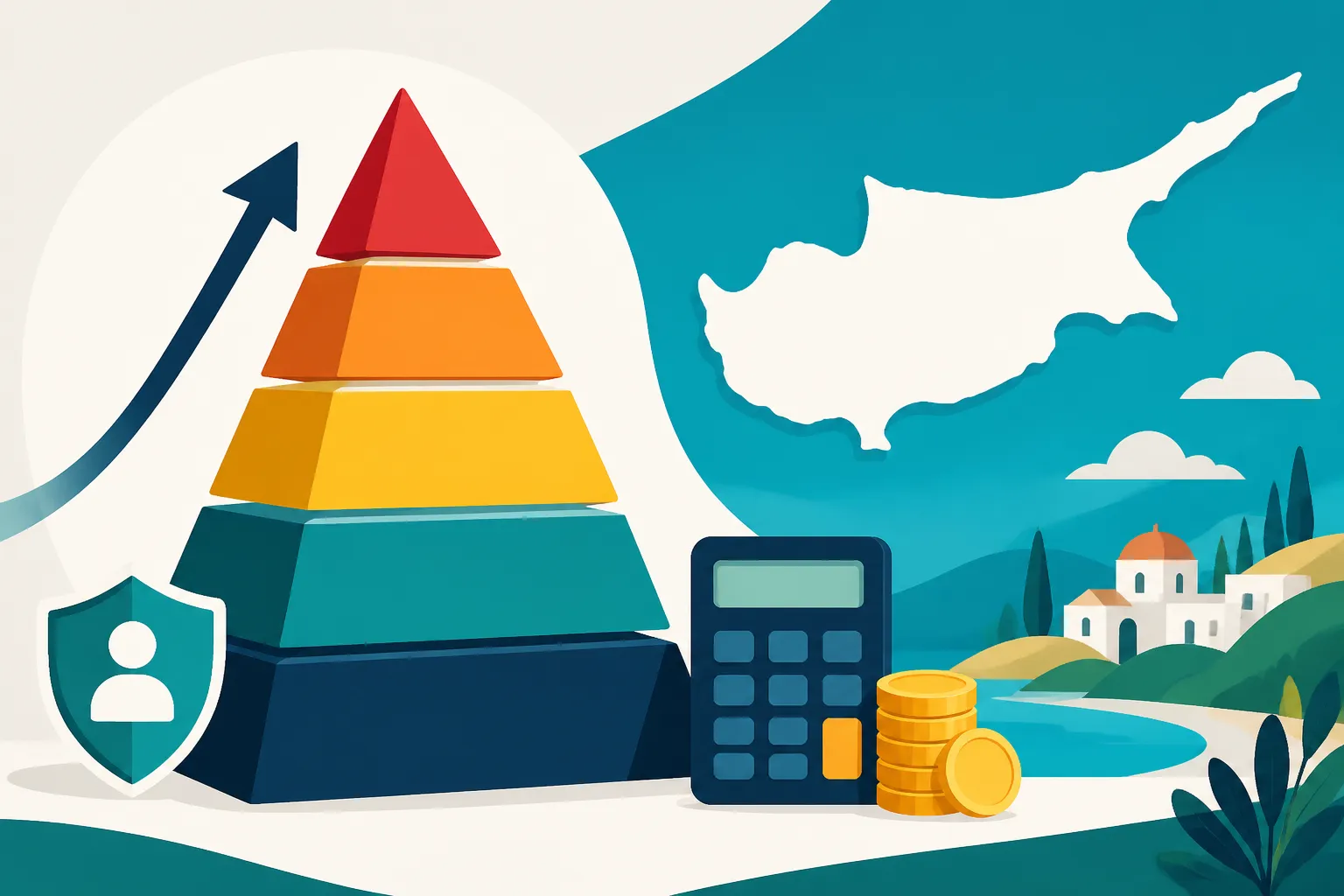
Cyprus operates on a progressive income tax system, which means the more you earn, the higher percentage of tax you pay, but only on the portion of your income that falls into each bracket. It’s not about suddenly paying a huge chunk of your entire salary at the top rate; it’s graduated, which is a common and fairer approach worldwide. For us expats, understanding this is fundamental, as it dictates much of our financial planning here.
The first thing to remember is that this system applies to individuals who are considered tax residents of Cyprus. If you're spending more than 183 days a year here, or meet the 60-day rule under specific conditions, you're likely a tax resident. This means your worldwide income (with some exceptions, of course) becomes subject to Cypriot tax. It’s a big shift for many, especially those from countries with different tax residency rules, so it’s crucial to get this right from the start. For a deeper dive, you might want to look into Tax Residency in Cyprus: The 183-Day and 60-Day Rules Explained (2027) to properly establish your status.
The Basic Tax Bands for 2026
Alright, let's get down to the numbers. The Cypriot income tax bands have remained quite favourable compared to many other European nations, which is a significant draw for many of us choosing to make this island our home. Here are the basic income tax bands that are expected to be in effect for the tax year 2026:
| Taxable Income (Annual €) | Tax Rate (%) | Cumulative Tax (€) on Max in Band |
|---|---|---|
| Up to €19,500 | 0% | €0 |
| €19,501 – €28,000 | 20% | €1,700 |
| €28,001 – €36,300 | 25% | €3,775 |
| €36,301 – €60,000 | 30% | €10,985 |
| Over €60,000 | 35% | Varies |
What this table shows is pretty straightforward: the first €19,500 of your annual taxable income is completely tax-free. That's a huge benefit right off the bat, especially for those with moderate incomes or those who qualify for other significant exemptions. If you're earning, say, €25,000 a year, only the €5,500 (25,000 – 19,500) that falls into the second band will be taxed at 20%. The rest, the initial €19,500, remains untaxed. It’s a system designed to be less burdensome on lower and middle-income earners, which, as expats often discover, is a welcome relief compared to some of our home countries. This foundational understanding is key to grasping The Complete Guide to Taxes in Cyprus for Expats (2027).
Who is Subject to Cypriot Income Tax?
This is where it gets a little more complex, and where your specific situation as an expat becomes very important. Broadly speaking, anyone considered a tax resident of Cyprus is subject to income tax on their worldwide income. This includes income from employment, self-employment, pensions, rents, and certain other sources, regardless of where that income is generated. However, there are significant nuances.
For example, if you are employed by a company in Cyprus, your employer will typically deduct Pay As You Earn (PAYE) income tax, along with social insurance contributions, directly from your salary. This is usually pretty seamless, and often, your first indication of the tax bands will be your payslip. If you're self-employed, however, the onus is entirely on you to correctly declare your income and make provisional tax payments throughout the year. For more on this, you might find How to Pay Tax as a Self-Employed Person in Cyprus particularly useful.
Non-residents, on the other hand, are generally only taxed on income derived from sources within Cyprus. This usually applies to individuals who spend less than 183 days on the island and don't meet the 60-day rule. It's vital to correctly determine your tax residency status from day one, as it fundamentally changes your tax obligations. Misunderstanding this can lead to uncomfortable surprises down the line, which none of us want.
Exemptions and Special Considerations for Expats
Now, here's where Cyprus truly shines for many expats, offering a number of enticing exemptions that can significantly reduce your tax burden, often more so than in other jurisdictions. These aren't loopholes; they're integral parts of the Cypriot tax policy designed to attract foreign investment and talent to the island. It’s part of what makes How the Cyprus Tax System Works: Low Taxes and the Non-Dom Regime Explained (2027) so appealing.
It's common for expats to feel overwhelmed by the initial administrative hurdles of moving to a new country. From getting your residence permit sorted to understanding local bureaucracy, it can feel like a full-time job. The good news is that these tax benefits are real and can make a big difference, so it’s worth taking the time to understand them properly, or seeking professional advice from experts like Taxes for Expats who specialise in navigating these complexities for foreigners.
The Non-Domiciled (Non-Dom) Status: A Game Changer
This is perhaps the most significant tax benefit for many expats in Cyprus. The Non-Dom status essentially exempts you from Special Defence Contribution (SDC) on certain types of income that would normally be taxed for Cypriot tax residents. For expats, this primarily means:
- No SDC on Dividends: This is huge if you receive income from shares or investments. Ordinarily, residents would pay a significant SDC on dividends, but as a Non-Dom, it's exempt.
- No SDC on Interest Income: Similar to dividends, interest income (e.g., from savings accounts) is exempt from SDC for Non-Doms.
- No SDC on Rental Income (for the first 17.5%): While rental income is still subject to income tax, the SDC exemption on a portion of it is beneficial.
To qualify for Non-Dom status, you generally need to be a tax resident of Cyprus but not domiciled here. "Domicile" for tax purposes typically refers to your "domicile of origin" (usually where your father was domiciled at your birth) or "domicile of choice" (where you intend to live permanently). Most expats arriving in Cyprus, particularly in their first 17 years of tax residency, can qualify. This benefit alone can drastically reduce your overall tax bill if you have significant investment income. We have an entire article dedicated to Understanding the Non-Dom Regime and Tax Benefits in Cyprus, which I highly recommend checking out if this applies to you.
Other Key Tax Exemptions and Allowances
Beyond the Non-Dom status, several other exemptions and allowances exist that can further reduce your taxable income:
-
50% Exemption for High Earners: This is another major benefit, specifically designed to attract high-net-worth individuals and professionals. If you were not a resident of Cyprus before the commencement of your employment and your annual remuneration from employment in Cyprus exceeds €55,000, you are entitled to a 50% exemption from income tax for a period of 17 years. This means half of your income from Cypriot employment is not subject to income tax. This is a powerful incentive, effectively halving the portion of your salary that enters the tax bands. It's often misunderstood, but it really applies to the net income after other deductions, not just your gross. For more details, explore Understanding the 50% Income Tax Exemption for High Earners in Cyprus.
-
Exemption for Overseas Employment Income: If you work outside Cyprus for more than 90 days in a tax year for a non-resident employer, your remuneration for those days is exempt from Cypriot income tax. This is particularly relevant for those in roles requiring extensive international travel.
-
Pension Income Exemption: For non-resident pensions, you can choose to be taxed at a flat rate of 5% on amounts exceeding €3,420 annually, or opt for the standard income tax bands. This is particularly attractive for retirees moving to Cyprus.
-
Charitable Donations: Donations to approved charities can be deducted from your taxable income, up to a certain percentage.
-
Life Insurance Premiums and Provident Fund Contributions: Contributions to approved provident funds and certain life insurance premiums can be deducted, subject to limits.
These exemptions are not automatically applied; you usually need to claim them when filing your annual tax return. Knowing what you're eligible for is half the battle, and a good accountant can ensure you're not missing out on any legitimate savings.
Practical Application: Calculating Your Income Tax
Understanding the theoretical bands and exemptions is one thing, but actually seeing how it plays out in practice is where the rubber meets the road. It’s about taking your specific income, applying the rules, and getting to that final number you owe. This is often the point where expats feel they need to pull out their hair, as the calculations can seem daunting, especially if your income sources are diverse.
It's really important to keep accurate records of all your income, both local and foreign, as well as any expenses that might be deductible. When it comes to managing your finances, especially moving money between accounts in different currencies, services like Wise can be incredibly helpful for expats. They often offer more competitive exchange rates and lower fees than traditional banks, which can save you a fair bit over the year, allowing you to manage your funds efficiently ahead of any tax payments.
Step-by-Step Calculation for a Salaried Employee
Let's walk through a hypothetical example for a salaried employee to illustrate how the income tax bands work with a common expat scenario.
Scenario: Maria is a new expat working in Limassol, earning a gross annual salary of €70,000. She qualifies for Non-Dom status and also the 50% exemption for high earners, as she was not a resident before and her salary exceeds €55,000.
- Start with Gross Income: €70,000
- Apply 50% Exemption: Maria qualifies, so 50% of her income is exempt.
- Exempt amount: €70,000 * 0.50 = €35,000
- Taxable employment income: €70,000 – €35,000 = €35,000
- Apply Tax Bands to Taxable Income:
- First €19,500 is taxed at 0% = €0
- Remaining taxable income: €35,000 – €19,500 = €15,500
- This remaining €15,500 falls into the next band (€19,501 – €28,000), which is taxed at 20%.
- Tax on €15,500 @ 20% = €3,100
- Total Income Tax Due: €0 + €3,100 = €3,100
In this example, despite earning €70,000, Maria's actual income tax liability is only €3,100, thanks to the generous exemptions. This highlights just how impactful these special provisions are for expats in Cyprus. This type of calculation is precisely what you need to understand when you delve into Filing Your Tax Return in Cyprus: The Complete Walkthrough (2027).
Considerations for Self-Employed Individuals
For self-employed expats, the process is a bit different as there's no employer deducting taxes for you. You are solely responsible for declaring your income and making tax payments. The same income tax bands apply, but you'll also need to consider:
- Provisional Tax: If your income from self-employment is expected to exceed certain thresholds, you'll need to pay provisional tax in two instalments throughout the year (typically by 31st July and 31st December) to avoid penalties. This estimated tax is based on your projected annual profit.
- Allowable Expenses: As a self-employed individual, you can deduct legitimate business expenses from your gross income to arrive at your net taxable profit. This includes things like office rent, utility costs, professional fees, and equipment depreciation. Keeping meticulous records of these expenses is critical.
- Social Insurance Contributions: Self-employed individuals also need to make their own social insurance contributions, which are separate from income tax but are mandatory and calculated based on your income.
- VAT Registration: Depending on your services and annual turnover, you might also need to register for VAT. This is a whole other layer of compliance to consider.
Navigating self-employment taxes can be complex, especially with varying income streams and international clients. It’s highly advisable to consult with a local accountant who specializes in expat and self-employment taxation to ensure compliance and optimise your tax position. For those new to this, learning How Do I Register as Self-Employed in Cyprus? is a foundational step.
Navigating Tax Compliance and Professional Help
The Cypriot tax system, while offering significant advantages, still requires careful navigation. The rules, deadlines, and required documentation can be a minefield for those unfamiliar with local practices. Trust me, trying to figure out government forms in a foreign language (even with English translations available) is not how you want to spend your precious time here on the island!
It’s about striking a balance between understanding the basics yourself and knowing when to delegate to a professional. The goal is to ensure you're compliant, benefiting from all applicable exemptions, and not paying a single euro more than you have to.
Essential Documents and Deadlines
Regardless of whether you're employed or self-employed, some key documents and deadlines are universal:
- Tax Identification Code (TIC): This is your personal tax number in Cyprus. You'll need to obtain this by registering with the Tax Department shortly after arriving. It's essentially your passport to the tax system here. Without it, you can't file taxes or benefit from various schemes. You can find detailed steps on How to Register with the Tax Department and Get a TIN in Cyprus.
- Income Tax Return (IR1): This is the main form you'll submit annually to declare your income and calculate your final tax liability.
- Supporting Documents: Keep records of your payslips, bank statements, rental agreements, invoices (if self-employed), and any other relevant financial documents. These are crucial for substantiating your claims and income.
Key Deadlines (for individuals, usually applicable for the previous tax year):
- 31st July: Deadline for submission of the Individual Income Tax Return for self-employed individuals and those with income not subject to PAYE. Also, the first provisional tax payment for the current year is due.
- 31st December: Second provisional tax payment due for self-employed individuals.
- 31st July (of the following year): The deadline for the electronic submission of the Income Tax Return for employees and pensioners (IR1).
These dates are generally consistent, but it's always wise to confirm the exact dates for each tax year, as they can occasionally shift. Missing deadlines can result in penalties and interest, which are easily avoidable.
When to Seek Expert Advice
While this guide aims to provide a clear overview of the income tax bands and expat benefits, I cannot stress enough the value of professional advice. Tax laws can be intricate, and an experienced local tax advisor or firm, such as one recommended by Taxes for Expats, can:
- Ensure Correct Residency Status: Confirm your tax residency and domicile status, which is foundational to your entire tax situation.
- Maximise Exemptions: Identify all applicable exemptions and allowances you qualify for, ensuring you’re not leaving money on the table.
- Navigate Complex Situations: If you have multiple income streams, foreign assets, or unique circumstances (e.g., selling property, significant investments), a professional can guide you through the complexities.
- Ensure Compliance: Help you meet all filing deadlines and accurately complete forms, preventing penalties.
- Optimize Your Tax Position: Provide strategic advice on structuring your finances to be as tax-efficient as possible within the legal framework.
Even if you’re financially savvy, the specific nuances of Cypriot tax law, especially regarding international income and expat incentives, are best handled by someone who deals with them daily. Investing in good tax advice upfront can save you considerable stress and money in the long run. After all, the goal of moving here is to enjoy life, not to be bogged down by paperwork! Understanding The Complete Guide to Property Taxes and Transfer Fees in Cyprus (2026) or Understanding Capital Gains Tax on Property in Cyprus might also require expert guidance if you're looking to buy or sell.
Disclaimer
The information provided in this guide is intended for general informational purposes only and does not constitute financial, legal, or tax advice. While we strive to keep the information up-to-date and accurate, tax laws and regulations in Cyprus can change. Expats should always consult with a qualified tax advisor or financial professional for advice tailored to their individual circumstances before making any tax-related decisions.