How Do I Buy a Scooter or Motorbike in Cyprus?
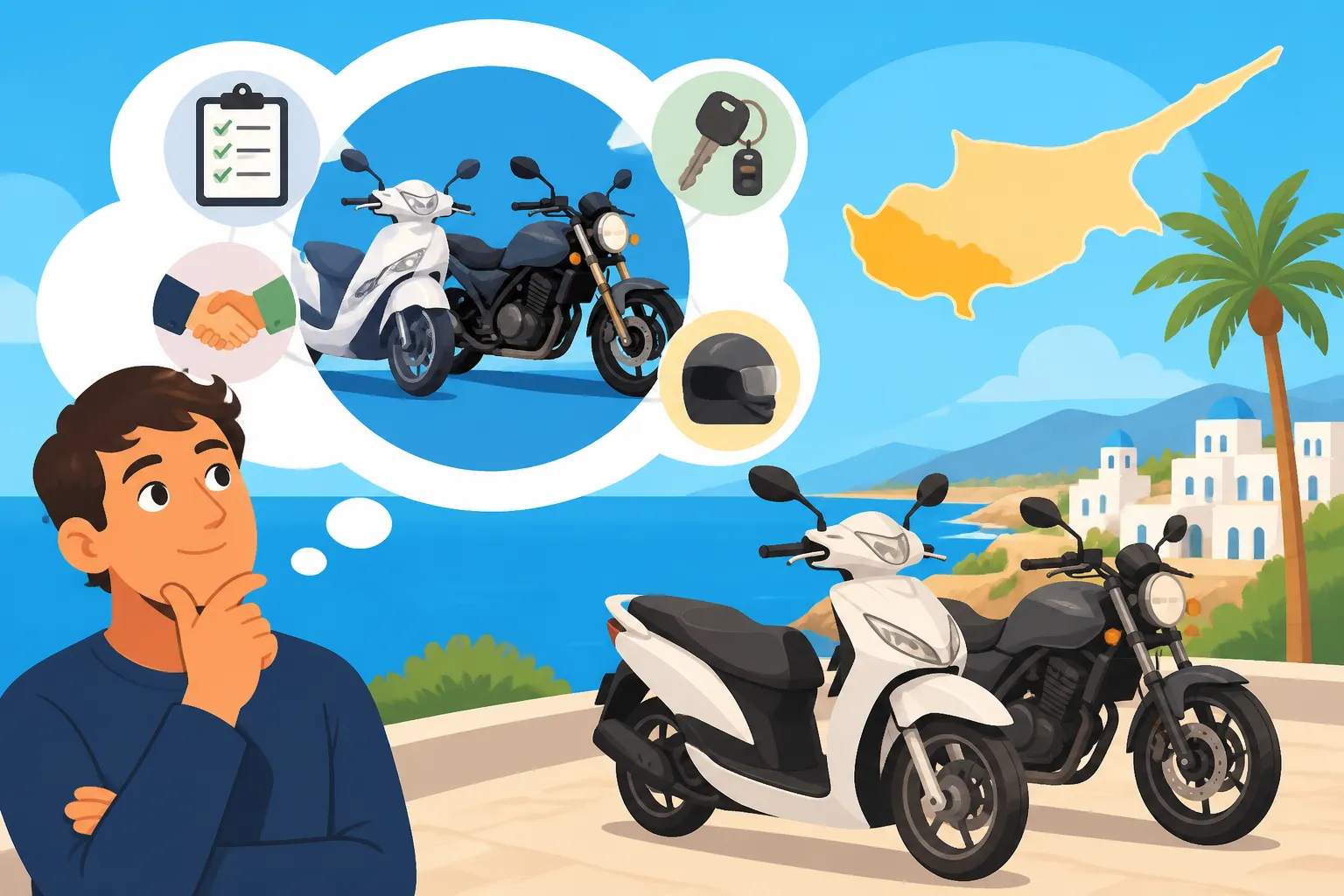
Moving to Cyprus brings with it a whole new rhythm of life, but navigating the island without personal transport can feel like trying to swim against a strong current. While the idea of tackling Cypriot roads on a scooter or motorbike might seem daunting, for many expats, it quickly becomes the ultimate solution for independence and soaking up the Mediterranean lifestyle. This comprehensive guide will walk you through everything you need to know about buying a scooter or motorbike here, cutting through the confusion so you can hit the road with confidence.
Why a Scooter or Motorbike is a Game Changer in Cyprus
Let's be real, Cyprus is an island blessed with sunshine and stunning scenery, but its public transport system often leaves a lot to be desired, especially outside the main city centres. For many of us, getting around efficiently and affordably is a constant headache. That's where a trusty two-wheeler truly shines.
Navigating Cypriot Roads and Traffic Realities
Cypriot cities, particularly Limassol and Nicosia, can get surprisingly congested during peak hours, and finding parking for a car can be a nightmare. Imagine endlessly circling a block, only to give up and park miles away from your destination. That's a daily reality for many car owners. With a scooter or motorbike, you can weave through lighter traffic, and parking? Suddenly, it's a breeze. You'll find spots right where you need them, saving you precious time and a whole lot of frustration.
Beyond the urban sprawl, the island’s charm lies in its villages, hidden beaches, and mountain roads, many of which are narrow, winding, and not always well-serviced by buses. A scooter opens up these possibilities, letting you explore at your own pace. You’ll be able to nip down those charming, cobbled village lanes or find that secluded beach cove that car drivers often miss. The cost of fuel for a car in Cyprus can also add up, and a motorbike is significantly more economical on petrol, allowing you to stretch your budget further for those weekend adventures.
The Cost-Benefit for Expats
When you first arrive, the sheer number of vehicles on the road might make you think everyone here drives a fancy car. But look closer, and you'll see legions of scooters and motorbikes, and for good reason. From the initial purchase price to ongoing running costs, they are often a much more budget-friendly option than a car, which is a significant factor when you're settling into a new country.
The upfront cost of buying a new or used scooter is substantially lower than even a basic used car. This frees up capital for other essential expenses as you set up your life here. Beyond that, the annual road tax is usually much cheaper, as are insurance premiums (depending on your age, experience, and the bike's engine size, of course). Maintenance, too, tends to be more affordable, with simpler mechanics and less expensive parts compared to a typical car. Think about those long, hot Cypriot summers – an air-conditioned car sounds lovely, but a refreshing breeze on a motorbike after a day at the office is surprisingly invigorating. This financial advantage allows many expats to maintain a higher quality of life without sacrificing their mobility.
Essential Steps Before You Buy: The Bureaucracy Begins
Alright, so you're convinced that a two-wheeled companion is exactly what you need. Fantastic! But before you get lost in dreams of coastal rides, there's some very Cypriot bureaucracy to navigate. Don't worry, I've been there, and with a bit of patience and preparation, you'll get through it.
Understanding Your Driving Licence Requirements
This is probably the first big hurdle. If you're an expat, your existing driving licence situation needs to be crystal clear. If you’re from an EU country, your licence is generally valid until it expires, after which you'll need to exchange it for a Cypriot one. For non-EU citizens, things can be a bit more nuanced. Initially, your foreign licence might be valid for a certain period (often up to six months, sometimes a year depending on bilateral agreements), but eventually, you’ll need to convert it.
The crucial part here is ensuring your licence covers the specific category for the scooter or motorbike you intend to buy. For example, a 50cc scooter might fall under a lower category (AM), while more powerful bikes will require an A1, A2, or A category licence. If your current licence doesn't have the appropriate motorcycle category, you'll need to go through the process of obtaining one in Cyprus, which involves theory and practical tests. This is a common situation for expats who might have a car licence from back home but never bothered with a motorbike licence. It's best to check with the Road Transport Department (Department of Road Transport – TOM) in your district as soon as possible. For more detailed information on converting your licence, you might find our guide on How Do I Convert My Foreign Driving Licence in Cyprus? incredibly helpful.
Budgeting for Your Two-Wheeled Freedom
Nobody wants nasty surprises when making a significant purchase, even for something as liberating as a scooter. Beyond the purchase price of the bike itself, there are several other costs you need to factor into your budget. This is where many newcomers sometimes underestimate the total outlay.
First, there's the purchase price. This can range dramatically based on whether you buy new or used, the make, model, engine size, and overall condition. Then comes insurance, which is legally mandatory. Premiums vary widely based on your age, driving experience, the bike's value, and the type of coverage you choose (third-party minimum vs. comprehensive). Next, you’ll have road tax, an annual fee that depends on the engine capacity. Don't forget the helmet – it’s not just legally required, it's essential for your safety! You'll also want to consider other protective gear like a jacket, gloves, and sturdy footwear. Lastly, there might be a small fee for the transfer of ownership at the Road Transport Department. Being prepared for these costs upfront will save you stress down the line.
Here’s a quick overview of potential costs (these are estimates and can vary significantly):
| Item | Estimated Cost (EUR) | Notes |
|---|---|---|
| New 50cc Scooter | 1,500 – 3,000 | Reputable dealerships, includes VAT. |
| Used 50cc Scooter | 500 – 1,500 | Depends heavily on age, mileage, condition. |
| New 125cc Motorbike/Scooter | 2,500 – 5,000 | Popular commuter size. |
| Used 125cc Motorbike/Scooter | 1,000 – 3,000 | Good value, check mechanics thoroughly. |
| Road Tax (Annual) | 10 – 50 | Lower for smaller engines, higher for larger. |
| Insurance (Annual) | 150 – 500+ | Third-party minimum, varies by age, experience, bike. |
| Helmet | 50 – 300+ | Essential safety gear, don't skimp here. |
| Transfer of Ownership Fee | 5 – 20 | Small administrative fee at TOM. |
| Basic Gear (Jacket, Gloves) | 100 – 400+ | Recommended for safety. |
Remember, these are starting points. Always get specific quotes and factor in your personal circumstances.
Where and How to Find Your Ride in Cyprus
Now for the fun part: finding your perfect two-wheeled companion! The market for scooters and motorbikes in Cyprus offers both new and used options, each with its own set of advantages and considerations.
New vs. Used: Pros and Cons
Buying New:
If your budget allows, a new scooter or motorbike from a reputable dealership offers peace of mind. You'll get a manufacturer's warranty, the latest models, and often the option for financing. Dealerships like F.M. Moto (Yamaha, Suzuki), Motorace (Honda, KTM), and B.P.M. Motor Co. (Piaggio, Vespa) are well-known across the island, with branches in major cities like Limassol, Nicosia, and Larnaca. They handle all the initial registration paperwork for you, which can be a huge relief for someone new to the country. The downside, of course, is the higher price tag and potentially slower depreciation once you ride it off the lot. However, knowing you have a reliable machine with a full service history from day one can be invaluable.
Buying Used:
For many expats, especially those on a tighter budget or those unsure about long-term stay, a used scooter or motorbike is the more attractive option. The used market in Cyprus is quite active. You can find options through online marketplaces like Bazaraki.com, Facebook Marketplace groups specific to Cyprus, or even local classifieds. Some smaller used vehicle dealers also stock scooters and motorbikes.
The biggest advantage is the price, but the biggest challenge is ensuring you're getting a good deal and a mechanically sound vehicle. When buying used, it's absolutely crucial to do your due diligence. Always inspect the bike thoroughly, check for accident damage, rust, and listen to the engine. If you're not mechanically inclined, bring a friend who is, or better yet, pay a trusted local mechanic a small fee to inspect it before you commit. Ask for service history and make sure the seller has all the necessary documents (registration certificate, road tax receipt, MOT certificate if applicable). Don't be afraid to walk away if something feels off; there are always other bikes out there.
Navigating the Purchase Process and Paperwork
Once you've found your dream machine, the administrative dance begins. This is where things can feel a bit like a maze, so pay close attention.
If you're buying from a dealer, they'll typically handle most of the registration paperwork, including the initial vehicle registration with the Department of Road Transport. You'll just need to provide your ID (passport/ARC) and possibly your Tax Identification Number (TIN). They'll guide you through signing the necessary forms and often arrange the first year's road tax and insurance.
If you're buying from a private seller, you'll be responsible for the transfer of ownership yourself. This involves a visit to your local Department of Road Transport (TOM) office. You and the seller must go together, or the seller must provide a power of attorney if they cannot be present. You'll need:
- Vehicle Registration Certificate (άδεια κυκλοφορίας): This is the equivalent of the V5C in the UK. Make sure the seller is the registered owner.
- Valid ID: Your passport or Alien Registration Card (ARC/Pink Slip).
- Proof of Insurance: You'll need to have insurance valid for the vehicle before the transfer can be completed. This can sometimes be tricky as you need the vehicle details to get insurance, but then need insurance for the transfer. Often, you can get a temporary policy or buy one on the spot from an insurance agent located near the TOM offices.
- Completed TOM 9A Form: The transfer of ownership application form.
- Payment for Transfer Fees: These are usually quite small.
The process at the TOM involves submitting these documents, paying the fee, and then a new registration certificate will be issued in your name, usually on the same day. It's similar to how you would register a car. For more details, you can refer to our guide on How Do I Register a Car in Cyprus?. Remember, having a local mobile number is essential for this entire process, both for coordinating with sellers or dealers and for filling out official forms. Having an active SIM with enough data and calls, perhaps from a provider like Airalo if you're newly arrived, can make these initial logistical steps much smoother, ensuring you don't miss important calls or messages during the transaction.
Insurance, Road Tax, and Staying Legal
Getting your new wheels is exciting, but the responsibility doesn't end there. Staying legal on Cypriot roads involves understanding and complying with insurance and road tax regulations.
Securing the Right Insurance
In Cyprus, it is mandatory by law to have at least third-party liability insurance for any motor vehicle, including scooters and motorbikes. This covers damage or injury you might cause to another person or their property. Driving without it can lead to severe penalties, including fines, points on your licence, and even vehicle impoundment. Don't risk it.
When looking for insurance, you'll find various local providers like Eurolife, Atlantic, and Gan Direct, among others. It’s worth shopping around for quotes. Your premium will depend on several factors:
- Your age and driving experience: Younger, less experienced riders typically pay more.
- The motorbike's engine size and value: More powerful or expensive bikes cost more to insure.
- Your claims history: If you have a no-claims bonus from your home country, some insurers might honour it, which can significantly reduce your premium. Always ask if this is an option and be prepared to provide proof.
- Type of coverage: Third-party is the minimum. You can also opt for third-party, fire, and theft, or fully comprehensive, which covers damage to your own bike even if you're at fault. Given Cyprus's busy roads, comprehensive might be a wise investment if you have a valuable bike.
It's a good idea to speak with an insurance agent, many of whom are English-speaking, to ensure you understand the terms and conditions. They can explain nuances like what happens in an accident, how to make a claim, and any exclusions. For a broader understanding of vehicle insurance, our article on How Much Is Car Insurance in Cyprus? also offers valuable insights that can apply to motorbikes.
Annual Road Tax and Inspection
Every vehicle on Cypriot roads, including scooters and motorbikes, must pay an annual road tax (τέλη κυκλοφορίας). This tax is calculated based on the engine capacity (cubic centimeters – cc) of your bike, with smaller engines generally incurring lower fees. The payment period typically runs from January 1st to December 31st each year.
You can pay your road tax online through the JCCSmart platform (which is surprisingly efficient for government payments here), at banks, or at the Road Transport Department offices. You'll need your vehicle registration number and your ID. Make sure to pay this on time, as late payments incur penalties. You can easily find the exact amount due for your specific vehicle on the JCCSmart platform. For further details on how to manage this, you can refer to our guide on How Do I Renew My Road Tax in Cyprus?.
Unlike cars, motorbikes generally have different, often longer, intervals for the Mandate Technical Inspection (MOT or 'K.T.E.O.' in Greek). Most motorcycles over 125cc require an MOT every two years after their initial registration, whereas smaller scooters may not require it at all, or only after a certain age. However, regulations can change, so always double-check the current requirements for your specific bike's category and age with the Road Transport Department. The MOT ensures your bike meets basic safety and environmental standards. It’s a thorough check of brakes, lights, tyres, emissions, and general roadworthiness.
Practical Tips for Scooter and Motorbike Owners in Cyprus
So, you've got your licence, bought your bike, and sorted out all the paperwork. Congratulations! Now for some practical wisdom to make your two-wheeled life in Cyprus as smooth and safe as possible.
Essential Gear and Safety First
I cannot stress this enough: safety first. While the temptation might be to enjoy the warm weather with minimal gear, remember that asphalt doesn't discriminate.
- Helmet: Absolutely non-negotiable and legally required. Invest in a good quality, full-face helmet that fits correctly. Don't buy a cheap, uncertified one just to tick a box. Your brain is worth more.
- Protective Jacket: Even in summer, a breathable motorcycle jacket with armour in the shoulders, elbows, and back offers vital protection. It also protects against sun exposure during long rides.
- Gloves: Protect your hands from scrapes and provide a better grip.
- Sturdy Footwear: Open-toed shoes are a definite no-go. Wear proper shoes or boots that cover your ankles.
- Trousers: Jeans offer minimal protection. Consider riding trousers with knee and hip armour for longer rides or higher speeds.
Cypriot drivers, bless them, can sometimes be a bit… enthusiastic. Always assume you are invisible, be hyper-aware of your surroundings, and ride defensively. The island’s roads can also be challenging, with uneven surfaces, potholes, and loose gravel, especially after winter rains or in rural areas. Be particularly cautious on turns and when approaching junctions.
Maintenance, Parking, and Local Riding Etiquette
Just like any vehicle, your scooter or motorbike needs regular care to keep it running smoothly and safely.
- Maintenance: Find a trusted local mechanic early on. Ask other expats or locals for recommendations. Regular oil changes, chain lubrication (if applicable), tyre pressure checks, and brake inspections are crucial. The dusty environment and hot climate can take a toll on components faster than you might be used to.
- Parking: One of the biggest advantages of a two-wheeler in Cyprus is ease of parking. However, still be mindful of where you park. Avoid blocking pedestrian pathways or vehicle access. While parking rules for bikes might seem more relaxed than for cars, getting a fine for obstruction is still possible. Always lock your bike, especially if you have a more valuable model, and consider a disc lock for added security.
- Riding Etiquette: Be polite but assertive. Use your indicators, anticipate other drivers' movements, and avoid lane splitting excessively, especially in heavy traffic, as it can be dangerous and is not always legally clear-cut. Remember that Cypriots often communicate with horn beeps – a quick, light beep is often a friendly 'hello' or 'I'm here,' not necessarily an aggressive honk. Get accustomed to the local driving style, which can be somewhat impulsive, and always maintain enough space around you. For a comprehensive overview of the general driving landscape, our pillar article Driving in Cyprus: Licences, Registration and Rules for Expats (2027) could provide useful context.
Embrace the freedom a scooter or motorbike offers, but always prioritise your safety and adhere to local regulations. It's truly one of the best ways to experience the real Cyprus, from bustling city life to serene coastal roads.
Disclaimer
The information provided in this guide is intended for general informational purposes only and does not constitute legal, financial, or professional advice. While we strive to keep the information up-to-date and accurate, regulations and procedures in Cyprus can change without prior notice. Expats and visitors are strongly advised to consult with relevant Cypriot authorities, legal professionals, or financial advisors for specific advice tailored to their individual circumstances. We cannot be held responsible for any inaccuracies or omissions, or for any actions taken based on the information provided herein.