Can My Children Get Residency in Cyprus Through Me?
One of the biggest worries for any expat is ensuring their entire family can join them on this incredible journey to a new country. It’s not just about you; it's about whether your children can genuinely settle here with you, access what they need, and legally reside. This guide is here to walk you through exactly how your children can obtain residency in Cyprus, dispelling myths and clarifying the steps for both EU and non-EU families.
The Foundations: Who Can Bring Their Children?
When you first land in Cyprus, brimming with excitement and perhaps a touch of trepidation, the administrative hurdles can feel overwhelming. Figuring out how to sort out your own residency is one thing, but adding your children to the mix often brings a whole new layer of stress. Rest assured, Cyprus does have clear pathways for family reunification, but the specifics largely depend on your own nationality and residency status.
EU/EEA/Swiss Citizens and Their Families
If you hold a passport from an EU, EEA, or Swiss country, you’re already one step ahead, and thankfully, the process for your children is far more straightforward. As an EU citizen exercising your right to free movement, your children, regardless of their nationality, generally have the right to reside with you in Cyprus. This is enshrined in EU law, which Cyprus, as a member state, adheres to.
For your children who are also EU/EEA/Swiss citizens, the process is essentially the same as for you: you’ll apply for what's commonly known as a Yellow Slip (or MEU1) at the Civil Registry and Migration Department. This is a registration certificate that confirms their right of residence. You'll need to provide proof of their identity, your family relationship (birth certificates), and your own means of support and health insurance. It’s not a permission to stay, but rather a confirmation of an existing right. The key here is proving the familial link and that you, as the sponsoring parent, meet the requirements for economic self-sufficiency, meaning you won’t become a burden on the Cypriot state. This generally involves showing sufficient funds in a Cypriot bank account or proof of employment. If you're wondering How to Register as an EU Citizen (Yellow Slip / MEU1) in Cyprus, you'll find the information directly applicable to your children too.
Now, if your children are non-EU citizens, but you, the parent, are an EU citizen, they are still very much covered under EU family reunification rules. They are considered "family members of an EU citizen" and have the right to reside with you. For them, you'd apply for an MEU2 residence card. The documents required will be similar – passports, birth certificates, your Yellow Slip, proof of your financial stability, and comprehensive health insurance. This permit typically lasts for five years, aligning with your own initial registration. This is a critical distinction, as it grants them residency without the often more stringent requirements faced by non-EU citizens applying under national immigration laws.
Non-EU Citizens with a Valid Residence Permit
For non-EU citizens, the path to bringing your children to Cyprus is generally through the family reunification provisions under national immigration law. This is where it can get a bit more complex, and patience truly becomes a virtue. Your ability to sponsor your children for residency hinges directly on your own valid residence permit. You can't just arrive on a tourist visa and then apply for your children's residency; you must already have a long-term residency status, such as a work permit, a Digital Nomad Visa, a Category F permit, or another type of long-stay visa.
The most common route for non-EU citizens is through a specific application for family reunification, often linked to your own permit. For example, if you have a work permit, your employer might have initiated a combined application, or you might need to apply separately once your own permit is secured. The Civil Registry and Migration Department (CRMD) is the agency that handles these applications. They will want to see solid proof of your financial stability – income that is sufficient not just for you, but for your entire family, demonstrating you can support them without relying on public funds. They’ll also require comprehensive health insurance for all family members, covering inpatient and outpatient treatment. This is where companies like Cigna Global often come into play, as their plans are well-recognized and meet the often strict requirements for visa applications. If you're grappling with the thought of How to Include Family in Your Cyprus Residency Application, understand that it's a parallel but linked process to your own.
You’ll also need to prove your accommodation is suitable for the whole family, ensuring it meets minimum size requirements set by the authorities. A one-bedroom studio might be fine for a single person, but certainly not for a family with children. Documents like tenancy agreements or property ownership deeds will be crucial. Remember, the Cypriot authorities want to ensure that any family joining you will have a stable, secure, and safe environment. This means they look at everything from your living situation to your financial means to ensure a smooth integration into Cypriot society.
The Application Process: Navigating the Bureaucracy
Ah, the application process. This is where many of us expats feel like we’re running a bureaucratic marathon, often uphill, in the summer heat. But with a clear understanding of what’s needed, and a healthy dose of persistence, you can get through it. The key is meticulous preparation and anticipating potential roadblocks.
Essential Documents You'll Need
Gathering documents is usually the most time-consuming part, and in Cyprus, it often feels like a treasure hunt. Don't underestimate the need for official translations and apostilles. Any document not in Greek or English will almost certainly need to be officially translated and certified. For many foreign documents, an apostille (an international certification) will be required from your home country, especially for birth certificates and marriage certificates.
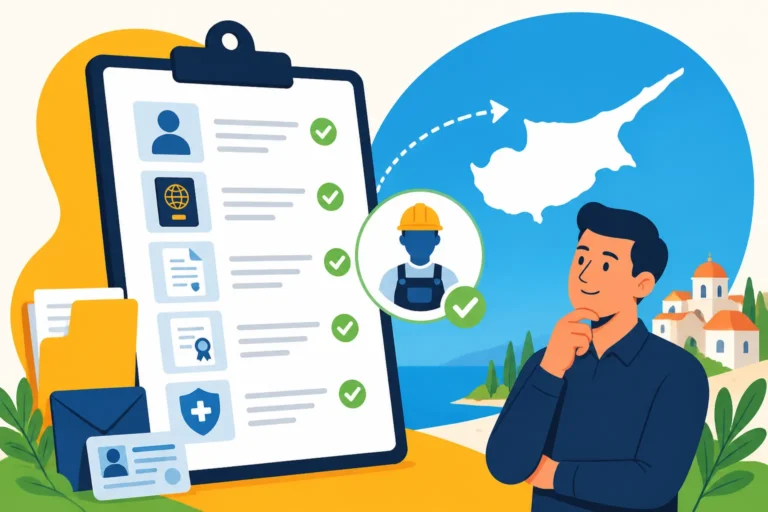
Here's a general list, but always check the most current requirements with the Civil Registry and Migration Department, as these can subtly change:
- Application Forms: The specific forms for family reunification, usually obtained from the CRMD website or office.
- Passports: Valid passports for all family members, with at least six months' validity remaining.
- Birth Certificates: Original birth certificates for each child, showing the parent-child relationship. These must be translated and apostilled.
- Marriage Certificate: If applicable, your marriage certificate to prove the marital relationship between parents. Again, translated and apostilled.
- Parent's Residence Permit: A copy of your own valid residence permit (Yellow Slip, Pink Slip, Work Permit, Digital Nomad Visa, etc.).
- Proof of Sufficient Income: Bank statements (from a Cypriot bank account are preferred), salary slips, employment contracts, or audited financial statements if self-employed. They want to see consistent income. If you're pondering How Your Residency Status Affects GeSY Access in Cyprus, remember that sufficient income is also crucial for GeSY eligibility.
- Accommodation Proof: A rental agreement or title deed for your home, demonstrating adequate living space for the entire family.
- Health Insurance: Comprehensive health insurance for each child, valid in Cyprus. This is non-negotiable. As mentioned earlier, providers like Cigna Global are often a reliable choice as they understand the expat market and the specific requirements for these types of visas.
- Criminal Record Certificate: For older children (usually 16 or 18+, depending on the exact rules at the time), a clear criminal record certificate from their country of origin might be required.
- School Enrollment/Proof of Study: If your children are of school age, proof of their enrollment or intent to enroll in a Cypriot school. This demonstrates their integration into local life.
- Recent Passport Photos: Standard biometric passport photos for each applicant.
It’s often a good idea to create a checklist and ensure you have multiple copies of everything. A small error or missing document can send you back to square one, prolonging an already lengthy process.
Step-by-Step Filing and Follow-Up
Once you have your document arsenal ready, it's time for the submission.
- Schedule an Appointment: For non-EU citizens, you'll often need to schedule an appointment with the local district unit of the Civil Registry and Migration Department. Walk-ins are rarely successful for complex applications like family reunification.
- Submission: Attend the appointment with all your original documents and copies. The officer will review everything. Be prepared for questions and don't be surprised if they ask for something extra on the spot. Keep a calm demeanour and try to have any supporting documents you can think of on hand.
- Pay Fees: There will be application fees for each family member. Make sure you have enough cash or an accepted payment method.
- Biometrics: For non-EU applicants, your children might need to provide biometric data (fingerprints and a digital photo) at the time of application or a subsequent appointment.
- The Waiting Game: This is where the expat virtue of patience truly comes into its own. Processing times can vary wildly. It could be a few months, or it could stretch to over a year, depending on the volume of applications and the complexity of your case. It's a common frustration, but it's important to set realistic expectations. If you need to stay on top of it, understand that How Long Until I Can Apply for Cyprus Citizenship? is a very different timeline and process compared to initial family residency.
- Follow-Up: Don't be afraid to follow up politely if the processing time significantly exceeds the estimates given. However, avoid calling daily. A monthly or bimonthly check-in is usually sufficient. Keep records of who you spoke to and when.
- Approval and Collection: Once approved, you'll be notified to collect the residence permits. This is the moment of relief when all that hard work pays off.
It’s a long road, but seeing your children finally settled and having their own legal status here makes it all worthwhile. For those thinking of relocating belongings too, remember to coordinate the timing. Companies like Sirelo can assist with the logistics of moving your household items once all your immigration ducks are in a row.
Specific Scenarios and Considerations
Cyprus, like any country, has its nuances when it comes to immigration for children. It's not a one-size-fits-all process, and certain situations require extra attention.
Age Limits and Dependency
The concept of "child" for immigration purposes isn't always as simple as it sounds. Generally, minor children (under 18) are straightforward to include in family reunification applications, provided you can prove parental responsibility. However, what happens when your child is older, perhaps in university, but still financially dependent on you?
For non-EU citizens, the definition of a dependent child for family reunification often strictly adheres to the age of 18. Some exceptions may exist for children with severe disabilities, but generally, once a child turns 18, they are considered adults and may need to apply for their own residence permit based on their own circumstances, such as a student visa if they plan to study in Cyprus, or a work permit if they find employment. This is a critical point that many expat families miss, assuming their "children" remain dependents indefinitely. You’ll need to check the specific age cut-offs for the permit you hold and the family reunification category you are applying under. It’s a sad reality that sometimes, older children might not be able to automatically join you, and they would need to explore options like How to Apply for a Student Visa for Cyprus independently.
For EU citizens, the rules are typically more lenient, extending to dependent children up to the age of 21, and beyond 21 if they can prove continued financial dependency on the parent, for example, if they are enrolled in full-time education and not earning enough to support themselves. This flexibility is a significant advantage for EU families. Always be prepared to provide robust evidence of financial dependency if your child is over 18, such as bank transfers, tuition receipts, and statements showing their lack of independent income.
Health Insurance and Education for Children
These two aspects are paramount for any family, regardless of your nationality, and the Cypriot authorities take them very seriously. They want to ensure that children residing in Cyprus have access to adequate medical care and education.
Health Insurance: As an expat parent, securing proper health insurance for your children is not just a legal requirement for residency; it’s a parental obligation. For non-EU citizens applying for family reunification, comprehensive private health insurance is typically mandatory until they might become eligible for GeSY, Cyprus's General Healthcare System, which usually occurs after a certain period of social insurance contributions. This private insurance must cover inpatient, outpatient, and sometimes even emergency repatriation. Again, this is where a reputable international provider like Cigna Global can be a lifeline, ensuring all bases are covered to meet immigration criteria. If you are struggling to understand Health Insurance in Cyprus: GeSY, Private and Employer Options Explained, know that children's coverage is usually a subset of these options.
For EU citizens and their family members, once you are registered and making social insurance contributions, your children generally become eligible for GeSY. However, there might be an initial waiting period or a need to confirm their registration, especially if they are non-EU family members. During this transitional phase, having a private policy is highly recommended. Understanding the nuances of How Cyprus's Health System Works: GeSY vs Private Explained (2027) is crucial for making informed decisions about your children's healthcare.
Education: Cyprus offers a range of educational options, including public Cypriot schools, private Cypriot schools, and international schools. For residency purposes, especially for non-EU applicants, demonstrating that your children will be enrolled in an appropriate educational institution is often a requirement. This shows integration and a plan for their future in Cyprus.
Public schools follow the Cypriot curriculum and are taught primarily in Greek. They are free for residents. Private Cypriot schools usually offer a bilingual curriculum (Greek and English) and come with fees. International schools, popular with expat families, follow curricula like the British, American, or IB systems and are taught in English, but they are considerably more expensive. When choosing a school, remember to factor in location and transport. If you're looking for The Complete Guide to Schools and Education in Cyprus for Expat Families, you'll find detailed insights there.
What if Circumstances Change?
Life happens, and sometimes circumstances change. Perhaps you change jobs, move house, or your marital status shifts. These changes can impact your children's residency status, especially for non-EU citizens.
If you change employers, your own work permit might need to be re-issued or transferred, which could have implications for your children's dependent visas. Always inform the Civil Registry and Migration Department of any significant changes in your employment or address. Similarly, a change in your marital status, such as divorce or separation, could complicate the residency for children, particularly if one parent leaves Cyprus or if custody arrangements are altered. In such cases, legal advice might be necessary to ensure your children’s status remains secure.
For EU citizens, the system is generally more robust against such changes, as the right of residence is tied more broadly to the parent's exercise of treaty rights, rather than a specific employment contract. However, maintaining sufficient resources and comprehensive health cover remains crucial. It's always best practice to keep the authorities informed of any major life changes that could affect your residency or your children's.
Common Challenges and Expert Tips
Moving to a new country with children is inherently challenging. There are logistical hurdles, emotional adjustments, and, of course, the ever-present bureaucratic maze. Being prepared for these can make a world of difference.
The Waiting Game and Proactive Steps
As I’ve mentioned, patience is truly a virtue here. The processing times for family reunification applications, especially for non-EU citizens, can be lengthy. It's not uncommon for approvals to take several months, sometimes even longer than a year. This can be incredibly frustrating, particularly when you have children who are eager to settle in, start school, or simply be reunited with a parent.
Proactive Steps:
- Start Early: Begin gathering your documents and preparing your application as soon as you know you'll be moving or once your own permit is secure. Do not wait.
- Organize Everything: Keep all original documents, copies, and translations meticulously organized in a dedicated file. Label everything clearly. This will save you immense stress if you need to resubmit something or provide additional information.
- Digital Copies: Have digital scans of all documents. This makes it easier to send them via email if requested by the authorities or an immigration lawyer.
- Seek Professional Advice: For non-EU family reunification, especially if your case is complex (e.g., stepchildren, children over 18), consider consulting with an immigration lawyer in Cyprus. They can guide you through the process, ensure all documents are correct, and liaise with the authorities on your behalf, potentially saving you time and headaches. This investment can be invaluable.
- Manage Expectations: Talk to other expats who have gone through the process. Understand that delays are common, and try not to let them get to you too much. It's part of the expat journey in Cyprus.
Maintaining Your Children's Residency Status
Getting the initial permit is a huge milestone, but it's not a one-and-done deal. Residence permits have an expiry date, and it's your responsibility to ensure they are renewed in a timely manner.
Renewal Process:
- Monitor Expiry Dates: Keep a close eye on the expiry date of your children’s residence permits (and your own!). Start the renewal process well in advance, usually 2-3 months before expiry.
- Similar Documentation: The renewal process will typically require similar documentation to the initial application – updated proof of income, health insurance, and accommodation.
- No Gaps: It's crucial to ensure there are no gaps in residency. An expired permit, even for a short period, can lead to complications, fines, or even issues with future applications. This is especially true for non-EU citizens.
- Long-Term Goals: Understand that consistent, uninterrupted legal residency for your children is the pathway to them potentially applying for permanent residency in Cyprus down the line. If you're looking into How to Move from Temporary to Permanent Residency in Cyprus, know that your children's continuous residency contributes to their eligibility.
Here's a quick summary table of key requirements based on nationality:
| Requirement | EU/EEA/Swiss Citizen Children (MEU1/MEU2) | Non-EU Citizen Children (Family Reunification) |
|---|---|---|
| Parent's Status | Parent must have Yellow Slip (MEU1) or equivalent EU registration. | Parent must have valid long-term residence permit (e.g., work, Digital Nomad). |
| Proof of Relationship | Birth certificate (translated, apostilled if needed). | Birth certificate (translated, apostilled). Marriage cert for parents. |
| Financial Means | Parent provides proof of sufficient and stable resources for the family. | Parent provides robust proof of income to support entire family. |
| Accommodation | Proof of adequate housing for the family. | Proof of adequate housing, often subject to minimum size requirements. |
| Health Insurance | Covered by GeSY if parent contributes; private needed until eligible. | Comprehensive private health insurance is mandatory (e.g., Cigna Global). |
| Age Limit | Generally up to 21, or beyond if proven financially dependent. | Typically strictly under 18; exceptions for disability only. |
| Application Office | Civil Registry and Migration Department (CRMD) – District Offices. | Civil Registry and Migration Department (CRMD) – District Offices. |
| Processing Time | Generally faster (weeks to a few months). | Can be significantly longer (several months to over a year). |
Remember, your children are just as much a part of your expat dream as you are. Taking the time to understand and navigate their residency process carefully will lay a stable foundation for their life here in Cyprus. Whether it's finding the right school, getting them registered for healthcare, or simply having their passport stamped with their valid permit, each step brings them closer to calling this island home.
Disclaimer
The information provided in this guide is for general informational purposes only and does not constitute legal or immigration advice. While every effort has been made to ensure accuracy, immigration laws and procedures in Cyprus can change rapidly. It is highly recommended to consult with the official Civil Registry and Migration Department or a qualified immigration lawyer in Cyprus for the most current and specific advice pertaining to your individual circumstances.