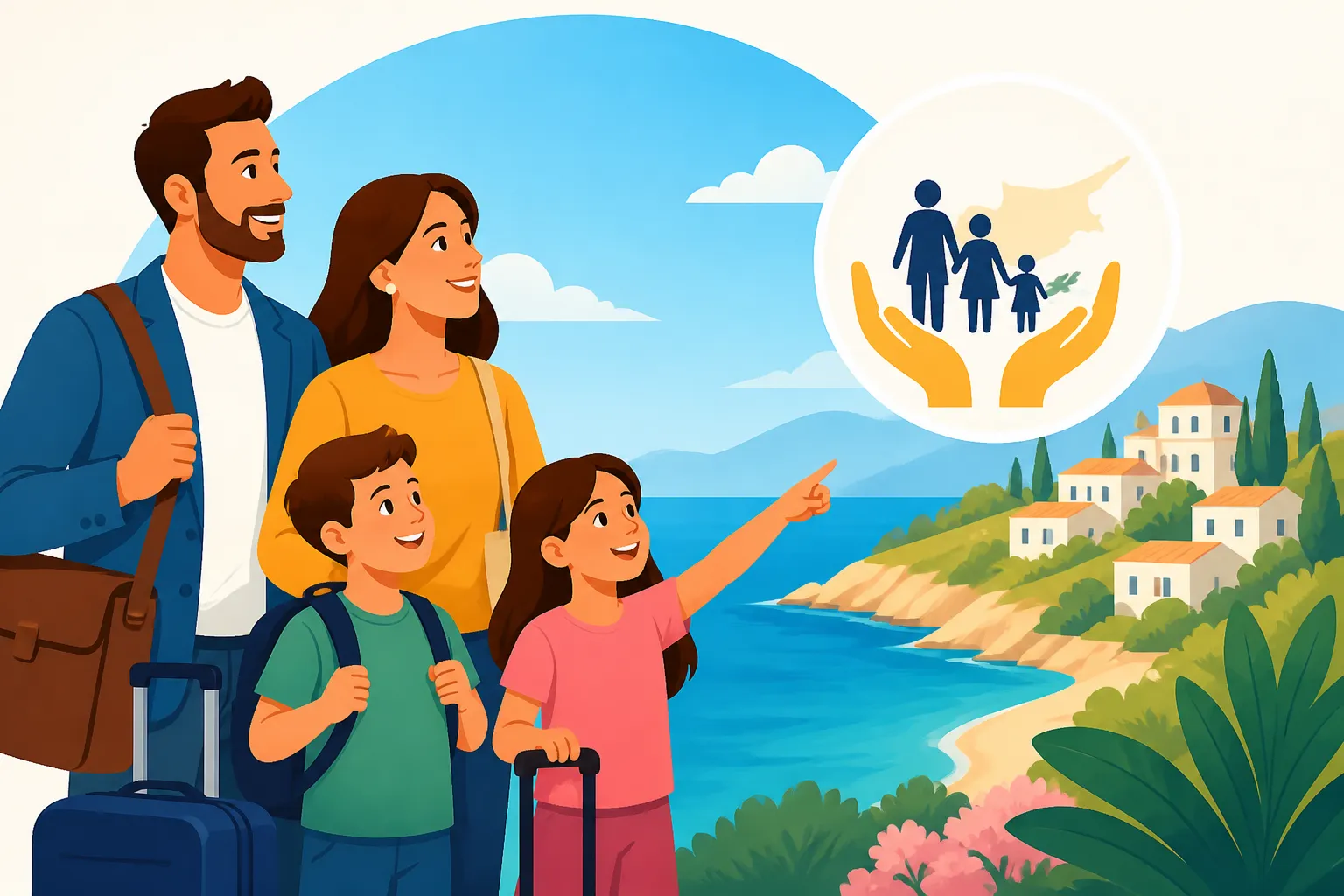
Can I Bring My Family When I Move to Cyprus for Work?
Moving to a new country for work is an enormous undertaking, and the thought of leaving your family behind, even temporarily, can weigh heavily on anyone. You’ve landed a fantastic opportunity in Cyprus, which is brilliant, but now the big question looms: can you bring your loved ones with you, and if so, how? This guide is here to walk you through the often-complex, sometimes frustrating, but ultimately rewarding process of bringing your family to join you in your new Cypriot life.
Bringing Your Loved Ones: The Cypriot Family Reunification Framework
One of the biggest anxieties for anyone considering an expat life is figuring out how to keep their family unit together. Thankfully, Cyprus, like most EU countries, has a well-defined framework for family reunification. However, it's crucial to understand that the rules can vary significantly based on your own citizenship and that of your family members. This isn't a one-size-fits-all situation, and getting this foundational understanding right will save you a lot of headaches down the line.
Distinguishing Between EU and Non-EU Family Members
The first, and perhaps most critical, distinction in Cyprus's immigration landscape is whether you and your family members are EU/EEA/Swiss citizens or not. If you are an EU citizen working in Cyprus, your family members, regardless of their own nationality, generally enjoy more straightforward rights to residence. They will typically apply for a document known as the How to Register as an EU Citizen (Yellow Slip / MEU1) in Cyprus, which confirms their right to reside in Cyprus as a dependent of an EU citizen exercising treaty rights. This process is usually less bureaucratic and quicker than the procedures for non-EU nationals.
For non-EU citizens working in Cyprus, the process falls under the "Family Reunification" provisions of the Aliens and Immigration Law. This is where things can get a bit more detailed. As a non-EU permit holder (likely on a work permit), you will be the sponsor for your family members. They will apply for their own residence permits, which are often tied to yours. The criteria are stricter, requiring proof of stable income, adequate accommodation, and comprehensive health insurance for everyone. It’s vital to understand that simply having a work permit yourself doesn't automatically grant your family the right to live and work here; each family member will need their own application. This is a common point of confusion and frustration, as many assume their permit covers the whole family immediately. Don't fall into that trap!
Who You Can Sponsor: Spouses, Children, and Special Cases
So, who exactly can you bring under the family reunification umbrella? The core categories are generally straightforward:
- Spouses: Your legally married spouse is typically the primary candidate for family reunification. Common-law partners, while increasingly recognized in some countries, often face more hurdles in Cyprus unless they can prove a long-standing, stable relationship or convert it into a legal marriage. Make sure your marriage certificate is internationally recognised and apostilled if necessary – this is non-negotiable.
- Minor Children: Children under the age of 18 are usually included. This applies to both biological and legally adopted children. If the child is not biologically yours but adopted, you'll need the full legal adoption papers. For children from a previous marriage, you might need additional documentation proving full custody and the consent of the other parent if applicable.
- Dependent Adult Children: In very specific circumstances, adult children (over 18) who are genuinely unable to support themselves due to severe illness, disability, or continuous full-time study may also be considered. However, this is a much harder case to make and requires extensive medical documentation or proof of enrollment and financial dependency. Don't expect this to be a simple tick-box exercise; the authorities scrutinise these applications very carefully.
- Parents/Grandparents: Bringing parents or grandparents is exceedingly difficult under general family reunification rules, especially for non-EU citizens. Cyprus's legislation heavily prioritises direct dependants (spouse and minor children). There are extremely limited circumstances, usually involving severe dependency due to advanced age or disability, and even then, the financial and logistical burden on the sponsor is immense. Unless there are exceptional humanitarian grounds, it's generally not a feasible route.
For non-EU citizens, understanding Family Reunification in Cyprus: Bringing Your Spouse and Children (2027) is paramount. It details the specific categories and requirements for each family member you wish to bring over. The key takeaway here is that while Cyprus is welcoming, the process is structured, and you need to be prepared with a robust application for each individual.
Preparing Your Paperwork: A Comprehensive Checklist for Family Visas
Once you understand who you can bring, the next step is perhaps the most daunting for many expats: gathering all the paperwork. Cypriot bureaucracy, while generally efficient, demands meticulous attention to detail. Missing a single document or providing an incorrectly certified copy can lead to frustrating delays, or worse, outright rejection. My advice from years of living here: assume you need more documents than you think, and always get them officially translated and apostilled if required by your home country. It’s better to be over-prepared than under-prepared.
Proving Financial Means and Adequate Accommodation
This is a critical hurdle for non-EU family reunification. The Cypriot authorities need to be absolutely sure that your family won't become a burden on the state. This means you, as the sponsor, must demonstrate sufficient and stable financial resources to support your entire family without relying on public assistance.
- Financial Resources: You'll typically need to provide your employment contract, recent salary slips (usually the last 6-12 months), and detailed bank statements from a Cypriot bank showing consistent income and savings. The exact income threshold isn't always publicly declared in a fixed figure, but it must be considered sufficient for the size of your family to live comfortably, including rent, utilities, food, and other necessities. For a single person, the minimum might be one figure, but for a family of four, it will be significantly higher. It’s often a multiple of the national minimum wage or a benchmark set by the migration department to ensure self-sufficiency. You might also need proof of your annual income for the previous tax year, so make sure your taxes are in order. Consulting with a specialist on Taxes for Expats can also help you understand how your combined family income might be viewed from a financial stability perspective for immigration purposes, not just tax.
- Accommodation: You must also prove that you have suitable accommodation for your family. This means a rental agreement or property title deed that specifies an adequate number of rooms for the size of your family. A two-bedroom apartment might be fine for a couple and one child, but likely not for a couple and three children. The contract should be legally stamped and registered with the relevant authorities (often the tax department). You will need to provide the complete rental agreement, proof of payment (like bank transfers for rent), and sometimes even a copy of the landlord’s title deed to verify ownership. The authorities want to see that your living situation is stable and appropriate. For more on this, you might find The Complete Guide to Renting a Home in Cyprus (2027) helpful in understanding rental expectations.
Health Coverage and Essential Personal Documents
Another non-negotiable requirement for non-EU family members is comprehensive health insurance. This is a common sticking point, so pay close attention.
- Health Coverage: While you, as an employed individual, might be registered with GeSY (Cyprus's General Healthcare System), your non-EU family members, initially, will likely not be automatically covered, especially if they are arriving on a family reunification visa. They will almost certainly need private health insurance that covers inpatient and outpatient care, as well as repatriation. This insurance must be valid for at least one year and meet specific minimum coverage requirements set by the Cypriot government. Once they have lived and paid into the Social Insurance Fund for a certain period, they may become eligible for GeSY, but don't count on it for their initial arrival. It’s crucial to understand Health Insurance in Cyprus: GeSY, Private and Employer Options Explained before your family arrives.
- Personal Documents: This list is extensive and each document needs to be current and often officially translated into Greek or English by a certified translator, and then potentially apostilled/attested in your home country.
- Passports: Valid passports for all family members, with sufficient validity remaining (at least 2 years is a good rule of thumb).
- Application Forms: Duly completed application forms (Form M.67 for a Pink Slip for family members, or MEU2 for EU family members).
- Marriage Certificate: Original and certified copy of your marriage certificate.
- Birth Certificates: Original and certified copies of birth certificates for all children.
- Police Clearance Certificate: For adults (over 16 or 18, depending on nationality), a clean criminal record certificate from their country of origin (and any country they have resided in for more than six months in the last ten years). This must be recent (usually issued within the last 3-6 months).
- Medical Certificates: Some nationalities may require a medical certificate confirming good health, often specifically for Hepatitis B and C, HIV, and Syphilis, and a chest X-ray for tuberculosis. This is usually done by a government doctor in Cyprus after arrival.
- Passport-Sized Photos: Recent, biometric passport photos for each applicant.
- Proof of Relationship: Beyond certificates, sometimes additional proof like family photos, joint bank accounts, or utility bills can support the application, especially if there are doubts about the genuineness of the relationship.
This list isn't exhaustive, and requirements can change, so always check the latest guidance from the Civil Registry and Migration Department (CRMD) or consult with an immigration lawyer in Cyprus.
Document Checklist for Non-EU Family Reunification
| Document Type | For Sponsor (You) | For Spouse | For Children (Minor) | Notes |
|---|---|---|---|---|
| Personal Identification | Valid Passport, Work Permit/Residence Permit (Pink Slip) | Valid Passport | Valid Passport, recent passport photos | Passport validity often required for 2+ years for each applicant |
| Relationship Proof | N/A | Original Marriage Certificate (apostilled/attested) | Original Birth Certificate (apostilled/attested) | Translations may be required |
| Financial Means | Employment Contract, Last 6-12 months Salary Slips, Bank Statements, P60 (Tax Form) | N/A (unless independently employed) | N/A | Must prove sufficient income for whole family in Cyprus |
| Accommodation Proof | Rental Agreement (stamped), Landlord's Title Deed | N/A | N/A | Sufficient size for entire family |
| Health Coverage | Proof of GeSY (if applicable) | Private Health Insurance Policy (comprehensive) | Private Health Insurance Policy (comprehensive) | Must meet minimum coverage requirements |
| Criminal Record | N/A | Police Clearance Certificate (from home country/residence) | N/A (if under 16/18) | Recent (within 3-6 months), apostilled/attested, translated if needed |
| Medical Certificates | N/A | Blood tests (Hep B/C, HIV, Syphilis), Chest X-ray (TB) | Blood tests (Hep B/C, HIV, Syphilis), Chest X-ray (TB) | Usually done after arrival at a government doctor |
| Application Forms | N/A | M.67 Application Form (Duly completed) | M.67 Application Form (Duly completed) | Available from CRMD website |
| Passport-Sized Photos | N/A | 4 recent biometric photos | 4 recent biometric photos | Specific size and background requirements |
The Application Journey: From Submission to Approval
Navigating the immigration process in Cyprus can feel like a labyrinth, especially when you're trying to do it for your entire family. Patience is not just a virtue here; it's a necessity. The Civil Registry and Migration Department (CRMD) is the primary authority you'll be dealing with, and their procedures, while standardized, can sometimes be subject to interpretation or sudden changes.
Navigating the Civil Registry and Migration Department
Your journey will inevitably lead you to the CRMD. This is where all applications for residence permits and family reunification are submitted. While they have regional offices (e.g., in Nicosia, Limassol, Paphos), it's often the central department in Nicosia that makes the final decisions.
- Making an Appointment: For non-EU family reunification applications, you'll typically need to schedule an appointment. Trying to walk in can lead to long waits or being turned away. Check the CRMD's official website for their current appointment system and required forms.
- Submitting the Application: When you attend your appointment, you must bring all the original documents and several sets of copies. The officials will check everything meticulously. This is where any missing or incorrect document can cause an immediate setback. You'll submit the forms, pay the required fees (which can be substantial per person, so budget accordingly), and likely be given a receipt.
- Fingerprinting and Biometrics: All adult applicants will need to have their fingerprints taken and other biometric data recorded. This is standard procedure and part of the security checks.
- Medical Examinations: After submission, your family members will usually be directed to a government hospital or designated clinic to undergo the mandatory medical examinations (blood tests for certain diseases and a chest X-ray). This is a crucial step and the results will be sent directly to the CRMD.
It’s important to remember that the language of administration is usually Greek, although English-speaking staff are generally available, especially in larger cities. Still, having some basic Greek phrases or even a trusted Greek-speaking friend with you can ease the process considerably.
Anticipating Timelines and Potential Hurdles
This is where many expats experience the most anxiety. Processing times for family reunification applications can vary wildly, from a few months to over a year. There's no fixed guarantee.
- Average Timelines: For non-EU family reunification, don't expect a quick turnaround. Realistically, prepare for a minimum of 6-9 months, but it could extend to 12-18 months, especially if there are queries or additional documents requested. EU family members (applying for Yellow Slip) usually have a much shorter processing time, often a few weeks to a couple of months.
- Common Hurdles and Delays:
- Incomplete Documentation: As mentioned, this is the biggest culprit. Double-check everything before submission.
- Background Checks: Security and background checks can take time, especially if multiple countries are involved.
- Caseload and Staffing: The CRMD, like any government department, can be swamped with applications, leading to longer processing times.
- Requests for Additional Information: Don't be surprised if you receive a letter asking for more documents or clarification. Respond promptly and comprehensively.
- Expired Documents: If a police clearance or medical certificate expires during the processing time, you might be asked to provide new ones, causing further delays.
While waiting, your family might be able to stay in Cyprus on a short-stay visa (if applicable to their nationality), but they usually cannot work or access public services beyond emergency healthcare. They might also need to leave the country and re-enter, or sometimes extend their tourist visa, which is a stressful situation. It’s crucial to understand Understanding Residence Permits and the Pink Slip in Cyprus (2027) to manage expectations regarding status during this waiting period.
Post-Approval Steps: Collecting Permits, Next Administrative Actions
Congratulations! You've received the good news. But the journey isn't quite over.
- Collecting the Pink Slip: Once approved, your family members will be notified to collect their "Pink Slip" (Temporary Residence Permit). This is a physical card. You'll need to go to the CRMD again, likely with an appointment, to collect it.
- Registering for GeSY (if eligible): After obtaining their Pink Slip and if they are now contributing to the Social Insurance Fund (if of working age and employed), your family members may become eligible to register for the General Healthcare System (GeSY). This is a vital step for accessing affordable public healthcare. The process involves registering on the GeSY portal and choosing a personal doctor. You can learn more in How to Register for GeSY (General Healthcare System) in Cyprus (2027).
- Other Registrations: Depending on their age and status, you might need to enrol children in school or explore work opportunities for your spouse (if their permit allows). Remember that a family reunification permit does not automatically grant the right to work for spouses; a separate work permit process might be necessary unless they are EU citizens.
- Settling In: With the paperwork done, you can now focus on the exciting part – building your life together in Cyprus. This includes everything from setting up utilities for your home to getting everyone settled into their new routines. For practical steps, check out The Expat Guide to Setting Up Utilities (Electricity, Water, Internet) in Cyprus.
Settling In: Helping Your Family Thrive in Cyprus
Getting the visas and permits is a huge win, but it's just the beginning. The real work starts with helping your family adapt to their new environment. Cyprus offers a wonderful lifestyle, but like anywhere, it comes with its unique set of challenges. An empathetic approach and active involvement in their integration will make all the difference.
Educational Opportunities and Social Integration for Children
Children often adapt surprisingly well, but it largely depends on their age, personality, and the support system you put in place.
- Schooling Options: Cyprus offers a range of schooling options:
- Public Schools: These are free and primarily teach in Greek. While some international students integrate well, it can be a steep learning curve for those with no prior Greek. For very young children, immersion can be successful.
- Private Schools: Many private schools offer education in English, sometimes following British or American curricula. These are popular with expat families but come with significant tuition fees. They often provide a more diverse, multicultural environment.
- International Schools: These are dedicated to international curricula (e.g., IB) and are excellent for continuity if you anticipate moving again. However, they are generally the most expensive.
Consider your child's age, language proficiency, and future educational plans when making this critical decision. Schools and Education in Cyprus: A Complete Guide for Expat Families provides a detailed breakdown of these choices.
- Social Life and Activities: Encourage your children to participate in local activities. Cyprus has many sports clubs (football, basketball, tennis), dance classes, and youth groups. English is widely spoken in urban centres, so finding friends for older children might be easier than you think. Weekends often involve family trips to the beach, mountains, or historical sites, providing plenty of opportunities for bonding and exploration.
Support for Spouses and Family Financial Considerations
Your spouse's integration is just as important. Leaving a familiar routine, friends, and potentially a career can be a difficult adjustment.
- Spousal Support:
- Language Learning: While English is widely spoken, learning some Greek will significantly enhance integration. It shows respect for the local culture and opens up more opportunities for social interaction and daily life. Consider online platforms like iTalki, which offer one-on-one lessons with native Greek speakers, or local language schools.
- Social Networks: Encourage your spouse to join expat groups (online and offline), local community clubs, or volunteer. These networks provide vital emotional support and practical advice. Many cities, like Limassol and Nicosia, have very active expat communities.
- Employment Opportunities: If your spouse wishes to work (and their permit allows), the job market in Cyprus can be competitive, especially if they don't speak Greek. However, sectors like finance, IT, and tourism often have openings for English speakers. Networking and persistence are key. The Expat Guide to Finding a Job in Cyprus (2027) can offer some valuable insights here.
- Family Financial Considerations: Bringing your family inevitably increases your cost of living.
- Budgeting: Housing, schooling (if private), groceries, and activities will all add up. While Cyprus can be affordable in some aspects, maintaining a comfortable expat lifestyle for a family requires careful budgeting. You can find a good overview in The Complete Guide to Cost of Living in Cyprus for Expats (2026).
- Healthcare Costs: Even with GeSY, there might be co-payments or services not fully covered, so maintaining some financial buffer for health-related expenses is always wise.
- Long-term Planning: As your family settles, you might consider longer-term financial planning, perhaps looking into investments or pension options available in Cyprus.
Ultimately, bringing your family to Cyprus to join you for work is a journey that requires significant planning, patience, and adaptability. It's a testament to your commitment to your family's well-being and your new life. Embrace the challenges, celebrate the small victories, and soon enough, Cyprus will feel like home for all of you.
Disclaimer
The information provided in this guide is intended for general informational purposes only and does not constitute legal, financial, or immigration advice. While every effort has been made to ensure accuracy, regulations and procedures in Cyprus can change rapidly. It is highly recommended to consult with a qualified immigration lawyer, financial advisor, or the relevant Cypriot government authorities (such as the Civil Registry and Migration Department) for advice tailored to your specific situation before making any decisions. We are not responsible for any inaccuracies or omissions.