The Expat Guide to Setting Up Utilities (Electricity, Water, Internet) in Cyprus
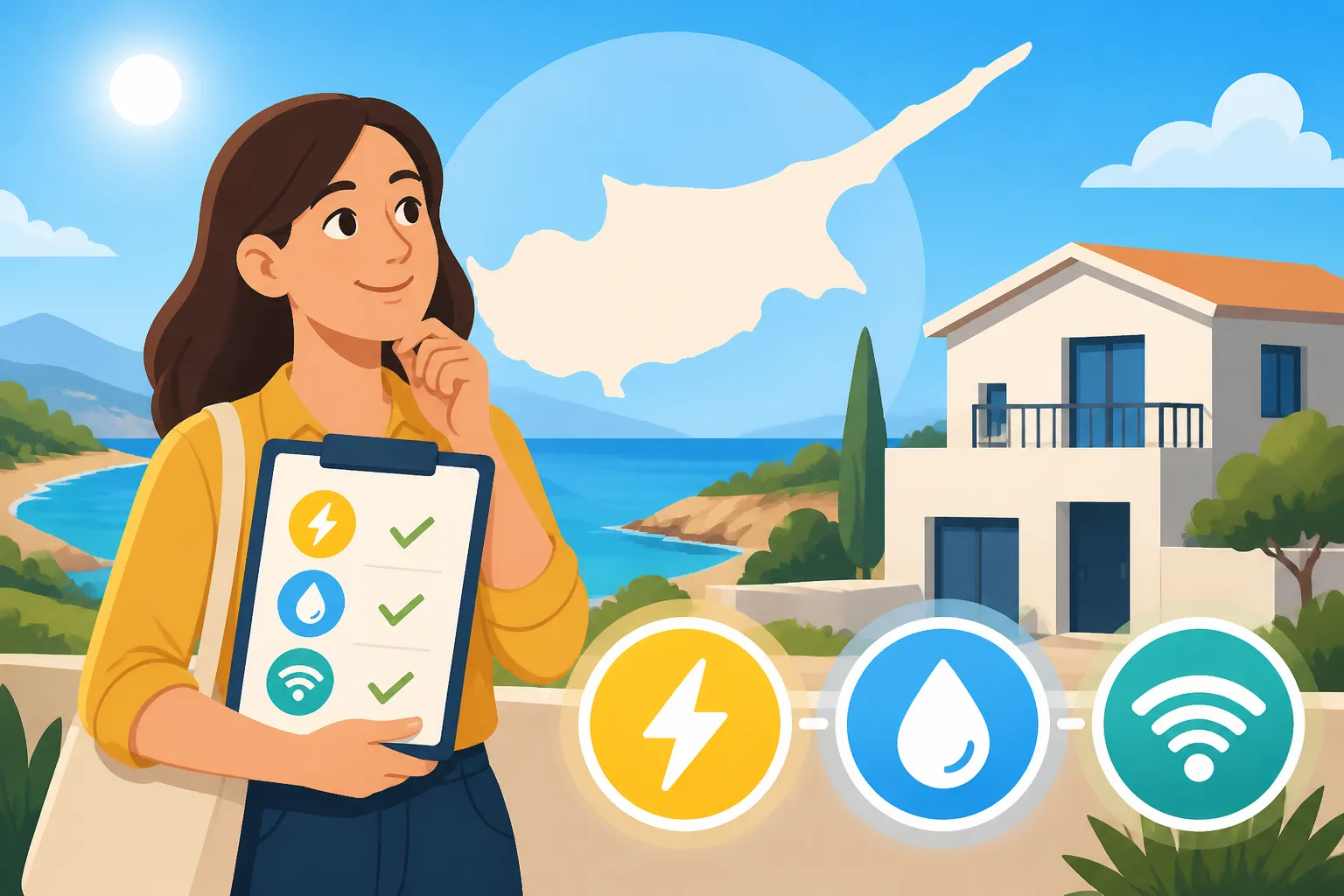
One of the first, and often most frustrating, hurdles for any expat landing in Cyprus is getting those essential utilities sorted. You’ve probably just landed, navigated the chaos of finding a place, and now you’re faced with a new language, a new system, and a distinct lack of hot water or Wi-Fi. It’s enough to make you pull your hair out! This guide is here to walk you through the ins and outs of connecting your electricity, water, and internet, offering practical advice and a big dose of empathy from someone who’s been there.
Understanding the Cypriot Utility Landscape
When you first arrive in Cyprus, everything feels new, and frankly, a bit overwhelming. The utility setup here isn't quite the same as in many other European countries, and what might seem straightforward back home can turn into a saga here. It's not necessarily "difficult," but it requires patience, attention to detail, and a good understanding of the local way of doing things. Forget instant online setups for everything; expect a few visits to offices and some paperwork.
Navigating the Bureaucracy of Utility Connections
Ah, bureaucracy, the beloved companion of every expat worldwide! In Cyprus, setting up utilities often involves a dance between various semi-governmental organizations and municipal bodies. It’s not a one-stop shop, unfortunately. For electricity, you'll be dealing with the Electricity Authority of Cyprus (EAC). For water, it’s typically your local Water Board, which might be municipal (like Limassol Water Board, Nicosia Water Board) or a regional authority. Internet and mobile services are provided by private companies, which, thankfully, are generally more streamlined.
What this means for you is that you’ll need to allocate separate time slots and prepare distinct sets of documents for each service. Don't expect one office to handle everything for you. This fragmented approach can be bewildering, especially when you're still grappling with the local language and customs. Many expats recount tales of running from one office to another, only to find they’re missing a specific stamp or a photocopy of a document they swear they provided elsewhere. It’s crucial to approach each utility provider as a completely separate entity.
Key Utility Providers and Their Roles
Let's break down who does what, so you know exactly which door to knock on (or rather, which queue to join).
The Electricity Authority of Cyprus (EAC) is the sole provider of electricity across the entire island. You won't have a choice in electricity suppliers, which simplifies things in one way but means there's no competitive market for power. They handle everything from connections to billing and maintenance. Their offices are usually found in major towns, and they also have a decent online presence for inquiries, though initial setup often requires an in-person visit.
For water, things are a little more localized. Major cities like Limassol, Nicosia, Larnaca, and Paphos each have their own Water Boards. If you're in a smaller village or a more rural area, your water supply might fall under a different, more localized authority. It's essential to confirm which Water Board or authority serves your specific address. This information can usually be found by asking your landlord, neighbours, or checking a previous water bill for the property. These boards are responsible for water supply, metering, and billing.
When it comes to internet and mobile services, you're spoiled for choice with private companies. The main players include Cyta, which is the semi-governmental telecommunications giant, offering everything from landlines to mobile and internet. Then there are private competitors like Epic and Primetel, both of which have invested heavily in expanding their networks and services. These companies operate in a competitive market, which is excellent news for consumers as it often leads to better deals and faster connections. We'll delve deeper into choosing between them shortly.
Common Challenges for Newcomers
Let's be real, moving to a new country is tough, and setting up utilities adds another layer of stress. One of the biggest challenges for newcomers is simply understanding the process. The official websites might be available in English, but the actual forms or the explanations from staff might be less clear. Patience is truly a virtue here.
Another common hurdle is the deposit requirement. Both the EAC and the Water Boards will almost certainly ask for a deposit upfront to connect services. This is standard practice but can be an unexpected cost when you're already shelling out for rent deposits and other moving expenses. Make sure you factor this into your initial budget. The amount can vary depending on the type of property and previous usage, but it’s usually equivalent to a few months of estimated bills.
Finally, getting all your documents in order can be a minor headache. You'll need copies of your rental agreement or property title deeds, your passport, and often your Alien Registration Card (ARC) or Yellow Slip. Sometimes, proof of address (like your rental agreement or even a bank statement once you have one) is also required. Always call ahead or check the specific provider's website to confirm the exact list of documents needed for new connections, as these can sometimes change or vary slightly. My personal advice? Always bring more documents than you think you'll need, and have both originals and copies.
Setting Up Electricity in Cyprus (EAC)
Electricity is, without a doubt, the most fundamental utility you'll need. Living without power in Cyprus, especially during the scorching summers or chilly winters, is simply not an option. The good news is that the process with the Electricity Authority of Cyprus (EAC) is relatively standardized across the island.
The EAC Application Process: Step-by-Step
Getting your electricity connected in Cyprus generally involves these steps:
-
Gather Your Documents: Before you even think about heading to an EAC office, make sure you have everything ready. This is usually where people get tripped up. You'll need:
- Your passport or ID card.
- A copy of your rental agreement or the property's Title Deeds (if you've bought the property). The agreement should clearly state your name and the address.
- Your Tax Identification Code (TIC), if you have one.
- Your Alien Registration Card (ARC) or proof of application for your residence permit (e.g., your Pink Slip application receipt or your Yellow Slip for EU citizens).
- The electricity meter number for your property. Your landlord should be able to provide this, or you can find it on a previous bill for that address.
- A security deposit.
-
Visit an EAC Customer Service Centre: While the EAC does have an online portal and phone services, for a new connection in your name, an in-person visit is almost always required. Find the nearest EAC office to your residence. They have branches in all major cities like Limassol, Nicosia, Paphos, and Larnaca. Be prepared for a wait, especially during peak hours. Take a deep breath, grab a number, and practice your pleasantries.
-
Complete the Application Form: At the office, you'll be given a form to fill out. The staff are generally helpful, and most will speak English. Clearly state that you are applying for a "new connection" in your name, even if there was power before and you're just transferring it. It’s typically a new contract.
-
Pay the Security Deposit: Once your application is reviewed and accepted, you'll be asked to pay a security deposit. This deposit acts as a guarantee against unpaid bills. The amount can vary, but for a standard residential property, it typically ranges from €100 to €250, depending on the property type and estimated consumption. You'll get this back when you eventually disconnect your services, provided all bills are settled.
-
Connection Activation: After paying the deposit, the EAC will usually activate the electricity connection within a few working days. In some cases, if the previous tenant only just disconnected, it might even be faster. There's usually no need for an EAC technician to visit your property unless there's a specific issue or the property has been without power for a very long time.
It’s always a good idea to confirm with the EAC staff how long the activation will take and if there's any specific action you need to take at the property (e.g., flipping a main switch).
Required Documents and Fees
Let's put this into a handy table format because, let's face it, lists are easier to digest when you're stressed.
| Document/Requirement | Description | Estimated Cost/Deposit (EUR) | Notes |
|---|---|---|---|
| Passport/ID Card | Original and photocopy of your valid passport or EU ID card. | N/A | Essential for identification. |
| Rental Agreement/Title Deed | Original and photocopy of your signed rental agreement (Lease Contract) or the property’s Title Deeds if you own it. It must clearly show your name, the property address, and the commencement date. For rentals, ensure it’s stamped by the tax office (optional but often requested by providers, your landlord usually handles this). | N/A | Proof of occupancy. Ensure all details are legible. If it's a rental, make sure the landlord has registered it with the tax department; while not strictly required for utility setup, it helps. |
| Alien Registration Card (ARC)/Yellow Slip | Your official residence permit document, or the receipt of your application for one. For EU citizens, this is your Yellow Slip / MEU1 registration. For non-EU, it's typically your Pink Slip or the application receipt. | N/A | This confirms your legal residency status in Cyprus. It's proof that you're not just a tourist trying to set up long-term services. |
| Property Meter Number | The specific number identifying the electricity meter at your property. Your landlord or previous utility bill should provide this. | N/A | Crucial for the EAC to identify the correct connection point. |
| Security Deposit | A refundable deposit required to initiate the service. | €100 – €250 | Varies depending on the size and type of property. This is returned to you upon final disconnection, provided all outstanding bills are paid. |
| Connection Fee | Sometimes a small administrative fee is charged for establishing a new account. | ~€10-€20 | This is a one-off charge, not related to the deposit. Confirm this at the EAC office. |
Remember, these are typical requirements. It's always best to double-check with the specific EAC office you plan to visit, just in case there are any regional variations or updated policies. You can also refer to our detailed guide on How to Set Up Electricity (EAC) in Your Cyprus Home for more in-depth information.
Understanding Your Electricity Bill and Tariffs
Once your power is connected, your first EAC bill will arrive. Don't panic if it looks a bit different from what you're used to! Electricity bills in Cyprus are typically issued every two months. They'll include a breakdown of your consumption (measured in kilowatt-hours, or kWh), the standing charge, and a few other small fees.
The EAC operates on a tiered tariff system, meaning the more electricity you consume, the higher the rate you pay per kWh for subsequent units. This is designed to encourage energy conservation. There are also different tariffs for residential, commercial, and specific high-consumption uses. For most expats in residential properties, you'll be on a domestic tariff.
Your bill will clearly show your current reading, the previous reading, and the difference, which is your consumption for the billing period. You'll also see a standing charge, which is a fixed fee regardless of your consumption, covering the cost of maintaining the connection. Keep an eye out for the green surcharge, which contributes to renewable energy initiatives.
Payment methods are quite flexible. You can pay your EAC bill at any bank, through their online banking portal, at Easypay kiosks, or via direct debit. Setting up a direct debit is highly recommended to avoid missing payments, especially if you're prone to forgetting paper bills or travelling frequently. You can find more information on How to Pay Your Utility Bills Online in Cyprus to make this process smoother.
A common shock for newcomers is the cost of air conditioning. Given Cyprus's climate, AC units run almost constantly during the summer months, and they are major power consumers. Be prepared for significantly higher electricity bills during July, August, and September. Conversely, if you rely on electric heaters in winter, those bills can also creep up. It's a good idea to monitor your consumption and try to be energy-efficient where possible.
Connecting to Water Supply in Cyprus (Water Boards)
Just like electricity, a consistent water supply is non-negotiable. While the process is similar to electricity in terms of bureaucracy, the key difference is dealing with a local Water Board rather than a single national entity. This means the specific office and exact forms might vary slightly depending on where you live.
Registering for Water Services in Your Municipality
The first step is to identify which Water Board serves your property. As mentioned, major cities have their own: Limassol-Amathus Water Board, Nicosia Water Board, Larnaca Water Board, and Paphos Water Board. If you’re in a village, ask your landlord or a local for guidance on the relevant authority.
Here’s the typical registration process:
- Identify Your Water Board: Confirm the correct Water Board for your address. A quick search online for "[Your City] Water Board" will usually bring up their contact details and office locations.
- Gather Documents: Similar to EAC, you'll need:
- Your passport or ID.
- Your rental agreement or Title Deeds.
- Your ARC/Yellow Slip.
- The water meter number for your property. This is absolutely critical. It’s usually a small metal box near the street or inside a utility cupboard. Your landlord should provide this.
- A security deposit.
- Visit the Water Board Office: Head to the customer service office of your relevant Water Board. Again, anticipate a wait. The staff there will assist you in filling out the necessary application forms.
- Pay the Security Deposit: A deposit is required, similar to the EAC, to secure your account. This amount typically ranges from €80 to €150 for residential properties.
- Service Activation: Once the paperwork is complete and the deposit paid, your water service should be activated. In most cases, if the water was previously connected, it will be reactivated very quickly, sometimes even on the same day. If the water was completely disconnected from the main supply, it might take a technician a day or two to visit and restore the connection.
Don't be shy about asking questions at the office. Confirm the billing cycle, how to read your meter, and the various payment options available. Understanding Water and Utility Bills in Cyprus in general can alleviate a lot of initial confusion.
Water Meter Readings and Billing Cycles
Water bills are also typically issued every two to four months, depending on the specific Water Board and your consumption patterns. Unlike electricity, which uses kWh, water consumption is measured in cubic meters (m³).
Your bill will show your current meter reading, the previous reading, and the volume of water consumed. There’s usually a fixed standing charge in addition to the consumption charges. Similar to electricity, water tariffs are often tiered, meaning the cost per cubic meter increases after a certain threshold of consumption. This is particularly relevant if you have a garden that requires a lot of watering, as you can quickly move into higher-priced tiers.
Many properties in Cyprus also have communal water meters for shared areas (like swimming pools or garden irrigation in apartment complexes). These costs are then divided among residents and usually included in your communal fees. Always clarify with your landlord or property management if your water meter is individual or if there are communal charges to consider. For more detailed information, check out our guide on Understanding Communal Fees for Apartments in Cyprus.
Payment options usually mirror the EAC: banks, online banking, Easypay kiosks, and direct debits. Again, direct debit is highly recommended for convenience.
Tips for Water Conservation and Leak Detection
Water is a precious resource in Cyprus, especially during the long, dry summers. Conservation isn't just good for your wallet; it's also environmentally responsible.
- Mind Your Usage: Simple habits like shorter showers, turning off the tap while brushing teeth, and only running dishwashers/washing machines with full loads can make a significant difference.
- Check for Leaks: A dripping tap or a silent toilet leak can waste hundreds of litres of water per day. Periodically check your meter when no water is being used in the house. If the numbers are still turning, you likely have a leak somewhere. Address these immediately, as they can lead to unexpectedly high bills.
- Garden Wisely: If you have a garden, consider drought-resistant plants or implement efficient irrigation systems that water early in the morning or late in the evening to minimize evaporation.
Being mindful of your water usage can really help manage those bills, especially as you get accustomed to the Cypriot climate and how quickly water can be consumed.
Getting Your Internet and Mobile Connected in Cyprus
Now, this is where most expats breathe a sigh of relief. Unlike electricity and water, internet and mobile services are provided by competitive private companies, and the process is generally much smoother and faster. Having reliable internet and a local phone number is paramount for settling in, staying connected with family, and navigating daily life.
Choosing an Internet Service Provider (ISP)
Cyprus has a good selection of Internet Service Providers (ISPs), primarily Cyta, Epic, and Primetel. Each offers a range of packages, speeds, and prices, so it pays to do a little research based on your needs and location.
- Cyta: As the former state-owned telecommunications authority, Cyta has the most extensive infrastructure. They offer ADSL, VDSL, and fibre optic connections. Their plans often come bundled with landline and TV services. While sometimes perceived as slightly more expensive, their network coverage and reliability are generally excellent, particularly in more rural areas where other providers might have weaker signals. They also have an impressive customer service presence, with offices in every major town.
- Epic: Formerly MTN, Epic has grown significantly and is a strong competitor, especially in mobile services, but also offers competitive home internet packages, including fibre. They often have attractive promotional deals for new customers. Their customer service is often praised for being modern and efficient.
- Primetel: Another major player, Primetel also offers a variety of internet solutions, including fibre optic, and bundles with mobile and TV. They are known for aggressive pricing and frequently roll out special offers, making them an excellent choice for those looking for value.
Things to Consider When Choosing:
- Location: Fibre optic availability is expanding rapidly, especially in urban centres like Limassol, Nicosia, and Larnaca. Always check what type of connection (ADSL, VDSL, Fibre) is available at your specific address. Fibre offers the fastest and most stable speeds.
- Speed: Determine your needs. Are you a heavy streamer, gamer, or working remotely? Then aim for higher speeds (100 Mbps+). If it's just for casual browsing and emails, a more basic package might suffice.
- Bundles: Most providers offer bundled packages that combine internet, landline, mobile, and even TV services at a reduced price. This can be cost-effective if you need all these services.
- Contract Length: Be aware of contract lengths, which are typically 12 or 24 months. Early termination fees can be hefty.
Once you’ve chosen a provider, you can usually apply online, over the phone, or in person at one of their stores. You'll need your passport/ID, residence permit, and proof of address. Installation usually takes a few days to a week for ADSL/VDSL, and potentially longer for a new fibre connection if infrastructure needs to be laid. Our guide on How to Set Up Internet and TV in Cyprus provides a deeper dive into these considerations.
Mobile Phone Services and eSIM Options
Getting a local SIM card is usually one of the first things expats do upon arrival. It makes communicating much easier and avoids exorbitant roaming charges. Again, Cyta, Epic, and Primetel are the main providers, offering both pay-as-you-go (prepaid) and monthly contract (postpaid) options.
- Pay-As-You-Go: This is a great option for initial days or for those who prefer not to be tied to a contract. You buy a SIM card, top it up with credit, and then buy data/call bundles as needed. It's flexible and allows you to test out network coverage.
- Monthly Contracts: If you plan to stay long-term and have a residence permit, a postpaid contract offers better value, more data, and often includes unlimited calls/SMS within Cyprus. You'll need your passport/ID, residence permit, and often proof of address and bank account details for direct debit payments. Contract lengths are usually 12 or 24 months.
eSIMs for Instant Connectivity: For those who need immediate data upon landing or want to avoid juggling physical SIM cards, eSIMs are a game-changer. Companies like Airalo offer international eSIMs that you can purchase and activate digitally before you even land. This means you have instant mobile data connectivity the moment your plane touches down, allowing you to use maps, book taxis, and communicate without hunting for a local SIM card. It's an excellent stopgap solution or even a primary data solution for short-term stays, although long-term local contracts usually offer better value for calls and SMS.
When choosing a mobile plan, consider:
- Data Allowance: How much data do you typically use?
- Call/SMS Allowance: Do you make many local or international calls?
- International Roaming: If you travel frequently outside Cyprus, check roaming costs or if EU roaming is included (for EU-based plans).
- Network Coverage: While all three major providers have good coverage in urban areas, check reviews for rural coverage if you plan to explore off the beaten path.
For more assistance in navigating your options, our guide on How to Choose a Mobile and Internet Provider in Cyprus can provide further clarity.
Broadband vs. Mobile Internet: What's Best for You?
The choice between traditional broadband (ADSL, VDSL, Fibre) and relying solely on mobile internet (via hotspot or dedicated mobile router) depends heavily on your lifestyle and usage.
Traditional Broadband (Home Internet):
- Pros: Generally more stable, faster, and offers unlimited data at fixed speeds, especially fibre optic. Ideal for multiple users, streaming, gaming, and remote work.
- Cons: Requires installation, is tied to a specific address, and has a contract commitment.
- Best for: Long-term residents, families, remote workers, and anyone who needs reliable, high-speed internet at home.
Mobile Internet (Hotspot/Dedicated Device):
- Pros: Portable, quick to set up (especially with an eSIM like Airalo), no installation required. Can be very convenient for short-term stays or if you move frequently.
- Cons: Data caps are common, speeds can fluctuate depending on signal strength, and sustained high usage can be expensive. Can drain phone battery if used as a hotspot.
- Best for: Short-term visitors, digital nomads who travel frequently, or as a backup to home broadband. While some digital nomads in Cyprus might rely solely on this, for a stable base, dedicated home internet is usually preferred.
Many expats opt for a combination: a solid home broadband connection for daily use and a local SIM or eSIM for mobile data on the go. This provides the best of both worlds, ensuring you’re always connected whether you’re at home or exploring the beautiful island.
Other Essential Utilities and Services
While electricity, water, and internet are the big three, there are a few other services that contribute to comfortable living in Cyprus. Understanding these from the get-go can save you headaches down the line.
Waste Management and Recycling in Cyprus
Waste management in Cyprus is handled by your local municipality. This typically involves kerbside collection of general waste and, increasingly, separate collections for recycling.
- General Waste: Most municipalities provide residents with specific bins or instruct on designated collection points. Collection usually happens once or twice a week. You'll need to purchase official municipality bags in some areas (often found at supermarkets) or use standard bin bags, depending on local regulations. Check your local municipal website or ask your neighbours about the specific days and methods for your area.
- Recycling: Cyprus has made strides in recycling over the past decade. The main organization promoting recycling is Green Dot Cyprus. They operate a system where specific bins are provided for paper/cardboard, plastics/metals/tetrapak, and glass.
- PMD (Plastics, Metals, Drink Cartons): Usually collected in clear plastic bags (often provided by Green Dot or the municipality) or specific wheelie bins.
- Paper/Cardboard: Collected in separate paper bags or bins.
- Glass: Typically collected in bell-shaped communal glass recycling bins placed around towns and villages.
- Organic Waste: Some municipalities are starting pilot schemes for organic waste collection, but it's not widespread yet.
- Battery and Electrical Waste: Special collection points for these are available at larger supermarkets and electronics stores.
It's vital to participate in recycling as much as possible, not just for environmental reasons but also because some municipalities are starting to impose fines for improper waste separation. Information on specific recycling schedules and bin locations can usually be found on your municipal website or the Green Dot Cyprus site.
Heating and Cooling Solutions for the Cypriot Climate
Cyprus experiences very hot, long summers and surprisingly cool, damp winters. Your utility planning needs to account for both extremes.
- Cooling: Air conditioning units are practically a necessity during the summer months (June to September/October). Most modern properties come with AC units installed in living areas and bedrooms. Be mindful of their electricity consumption; running multiple units constantly can lead to very high EAC bills. Regular servicing of your AC units is also important for efficiency and air quality.
- Heating: While winters are mild compared to northern Europe, temperatures can drop significantly, especially inland and at night. Central heating systems are less common than in colder countries. Instead, Cypriots rely on a mix of:
- Split Unit ACs: Most AC units double as heaters (reverse cycle). These are often the primary heating source.
- Electric Heaters: Portable electric heaters are common, but again, consume a lot of electricity.
- Gas Heaters: Bottled gas heaters are popular for localized heating. You buy gas cylinders from supermarkets or gas stations. They're efficient but require good ventilation.
- Pellet Stoves/Fireplaces: Less common in modern apartments, but found in older houses or rural properties, offering a more traditional heating solution.
- Underfloor Heating: A luxury feature in some newer, higher-end properties.
When choosing a property, pay attention to the insulation and the heating/cooling solutions available. Good insulation can significantly reduce your utility bills, especially for electricity.
Landline Phones and TV Services
While mobile phones and internet streaming have largely replaced them, landline phones and traditional TV services are still available and often bundled with internet packages.
- Landline Phones: Offered primarily by Cyta, and sometimes by Epic and Primetel as part of a bundle. For most expats, a landline might seem redundant with mobile phones. However, some older apartment buildings or businesses might still rely on them. If you work from home and require a stable connection for specific services, a landline can offer that extra reliability.
- TV Services:
- Free-to-air: Cypriot national channels (CyBC) and some Greek channels are available via analogue or digital terrestrial broadcast. You'll need an aerial.
- Subscription TV: Cyta Vision, Epic TV, and Primetel TV offer subscription packages with a mix of local, Greek, and international channels, including sports, movies, and documentaries. These are often part of their internet and mobile bundles. They provide set-top boxes and on-demand content.
- Streaming Services: Many expats simply rely on international streaming services like Netflix, Amazon Prime Video, Disney+, etc., accessed via their home internet. A VPN might be necessary to access geo-restricted content from your home country.
Unless you have a specific need for a landline or local subscription TV, relying on mobile phones and internet-based streaming is usually the most common and flexible approach for expats.
Managing Your Utility Bills and Payments
Once all your utilities are set up, the next step is managing your bills effectively. It’s easy to let things slip when you’re dealing with different billing cycles and payment methods, but staying on top of it is crucial to avoid disconnections or late payment penalties.
Online Payment Portals and Direct Debits
The easiest and most stress-free way to manage your utility payments in Cyprus is to leverage online options and direct debits.
- Direct Debit: This is highly recommended for all your regular utility bills (EAC, Water Board, internet/mobile contracts). You provide your bank with authorization to pay your bills directly from your account each month or billing cycle. This ensures you never miss a payment, even if you’re travelling or simply forget. You can usually set this up directly with the utility provider or through your bank. For more details on setting this up, our article How Do I Set Up Auto-Pay for My Utility Bills in Cyprus? is a must-read.
- Online Banking: All major Cypriot banks (Bank of Cyprus, Hellenic Bank, Eurobank) offer robust online banking platforms. You can typically add the EAC, your Water Board, and your internet/mobile providers as beneficiaries and make payments manually. This is a good option if you prefer to review your bill before payment, but remember to initiate the payment before the due date.
- Provider Portals: The EAC, Water Boards (some), and all major internet/mobile providers have their own online customer portals. Here, you can view your bills, check consumption history, and make payments using a debit or credit card. It’s also a great way to monitor your usage and identify any unexpected spikes.
- Easypay Kiosks: These ubiquitous kiosks are found in supermarkets, kiosks, and petrol stations across Cyprus. They allow you to pay a wide range of bills, including utilities, with cash or card. They are convenient for one-off payments or if you prefer to pay with cash.
Staying organised is key. Consider creating a spreadsheet or using a calendar reminder for all your bill due dates, especially in the initial months before you set up direct debits for everything. This helps you understand the Cost of Living in Cyprus for Expats more clearly.
Understanding Co-ownership and Shared Bills
If you’re renting an apartment in a building with common areas, or even living in a shared house, you might encounter co-ownership or shared bill scenarios.
- Communal Fees: In apartment buildings, you will almost certainly pay communal fees. These cover the maintenance of shared spaces, cleaning, elevator costs, and often include shared electricity (for hallways, stairwells, garden lights) and shared water (for irrigation of common gardens, swimming pools). These fees are usually managed by a building committee or a professional property management company. You will pay them directly to the committee/company, usually monthly or quarterly. It’s crucial to understand what’s included in these fees when you sign your rental agreement.
- Shared Properties: If you’re sharing a house with roommates, you’ll need to decide how to split the utility bills. One common approach is to put all bills in one person’s name and then everyone contributes their share. Alternatively, you could try to have separate accounts for different utilities, though this can be more complicated with EAC and Water Boards. Always have a clear agreement with your housemates on how these shared costs will be managed to avoid disputes.
Transparency is paramount. Ensure you receive copies of all communal fee statements and utility bills if you are contributing to shared costs, so you can track expenditures.
Dealing with Disputes or Disconnections
Despite your best efforts, sometimes things go wrong. You might receive an unexpectedly high bill, experience a service interruption, or find yourself facing a disconnection notice.
- Disputes: If you believe there’s an error on your bill, contact the utility provider immediately. Gather all relevant information (meter readings, previous bills, communication records). Most providers have a formal complaints process. If you can’t resolve it directly, you might need to seek advice from the Consumers Association of Cyprus or, in severe cases, legal counsel.
- Service Interruptions: Power cuts or water outages can happen, especially during extreme weather or for maintenance. The EAC and Water Boards usually provide information about planned outages on their websites. For unexpected outages, you can usually check their social media channels or call their emergency lines.
- Disconnections: Utility companies will generally not disconnect services without prior notice. If you receive a disconnection warning, it usually means you have an overdue bill. Act quickly: contact the provider, clarify the amount due, and make arrangements for payment to avoid disconnection. Ignoring these notices will almost certainly lead to your services being cut off, and reconnecting them will incur additional fees and hassle.
Always keep records of your communications with utility providers, including dates, times, and the names of the people you spoke with. This can be invaluable if you need to escalate a problem.
Moving In, Moving Out: Utility Transfers and Cancellations
The administrative journey with utilities doesn't end once you're connected. When it's time to move house or leave Cyprus, you'll need to go through the process of transferring or cancelling your services. This is just as important as setting them up, as it ensures you're not liable for future bills and that you get your security deposits back.
Transferring Utilities to a New Tenant or Owner
If you are moving within Cyprus, or leaving a property and a new tenant or owner is taking over, you’ll need to ensure the utilities are properly transferred out of your name.
- Electricity (EAC): You will need to visit an EAC customer service centre. Bring your final property details, the date you're vacating, and preferably the meter reading on that day. If you know the details of the new tenant/owner, it can sometimes streamline the process as they can apply for a new connection immediately. Otherwise, the EAC will disconnect the service from your name. You'll need to ensure all your outstanding bills are paid. The security deposit you paid when you first connected will be refunded to you, either by cheque or direct bank transfer, after your final bill is settled.
- Water (Water Board): Similar to EAC, visit your local Water Board office. Provide your departure date and a final meter reading. If a new tenant/owner is taking over, they will need to apply for a new connection in their name. The Water Board will process your final bill and refund your deposit once all payments are clear.
- Internet and Mobile: These are typically easier to transfer or manage.
- Internet: If you're moving to a new property within the same provider's service area, you can usually request a "relocation" of your service. There might be a small administrative fee. If your new home isn't serviced by your current provider, or you simply want to switch, you'll need to cancel your existing contract (be mindful of contract termination fees) and set up a new one.
- Mobile: Your mobile contract is usually tied to you, not your address. If you’re staying in Cyprus, your contract simply continues. If you're leaving Cyprus, you’ll need to formally cancel it.
Always take photos of your electricity and water meters on your move-out day to document the final readings. This can be invaluable if there are any discrepancies later on.
Cancelling Services When Leaving Cyprus
If you are leaving Cyprus permanently, it’s vital to formally cancel all your utility services to avoid any lingering liabilities. This also ensures you retrieve your security deposits.
- Contact All Providers: Get in touch with the EAC, your local Water Board, and your internet/mobile providers well in advance of your departure date. Give them your exact last day at the property and request final bills.
- Final Meter Readings: On your last day, take final meter readings for electricity and water. Provide these to the respective companies.
- Settle All Bills: Ensure all outstanding bills are fully paid. The EAC and Water Board will issue a final bill after your reported last day.
- Deposit Refunds: Request the refund of your security deposits. Provide your bank account details (a Cypriot bank account is usually best for this) or a forwarding address for a cheque. Be prepared for this process to take a few weeks.
- Return Equipment: For internet and TV services, you will likely need to return modems, routers, set-top boxes, and any other rented equipment to the provider's store. Failure to do so can result in charges.
It’s always a good idea to keep copies of all cancellation confirmations and receipts. If you're arranging international shipping for your belongings, services like Sirelo can help you find reputable moving companies, simplifying one aspect of your exit strategy. Thinking about your departure even as you arrive is a good proactive step to ensure a smooth transition, whenever that day comes.
Final Readings and Deposit Returns
As an expat, understanding how your deposit is returned is critical. For EAC and Water Boards, the security deposit is usually returned after the final bill has been generated and paid. This process can sometimes take a few weeks to a month. They will typically issue a cheque which can be mailed to a forwarding address, or if you maintain a Cypriot bank account, they can transfer the funds directly. Make sure you provide them with clear, up-to-date contact and banking information. If you're unsure about keeping a Cypriot bank account, you might want to consider some information about Can I Keep My Foreign Bank Account After Moving to Cyprus? to help you make decisions.
For internet and mobile providers, the deposit (if one was paid for a contract) is usually offset against any final outstanding bills or early termination fees. If there’s a remaining balance in your favour, it will be refunded. Again, this requires clear communication and ensuring all equipment is returned.
The key takeaway here is communication. Don't just disappear. Inform all providers of your departure to avoid any unexpected bills or complications down the line. A little effort at the end ensures a clean break and allows you to retrieve any funds you are owed.
Disclaimer
The information provided in this guide is intended for general informational purposes only and does not constitute legal, financial, or professional advice. While we strive to keep the information up-to-date and accurate, regulations and procedures in Cyprus can change. Always consult with the official utility providers, relevant government departments, or a local expert for the most current and specific advice pertaining to your individual circumstances. We cannot be held responsible for any inaccuracies or omissions.