How Do I Add a Dependent to My GeSY in Cyprus?
So, you’ve finally navigated the glorious (and often bewildering) maze of getting your own GeSY registration sorted here in Cyprus. You’re breathing a sigh of relief, perhaps even celebrating with a well-deserved frappe. But then the reality hits: what about your spouse, your children, or other family members? Adding dependents to your GeSY account can feel like an entirely new administrative challenge, often more complex than your initial registration. This guide is designed to walk you through that intricate process, helping you ensure that all your loved ones are properly covered under Cyprus's General Healthcare System, sparing you some headaches along the way.
Understanding GeSY Eligibility for Dependents
Before you even think about filling out forms or clicking through the online portal, it's absolutely crucial to understand who actually qualifies as a "dependent" under the GeSY scheme. This isn't just a formality; it determines everything from the documents you'll need to the success of your application. The Health Insurance Organisation (HIO), which oversees GeSY, has specific criteria, and believe me, they stick to them.
Who Qualifies as a Dependent Under GeSY?
Generally speaking, GeSY aims to provide comprehensive healthcare to permanent residents of Cyprus. When it comes to dependents, the system primarily focuses on your immediate family:
- Spouses: If you are legally married, your spouse is typically eligible to be added as a dependent. This applies whether they are working or not, as long as they meet the general residency requirements for GeSY. The key here is "legally married" – common-law partners, unfortunately, aren't automatically included under the same dependent status. This can be a real sticking point for many expat couples who might not have formalized their relationship with a marriage certificate, so it’s something to clarify beforehand.
- Minor Children: Children under the age of 18 are usually eligible to be added to a parent's GeSY account. This is fairly straightforward, assuming the parent is already a registered beneficiary.
- Adult Children Under Specific Circumstances: This is where it gets a little more nuanced. Adult children (aged 18-21) may be covered if they are enrolled in full-time education. For those over 21, the rules become even stricter, often requiring them to be disabled or unable to work, and still financially dependent on the GeSY-registered parent. It’s not simply a matter of them still living at home and needing care, but meeting the HIO's definition of "dependent" which can be quite rigid.
- Elderly Parents or Other Relatives: While many countries allow for the inclusion of elderly parents or other financially dependent relatives, GeSY typically does not. The system is primarily designed for the nuclear family unit. If you're looking to bring elderly parents to Cyprus, their healthcare will likely need to be covered through private health insurance or their own individual GeSY contributions if they meet specific residency and contribution criteria. This is a common point of confusion and frustration for expats, so it's best to set realistic expectations early.
Your own GeSY registration status is the bedrock for adding any dependents. If you're not fully registered and actively contributing, you won't be able to add anyone else. Think of it as needing to unlock your own access before you can share the key. For a deep dive into your own eligibility, you might want to review our guide on Understanding Who Is Eligible for GeSY in Cyprus.
The Importance of Your Own GeSY Registration Status
It might sound obvious, but you cannot add dependents to your GeSY account if you aren't a fully registered beneficiary yourself. This means you must have completed your own registration process, received your beneficiary number, and, if applicable, be actively making social insurance contributions.
For employed individuals, this usually means your employer has registered you with the Social Insurance Services, and contributions are being deducted from your salary. If you're self-employed, you'll need to be registered and paying your own contributions. Non-contributing beneficiaries (like certain pensioners) also need to be fully enrolled and have their status confirmed.
Any hiccup in your own status – perhaps a delay in social insurance registration, or an issue with your residency permit – will directly impact your ability to add family members. I've seen countless expats get stuck at this stage, thinking their personal registration was complete, only to find a small administrative detail holding everything up. It’s a classic Cyprus bureaucracy moment, isn't it? Patience, my friends, is not just a virtue, it's a survival skill here.
What Documents Will You Need?
Ah, the documents! Cyprus loves its paperwork, and the GeSY dependent application is no exception. Having all your ducks in a row before you start the process will save you immense frustration. Here’s a general list, but always be prepared for the HIO to ask for something extra, just because:
- Your ARC (Alien Registration Card) or Residence Permit: Proof of your own legal residency in Cyprus.
- Your GeSY Beneficiary Number: Essential for linking your dependents to your account.
- Proof of Relationship:
- For Spouses: Your official marriage certificate (original or certified copy, usually with an apostille if from outside Cyprus, and an official translation if not in Greek or English).
- For Children: Their birth certificates (again, original or certified copy, apostilled and translated if necessary).
- Proof of Identity for Dependents: Passports or national ID cards for each dependent.
- Proof of Residency for Dependents: If they have their own ARC or residence permit, include it. For children living with you, proof of your shared address might suffice initially.
- Proof of Financial Dependency (if applicable): For adult children, this could be university enrollment letters for students, or medical certificates for disabled dependents, alongside bank statements or tax declarations showing your financial support.
- Social Insurance Statement (for the main beneficiary): To prove you are actively contributing to the system. You can get this from the Social Insurance Services portal.
It's always a good idea to have both original documents and photocopies. Sometimes they just want to see the original and keep a copy, other times they might keep the original for a short period. And remember, any document not in Greek or English must be officially translated by the Press and Information Office (PIO) or a certified translator in Cyprus. Don't try to submit your own translation – it won't be accepted. If you're still getting your head around the whole system, our comprehensive guide, The Complete Guide to Healthcare in Cyprus for Expats (2027), covers a lot of these foundational aspects.
Step-by-Step Guide to Adding Dependents to Your GeSY Account
Now that you know who qualifies and what you need, let's get into the practical steps. The GeSY system is increasingly digital, which is a blessing and a curse. While it saves trips to government offices, the online portal can sometimes be a bit… opaque.
The Online GeSY Portal: Your First Stop
The primary way to add dependents is through the official GeSY online portal. You'll need your personal GeSY beneficiary login details, which you should have from your initial registration. If you haven't registered online yet or have forgotten your credentials, you’ll need to sort that out first. Trust me, trying to do anything without a working login is a recipe for tears.
Once logged in, look for a section related to "Beneficiary Management" or "My Family Members." The exact wording might change as the HIO updates the system, but it will generally be intuitive enough to find if you spend a few minutes exploring. This is where you’ll initiate the process of adding new family members.
Navigating the Application Process
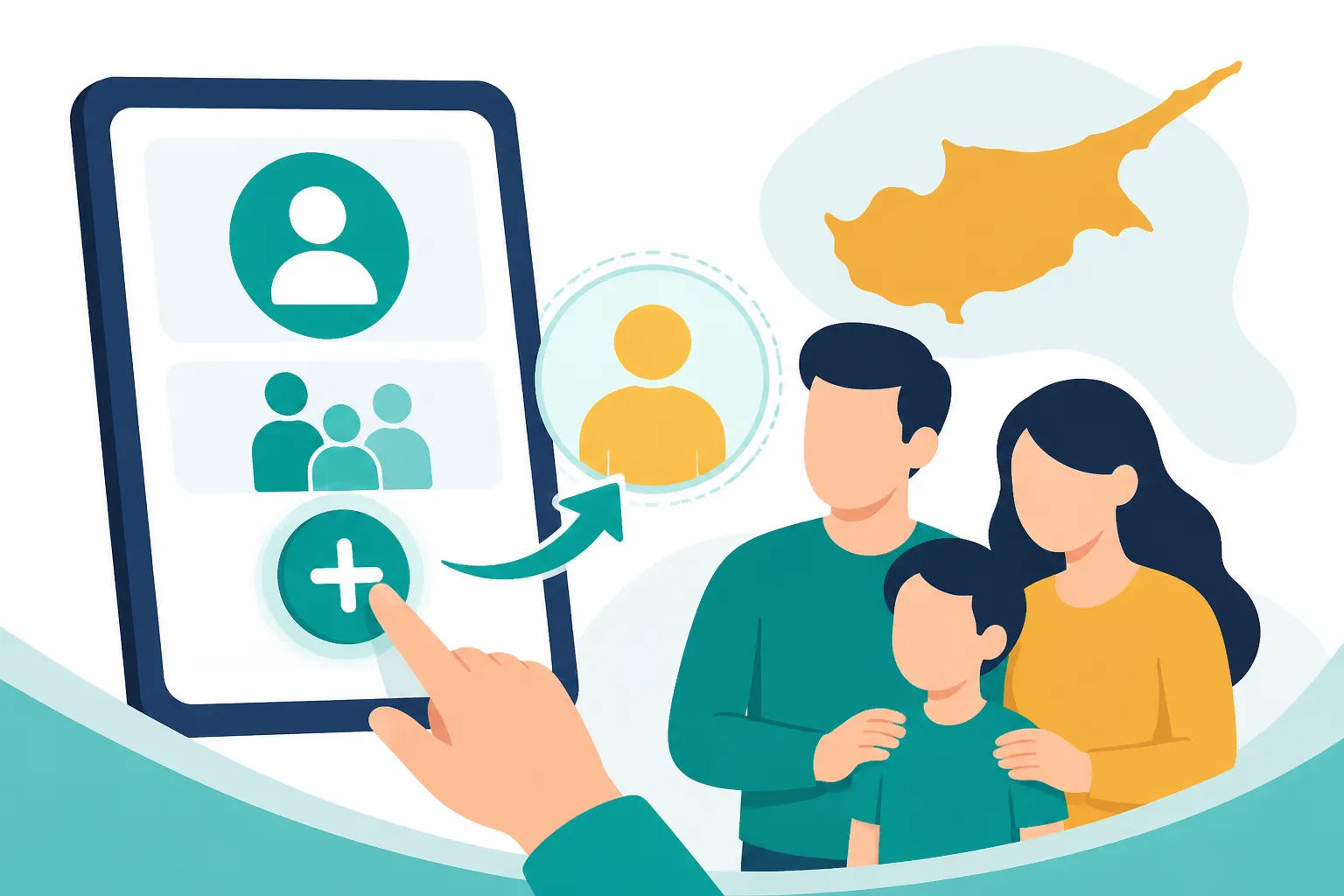
Inside the portal, you'll typically find an option to "Add Dependent" or "Register Family Member." Clicking this will usually lead you to an online form. Be prepared to enter:
- Dependent's Personal Details: Full name, date of birth, nationality, gender, and sometimes their relationship to you (spouse, child).
- Dependent's Identification Number: If they have a Cypriot ID, ARC, or even just their passport number, input it accurately.
- Contact Information: Although usually linked to your primary account, sometimes individual contact details for adult dependents might be requested.
This online form is usually the first stage. Don't be surprised if it feels a little basic; the real work often comes with the documentation.
Table: Common Documents for Adding Dependents to GeSY
| Dependent Type | Essential Documents Required | Additional Notes |
|---|---|---|
| Spouse | – Marriage Certificate (apostilled, translated if needed) | – Proof of main beneficiary's active GeSY status |
| – Spouse's Passport/ID | – Spouse's ARC/Residence Permit (if applicable) | |
| Minor Child | – Child's Birth Certificate (apostilled, translated if needed) | – Proof of main beneficiary's active GeSY status |
| – Child's Passport/ID | – Proof of shared address (e.g., utility bill under parent's name) | |
| Adult Child | – Child's Birth Certificate (apostilled, translated if needed) | – Proof of main beneficiary's active GeSY status |
| (18-21, Student) | – Child's Passport/ID | – University enrollment letter (proof of full-time study) |
| – Proof of financial dependency (e.g., bank statements, tax declarations showing support) | – Child's ARC/Residence Permit (if applicable) | |
| Adult Child | – Child's Birth Certificate (apostilled, translated if needed) | – Proof of main beneficiary's active GeSY status |
| (Over 21, | – Child's Passport/ID | – Medical certificates proving disability/inability to work |
| Disabled) | – Proof of financial dependency (e.g., bank statements, tax declarations showing full support) | – Child's ARC/Residence Permit (if applicable) |
Note: Always consult the official HIO guidelines or a local expert, as requirements can change.
Submitting Supporting Documentation
Once you've filled out the online form, the system will usually prompt you to upload the necessary supporting documents. This is where those scanned copies of passports, marriage certificates, and birth certificates come in. Ensure they are clear, legible, and correctly named. PDFs are usually the preferred format.
After uploading, you'll submit your application. What happens next can vary. Sometimes, the HIO might process it directly based on the uploaded documents. Other times, they might still request that you visit a district HIO office to present the original documents for verification. Always keep an eye on your registered email and the GeSY portal for updates or requests for further information.
It’s good practice to print out a confirmation of your online submission. This timestamped record can be invaluable if you need to follow up later, especially given that processing times can fluctuate wildly. For those looking for broader information on navigating the complexities of healthcare here, our guide on Navigating the Cypriot Healthcare System: An Expat's Roadmap (2027) offers further insights.
Common Challenges and Troubleshooting When Adding Dependents
No administrative process in Cyprus is ever truly "smooth sailing," and adding dependents to GeSY is no exception. You're bound to hit a snag or two, but knowing what to expect can help you prepare.
Dealing with Missing or Incorrect Documents
This is probably the most common hurdle. Maybe your marriage certificate isn’t apostilled, or you forgot to get a birth certificate officially translated. The HIO is quite strict about documentation. If anything is missing or incorrect, your application will be put on hold, or worse, rejected.
- Be proactive: Before you even start, double-check every document against the HIO's requirements. If in doubt, get it apostilled and translated. It's better to over-prepare than to face delays.
- Respond promptly: If the HIO contacts you requesting additional documents or clarifications, respond as quickly as possible. Delays on your end will only prolong the process.
- Seek clarification: If you're unsure why a document is deemed insufficient, don't hesitate to call the HIO helpline or visit a district office. Sometimes, a quick chat can clear up confusion that an email exchange might not.
Understanding Processing Times and Follow-Ups
The processing time for dependent applications can vary significantly. It could be a few weeks, or it could stretch into months, depending on the time of year, the complexity of your case, and the current workload of the HIO. This waiting period can be incredibly stressful, especially if you have an urgent medical need.
- Be patient (but persistent): Check the online portal regularly for status updates. If you haven’t heard anything after a reasonable period (e.g., 4-6 weeks), don't be afraid to follow up. A polite phone call to the HIO helpline or a visit to a district office can sometimes nudge things along.
- Keep records: Note down names, dates, and what was discussed during any phone calls or office visits. This paper trail can be invaluable if issues arise.
- Consider private options for the interim: While you wait for GeSY approval, it’s wise to have a backup plan for your family’s healthcare. Many expats opt for private health insurance during this transitional phase. Options like SafetyWing, for example, offer flexible travel and medical insurance that can cover unexpected medical needs while you’re waiting for your GeSY to kick in. It’s a peace-of-mind solution that many find indispensable, ensuring that a sudden illness or accident doesn't leave you with a hefty bill. Even after GeSY is active, some expats choose to maintain private insurance for specific treatments or to access private facilities without GeSY co-payments, a topic explored further in Understanding Private Health Insurance Options in Cyprus.
What to Do If Your Application Is Rejected
A rejection can feel disheartening, but it's not necessarily the end of the road.
- Understand the reason: The rejection letter should state the specific reason(s) for the denial. This is crucial for your next steps. Was it a missing document? Did a dependent not meet the eligibility criteria?
- Rectify and reapply: If the issue was purely administrative (e.g., missing translation, un-apostilled document), fix it and reapply.
- Appeal the decision: If you believe the rejection was based on a misunderstanding or misinterpretation of the rules, you have the right to appeal. This usually involves submitting a formal appeal letter, often with additional evidence, to the HIO within a specified timeframe.
- Seek professional help: For complex cases or appeals, it can be incredibly helpful to consult with an immigration lawyer or a professional who specializes in GeSY applications. They can provide guidance, review your documentation, and help you present your case effectively. This is particularly useful if your residency status itself might be impacting GeSY access, as detailed in How Your Residency Status Affects GeSY Access in Cyprus.
Temporary Solutions for Healthcare
Let's face it, waiting for bureaucracy is not an option when someone needs medical attention. While your dependent's GeSY application is pending, you absolutely need to ensure they have some form of healthcare coverage.
- Private Doctor Visits: You can always take your dependent to a private doctor or clinic. You will pay out-of-pocket for these visits. The cost can vary, but a private GP consultation usually runs between €40-€60. For more on this, check out The Cost of Healthcare in Cyprus: A Complete Breakdown for Foreigners (2026).
- Emergency Care: In a genuine emergency, public hospitals will provide treatment regardless of GeSY status, but you will be charged for the services. If the situation is not life-threatening but urgent, private hospitals or clinics are an option, again, with upfront payment. Our guide on Emergency Medical Care in Cyprus: What Every Expat Needs to Know is essential reading.
- Travel Insurance/International Health Insurance: This is where solutions like SafetyWing truly shine. If your dependents are new to Cyprus or still in the early stages of their residency, a robust travel or international health insurance plan can act as a crucial safety net. It covers unexpected medical expenses, ensuring that you don't face exorbitant bills for treatments or hospital stays while GeSY coverage is being sorted. It’s a good temporary measure, or even a long-term supplement if you want broader coverage. Remember, GeSY covers a lot, but for some, private options offer a peace of mind that's worth the investment.
Maintaining Your Dependent's GeSY Coverage
Getting your dependents registered is a win, but it’s not a one-and-done deal. Just like with your own GeSY status, there are ongoing responsibilities to ensure their coverage remains active.
Annual Reviews and Updates
While GeSY doesn't typically require an annual re-registration in the way some other systems might, it's vital to ensure your information and your dependents' information is always up-to-date. This means:
- Checking the Portal: Periodically log into your GeSY portal to review the status of your dependents. Are they still listed? Are their details correct?
- Updating Personal Information: If there are any changes to your address, contact details, or your dependent's information (e.g., new passport), it's your responsibility to update these with the HIO. This might involve updating your details at the Civil Registry and Migration Department first, as GeSY often pulls information from there.
- Social Insurance Link: For dependents whose eligibility is tied to your social insurance contributions (which is most often the case), ensuring your own contributions are continuous and correctly reported is paramount. Any interruption in your contributions can lead to a temporary loss of GeSY access for you and your dependents.
Changes in Dependent Status
Life happens, and circumstances change. GeSY coverage for dependents is dynamic and needs to reflect these changes.
- Child Turning 18: When a child reaches 18, their automatic dependent status usually changes. If they are continuing in full-time education, you'll need to provide proof of their enrollment to the HIO to extend their coverage up to age 21. If they start working, they will need to register for GeSY independently through their own social insurance contributions.
- Child Turning 21: If your child reaches 21 and is no longer a full-time student, or doesn't meet the specific criteria for adult dependents (e.g., disability), they will cease to be covered under your GeSY account. At this point, they'll need to secure their own GeSY eligibility, most commonly by being employed and making social insurance contributions.
- Divorce or Separation: If you divorce or separate, the dependent status of your ex-spouse under your GeSY account will change. You'll need to inform the HIO of this change. The ex-spouse will then need to establish their own GeSY eligibility, typically through employment or other qualifying criteria.
- Dependent Leaves Cyprus: If a dependent leaves Cyprus permanently, they should be removed from your GeSY account. This ensures the system is accurate and prevents any potential issues with future re-entries or other administrative processes.
It’s easy to overlook these details amidst the hustle and bustle of expat life, but keeping on top of them can save you a lot of grief down the line. Regular check-ins with the GeSY portal and being proactive about reporting changes are your best allies.
Disclaimer
Please remember that I am an expat blogger, not a legal professional or an official representative of the Cyprus government or the Health Insurance Organisation (HIO). While I strive to provide accurate and up-to-date information based on my personal experience and available public resources, regulations and procedures in Cyprus can change without notice. Always verify information directly with the official HIO website, district offices, or a qualified legal or immigration consultant before making any decisions. This guide is intended for informational purposes only and should not be considered legal or medical advice.