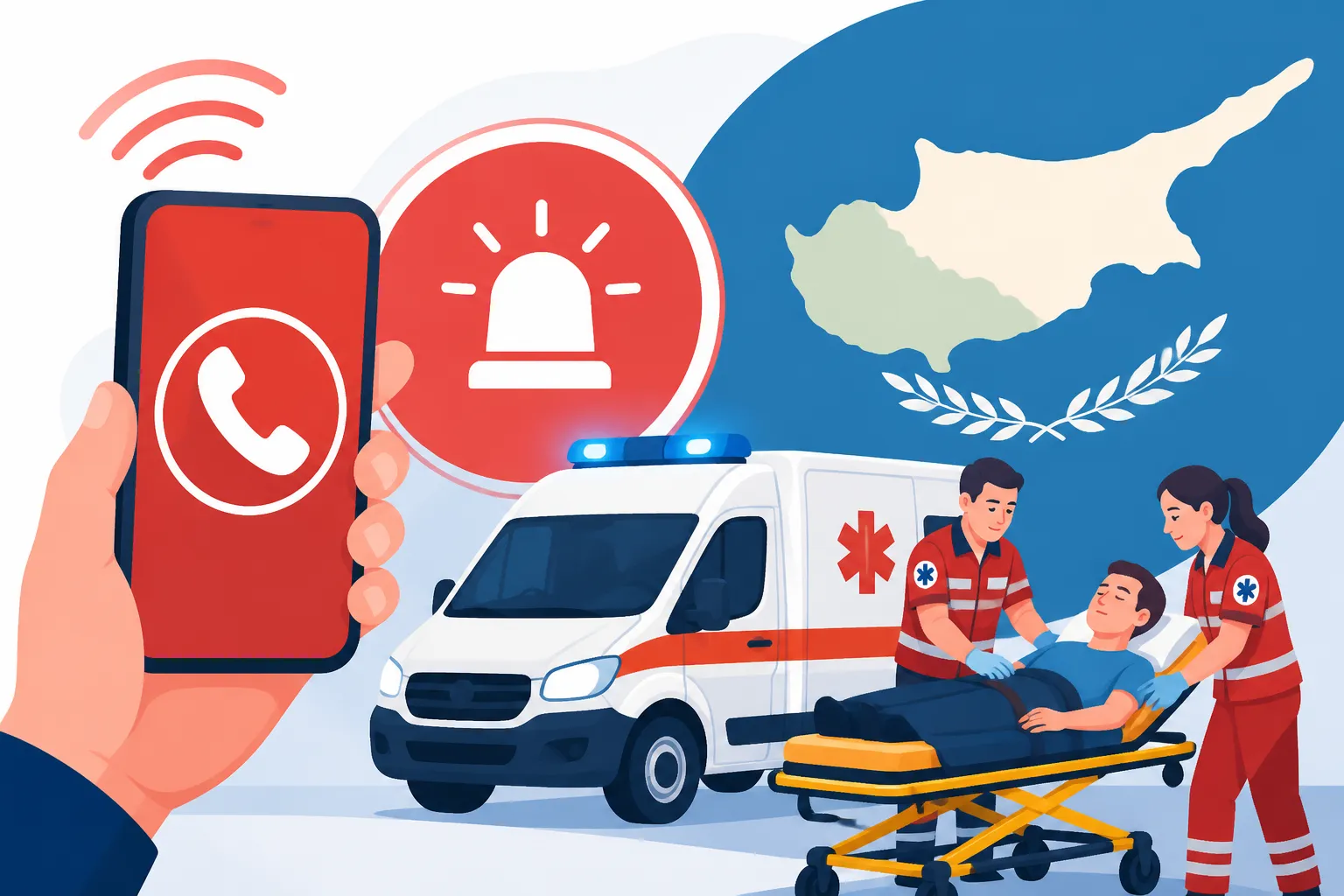
Understanding Emergency Numbers (112) and Ambulance Care in Cyprus
Experiencing a medical emergency in a foreign country is one of those primal fears that can keep even the most seasoned expat awake at night. The sudden rush of adrenaline, the language barrier, the unknown procedures – it's enough to make anyone feel utterly lost and vulnerable. But take a deep breath, because this guide is designed to cut through that anxiety, offering you a clear, realistic roadmap for understanding Cyprus's emergency numbers and ambulance care, helping you navigate those critical moments with confidence.
The Panic Button: Unpacking 112 in Cyprus
When things go wrong, and you need immediate help, whether it's for a medical crisis, a fire, or a crime, your first and most crucial call in Cyprus is 112. This isn't just a number; it's the lifeline that connects you to all emergency services across the entire European Union. Trust me, learning this number and understanding how it works is probably the most important piece of information you'll glean from this entire article. It’s the universal "help me now" button that everyone, from long-term residents to short-term tourists, needs to have etched into their memory.
What Happens When You Dial 112?
When you dial 112 in Cyprus, you're not just getting through to a single department; you're connecting to a centralised emergency call centre that coordinates all necessary services. The operators are trained to handle a wide array of situations and, crucially, are typically multilingual, capable of communicating in English, Greek, and often other major European languages. This is a huge relief for many expats, as the thought of trying to explain a medical emergency in broken Greek is a nightmare scenario.
The first thing the operator will do is try to ascertain the nature of your emergency. They’ll ask key questions: What happened? Where are you? Is anyone injured? How many people are involved? They're essentially performing an initial triage over the phone to determine whether you need an ambulance, the police, the fire department, or perhaps all three. Based on your answers, they will then dispatch the appropriate services to your location. It’s a rapid-response system designed to get help to you as quickly and efficiently as possible, cutting out the need to remember separate numbers for each service, which can be particularly challenging under stress. Always try to remain calm, speak clearly, and provide as much detail as you can, even if you feel like you’re rambling. Every piece of information helps them send the right support.
When to Call 112 vs. Other Numbers
This is a critical distinction that many newcomers often struggle with. While 112 is your go-to for genuine emergencies, it’s not for every minor ailment or inconvenience. Calling 112 for non-emergencies can clog up the lines and divert resources from truly life-threatening situations, potentially putting others at risk. A good rule of thumb is to ask yourself: "Is there an immediate threat to life, limb, or property?" If the answer is yes, then 112 is absolutely the correct number.
Genuine emergencies include things like severe chest pain, sudden loss of consciousness, uncontrolled bleeding, serious accidents (car crashes, falls from height), suspected stroke, severe burns, sudden severe allergic reactions, or any situation where someone’s life is in immediate danger. For tourists, this is also the number you’d call if you witness a major accident or crime. On the other hand, if you have a fever, a sprained ankle that isn't severe, or a lingering cough, your personal doctor or a visit to a local clinic is the appropriate course of action. For general health advice that isn't urgent, you might call a local clinic or, if you're registered, your personal doctor (GP). Similarly, if your cat is stuck up a tree or you’ve lost your wallet, these are not 112 emergencies – you’d typically contact your local municipality or police station on their non-emergency lines respectively. Understanding these boundaries is essential for both your safety and the efficient functioning of the emergency services system. For deeper insights into managing less urgent medical needs, consider reading our guide on Registering with a Personal Doctor GP in Cyprus: The Complete Expat Guide 2026.
Understanding Ambulance Services in Cyprus
So, you've called 112, explained the situation, and an ambulance is on its way. What happens next? The ambulance service in Cyprus, much like the broader healthcare system, has layers to it. Knowing these layers beforehand can significantly reduce stress when every second counts. It's not just about getting from point A to point B; it's about the type of care you'll receive on the way and what to expect upon arrival.
Who Operates the Ambulances? Public vs. Private
In Cyprus, the primary ambulance service is operated by the state, falling under the Ministry of Health. These are the ambulances you'll typically see responding to 112 calls, especially for serious incidents. They are staffed by trained paramedics and emergency medical technicians, equipped to provide essential life support and stabilisation en route to the nearest appropriate hospital. These public ambulances serve all residents, whether they are registered with GeSY or not, in situations deemed medically urgent by the 112 operator. They are fundamental to the nationwide emergency response infrastructure.
However, just as with hospitals, there are also private ambulance services available, particularly in the larger cities like Limassol and Nicosia. These are often linked to private hospitals or clinics and can be called directly, though in an emergency, 112 will always direct the state service first. Private ambulances often offer slightly more personalised transport and might be preferred for inter-hospital transfers or for individuals with specific private insurance plans that cover such services. While they might appear to be a faster option sometimes, the public 112 system is designed for immediate, critical response. You would typically use a private ambulance service if you explicitly request it and are willing to pay, or if your private insurance dictates it for non-critical, pre-arranged transport. For a more detailed look at the broader healthcare landscape, you might find our guide on Public vs Private Healthcare in Cyprus: Which Should Expats Choose? particularly insightful.
The Cost of an Ambulance Ride: What Expats Need to Know
Ah, the dreaded question of cost. This is where it can get a little murky, and expats often find themselves in a bind if they haven't planned ahead. For those registered with GeSY (the General Healthcare System), emergency ambulance services are generally covered. This is one of the huge benefits of being enrolled in the system. You typically won't face an upfront charge for a state ambulance responding to a genuine emergency. However, remember that "emergency" is key here – if it's determined that the ambulance was called for a non-emergency that could have been handled differently, there might be a charge, though this is rare in critical situations.
For those without GeSY, perhaps new arrivals still figuring out How to Register for GeSY After Moving to Cyprus, or tourists, the situation is different. A state ambulance ride for a genuine emergency will likely incur a fee. While exact figures can fluctuate, you should expect to pay a few hundred euros for the service. This is where comprehensive health insurance, especially travel insurance like SafetyWing, becomes absolutely indispensable. SafetyWing plans are designed specifically for nomads and travelers, often covering emergency medical evacuation and treatment, which includes ambulance fees. Even if you're just visiting or in the transitional phase of moving, having a robust policy from a provider like SafetyWing can save you from a significant financial hit during an already stressful time. Always double-check your policy's specifics regarding emergency transport. For detailed information on healthcare costs, check out The Cost of Healthcare in Cyprus: A Complete Breakdown for Foreigners 2026.
Here's a quick overview of ambulance cost scenarios:
| Scenario | GeSY Registered Individuals | Non-GeSY Residents / Tourists | Private Health Insurance |
|---|---|---|---|
| State Ambulance (112 Call) | Generally covered (no direct cost) | Out-of-pocket fee (approx. €100-€300+) | May be reimbursed depending on policy |
| Private Ambulance (Direct Call) | Out-of-pocket fee (can be higher) | Out-of-pocket fee (can be higher) | May be directly covered or reimbursed |
It’s always a good idea to confirm your insurance coverage before an emergency if possible, perhaps by making a quick call to your provider to understand their emergency protocols and what's covered for ambulance transport in Cyprus.
Preparing for an Emergency: What Information to Have Ready
In the heat of an emergency, your mind can go blank. That's why preparation is your best friend. Having key information readily accessible, not just for yourself but for anyone who might be helping you, can be literally life-saving. I recommend keeping a physical card in your wallet and a digital note on your phone with the following details, clearly labelled "In Case of Emergency (ICE)":
- Your full name and date of birth.
- Your current address in Cyprus. Be specific, including the town, street name, building number, and any distinguishing features that might help paramedics find you quickly (e.g., "blue gate," "next to the bakery"). Remember, some addresses here can be tricky to locate without good landmarks.
- Your contact phone number.
- An emergency contact person's name and number. This should ideally be someone local or someone who can be reached quickly and knows your medical history.
- Any known allergies.
- A list of your current medications and dosages.
- Major medical conditions (e.g., diabetes, heart condition, epilepsy).
- Your GeSY registration number (if applicable).
- Details of your private health insurance (provider name, policy number, emergency contact for them), especially useful if you have a plan like SafetyWing or another international provider.
- Blood type (if you know it).
Having this information at your fingertips, or easily accessible to someone assisting you, can save precious minutes. It's a small effort that can make a monumental difference in the quality and speed of emergency care you receive.
Navigating Emergency Room Care After the Ambulance
Once the ambulance has whisked you away, your journey continues to the Emergency Department (A&E). This can be another point of anxiety for expats, as the environment is often chaotic, and the procedures might differ from what you're used to back home. Knowing what to expect in both public and private settings can help you feel more in control during a very vulnerable time.
Public Hospital Emergency Departments
If you're taken to a public hospital, you'll enter what's typically referred to as the "Τμήμα Επειγόντων Περιστατικών" (Tmimato Epeigonton Peristatikon). The first step here, for everyone, is triage. A nurse or doctor will assess your condition based on your symptoms, vital signs, and the information provided by the ambulance crew (if you arrived by ambulance). This is not a "first come, first served" system; patients with more severe or life-threatening conditions will be seen first. This is crucial to understand, as waiting times can be long, particularly if your condition is deemed non-life-threatening, even if you feel awful. It's a common frustration for many, but it ensures that critical cases receive immediate attention.
Once triaged, you’ll wait to be called for further assessment or treatment. This waiting period can sometimes stretch for hours, especially during busy times or if your case isn't high priority. Keep your documents (ID, GeSY card if you have one, insurance details) handy. When you are finally seen, doctors will evaluate you, perform necessary tests (blood work, imaging like X-rays or CT scans), and determine the best course of action. If you're registered with GeSY, you'll generally only pay the standard co-payment for specialist consultations or specific tests, but genuine emergencies are often fully covered without upfront fees. However, always confirm. For more about public hospitals, see Understanding the Difference Between Public and Private Hospitals in Cyprus.
Some of the major public hospitals with emergency departments include:
- Nicosia General Hospital (Γενικό Νοσοκομείο Λευκωσίας): The largest hospital in Cyprus, serving the capital.
- Limassol General Hospital (Γενικό Νοσοκομείο Λεμεσού): A key facility for the bustling Limassol district.
- Paphos General Hospital (Γενικό Νοσοκομείο Πάφου): Serving the western part of the island.
- Larnaca General Hospital (Γενικό Νοσοκομείο Λάρνακας): Important for the airport and eastern region.
- Famagusta General Hospital (Γενικό Νοσοκομείο Αμμοχώστου) in Paralimni: Servicing the eastern tourist areas.
Private Hospital Emergency Options
In contrast to public hospitals, private hospitals in Cyprus also offer robust emergency services, though they are usually referred to as Accident & Emergency (A&E) departments or Urgent Care Centers. These facilities tend to have shorter waiting times, more modern amenities, and a higher staff-to-patient ratio, making them a more comfortable experience for many, provided you have the means or appropriate insurance. They are particularly popular with expats who have comprehensive private health insurance.
If you have private insurance, many private hospitals (such as Ygeia Polyclinic in Limassol, American Medical Center in Nicosia, or Evangelismos Hospital in Paphos) can often directly bill your insurer, meaning you might not have to pay large sums upfront. However, it's crucial to confirm this with both your hospital of choice and your insurance provider as policies vary widely. For example, a global health insurance plan or a tailored expat plan from a provider like SafetyWing might cover private A&E visits. Always present your insurance card and clearly state that you intend for your insurance to cover the costs upon arrival. Be prepared, however, that even with insurance, you may need to pay an excess or for services not fully covered by your plan. For an in-depth look at private healthcare, including how to find and use these facilities, our guide on How to Use Private Hospitals and Clinics in Cyprus can offer valuable context.
Understanding GeSY and Emergency Care
GeSY (General Healthcare System) is Cyprus's universal healthcare system, designed to provide comprehensive medical care to all eligible residents, including expats who contribute to social insurance. For emergencies, GeSY coverage is a huge advantage. As mentioned, if you're taken to a public hospital emergency department and you're registered with GeSY, the services are covered with minimal or no co-payments. This includes emergency consultations, diagnostics (like X-rays, blood tests), and even hospitalisation if required.
One common question is whether you need a referral from a Personal Doctor (GP) to access emergency care under GeSY. The answer, for genuine emergencies, is no. You can directly present yourself (or be brought by ambulance) to any public hospital's A&E department without a GP referral. The system is designed for immediate access in critical situations. Once your emergency is addressed, if follow-up care is needed, you will likely be referred to a specialist or advised to see your registered GP for ongoing management. Understanding how GeSY works for different types of care, including emergencies, is vital for long-term residents. You can learn more about this by reading Understanding GeSY Co-Payments and Out-of-Pocket Fees in Cyprus or How GeSY's Health System Works: GeSY vs Private Explained 2026.
Beyond the Ambulance: Follow-up and Support
Surviving an emergency is one thing, but what comes next is equally important for your recovery and long-term well-being. The Cypriot healthcare system extends beyond the immediate crisis, offering pathways for ongoing care and support. It's not uncommon to feel a bit adrift after a medical emergency, so knowing the next steps can provide a much-needed sense of security.
Post-Emergency Care and Referrals
Once you're stable and discharged from the emergency department, the medical team will provide you with discharge instructions. These will typically include advice on medication, wound care (if applicable), and crucially, recommendations for follow-up appointments. For anything beyond the immediate emergency, you'll generally be advised to follow up with your Personal Doctor (GP) if you're a GeSY patient, or a private specialist if you're using private healthcare.
If your emergency involved a specific condition that requires ongoing specialist care (e.g., cardiology, orthopaedics), the hospital might provide you with a referral. Under GeSY, this referral would allow you to book an appointment with a GeSY-registered specialist without needing another visit to your GP, although sometimes your GP will issue the initial referral. If you're relying on private healthcare, you can usually book directly with a private specialist or use the hospital's outpatient clinics. Always ensure you understand the discharge instructions, including when and where to seek follow-up care. Don't hesitate to ask questions before you leave the hospital, especially about medication schedules or warning signs to look out for. Our guide on How to Access Specialist Care Through GeSY in Cyprus offers more detail on navigating referrals.
Psychological Impact and Support
Going through a medical emergency, especially in a foreign country, can be incredibly traumatic and disorienting. It's not just the physical recovery; the psychological toll can be significant. Feelings of fear, anxiety, vulnerability, and even helplessness are completely normal. Many expats often minimise these feelings, focusing solely on the physical, but mental well-being is just as important.
It's vital to acknowledge and address any lingering emotional distress. Talk to trusted friends or family, or consider seeking professional help. Cyprus has a growing number of mental health professionals, including psychologists and therapists, many of whom are English-speaking. Your GP can often provide referrals to mental health services under GeSY, or you can seek private counselling. Don't suffer in silence; taking care of your mental health after a traumatic event is a sign of strength, not weakness. Remember, there are resources available to help you process the experience and regain your sense of peace and security. For guidance on accessing these services, refer to How to Access Mental Health Services in Cyprus as an Expat.
Essential Safety Tips and Prevention
While this guide focuses on what to do during an emergency, prevention and preparedness are equally important. Being proactive about your safety and having key information organised can alleviate a lot of stress and potentially even avert a crisis. As an expat, you’re already navigating a new environment; adding a layer of personal safety measures just makes good sense.
Keeping Emergency Contacts Handy
Beyond your immediate medical information, having a list of crucial non-medical emergency contacts is highly advisable. This can include:
- Your Personal Doctor (GP): For non-urgent medical advice or appointments.
- Close friends or family members: People who can be contacted and might be able to assist.
- Your employer's emergency contact (if applicable).
- Your embassy or consulate details: For consular assistance in extreme situations.
- Your landlord or property manager: For property-related emergencies.
- Your health insurance provider's 24/7 emergency line. This is especially critical if you have a private plan or a travel insurance policy like SafetyWing. They can guide you on approved hospitals and direct billing procedures.
Keep this list stored securely but accessibly on your phone (perhaps as a widget or a pinned note) and in a physical format in your wallet. It's not about being paranoid; it's about being prepared for any eventuality.
Learning Basic Greek Phrases for Emergencies
While 112 operators are multilingual, and many doctors and nurses speak excellent English, there might be situations where you encounter someone who doesn't, or where a few key Greek phrases could make a difference. Even knowing how to say "help," "doctor," "hospital," "pain," "where," "here," and "please" can be invaluable. It shows respect for the local culture and can significantly bridge communication gaps in moments of stress.
Here are a few basic phrases to get you started:
- Help! – Βοήθεια! (Voítheia!)
- Doctor – Γιατρός (Giatrós)
- Hospital – Νοσοκομείο (Nosokomeío)
- Pain – Πόνος (Pónos)
- Where is…? – Πού είναι…? (Poú eínai…?)
- Here – Εδώ (Edó)
- Please – Παρακαλώ (Parakaló)
- Emergency – Έκτακτη ανάγκη (Éktakti anágki)
Even attempting these few words can garner goodwill and faster assistance. Consider taking a few basic Greek lessons – it will enrich your life in Cyprus in countless ways, not just in emergencies! Our guide on Learning Greek for Living in Cyprus: A Complete Guide for Expats offers some great starting points.
Travel Insurance and Emergency Coverage for Visitors
For those who are tourists, short-term visitors, or new arrivals who haven't yet secured long-term residency and GeSY coverage, comprehensive travel insurance is non-negotiable. Don't even think about stepping foot on the island without it. A simple mishap – a fall, an unexpected illness, or a more serious accident – can lead to substantial medical bills if you're not covered.
Many standard travel insurance policies will cover emergency medical treatment, including ambulance costs and hospitalisation. Providers like SafetyWing are particularly popular among the expat and digital nomad community because their policies often offer flexible, comprehensive coverage that can even extend to limited home country visits and crisis response, tailored to a nomadic lifestyle. It's not just about covering costs; it's about having access to emergency assistance services that can guide you through the process, liaise with hospitals, and arrange for medical repatriation if necessary. Investing in a good travel insurance policy before you arrive is one of the smartest financial decisions you can make to protect yourself and your peace of mind while exploring or settling into Cyprus. Even if you're considering staying long-term, having a temporary solution like SafetyWing can bridge the gap until your GeSY registration is complete. For more on various insurance options, you can consult Health Insurance in Cyprus: GeSY, Private and Employer Options Explained.
Disclaimer
The information provided in this guide is for general informational purposes only and does not constitute medical, legal, or financial advice. While we strive to provide accurate and up-to-date information, regulations and services in Cyprus can change. Always consult with qualified professionals for advice tailored to your specific situation. In a medical emergency, dial 112 immediately.