Do I Need a Sponsor for the Digital Nomad Visa in Cyprus?
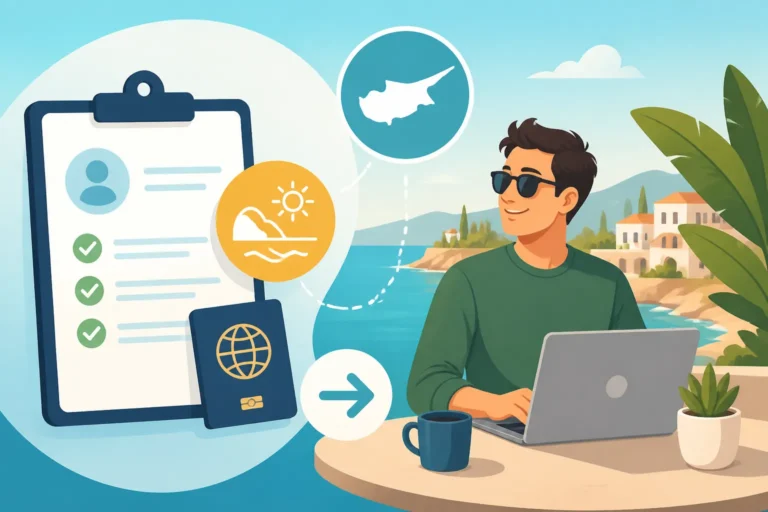
The Cyprus Digital Nomad Visa has captured the imagination of so many expats, offering the dream of sun-drenched remote work. But, like most things in a new country, it comes with its own unique set of administrative hurdles and confusing requirements. One question that pops up time and again, causing no end of anxiety, is whether you need a sponsor to even apply. This guide is here to clear up that specific confusion and walk you through the reality of the Digital Nomad Visa requirements in Cyprus, confirming once and for all that you are, in fact, your own best sponsor.
Demystifying the Cyprus Digital Nomad Visa
Let's cut straight to the chase: no, you do not need a sponsor for the Digital Nomad Visa in Cyprus in the traditional sense. This isn't a family reunification visa where a resident relative "sponsors" you, nor is it a work permit where a Cypriot employer acts as your sponsor. The very essence of the Digital Nomad Visa is built on self-sufficiency. It's designed for individuals who work remotely for companies or clients outside of Cyprus, drawing an income from abroad, and who can prove they can support themselves financially without becoming a burden on the Cypriot social system.
The Cypriot government introduced this visa to attract talented individuals who contribute to the economy without directly competing in the local labour market. It's a fantastic initiative for non-EU/EEA citizens looking for a new base, offering the chance to enjoy the island's lifestyle while continuing their international careers. The focus is entirely on your ability to sustain yourself and, if applicable, your family, through your foreign-sourced income. This distinction is crucial, as many potential applicants get bogged down searching for a "sponsor" when they should be focusing on proving their financial independence. If you're looking for a general overview, take a look at The Expat Guide to the Cyprus Digital Nomad Visa (2027).
Core Eligibility Criteria: Proving Your Self-Sufficiency
Since traditional sponsorship isn't a requirement, your entire application hinges on your ability to demonstrate financial stability and independence. The Cypriot authorities want to see concrete proof that you're not just passing through, but that you have the means to live comfortably on the island for the duration of your visa.
The Income Requirement
This is perhaps the most significant hurdle and the primary way you "sponsor" yourself. The Cypriot government sets a minimum monthly income threshold that you must meet. As of the latest information, this threshold is €3,500 gross per month for the main applicant. This isn't just a suggestion; it's a strict requirement that you must prove through official documentation.
If you plan to bring family members with you, the income requirement increases. For a spouse, you need to add an extra 20% to the main applicant's income (€700), and for each child, an additional 15% (€525). So, for a family of four (main applicant, spouse, and two children), your combined gross monthly income would need to be around €5,250 (€3,500 + €700 + €525 + €525). It's vital to check the absolute latest figures from the Civil Registry and Migration Department, as these can be updated. For more detailed information on this, check out What Is the Minimum Income for the Digital Nomad Visa in 2026?.
How do you prove this income? You'll typically need to provide:
- Employment Contract or Service Agreements: If you're employed, your contract clearly stating your salary. If you're a freelancer or run your own business, service agreements or contracts with your international clients.
- Bank Statements: Official bank statements for the past 3-6 months showing consistent income flowing into your account. These need to clearly demonstrate that you consistently meet or exceed the required threshold.
- Tax Returns: Previous tax returns can also serve as proof of consistent earnings.
- Company Registration Documents: If you own your own business, proof of its registration outside of Cyprus.
Remember, this income must come from activities performed remotely for clients or employers located outside of Cyprus. You cannot work for a Cypriot entity or generate income from within Cyprus while on this visa. This is the fundamental principle of the Digital Nomad Visa.
Here's a quick breakdown of the income requirements to give you a clearer picture (always verify with official sources, as these can change):
| Applicant Type | Monthly Gross Income (Approx.) | Additional Per Dependent |
|---|---|---|
| Main Applicant (Single) | €3,500 | N/A |
| Spouse | N/A | +20% (€700) |
| Each Child | N/A | +15% (€525) |
This table highlights that the financial burden rests squarely on your shoulders, underscoring the "no sponsor needed" reality. Your income is your passport to this visa.
Health Insurance: A Must-Have, Not a 'Sponsor'
Another non-negotiable requirement that often gets confused with "sponsorship" is comprehensive health insurance. The Cypriot government mandates that all Digital Nomad Visa applicants and their dependents must have valid, comprehensive health insurance coverage for the duration of their stay. This isn't a local sponsor paying for your healthcare; it's your responsibility to secure it.
The insurance must cover inpatient and outpatient care, and typically, it needs to be an international policy that is valid in Cyprus. GeSY, Cyprus's General Healthcare System, is usually not immediately available to Digital Nomad Visa holders upon arrival, as eligibility often depends on social insurance contributions through local employment. Therefore, a private health insurance policy is essential. Many expats opt for international providers like Cigna Global, who offer policies specifically designed for individuals living abroad, ensuring robust coverage for unexpected medical needs. Having adequate health insurance not only fulfills a visa requirement but provides immense peace of mind in a foreign country. You can learn more about this in Health Insurance in Cyprus: GeSY, Private and Employer Options Explained and Understanding Health Insurance and Requirements for Cyprus Visas.
When choosing a policy, ensure it meets the specific requirements of the Civil Registry and Migration Department, which usually means a high level of coverage with no exclusions for pre-existing conditions (or at least, clear documentation of them). Always get confirmation from your insurer that their policy is accepted for the Cypriot Digital Nomad Visa application.
Accommodation and Financial Stability
Beyond your consistent monthly income, you'll also need to demonstrate that you have suitable accommodation in Cyprus and sufficient funds to cover your initial relocation and ongoing living expenses. Again, this points to your personal financial stability, not reliance on a third-party sponsor.
- Proof of Accommodation: This could be a rental agreement for an apartment or house, or even a booking confirmation for longer-term temporary accommodation if you plan to search for a permanent place after arrival. The authorities want to see that you have a place to live. Finding a place can be a task in itself, so it's good to have this sorted early. Dive deeper into the rental process with The Complete Guide to Renting a Home in Cyprus (2027).
- Proof of Sufficient Funds: While your monthly income is paramount, it's also wise to show you have a buffer in your savings account. This isn't a formal, specified amount like the monthly income, but it helps solidify your case that you are financially secure and won't immediately struggle if there's a hiccup in your remote work. This demonstrates a well-planned move and reduces any perceived risk to the Cypriot state.
These requirements collectively paint a picture of an applicant who is prepared, self-reliant, and fully capable of integrating into Cypriot society without financial dependence on local resources.
The Application Process: Navigating the Bureaucracy (Without a Sponsor)
Understanding that you are your own sponsor simplifies the application process significantly. It means you don't need to find a local contact, a company, or a relative to vouch for your financial standing. Instead, your focus shifts entirely to meticulously gathering and presenting your personal documentation.
Gathering Your Documents
The list of documents for the Digital Nomad Visa can seem daunting, but each item serves to prove your eligibility based on self-sufficiency. You'll need:
- Valid Passport: A copy of your passport valid for at least two years beyond your intended stay.
- Application Form: The official MVIS2 form, duly completed and signed.
- Photos: Two recent passport-sized photos.
- Proof of Income: As detailed above (employment contracts, bank statements, tax returns).
- Proof of Remote Work: A declaration or letter from your employer (if employed) or contracts with international clients (if self-employed) confirming that you can perform your duties remotely.
- Health Insurance Policy: Proof of comprehensive private health insurance.
- Accommodation Proof: Rental agreement or reservation.
- Police Clearance Certificate: A clear criminal record from your country of origin and any country you've resided in for over six months in the past year. This usually needs to be apostilled or legalised. You can learn more about preparing these kinds of documents in How to Get Your Documents Apostilled for Cyprus Immigration.
- Curriculum Vitae (CV): A detailed CV outlining your professional background.
- Educational Certificates: Copies of your academic qualifications.
- Administrative Fees: Proof of payment for the application fees.
The critical takeaway here is that every single document relates back to you and your circumstances, reinforcing the point that no external sponsor is required.
Where and How to Apply
The application process for the Digital Nomad Visa generally involves a couple of pathways:
- From Abroad: You can submit your application to the Consular Section of the Diplomatic Mission of Cyprus in your country of residence. If there isn't one, you might submit it to the nearest Cypriot embassy or consulate accredited to your country. This path allows you to receive your visa before travelling to Cyprus.
- From Within Cyprus: Many digital nomads initially enter Cyprus on a short-stay visa (e.g., a tourist visa, which generally allows 90 days within a 180-day period for non-EU citizens). Once on the island, you can then apply for the Digital Nomad Visa at the Civil Registry and Migration Department in Nicosia. This is a popular option, giving you time to settle in and find accommodation. However, be mindful of your tourist visa expiry date and aim to submit your application well in advance. For insight into this specific scenario, check out Can I Apply for a Cyprus Residence Permit from Inside the Country?.
No matter which route you choose, the assessment criteria remain the same: your ability to demonstrate self-sufficiency.
What to Expect Post-Submission
After submitting your application, the waiting game begins. You might be called for an interview, and you'll definitely need to provide biometric data (fingerprints and photo) at the Civil Registry and Migration Department if you applied from within Cyprus. This is all standard procedure for obtaining a residence permit.
Once approved, you'll be issued a temporary residence permit, often referred to as a "Pink Slip" because of its historical colour, though it's now usually a card. This permit will explicitly state your status as a Digital Nomad. This Pink Slip is your official recognition of residency in Cyprus and allows you to live and travel in and out of the country for the duration of its validity, typically one year, renewable annually. Understanding this document is key to your new life in Cyprus; find more details in Understanding Residence Permits and the Pink Slip in Cyprus (2027).
The processing times can vary, sometimes taking a few weeks to several months depending on the workload of the department and the completeness of your application. Patience, my friends, is a virtue when dealing with immigration matters in Cyprus.
What "Sponsorship" Really Means in Other Visa Contexts (And Why It Doesn't Apply Here)
To truly understand why the Digital Nomad Visa doesn't require a sponsor, it helps to briefly look at other visa categories where sponsorship is absolutely essential. This comparison highlights the unique, independent nature of the digital nomad scheme.
Employer Sponsorship for Work Permits
For non-EU citizens seeking traditional employment in Cyprus, a work permit is typically required. In this scenario, the Cypriot employer acts as the sponsor. They must prove to the Department of Labour that they couldn't find a suitable candidate for the position from within the EU/EEA labour market. The employer undertakes significant administrative and financial responsibility, including applying for the permit, sometimes covering relocation costs, and ensuring the employee's compliance with labour laws. This is a very different beast from the Digital Nomad Visa, where you are the sole economic driver and legal responsible party for your own stay. If you're interested in the traditional route, here's more on How to Get a Work Permit to Work in Cyprus (2027).
Family Reunification Sponsorship
Another common type of "sponsorship" in immigration is family reunification. If you are a legally residing expat in Cyprus, you may be able to "sponsor" your spouse, minor children, and sometimes even dependent parents to join you on the island. Here, your status as a resident and your proven financial means to support your family become the basis of their visa. You are, in essence, their sponsor, taking responsibility for their well-being and ensuring they don't become a burden on the state. This is clearly distinct from the Digital Nomad Visa, which is about your individual remote work and self-sustenance. For those considering this path, Family Reunification in Cyprus: Bringing Your Spouse and Children (2027) has more information.
Relocation Support (Not Sponsorship)
Sometimes, the term "sponsor" might inadvertently get used in the context of general relocation assistance. Companies like Sirelo, for example, are fantastic resources for managing the logistics of moving your life to Cyprus – finding movers, comparing services, understanding customs regulations, and so on. They offer invaluable practical support for a smooth transition. However, it's crucial to distinguish this practical assistance from official visa sponsorship. Sirelo can help you move your belongings, but they won't "sponsor" your visa application. That responsibility remains firmly with you, the applicant. Think of them as helping hand for the physical move, while the visa is about your legal right to stay. The broader process of moving to Cyprus is covered in The Complete Visa and Immigration Guide for Relocating to Cyprus (2027).
In summary, the Digital Nomad Visa in Cyprus is designed for truly independent individuals. It empowers you to navigate your own path, relying on your foreign income and personal planning, rather than needing an external guarantor. This freedom from traditional sponsorship is one of its most appealing features, but it places the onus squarely on you to present a robust, self-sufficient application.
Disclaimer
Please remember that immigration laws and requirements in Cyprus can change. While every effort has been made to provide accurate and up-to-date information in this guide, it is always advisable to consult the official website of the Civil Registry and Migration Department of Cyprus or seek advice from a qualified immigration lawyer or consultant for the most current regulations and personalised guidance before making any decisions. This article is for informational purposes only and does not constitute legal advice.