How to Apply for Cyprus Citizenship by Descent
The journey to reclaim your Cypriot heritage by applying for citizenship by descent can feel like navigating a labyrinth of paperwork and historical footnotes. Many expats, or those with Cypriot roots living abroad, find themselves overwhelmed by the precise requirements and the often-lengthy process to officially connect with their family's past. This comprehensive guide aims to shine a clear light on how to apply for Cyprus citizenship by descent, offering a realistic, empathetic, and step-by-step roadmap to help you navigate the bureaucracy and successfully secure your place as a Cypriot citizen.
Understanding Citizenship by Descent: The Basics
For many, the idea of applying for citizenship by descent is a deeply personal one, a way to honour ancestors and connect with a cultural identity that might have been passed down through generations. But when it comes to Cyprus, there are very specific legal frameworks that determine who is eligible. It's not just about having a Cypriot surname; it's about a direct, traceable lineage through specific historical periods. This section will break down the fundamental eligibility requirements, cutting through the confusion to give you a solid understanding of your starting point.
Key Eligibility Criteria for Cypriot Descent
The core of Cypriot citizenship by descent rests on your relationship to an individual who was a citizen of the Republic of Cyprus. This might sound straightforward, but Cyprus has a unique history, meaning the definition of who was a "citizen" has evolved. Generally, you are eligible if you were born:
- On or after August 16, 1960 (the date of the Republic's establishment):
- And your father was a citizen of Cyprus at the time of your birth. This is the most common and generally simplest route.
- And your mother was a citizen of Cyprus at the time of your birth, and you were born after June 11, 1999 (when the law was amended to grant equal rights to mothers).
- Before August 16, 1960:
- And your father was a British citizen who had connections to Cyprus, meaning he was born in Cyprus or was otherwise deemed a "Cypriot citizen" under the specific provisions of the Cyprus Citizenship Law 1967. This often applies to those born during the British colonial administration, where the concept of "Cypriot citizen" was distinct from British subject.
- This is where things can get a bit tricky, as proving your father's "connection" requires meticulous documentation.
It's crucial to understand that if your direct ancestor (father or mother, depending on the period) acquired Cypriot citizenship through naturalisation after your birth, this specific path to citizenship by descent might not apply to you. The law generally focuses on the parent's citizenship status at the time of your birth. This legal specificity can be a real point of frustration for many, as family histories rarely fit neatly into bureaucratic boxes. However, if your parent was a Cypriot citizen by birth, the path is generally much clearer.
Distinguishing Generations and Birth Dates
The birth dates of both you and your Cypriot parent/ancestor are absolutely critical. The Cyprus Citizenship Law has undergone several amendments, particularly regarding the ability to claim citizenship through the mother, which historically was much harder.
- Children born before August 16, 1960: If you were born before the Republic of Cyprus was established, your claim typically relies on your father being considered a "Cypriot citizen" under British rule. This often meant he was born in Cyprus or was registered as such. The process here can involve delving into old colonial records, which requires considerable patience.
- Children born between August 16, 1960, and June 11, 1999: During this period, citizenship by descent was predominantly passed through the father. If your mother was a Cypriot citizen and your father was not, you generally couldn't claim citizenship through her unless you were born out of wedlock and she was Cypriot. This historical gender bias often causes immense frustration for individuals whose Cypriot lineage comes solely from their maternal side.
- Children born on or after June 11, 1999: Since this date, the law has been equalised, allowing children to claim Cypriot citizenship through either their Cypriot father or their Cypriot mother, regardless of marital status. This change brought much-needed fairness and simplified the process for many younger generations.
It's not uncommon for applicants to discover that their specific birth year falls into a problematic period, requiring them to explore alternative routes or provide more extensive proof. This often necessitates a deep dive into family trees and historical records, sometimes even involving seeking legal advice to interpret specific situations under past laws.
The Application Process: Step-by-Step
Once you've confirmed your potential eligibility, the real work begins: assembling your application. This is where meticulous attention to detail and a healthy dose of patience will serve you well. The application for citizenship by descent is typically handled by the Civil Registry and Migration Department (CRMD) in Cyprus, or through a Cypriot embassy or consulate if you reside abroad. Many applicants find the process of gathering documents to be the most time-consuming and sometimes frustrating part, especially when dealing with records from multiple countries or historical periods.
Gathering Your Essential Documentation
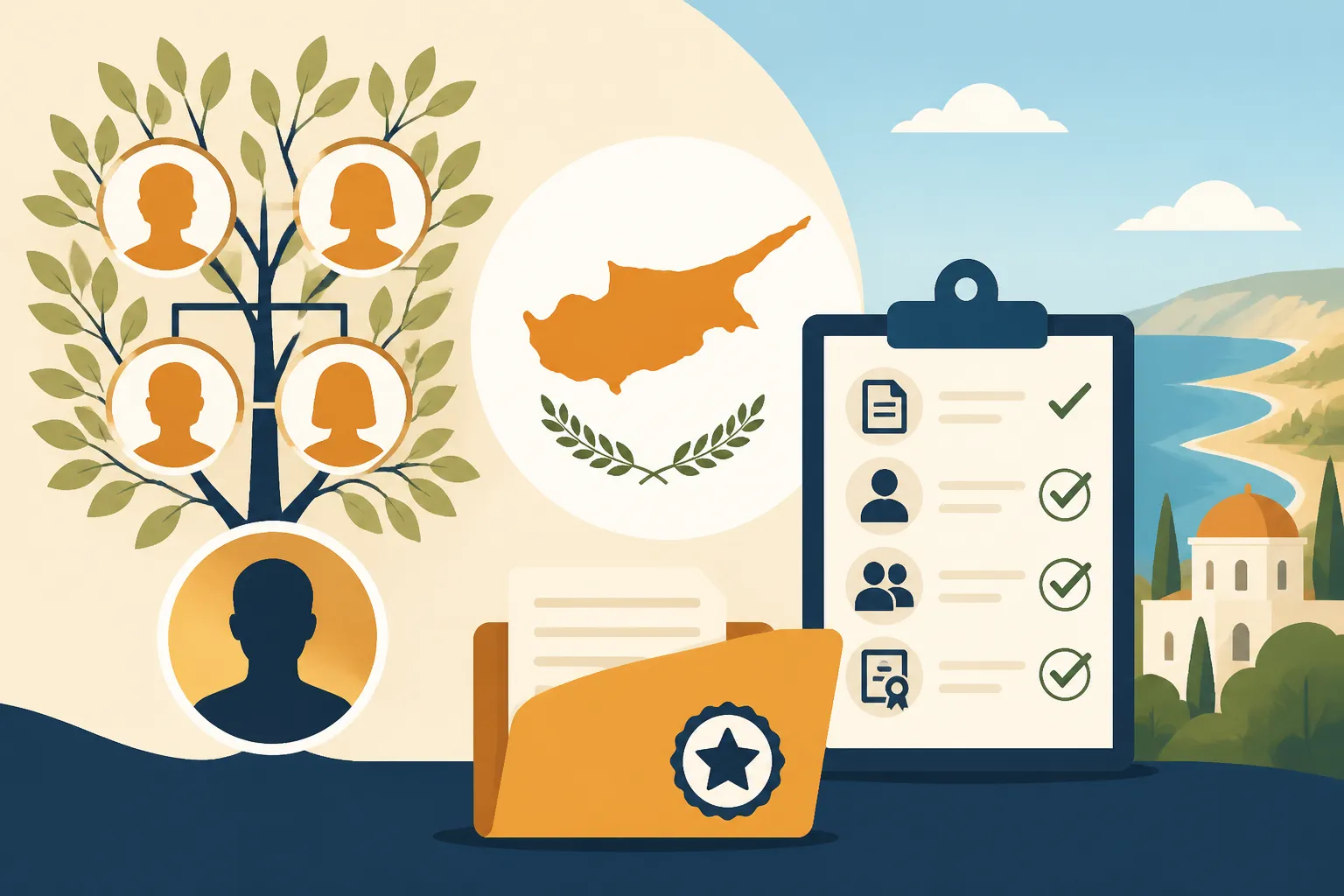
The list of documents required can feel daunting, but each one serves to establish a clear and unbroken chain of descent to your Cypriot ancestor. You'll need to demonstrate not just your relationship, but also the Cypriot citizenship of your parent or grandparent. Here's a general breakdown of what you'll typically need, always ensuring you provide original documents or certified true copies:
- Your Birth Certificate: This is fundamental, proving your birth date and parents' names. If you were born outside Cyprus, this document will need to be officially translated into Greek or English and potentially apostilled or legalised, depending on your country of birth.
- Your Parents' Marriage Certificate (if applicable): If your parents were married, this links them legally. Again, translation and legalisation might be necessary.
- Your Parents' Birth Certificates: To establish their parentage. This is especially crucial for the Cypriot parent.
- Your Cypriot Parent's Proof of Cypriot Citizenship: This is the cornerstone. It could be their Cypriot birth certificate (issued by the Republic of Cyprus or pre-1960 by the British colonial administration), a Cypriot identity card, a Cypriot passport, or a certificate of registration of citizen. For older claims, it might involve proving their or their parents' registration as a "British Subject connected with Cyprus" before 1960.
- Your Grandparents' Marriage and Birth Certificates: If your claim is through a grandparent, you'll need to establish the lineage through your parent to your grandparent.
- Passport Copies: Valid passports for yourself and your parents, if they are still alive.
- Criminal Record Certificate: From your country of residence, usually required for applicants over a certain age (e.g., 18).
- Proof of Address: Recent utility bills or bank statements.
- Passport-Sized Photographs: Usually two, conforming to specific biometric standards.
Remember, the Civil Registry and Migration Department in Cyprus can be very strict about the quality and completeness of documents. A missing stamp, an uncertified copy, or an un-apostilled document can lead to significant delays or even rejection. Take your time, double-check everything, and if in doubt, always seek clarification from the CRMD or a legal professional. This is where companies like Sirelo, though focused on moving, can illustrate the kind of detailed planning needed for international processes. Just as you'd meticulously plan a move, you must meticulously plan your document gathering.
Navigating the Application Forms and Submissions
The main application form for citizenship by descent is usually Form M71 (for adults of Cypriot origin) or Form M72 (for minors of Cypriot origin). These forms are available on the Civil Registry and Migration Department website or at Cypriot diplomatic missions abroad. While they might seem straightforward, it's vital to fill them out accurately and completely. Any discrepancies with your supporting documents could raise red flags.
When submitting your application:
- In Cyprus: You can submit your application directly to the Civil Registry and Migration Department in Nicosia. It's often advisable to book an appointment to avoid long queues, though sometimes walk-ins are processed. Be prepared for a potentially lengthy wait, as the CRMD deals with a high volume of applications.
- From Abroad: You can submit your application to the nearest Cypriot Embassy or Consulate. They will then forward it to the CRMD in Cyprus for processing. This route often adds to the overall processing time due to international mail and internal administrative transfers.
Once submitted, you'll typically receive a receipt confirming your application. This receipt is important for future inquiries. The application fee will also need to be paid at the time of submission. While the fees are generally modest, they are non-refundable, regardless of the outcome. Many expats residing on the island find that dealing with any government department, including the CRMD, requires a resilient attitude and a deep well of patience, as processes can feel slow and opaque at times. You can gain insights into the broader immigration process through articles like The Complete Visa and Immigration Guide for Relocating to Cyprus (2027).
What to Expect After Submission
After you've finally submitted your painstakingly prepared application, the waiting game begins. This can be the most trying part for many applicants. The processing times for citizenship by descent applications can vary significantly, ranging from several months to a few years, depending on the complexity of your case, the volume of applications, and the efficiency of the department at the time.
During this period:
- Communication is often minimal: Don't expect regular updates. You might only hear back if there's a problem with your application or if they require additional documents. This lack of communication can be incredibly frustrating, leaving applicants feeling in limbo.
- Additional Information Requests: It's not uncommon for the CRMD to request further documents or clarifications. This is particularly true for older cases or those with complex lineage. Respond promptly and comprehensively to avoid further delays.
- Interview (Rare but Possible): In some complex cases, an interview might be requested to clarify details of your application or lineage. This is more common in situations where the documentation is sparse or conflicting.
Once a decision is made, you will be notified. If your application is approved, you will be invited to take an oath of allegiance to the Republic of Cyprus (if you are an adult) and receive your Certificate of Citizenship. This certificate is your official proof of Cypriot nationality. Only then can you proceed to apply for a Cypriot identity card and passport. This final step is often met with immense relief and pride, marking the culmination of a long and often challenging administrative journey.
Specific Scenarios and Common Hurdles
While the general guidelines cover most applicants, the reality of family histories means there are often nuances and specific situations that can complicate the application process. Understanding these common hurdles beforehand can help you prepare for potential challenges and gather the right supporting evidence. Cyprus's unique legal history, particularly relating to gender and the period of British rule, means that some cases are far more complex than others.
Special Cases: Illegitimate Births and Adoptions
Family structures aren't always straightforward, and Cypriot law has evolved to address various scenarios:
- Children Born Out of Wedlock:
- If born before June 11, 1999: If your mother was a Cypriot citizen and your father was not, you could claim citizenship through your mother. If your father was the Cypriot citizen, he would typically need to formally acknowledge paternity for you to claim citizenship through him. This was a complex area, often requiring court orders for proof of paternity.
- If born on or after June 11, 1999: The law is now equal. You can claim citizenship through either your Cypriot mother or your Cypriot father, irrespective of their marital status. Paternity might still need to be legally established if it's not clear on your birth certificate, but the route is generally more accessible.
- Adopted Children: This is a much more complex area. Generally, an adopted child can acquire Cypriot citizenship if:
- They were adopted by a Cypriot citizen through a court order.
- The adoption was registered in Cyprus.
- The child was a minor at the time of adoption.
Laws regarding adoption and citizenship are highly specific and often require legal advice to navigate successfully, as the purpose of the adoption and the child's circumstances are heavily scrutinised.
These scenarios often necessitate additional legal documentation, such as court judgments or DNA evidence, which can significantly add to the complexity and duration of the application. It's an area where patience and professional guidance are particularly invaluable.
The Impact of British Colonial Rule on Citizenship Claims
For those whose Cypriot ancestors lived before 1960, the period of British colonial administration introduces a layer of historical complexity. Before the establishment of the Republic of Cyprus, there was no independent Cypriot citizenship in the modern sense; individuals were generally "British Subjects" with connections to Cyprus.
- Proving "Cypriot Citizen" status before 1960: If your ancestor was born in Cyprus before August 16, 1960, they would have been considered a British Subject connected with Cyprus. For you to claim citizenship by descent through them, you generally need to prove that they became a citizen of the Republic of Cyprus on its establishment (i.e., they were residing there at the time or otherwise qualified).
- The "Cypriot Citizen" of the British Empire: Some older documents might refer to individuals as "Cypriot citizens" in a broader sense, distinguishing them from those born elsewhere in the British Empire. However, for the purpose of the modern Republic of Cyprus, it's about connecting your ancestor to the independent Republic. This can involve locating old birth registries from the British colonial administration, which are often held in the archives in Nicosia.
Navigating these historical nuances can be challenging. It's not uncommon to find inconsistencies in old records or a lack of clear documentation. This period is a prime example of where many applicants hit a wall of frustration, feeling like their heritage is being questioned by paperwork that simply didn't exist in the same way generations ago.
Challenges with Historical Records and Documentation
Even with a clear understanding of the legal requirements, the practicalities of gathering historical documents can be a major headache. Records may be:
- Lost or Damaged: Especially for older generations, civil registries might have been incomplete, or records could have been lost due to conflict or natural disaster.
- Inaccurate or Inconsistent: Names might be spelled differently across various documents (e.g., Anglified versions vs. Greek spellings), birth dates might vary slightly, or locations might be vaguely described. These inconsistencies can cause delays, as the CRMD will require clarification.
- Difficult to Access: If your ancestors lived in remote villages, or if records are held in archives that require specific permissions or in-person visits, obtaining them can be a logistical nightmare, especially if you live abroad.
- Language Barriers: Older documents might be in Ottoman Turkish, archaic Greek, or even colonial English with unfamiliar terminology, requiring expert translation and interpretation.
When faced with missing or problematic documents, you might need to provide supplementary evidence, such as old church records, family bible entries, school records, military service records, or even sworn affidavits from elderly relatives. This often involves becoming a family genealogist overnight, tracing every available thread. This struggle to prove what you know in your heart to be true, simply because the paperwork isn't perfect, is a common and deeply felt frustration for many applicants.
Beyond the Application: Life as a Cypriot Citizen
Congratulations, you've received your Cypriot citizenship! This is a moment of immense pride and achievement, but it also brings with it new rights, responsibilities, and practical considerations. Becoming a citizen of Cyprus means more than just a passport; it means becoming part of a nation, with all the benefits and duties that entails.
Rights and Responsibilities of Cypriot Citizenship
With your new Cypriot passport, a world of opportunities opens up. As a Cypriot citizen, you are also an EU citizen, which grants you:
- Freedom of Movement: You can live, work, and study freely in any of the 27 EU member states, as well as in Iceland, Liechtenstein, Norway, and Switzerland. This is a significant benefit, especially for those who might previously have faced visa restrictions. You can also travel to many countries visa-free that a non-EU passport might not allow.
- Political Rights: You gain the right to vote and stand for election in Cyprus, as well as in European Parliament and local municipal elections in your country of residence within the EU.
- Access to Public Services: You have access to Cyprus's healthcare system (GeSY) once you become a resident and start contributing to social insurance, just like any other Cypriot. Similarly, you can access education and other public services. For a deeper dive into the healthcare system, check out How Cyprus's Health System Works: GeSY vs Private Explained (2027).
- Consular Protection: You are entitled to consular protection from any EU country's embassy or consulate in a third country where your home country (Cyprus) does not have diplomatic representation.
However, citizenship also comes with responsibilities:
- Adherence to Cypriot Law: You must abide by the laws of the Republic of Cyprus, whether residing on the island or abroad.
- Military Service (for males): Cypriot male citizens are generally liable for military service upon reaching a certain age. However, there are provisions and exemptions for those residing permanently abroad or for specific dual nationality cases. It's crucial to understand these obligations and potential exemptions well in advance.
- Taxes: If you become a tax resident of Cyprus, you will be subject to the Cypriot tax system. Understanding these obligations is key, and you can learn more in The Complete Guide to Taxes in Cyprus for Expats (2027).
It's a huge step, and the practical implications, from voting to potential military service, should be fully understood. For those who finally make the move to the island, practicalities like The Expat Guide to Setting Up Utilities (Electricity, Water, Internet) in Cyprus become immediate concerns.
Dual Nationality and Its Implications
Cyprus generally permits dual nationality, meaning you do not usually have to renounce your original citizenship when you become a Cypriot citizen. This is a significant advantage for many applicants, allowing them to maintain strong ties to both their heritage and their country of birth or long-term residence.
However, while Cyprus allows it, your other country of citizenship might not. It is absolutely crucial to check the laws of your existing citizenship. Some countries have strict rules against dual nationality, and acquiring Cypriot citizenship might automatically lead to the loss of your original citizenship. This is not something the Cypriot authorities will check for you; it's entirely your responsibility.
The implications of dual nationality can include:
- Passport Usage: You'll have two passports, and it's generally recommended to enter and exit Cyprus using your Cypriot passport and use your other passport for travel to your other country of citizenship, or countries where it offers visa-free access not available to Cypriots.
- Legal Status: You will be recognised as a citizen by both countries, with associated rights and obligations.
- Military Service (again): As mentioned, this is a key consideration for male dual nationals. Exemptions or deferments are often available for those permanently residing abroad, but understanding the process to secure them is vital.
- Taxation: Dual nationality does not automatically make you a tax resident of Cyprus. Tax residency is determined by factors like the 183-day rule or the 60-day rule for non-domiciled individuals. However, holding multiple citizenships can sometimes complicate tax affairs, especially if you have assets or income streams in multiple jurisdictions.
The benefits of dual nationality are clear – enhanced travel freedom, greater connection to two nations, and often more flexibility in terms of where you can live and work. However, always verify the rules with the relevant authorities of your other nationality to avoid any unintended consequences. The peace of mind that comes from being fully informed is priceless.
Navigating the Bureaucracy and Seeking Assistance
Let's be frank: navigating the Cypriot bureaucracy, especially for something as significant as citizenship, can test the patience of a saint. It's a journey that often requires persistence, meticulous organisation, and a thick skin. Many expats find that understanding how the system works (or sometimes, doesn't work) is half the battle.
Dealing with Cypriot Authorities: Patience is Key
The Civil Registry and Migration Department (CRMD) and Cypriot embassies or consulates abroad are the primary points of contact for your application. Here are some seasoned expat tips for managing your interactions:
- Be Prepared for Delays: I cannot stress this enough. "Cyprus time" is a real phenomenon, and government processes often move at their own pace. Do not set firm expectations for deadlines. If they say 6 months, mentally prepare for 12, just in case. This mindset will save you a lot of stress.
- Organisation is Your Best Friend: Bring all your documents, originals and copies, neatly organised. Make a checklist and tick things off. A well-presented application can sometimes help smooth the process.
- Politeness Goes a Long Way: While frustration is understandable, always remain polite and respectful. The civil servants are people too, and a calm, courteous approach is far more likely to get you positive attention than an aggressive one.
- Ask for Written Confirmation: If you receive important information or instructions, try to get them in writing (e.g., via email or a stamped note). This provides a paper trail if issues arise later.
- Follow Up, but Don't Harass: It's acceptable to follow up on your application after a reasonable period (e.g., after the initial estimated processing time has passed). However, constantly calling or visiting without a genuine update can be counterproductive. Keep a record of your follow-up attempts.
- Understand Language Barriers: While many officials speak English, particularly in larger cities and at the CRMD, some older or rural offices might have less English-speaking staff. Have key phrases in Greek ready, or consider bringing a Greek-speaking friend if you're dealing with a local office.
The bureaucratic journey might feel like a series of small battles, but with the right approach, you can navigate it effectively. It's often through such challenges that you truly begin to feel like you're earning your place, understanding the very fabric of the island you wish to call home or connect to. When thinking about the wider practicalities of moving, keep in mind resources like The Complete Guide to Cost of Living in Cyprus for Expats (2026), as financial planning is another area where thoroughness really pays off.
Professional Help: Lawyers and Genealogy Experts
While it's entirely possible to apply for citizenship by descent independently, especially for straightforward cases, many applicants choose to engage professional help. This is particularly true if:
- Your case is complex: This includes illegitimate births, adoptions, missing historical documents, or claims through very distant ancestors.
- You live abroad: A lawyer in Cyprus can act on your behalf, navigating the local CRMD and ensuring documents are submitted correctly, saving you multiple trips to the island.
- You lack Greek language skills: A professional can handle all communication with the authorities.
- You're unsure about specific legal interpretations: Laws, especially historical ones, can be nuanced. A lawyer specialising in immigration and citizenship law can provide invaluable advice.
Who can help?
- Immigration Lawyers in Cyprus: They specialise in Cypriot citizenship law, understand the intricacies of the CRMD, and can help you prepare and submit your application, represent you, and advise on complex legal issues.
- Genealogy Experts: For very old claims or missing records, a professional genealogist who specialises in Cypriot records might be able to help you trace your lineage and unearth crucial documents.
- Notary Publics/Certifying Officers: You'll need their services to certify copies of your documents as true copies of the originals, and possibly for sworn affidavits.
- Sworn Translators: Official translations of documents not in Greek or English will be required. Ensure they are certified translators recognised in Cyprus or by Cypriot diplomatic missions.
While engaging professionals incurs costs, for many, the peace of mind, time saved, and increased likelihood of a successful application are well worth the investment. Just as you might consider private health insurance from providers like Cigna Global for comprehensive medical coverage, investing in professional legal advice can be a vital safeguard when dealing with complex administrative processes. Ultimately, the decision to seek professional help depends on your comfort level with bureaucracy, the complexity of your family history, and your financial situation. What matters most is approaching the process with as much information and support as you need to succeed.
Disclaimer
The information provided in this guide is for general informational purposes only and does not constitute legal, financial, or immigration advice. While we strive to keep the information up-to-date and accurate, laws and procedures can change rapidly. It is essential to consult with qualified legal professionals, immigration consultants, or the relevant Cypriot authorities (such as the Civil Registry and Migration Department or a Cypriot Embassy/Consulate) for advice tailored to your specific situation. Reliance on any information in this guide is solely at your own risk.