How Do I Apply for an International School Place in Cyprus?
Moving your family to Cyprus is an exhilarating adventure, but let's be honest, the thought of navigating a whole new education system, especially when you're aiming for that perfect international school place, can feel like trying to solve a Rubik's Cube blindfolded. Many expat parents arrive with visions of seamless transitions, only to discover that securing a spot in a top international school here takes forethought, patience, and a good understanding of the local landscape. This guide is designed to cut through the confusion, offering you a clear, empathetic roadmap to finding and applying for an international school place in Cyprus, ensuring your children can hit the ground running.
Understanding the International School Landscape in Cyprus
When you land in Cyprus, one of the first things you'll likely notice is the abundance of international schools, particularly in the major cities. It’s a testament to the island's growing expat community and the demand for a specific style of education. But it's not just about a name; these schools offer a distinct approach that often resonates deeply with expat families.
Why International Schools are Popular with Expats
For many of us who've moved countries, the stability of an international school curriculum and its familiar teaching methods is a huge draw. Our children might have been in a British curriculum school in Dubai, an American school in Singapore, or an IB school in Geneva. The beauty of international schools in Cyprus is that they often follow these globally recognised curricula, providing a sense of continuity for kids who've already experienced several educational systems. This makes transitions smoother, both academically and emotionally.
Beyond the curriculum, the language of instruction—predominantly English—is a major comfort. While learning Greek is a fantastic goal for integration, having their core subjects taught in English removes a significant barrier for children new to the island. Furthermore, these schools boast incredibly diverse student bodies. Your child will be in classrooms with peers from all corners of the globe, fostering a multicultural environment that enriches their perspective and builds their adaptability. It's not just about academics; it's about growing up in a microcosm of the global community, where understanding different cultures is part of daily life. This can be a huge relief for parents who worry about their children finding their footing in a new country.
Key International Schools Across the Island
Cyprus might be a small island, but it punches above its weight when it comes to international educational choices. Each city has its own set of reputable institutions, and understanding their unique offerings is key to finding the right fit for your family.
In Nicosia, as the capital, you'll find some of the most established and prestigious options. The American Academy Nicosia, for instance, offers a blend of American and Cypriot educational approaches, while the English School Nicosia is a highly regarded institution following a British curriculum. The Falcon School is another well-known name, catering to a broad age range. These schools often have long histories and strong alumni networks, but also equally long waiting lists!
Limassol, being a vibrant business hub with a large expat population, also has excellent choices. The American Academy Limassol is a popular pick, mirroring its Nicosia counterpart. Foley's School is renowned for its academic rigor and British curriculum, while The Heritage Private School offers a comprehensive education from pre-reception through to A-Levels, boasting extensive facilities outside the city centre. When considering options in Limassol, it's always a good idea to research How Do I Find Family-Friendly Areas in Limassol? to get a sense of proximity and community.
Down in Paphos, known for its more relaxed pace and British expat community, the International School of Paphos (ISP) is the predominant choice, offering the British curriculum and IB Diploma. TLC Private School is another option, providing a nurturing environment. These schools serve families looking for quality education in a slightly quieter setting.
And for those settling in Larnaca, the American Academy Larnaca is a leading institution, while Med High School offers a British-style education. Each of these schools has its own ethos, academic strengths, and extracurricular programs, so deep diving into their specific offerings is crucial. Remember that the "best" school is always the one that best fits your child's personality and your family's educational philosophy. Knowing about The Best Places to Live in Cyprus for Expats: A Complete Guide can also help inform your school search by linking it to your desired lifestyle.
The Step-by-Step Application Process
So, you've decided on an international school, or perhaps a shortlist of them. Now comes the real work: navigating the application process. This isn't just about filling out a form; it's a strategic dance that requires attention to detail and, often, a good dose of persistence.
Initial Research and Shortlisting
Before you even think about forms, the most critical step is thorough research and creating a shortlist. Timing is absolutely crucial here. Unlike some countries where school places are readily available, international schools in Cyprus, especially the most popular ones, operate with strict enrollment periods and often have waiting lists that can stretch for months, or even years, particularly for specific year groups. Start your research as early as humanly possible – ideally, 6 to 12 months before you plan for your child to start.
Consider the curriculum carefully. Does your child thrive in a British system with IGCSEs and A-Levels, or is the more holistic, inquiry-based approach of the International Baccalaureate (IB) program a better fit? Perhaps you're looking for a US Diploma pathway. Matching the curriculum to your child's learning style and your long-term academic goals is paramount.
Think about logistics. Cyprus is relatively small, but commute times can add up. If you don't plan on driving, understanding How Do I Get Around Cyprus Without a Car? is essential, as public transport links to some school locations might be less convenient. School bus services are usually available, but they cover specific routes and can be an additional cost.
And, of course, the financial aspect cannot be overstated. International school fees in Cyprus vary significantly. Get a clear understanding of tuition fees, registration fees, and any other charges upfront. You'll find a detailed breakdown in our guide on How Much Are International School Fees in Cyprus? – it's a must-read for budgeting. Many schools offer virtual open days or tours, which are incredibly helpful if you're still abroad. If you're on the island, an in-person visit is invaluable to soak in the atmosphere and meet staff. As you're doing your initial scouting, remember to keep your phone charged and data plan topped up – an eSIM from a provider like Airalo can be really handy for staying connected and doing quick research on the go without worrying about roaming charges.
Required Documents and Entrance Procedures
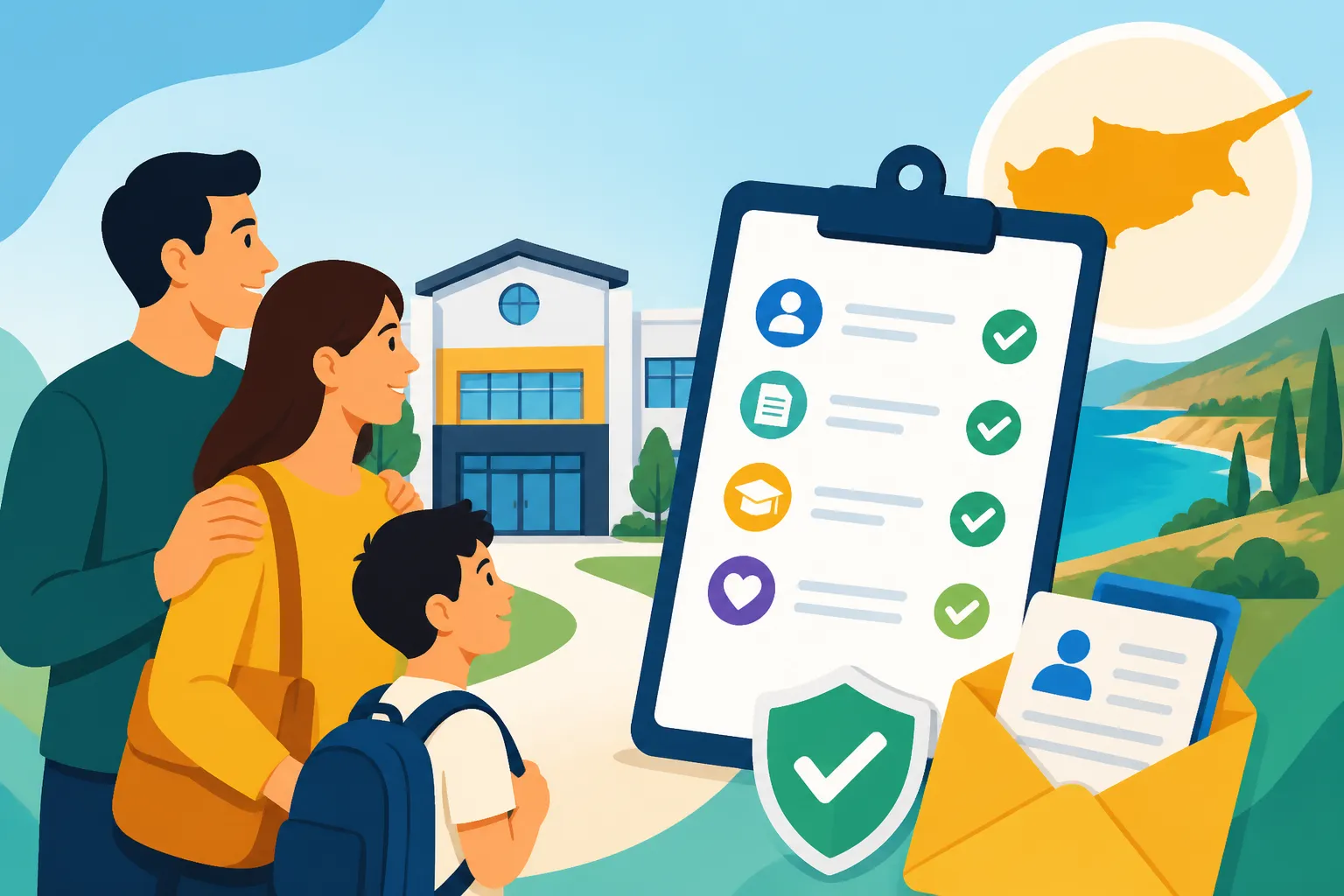
Once your shortlist is ready, it's time to gather the necessary paperwork, and trust me, there's usually a fair bit of it. Most schools will have an online application portal where you can submit everything.
Typical documents include:
- Completed Application Forms: These are usually detailed and require information about your child's academic history, interests, and any special educational needs.
- Child's Academic Records: Expect to provide copies of your child's school reports or transcripts for the last two to three academic years. These give the admissions team a clear picture of their performance and progress.
- Identity Documents: Copies of your child's birth certificate and passport, as well as copies of both parents' passports, are standard. If you have Cypriot residency documents (like a Yellow Slip or Pink Slip), have those ready too.
- Recommendation Letters: Some schools, particularly for older students, might request letters of recommendation from previous teachers or school principals.
- Medical Records: A copy of your child's vaccination record and any relevant medical information (allergies, ongoing conditions) will be needed.
Beyond the paperwork, most international schools have some form of entrance procedure. For younger children, this might be a simple assessment or an observation session in a play-based setting. For primary and secondary students, entrance exams are common. These typically cover English comprehension and writing, and mathematics. Some schools might also include a non-verbal reasoning test. Don't underestimate these – they are designed to gauge your child's academic readiness for the specific curriculum.
Interviews are also a frequent part of the process. Your child might have an interview with a head of department or even the principal, especially for secondary school admissions. Parents often have an interview too, which is an opportunity for the school to understand your family's expectations and for you to ask any lingering questions. If English isn't your child's first language, some schools may require specific language proficiency tests to ensure they can fully access the curriculum. It’s a lot to keep track of, but staying organised will save you headaches in the long run.
Navigating Waiting Lists and Admissions Offers
This is where the patience comes in, and for many expat families, it can be the most stressful part. It's a harsh reality that the most sought-after international schools in Cyprus often have waiting lists. You might do everything right, submit all your documents, and your child might ace their entrance exams, only to be told there isn't an immediate space available. This is particularly common for specific year groups where student turnover is lower or demand is exceptionally high.
Don't despair! Here are a few tips for managing waiting lists:
- Apply to multiple schools: This increases your chances of securing a place. Even if you have a top choice, having a backup (or two!) can significantly reduce stress.
- Maintain communication: Politely follow up with the admissions office every few weeks or months. Express your continued interest and ask about your child's position on the waiting list. Be present without being pushy.
- Be flexible: If your preferred year group is full, ask about other possibilities, such as starting in a different term if that's an option.
When an admissions offer finally arrives, it's a moment of relief and excitement! However, read the offer letter meticulously. It will outline:
- Acceptance Deadline: This is usually quite short, sometimes only a week or two, so be prepared to make a quick decision.
- Deposit Requirement: You'll almost certainly need to pay a non-refundable deposit to secure the place. This can be a significant sum, often equivalent to a month's tuition or more.
- Tuition Fee Breakdown: A clear schedule of when tuition payments are due (termly, annually, etc.) and what is included/excluded.
- Enrollment Forms: Additional forms for medical details, emergency contacts, and permissions that need to be completed before your child starts.
Once you've made your decision, formally accept the offer by the deadline and pay the required deposit. This step officially secures your child's place. Remember, this is a significant step in your family's relocation journey, and platforms like Sirelo can be incredibly helpful for managing the logistics of moving your entire household, including all those new school supplies, once you've secured your child's educational future.
Practical Considerations and Tips for Expat Parents
Beyond the forms and interviews, moving your child into an international school in a new country involves a whole host of practical considerations that can easily catch you off guard if you're not prepared.
Financial Planning and Hidden Costs
Let's talk money, because international school fees are usually a substantial part of an expat family's budget. Tuition fees are the most obvious cost, and they can range from €5,000 to €15,000+ per year, depending on the school and year group. Most schools offer installment plans (termly or quarterly), but paying annually often comes with a small discount.
However, it’s the "hidden" costs that can truly add up:
- Registration and Admission Fees: Almost all schools charge a non-refundable application fee (usually €50-€200) and a larger, non-refundable admission or enrollment fee (often €500-€1,500) once a place is offered. Don't forget the deposit required to secure the spot, which is separate from these and sometimes partially credited to your first tuition payment.
- Uniforms: Most international schools in Cyprus have mandatory uniforms. Budget a few hundred euros per child for a full set, including sports kits, especially if you need to buy multiple sizes.
- Textbooks and Resources: While some schools include textbooks, others require you to purchase them separately. Digital subscriptions for learning platforms are also increasingly common and can add to the cost.
- Extracurricular Activities (ECAs): Many ECAs (sports clubs, music lessons, drama, coding) come with additional fees. These are a fantastic way for your child to integrate and explore interests, but they're rarely free.
- School Trips: Field trips, excursions, and residential trips, particularly for older students, can be a significant expense.
- Transport: While some schools offer bus services, these are paid additions. If you're driving, factor in petrol costs and potential wear and tear. You can learn more about general expenses in The Complete Guide to Cost of Living in Cyprus for Expats (2026).
- Meals: Many schools have canteens offering paid lunch options. If your child prefers packed lunches, the cost of groceries will be relevant.
It’s truly important to budget for all these elements from the outset. Don't just look at the headline tuition fee; ask for a comprehensive breakdown of all potential costs from the admissions office.
Preparing Your Child for the Transition
Moving to a new country and starting a new school is a monumental change for children, no matter their age. Even if they're excited, underlying anxieties are common.
- Emotional Support: Talk openly with your child about the move and the new school. Acknowledge their feelings, both positive and negative. Reassure them that it's okay to feel nervous or sad about leaving friends behind.
- Language Support: If English isn't your child's first language, or if they're moving from a non-English speaking environment, consider some extra English tutoring before they start. Many schools offer EAL (English as an Additional Language) support, but a head start can boost their confidence.
- Academic Acclimatisation: Briefly discuss the new curriculum (if different) and what to expect. If they're moving from a very different system, it might take a term or two for them to fully adjust to the teaching styles and assessment methods.
- Connect with Others: Try to connect with other expat families who have children at the school through social media groups or school-organised events. This can provide your child with a familiar face before their first day, making the transition much smoother. Sometimes schools will pair new students with a "buddy" for their first few weeks.
Settling In and Leveraging School Resources
Once your child starts, your role as an expat parent shifts from applicant to active community member. Engaging with the school can make a huge difference in your child's (and your own) integration.
- Parent-Teacher Associations (PTA): Get involved! PTAs are fantastic ways to meet other parents, understand school events, and contribute to the school community. For newcomers, it's an invaluable network.
- Counselling and Support Services: Most international schools have a school counsellor or a pastoral care team. If your child is struggling with adjustment, academically or emotionally, don't hesitate to reach out to these resources. They are there to help.
- Communication with Teachers: Maintain open lines of communication with your child's teachers. Attend parent-teacher meetings, respond to emails, and address any concerns early on. Teachers are often the first to notice if a child is having difficulties adjusting.
- Extracurricular Activities: Encourage your child to participate in ECAs. This is one of the quickest ways to make friends, develop new skills, and feel a sense of belonging outside the academic classroom. Whether it's football, robotics, or the school choir, involvement can significantly aid their integration.
Alternatives and Broader Educational Choices
While international schools are a fantastic option for many expat families, they aren't the only pathway. It's important to understand the broader educational landscape in Cyprus, especially if an international school isn't the right fit or financially feasible. If you are exploring all options, it is worth looking at Schools and Education in Cyprus: A Complete Guide for Expat Families for a more comprehensive view.
Public and Private Cypriot Schools
Cyprus has a robust public education system, which is free for all residents, including expats. However, it operates predominantly in Greek. While this is an excellent option for immersion and for families planning a very long-term stay, the language barrier can be a significant challenge for children arriving without prior Greek knowledge, especially in primary and secondary years. Public schools follow the Cypriot national curriculum, which can differ markedly from what your child is used to.
There are also private Cypriot schools. These are fee-paying and generally follow the Cypriot curriculum but may offer some subjects in English or have specific English language support programs. They can sometimes be a middle ground, offering a more local experience than an international school while still having higher standards or specific facilities. Again, the primary language of instruction is usually Greek, but it's worth inquiring about their specific language policies, especially in larger urban centres. For more detail on these, you might find our article How to Enrol Your Child in a Cypriot School to be very useful.
Homeschooling and Online Education
For some expat families, especially those with very specific educational needs, those who travel frequently, or those preferring a highly personalised approach, homeschooling or enrolling in an accredited online education program can be viable alternatives.
Homeschooling in Cyprus is technically permitted, but the legal framework around it isn't as clearly defined or widely supported as in some other countries. If you choose this route, you would need to ensure your child receives an education "equivalent to that provided in public schools," which means careful planning of curriculum and record-keeping. It requires a significant commitment from parents and careful research into local regulations.
Online education, where your child enrolls in a virtual school based in another country (e.g., a British online school or a US virtual academy), is another option. This provides a structured curriculum and certified teachers, with the flexibility of learning from home. This approach can also be great for families who plan to move again soon, ensuring continued curriculum consistency. However, you'd need to ensure reliable internet access, which you can generally find across Cyprus. As you manage your child's online education, having a dependable connection is key, and an eSIM from Airalo can provide an excellent backup or primary data source, ensuring no disruption to virtual classes or learning resources.
Comparing International Schools in Cyprus
To give you a clearer picture, here's a brief comparison of some prominent international schools across the island. Please note that fees are approximate annual ranges and can change, so always check the latest figures directly with the schools.
| School Name | City | Curriculum | Age Range | Est. Annual Tuition Range (2026) | Key Features |
|---|---|---|---|---|---|
| The English School Nicosia | Nicosia | British (IGCSE, A-Level) | 11-18 years | €8,000 – €10,000 | Highly selective, strong academic reputation, rich history, diverse extracurriculars. |
| American Academy Nicosia | Nicosia | American/Cypriot | 5-18 years | €6,500 – €8,500 | Focus on holistic development, established institution, wide range of subjects, strong community feel. |
| Foley's School | Limassol | British (IGCSE, A-Level) | 3-18 years | €7,000 – €9,500 | Strong academic focus, excellent university placements, diverse student body, emphasis on traditional values. |
| The Heritage Private School | Limassol | British (IGCSE, A-Level) | 2-18 years | €6,000 – €9,000 | Large campus with extensive facilities (sports, arts), comprehensive education from early years, located just outside city center. |
| International School of Paphos (ISP) | Paphos | British (IGCSE, A-Level), IB Diploma | 2-18 years | €5,500 – €8,000 | Only school in Paphos offering IB Diploma, strong local and international reputation, good facilities, focus on individual student growth. |
| American Academy Larnaca | Larnaca | American/Cypriot | 5-18 years | €6,000 – €8,000 | Established bilingual education, emphasis on character development and academic excellence, strong parent involvement. |
Note: This table provides general information. Specific programs, individual year group fees, and application requirements should always be confirmed directly with each school.
Choosing the right international school for your child in Cyprus is one of the most significant decisions you'll make as an expat parent. It requires diligent research, careful planning, and a good dose of patience. By understanding the landscape, navigating the application process strategically, and preparing for the practicalities, you can ensure a smooth transition and a fulfilling educational experience for your children in their new island home.
Disclaimer
The information provided in this guide is intended for general informational purposes only and does not constitute professional advice. While we strive to ensure accuracy, school policies, fees, and immigration regulations in Cyprus can change frequently. Readers are strongly advised to verify all details with the respective educational institutions and relevant Cypriot authorities or seek independent professional advice before making any decisions. We are not liable for any inaccuracies or omissions.