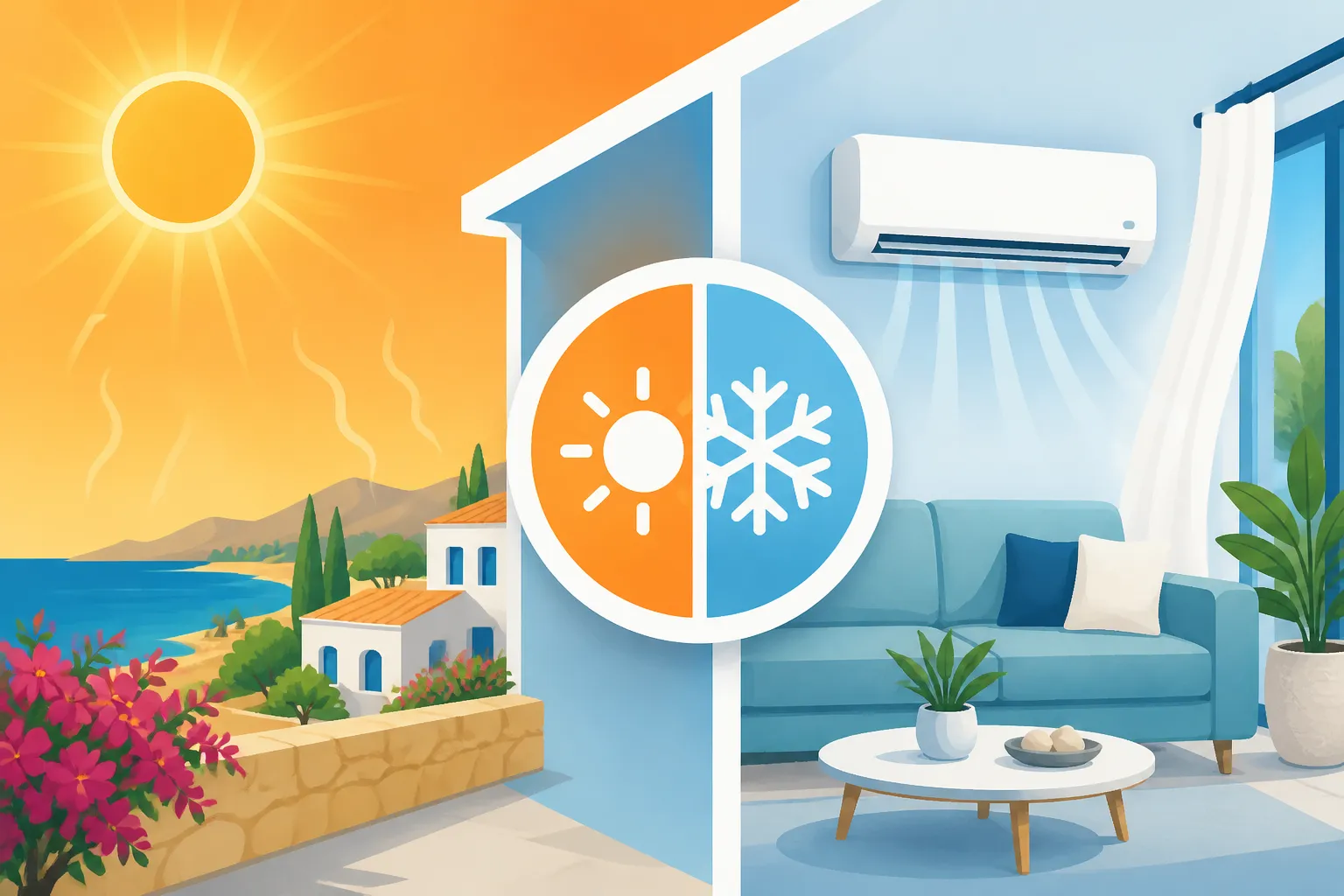
How Do I Keep My Home Cool in the Cyprus Summer?
Ah, the Cyprus summer. It's a rite of passage for every expat, isn't it? You arrive, usually in spring or autumn when the weather is glorious, and think, "This is paradise!" Then July and August hit, and suddenly your charming, sun-drenched apartment feels less like a Mediterranean dream and more like a pizza oven. The struggle to keep your home cool without your electricity bill skyrocketing into the stratosphere is real, and it's a frustration shared by almost everyone who has chosen this beautiful island as their home. This guide is going to walk you through every trick in the book, from clever passive strategies to making the most of your AC, ensuring your Cypriot home remains a sanctuary, not a sauna.
Understanding the Cyprus Heat and Your Home's Architecture
Before we dive into solutions, let's talk a bit about why it gets so hot and why our homes sometimes feel like they're conspiring against us. Cyprus summers are long, dry, and intensely sunny, with temperatures frequently hitting the high 30s (Celsius) and often soaring into the low 40s. The sun beats down with relentless intensity, and unlike some climates, there's often very little breeze to offer natural relief.
The Thermal Challenge of Cypriot Buildings
Many traditional Cypriot homes, especially older ones, were built with thick stone walls designed to keep cool. They might have smaller windows, strategically placed for cross-ventilation, and often benefit from being built into hillsides or having courtyards. Modern construction, however, often prioritizes aesthetics and light, sometimes at the expense of thermal efficiency. You'll find many apartments and houses built with concrete and light plaster, which, while quick to construct, can absorb and radiate heat throughout the day and well into the night. Large, single-glazed windows, common in older modern builds, become heat magnets, letting solar gain pour in.
You might have noticed that your building warms up throughout the day and then releases that heat slowly, meaning evenings can often feel hotter indoors than outdoors, even after the sun has set. This is a common phenomenon and the reason why many locals embrace the siesta tradition and adjust their schedules to avoid the midday sun. Understanding this passive heat absorption is the first step to combating it.
Your Home's Orientation and Sunlight Exposure
The direction your home faces plays a monumental role in how hot it gets. A south-facing apartment will bake under the sun for most of the day, particularly during those peak hours. West-facing windows catch the brutal afternoon sun, often making late afternoons unbearable. East-facing rooms get the morning sun, which can be pleasant in winter but quickly warms up your home in summer, while north-facing rooms generally receive the least direct sunlight, making them the coolest.
If you're still in the process of looking for a place, whether you're navigating How Do I Choose Between an Apartment and a House in Cyprus? or simply searching for a rental, keep sun exposure in mind. Even a small balcony or patio that faces direct south or west can quickly superheat your entire living space if not properly shaded. When you're viewing properties, try to visit them during the hottest part of the day to get a realistic sense of the internal temperature, especially if you're looking at How Do I Find an Apartment to Rent in Nicosia?, where the concrete jungle can intensify the heat.
Passive Cooling Strategies: Preparing Your Home for Battle
Before you even think about flipping on the air conditioning, there's a whole arsenal of passive strategies you can employ. These methods focus on preventing heat from entering your home in the first place and enhancing natural airflow, which can significantly reduce your reliance on energy-intensive cooling.
Mastering Your Windows and Doors
This is arguably the most crucial, yet often overlooked, strategy. The rule of thumb for Cypriot summers is simple: keep windows and doors closed during the day and open them at night.
- Daytime Seal: As soon as the sun starts to warm things up in the morning, usually by 8 or 9 AM, close all your windows and doors. Crucially, close your shutters, blinds, or thick curtains. This creates a barrier against the sun's rays and the hot air outside. If you have double glazing, you're already at an advantage, but even single glazing benefits immensely from being covered. Think of it like keeping a cooler box closed – you want to trap the cool air inside and keep the warm air out. This is especially important for those large, often unshaded windows that are common in modern builds.
- Nighttime Ventilation: Once the sun has set and the outside temperature has dropped (usually after 8-9 PM, sometimes later), open up your windows and doors to create a cross-breeze. This allows any cooler evening air to flow through your home, flushing out the heat that has accumulated in the walls and furniture throughout the day. If you have security concerns, consider installing mesh screens on windows and doors so you can keep them open safely. This nightly purge of hot air is vital for resetting your home's temperature for the next day. Sometimes, even just opening two windows on opposite sides of the house for an hour or two can make a remarkable difference.
Effective Shading Solutions
External shading is far more effective than internal shading because it stops the sun's heat before it even reaches your windowpane.
- External Shutters or Blinds: Many Cypriot homes come equipped with external shutters (often metal or plastic slatted ones). These are gold! Keep them fully closed during the day, especially on south and west-facing windows. They create an air gap that acts as insulation and physically blocks the sun.
- Awnings and Canopies: If you have a balcony or patio that gets direct sun, installing an awning can make a huge difference, not just for that outdoor space but for the adjacent indoor rooms as well. They provide shade to the exterior wall and window, preventing heat from radiating inwards. Consider the fabric type – light colours reflect more heat.
- Tinted or Reflective Window Films: For windows where external shading isn't possible (e.g., in a high-rise apartment), consider applying reflective or tinted window films. These can block a significant percentage of solar heat gain while still allowing light in. Just be sure to check with your landlord if you're renting, as this might be considered a modification.
- Planting: While not an immediate solution, if you have a garden or large planters, strategically placed trees or climbing vines can provide natural shade over time. Deciduous trees are perfect – they provide shade in summer and let the sun through in winter.
Optimizing Your Interior with Colour and Materials
Believe it or not, your interior decor choices can impact how hot your home feels.
- Light Colours: Use light colours for walls, ceilings, and even large furniture pieces. Light colours reflect heat and light, making rooms feel airier and cooler. Dark colours absorb heat, making a space feel warmer and more enclosed.
- Breathable Fabrics: Opt for natural, breathable fabrics like cotton or linen for bedding, curtains, and upholstery. They feel cooler to the touch and don't trap heat as much as synthetic materials. Heavy, dark curtains might block light, but if they're dark and unlined, they can absorb heat and radiate it into the room. Lighter, thermal-lined curtains are a better choice. When you're thinking about How Much Does It Cost to Furnish an Apartment in Cyprus?, prioritize these materials.
- Minimize Heat-Generating Appliances: Think about appliances that generate heat. Ovens, stovetops, dishwashers, and even older refrigerators can emit a surprising amount of heat. Try to use these during the cooler parts of the day (early morning or late evening) or run your dishwasher when you're not at home.
Active Cooling Solutions: When Passive Isn't Enough
Let's be realistic: passive strategies are excellent, but sometimes, the Cyprus heat demands more. This is where active cooling comes into play, primarily air conditioning and fans.
Air Conditioning: Your Best Friend (When Used Wisely)
Air conditioning units are ubiquitous in Cyprus, and for good reason. They are the most effective way to drop the temperature indoors. However, running them carelessly can lead to astronomical electricity bills. Understanding How Much Does Electricity Cost per Month in Cyprus? is crucial for managing this.
- Optimal Temperature Setting: Don't blast your AC to arctic temperatures. The ideal comfort zone for most people is between 24-26°C (75-79°F). Every degree lower significantly increases energy consumption. A difference of 5-7°C between indoor and outdoor temperatures is usually enough to feel comfortable without overworking the unit.
- Targeted Cooling: Do you really need to cool every room in the house? Focus on the rooms you're actively using. Close doors to rooms that don't need cooling to prevent the AC from working harder to cool a larger volume of air.
- Timer Functions: Most modern AC units have timer functions. Use them! Set the AC to turn on an hour before you get home or before you go to bed, and to turn off an hour or two after you've fallen asleep. This allows you to enjoy the cool air when you need it most, without continuous running.
- Regular Maintenance: A dirty filter or an unserviced unit is an inefficient unit. Dirty filters restrict airflow, making the AC work harder and consume more electricity. Schedule annual maintenance with a technician to clean the coils and check the refrigerant levels. This simple step can prolong the life of your unit and save you money.
- Inverter Technology: If you're buying new units or have the option to upgrade, choose inverter ACs. They adjust their compressor speed to maintain a consistent temperature, which is far more energy-efficient than older, non-inverter models that constantly cycle on and off at full power.
Fans: The Unsung Heroes
While fans don't actually cool the air, they create a wind-chill effect by evaporating sweat from your skin, making you feel cooler. They are significantly cheaper to run than AC and can be used in conjunction with it.
- Ceiling Fans: A ceiling fan in a main living area or bedroom can circulate air effectively, allowing you to often set your AC a degree or two higher or even switch it off for periods. Make sure it's set to rotate counter-clockwise in summer to push air down.
- Standing or Pedestal Fans: These are versatile and can be moved from room to room. Position them strategically to create a breeze across your body or to help circulate air if you have windows open at night.
- The Ice Fan Trick: For a quick, localized cool-down, place a bowl of ice or a frozen water bottle in front of a standing fan. As the ice melts, the fan blows the chilled air into the room. It's not a permanent solution, but it's great for a temporary relief.
Dehumidifiers
Cyprus summers can sometimes feel quite humid, especially along the coast. High humidity makes you feel hotter because your sweat doesn't evaporate as easily. While AC units inherently dehumidify as they cool, a dedicated dehumidifier can be useful in very humid conditions. By reducing the moisture in the air, you'll feel more comfortable even at a slightly higher temperature. This means you might not need to run your AC as intensely.
Here's a quick comparison of active cooling methods:
| Cooling Method | Initial Cost (Approx.) | Running Cost (Approx.) | Effectiveness | Best Use Case | Pros | Cons |
|---|---|---|---|---|---|---|
| Air Conditioning | €300 – €1000+ per unit | High | Very High | Direct cooling, humidity control | Most effective, precise temperature | High electricity cost, maintenance |
| Ceiling Fan | €50 – €200 | Very Low | Moderate | Air circulation, enhances AC effectiveness | Low cost, energy efficient | Doesn't cool air, less effective alone |
| Standing/Box Fan | €20 – €80 | Low | Moderate | Portable, targeted airflow | Low cost, very portable | Doesn't cool air, can be noisy |
| Dehumidifier | €100 – €300 | Medium | Low (direct cooling) | Reduces humidity, enhances comfort at higher temps | Improves comfort in humid conditions | Doesn't cool, moderate running cost |
Costs are approximate and can vary wildly based on brand, features, and installation complexity.
Daily Habits and Lifestyle Adjustments
Beyond the hardware, your daily routine and simple habits can make a significant difference in your home's comfort levels. Living in Cyprus often means adapting to a slightly different pace, especially during the peak summer months.
Cooking and Appliance Use
Remember those heat-generating appliances? Be mindful of how and when you use them.
- Outdoor Cooking: Embrace the BBQ! If you have a balcony, patio, or garden, cooking outdoors keeps the heat out of your kitchen. Cypriots love their barbecues, and this is one very practical reason why.
- Light Meals: Opt for lighter, no-cook or minimal-cook meals. Salads, sandwiches, and fresh fruits are not only refreshing but also reduce the need to turn on the oven or stovetop.
- Laundry: Run your washing machine and tumble dryer (if you use one) during the coolest parts of the day – early morning or late evening. Better yet, hang your clothes to dry outside; the sun will do the job quickly, and it won't add heat to your home.
- Lighting: Switch to LED bulbs. Incandescent and even some halogen bulbs generate a lot of heat. LEDs are far more energy-efficient and produce very little heat.
Hydration and Personal Cooling
Keeping yourself cool is just as important as keeping your home cool.
- Stay Hydrated: Drink plenty of water throughout the day, even if you don't feel thirsty. Dehydration can quickly make you feel overheated.
- Cool Showers: A lukewarm or cool shower before bed can significantly lower your body temperature and help you fall asleep more comfortably.
- Light Clothing: Wear loose-fitting, light-coloured clothing made from natural fibres like cotton. This allows your skin to breathe and sweat to evaporate.
- Cold Compresses: A damp cloth on your pulse points (wrists, neck, temples) can provide quick relief.
- Frozen Treats: Keep plenty of ice cream, frozen fruits, or homemade popsicles on hand for a refreshing cool-down.
Rethinking Your Schedule
The Cypriot lifestyle naturally adapts to the heat. Consider adopting some of these rhythms:
- Embrace the Siesta: If your work schedule allows, a short nap during the hottest part of the day (1 PM to 4 PM) can be incredibly refreshing. Many local businesses close during these hours.
- Early Mornings and Late Evenings: Plan your outdoor activities, errands, or even intense chores for the early morning or after the sun has begun to set. The cooler temperatures are much more conducive to productivity and enjoyment.
- Travel and Escapes: If you're feeling the heat get too much, remember that Cyprus has cooler mountain regions like the Troodos, which offer a refreshing escape, even if just for a day trip. Or, if you're truly desperate for a change of scenery and need to stay connected while planning a trip, remember that an eSIM from providers like Airalo can be a lifesaver for data roaming abroad. For longer-term plans, you might even consider moving some belongings with services like Sirelo to a temporary cooler location during the peak summer months, though for most expats, that's a bit extreme!
Common Expat Misconceptions and Mistakes
As someone who's been here a while, I've seen (and made) my fair share of mistakes when it comes to battling the Cypriot summer heat. Here are a few common pitfalls to avoid:
Leaving Windows Open All Day
This is probably the most common rookie error. You might think, "It's hot, so I'll open the windows to let the breeze in!" But in Cyprus, that "breeze" is often just hot air, especially during the middle of the day. All you're doing is inviting the heat straight into your home, nullifying any passive cooling efforts. Remember: windows closed during the day, open at night.
Over-Reliance on Air Conditioning
It's tempting to blast the AC at 18°C and leave it running constantly. But this is not sustainable, either for your wallet or the environment. Not only will your How Much Is the Average Utility Bill for an Apartment in Cyprus? go through the roof, but the sudden shock of going from an arctic indoor temperature to a scorching outdoor one can also be unpleasant and even unhealthy for some. Use AC intelligently, in conjunction with passive strategies. The Expat Guide to Setting Up Utilities Electricity Water Internet in Cyprus can give you a clearer picture of how electricity costs factor into your overall budget.
Not Servicing AC Units
Many expats move into rentals where the AC units might not have been serviced in years. A clogged filter or low refrigerant won't just make your unit less efficient; it can also lead to breakdowns. If you're renting, politely ask your landlord about the last service date. If they're unresponsive, consider paying for a service yourself if it's within your budget, viewing it as an investment in your comfort and potentially lower bills. It's often covered by Understanding Tenant and Landlord Rights in Cyprus for the landlord, but sometimes you need to nudge them.
Ignoring the Roof and Attic
If you live in a top-floor apartment or a house with an attic, a significant amount of heat can radiate downwards from the roof, which bakes in the sun all day. While you might not be able to install new insulation, consider what's up there. Sometimes, simply ensuring attic vents are clear can help a little. For houses, a light-coloured roof can reflect more sunlight than a dark one, though this is a significant renovation.
Underestimating the Cost Impact
When considering The Complete Guide to Cost of Living in Cyprus for Expats, electricity bills during summer are a major factor. Don't underestimate them. Many expats are shocked by their first summer electricity bill. By combining passive and active strategies, and being mindful of your usage, you can keep these costs down to a manageable level. Learning How Do I Set Up Auto-Pay for My Utility Bills in Cyprus? can make managing those inevitable larger summer bills a bit easier.
Living in Cyprus during the summer is an experience, and while it gets undeniably hot, it's also part of the charm of island life. By implementing these strategies, you can transform your home into a cool oasis, allowing you to fully enjoy everything this beautiful country has to offer, even when the mercury climbs sky-high.
Disclaimer
The information provided in this guide is for general informational purposes only and does not constitute professional advice. While we strive to offer accurate and up-to-date information, local regulations, costs, and availability of services can change rapidly in Cyprus. We recommend consulting with local experts, such as property managers, technicians, or legal advisors, for advice tailored to your specific situation. We are not liable for any actions taken based on the information provided herein.