How Do I Set Up Internet in My Cyprus Home?
Ah, the internet! It’s one of those things you just assume will be there, working seamlessly, right? Then you move to a beautiful island like Cyprus, and suddenly, getting connected feels like trying to decipher ancient Greek scrolls. You're probably sitting there, laptop open, phone on low battery, frantically trying to figure out which provider to choose, what documents you need, and how long you'll be stuck on mobile data. Trust me, I’ve been there – staring blankly at a Cypriot technician trying to explain something about cables in a language I barely understood. This guide is here to walk you through the process, step-by-step, to get your Cyprus home buzzing with internet connectivity.
Understanding Your Internet Options in Cyprus
When you first arrive in Cyprus, you'll quickly realise that while the island is small, its internet infrastructure offers a few different flavours, depending heavily on where you choose to lay your hat. Understanding these options is your first crucial step to avoiding frustration and getting the best fit for your needs.
Main Internet Service Providers
Cyprus has a handful of key players that dominate the internet service market, each with their own strengths and coverage areas. It’s not like back home where you might have dozens of options; here, it’s a more concentrated field.
Cyta is the traditional, state-owned telecommunications giant. Think of them as the incumbent, the old reliable. They have the most extensive infrastructure across the entire island, meaning if you’re venturing out into more rural or less developed areas, Cyta is often your best, or sometimes only, fixed-line option. Their service is generally stable, and they offer a wide range of packages, including bundled deals with landline phone and TV services. While they've invested heavily in fibre optics in major urban centres, their ADSL/VDSL network still covers a vast portion of the island, ensuring basic connectivity even where fibre hasn't reached yet. Their customer service, while sometimes a bit bureaucratic, usually has English-speaking staff available, which is a massive relief for many expats.
Then there's Epic, a newer, more dynamic player in the market, having recently rebranded from MTN. Epic is known for being quite competitive on pricing, often offering attractive promotions for internet-only packages or mobile data bundles. They have been rapidly expanding their fibre optic network, particularly in popular expat hubs like Limassol, Nicosia, and Paphos. If you’re living in a relatively modern building or a central area, Epic might give you more bang for your buck in terms of speed. Their approach tends to be more digitally focused, and their retail stores are usually sleek and modern, staffed by younger, often multilingual teams.
Finally, we have Cablenet. As their name suggests, they initially built their reputation on cable internet and TV services. However, they have transitioned significantly into offering super-fast fibre optic connections. Cablenet is often lauded by users for its high speeds and reliability, especially in areas where their fibre network is well-established. They tend to be a popular choice in apartment buildings and densely populated residential areas. Their packages often come bundled with TV services, offering a good all-in-one solution if you're looking for entertainment alongside your internet. Like Epic, they are typically quite competitive and have a strong presence in urban centers.
Types of Internet Connections
The type of connection you get will largely depend on your location and the provider's infrastructure in that specific spot. It’s not a one-size-fits-all scenario, and understanding the differences can save you a lot of grief.
Fibre Optic (FTTH/FTTC): This is the gold standard, the holy grail of internet in Cyprus. Fibre optic connections deliver internet at lightning-fast speeds, both for downloads and uploads, with incredible stability. If you’re a heavy streamer, a gamer, or work from home with large file transfers, fibre is what you want. The downside? Its availability is still primarily concentrated in the major cities and newer developments. Providers like Cyta, Epic, and Cablenet are all aggressively rolling out fibre, but if you’re outside a city centre or in an older village, it might not have reached you yet. Always, always check for fibre availability at your exact address before getting your hopes up. It’s not uncommon for one side of a street to have it, and the other not.
ADSL/VDSL: These are older, copper-based technologies. ADSL is the most basic, offering speeds that might feel sluggish by modern standards (think 8-24 Mbps). VDSL is an improvement, using fibre part of the way to the local cabinet before switching to copper, offering faster speeds (up to 100-200 Mbps in some cases). Cyta, in particular, has a very wide ADSL/VDSL network. These connections are more widely available, especially in rural or older residential areas where fibre deployment is still ongoing. They are perfectly fine for basic browsing, email, and standard streaming, but if multiple people are using the internet simultaneously or you need high bandwidth for work, you might feel the pinch.
Mobile Internet (4G/5G): This is your lifeline for temporary solutions or as a backup. Cyprus has excellent 4G coverage almost island-wide, and 5G is rapidly expanding in urban areas. You can get mobile internet through:
- Smartphone Hotspot: Using your phone's data plan to share internet with your laptop or other devices. Great for emergencies or short-term needs.
- Mobile Broadband Dongle/Router: These are dedicated devices, often pocket-sized, that use a SIM card to create a Wi-Fi hotspot. You can purchase these with prepaid data plans or monthly contracts from Epic or Cyta. They are fantastic for digital nomads, people in temporary accommodation, or as a stop-gap before your fixed-line internet is installed. For a seamless setup and to stay connected from the moment you land, consider using services like Airalo for an eSIM to get immediate mobile data coverage. This ensures you're not left scrambling for Wi-Fi while sorting out your fixed-line options.
The Step-by-Step Process of Getting Connected
Alright, you've landed, you've probably had your first Cypriot coffee, and now it's time to get down to business: securing that precious internet connection. The process, while not overly complicated, requires a bit of patience and knowing exactly what to prepare.
Choosing the Right Plan and Provider
This is where many expats hit their first hurdle. It’s not just about picking the fastest or cheapest option; it’s about what’s actually available and suitable for your specific situation.
First and foremost, check availability at your exact address. This cannot be stressed enough. Go to the websites of Cyta, Epic, and Cablenet, use their address checkers, or better yet, visit their physical stores. In Cyprus, internet infrastructure is highly localised. A building across the street might have fibre, while yours only has ADSL. Don't assume anything. If you're still in the process of moving your belongings, perhaps using a company like Sirelo, make sure to factor this internet research into your pre-move checklist to avoid surprises.
Next, consider your speed needs. Are you a solo expat who just browses and streams Netflix? Then a mid-range VDSL or a decent fibre package (e.g., 50-100 Mbps) might be perfectly adequate. Do you work from home, have a family with multiple devices, or upload large files regularly? Then you’ll want to push for the highest fibre speeds available (200 Mbps and above). Remember, advertised speeds are "up to" speeds; real-world performance can vary, especially with older infrastructure.
Budget is, of course, a major factor. While the cost of living in Cyprus for expats can be quite reasonable compared to other European destinations, internet isn’t always the cheapest utility. Compare internet-only plans versus bundled deals. Many providers offer attractive discounts if you package internet with a landline (which you might not need, but sometimes it's still cheaper than internet-only!) or TV services. If you already know you’ll want a local TV package, bundling can often save you money.
Finally, consider customer service. While all major providers have English-speaking staff, the quality and responsiveness can vary. Check online reviews or ask other expats in local Facebook groups for their experiences in your specific area. A provider with good, accessible support can make a huge difference if you encounter issues down the line.
Required Documents and Application Process
Once you've narrowed down your choice, it's time for the paperwork. Cyprus, like many Mediterranean countries, loves its documents, so arrive prepared.
You will typically need:
- Passport or EU ID Card: Your primary form of identification.
- Residence Permit (Pink Slip / Yellow Slip / MEU1): This is crucial as it proves your legal residency in Cyprus. If you've just arrived, you'll be needing to apply for your residence permit as part of your initial settling in phase, which you can read more about in our guide on Understanding Residence Permits and the Pink Slip in Cyprus. For EU citizens, your How to Register as an EU Citizen (Yellow Slip / MEU1) in Cyprus process will provide this.
- Proof of Address: A copy of your rental agreement (or property title deeds if you’ve bought). This legally ties you to the property where the service will be installed. Our guide on How to Sign a Rental Agreement and Pay a Deposit in Cyprus covers what you'll typically receive.
- Bank Account Details: For setting up direct debits for your monthly payments. You’ll need a local Cypriot bank account for this. Don't worry, we have a complete guide on The Expat Guide to Opening a Bank Account in Cyprus to help you with that.
The application process can usually be done in a few ways:
- In-Person at a Retail Store: This is often the easiest and most recommended method for expats, especially if you have questions or potential language barriers. You can bring all your documents, and a representative can walk you through the options, check availability, and help you fill out the forms. This also gives you a chance to gauge their English-speaking staff.
- Online: Most providers offer online application portals. While convenient, this might be trickier if you're new to the local system or don't have all your Cypriot documents (like a local bank account) fully set up yet.
- Over the Phone: Possible, but often less ideal for initial setup due to the need for document verification and potential for miscommunication.
Be prepared for a bit of back-and-forth. Sometimes they might ask for an additional document, or there might be a slight delay. Patience is your friend here!
Installation and Activation
Once the application is submitted and approved, the next step is getting the service actually connected.
What to Expect:
For fixed-line internet (fibre or ADSL/VDSL), you'll almost certainly need a technician visit. The provider will schedule an appointment, typically within a few working days to a couple of weeks, depending on their workload and the complexity of the installation. Be aware that these appointments might be given within a broad time window (e.g., 9 AM – 2 PM), so you’ll need to ensure someone is home.
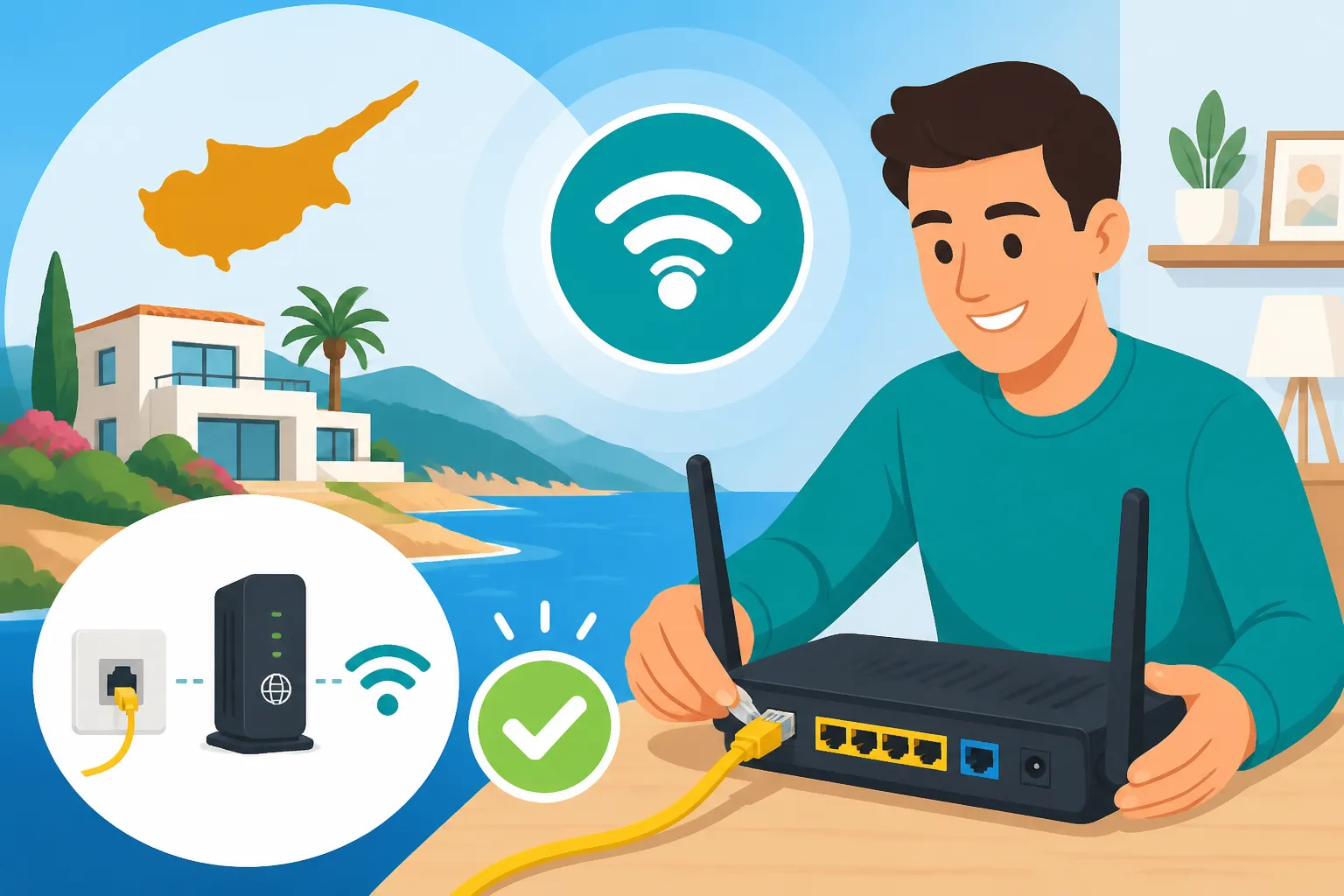
The technician will install the necessary equipment, which usually includes a modem/router. They will connect it to the main line coming into your building, ensure it's working, and set up the basic Wi-Fi network. This process usually takes 30 minutes to a couple of hours.
Router Setup: The technician will usually configure the basic Wi-Fi network with a default name (SSID) and password. Make sure to ask them to write it down for you, or better yet, change it to something memorable and secure once they leave. You'll likely receive a small user manual, but generally, the setup is plug-and-play after the technician has done their part.
Self-Installation: While common in some countries, self-installation for fixed-line internet is rare in Cyprus unless you're simply reactivating a previously used line in a property where all the necessary infrastructure is already perfectly in place. For mobile internet hotspots or dongles, however, it’s entirely self-service – just insert the SIM card, charge it up, and you’re good to go.
| Provider | Connection Types Offered | Typical Max Speeds (Advertised) | Common Contract Lengths | Bundles Available | English Support |
|---|---|---|---|---|---|
| Cyta | Fibre, VDSL, ADSL, Mobile | Up to 1 Gbps (Fibre), 100-200 Mbps (VDSL) | 12, 18, 24 months | Internet + TV + Landline + Mobile | Yes |
| Epic | Fibre, Mobile | Up to 1 Gbps (Fibre) | 12, 18, 24 months | Internet + Mobile, Internet + TV | Yes |
| Cablenet | Fibre | Up to 1 Gbps (Fibre) | 12, 18, 24 months | Internet + TV | Yes |
Note: Speeds and offerings are subject to change and specific location availability. Always confirm directly with the provider.
Navigating Common Challenges and Tips for Expats
Moving to a new country like Cyprus often means encountering unexpected quirks, and internet service can certainly have its moments. As an expat, knowing what to anticipate and how to navigate common issues can save you a lot of stress.
Dealing with Contracts and Customer Service
One of the areas where expats often feel a bit lost is understanding the intricacies of service contracts and knowing how to effectively communicate with customer service when things go awry.
Contract Lengths and Early Termination: Most internet providers in Cyprus will offer contracts with a minimum duration, typically 12, 18, or 24 months. While longer contracts might come with slightly better monthly rates, they also mean a commitment. If your plans change, or you decide to move within Cyprus or even leave the island, breaking a contract early can incur significant termination fees. These fees are designed to cover the remaining months of your contract, so they are not to be taken lightly. Always read the fine print regarding early termination clauses. If you’re unsure about your long-term stay, a 12-month contract offers more flexibility, or even consider a mobile broadband solution initially.
Customer Support Experience: While all major providers do have English-speaking staff, the experience can vary. Sometimes, you might need to try a few different phone numbers or visit a larger branch office in a city like Limassol or Nicosia to find someone truly proficient in English, especially for complex technical issues. Don't be afraid to politely insist on speaking to someone who can assist you in English. Many providers also offer support through online chat or email, which can be useful for minor queries or if you prefer written communication. Remember, a little patience and a friendly attitude go a long way in Cyprus.
Temporary and Mobile Internet Solutions
There's often a gap between arriving and getting your fixed-line internet installed. Or perhaps you simply don't need a fixed line at all. This is where mobile internet really shines for expats.
For those first few days or even weeks when you’re still getting your residence permit sorted and finding your feet, relying on mobile data is a lifesaver. You can easily pick up a prepaid SIM card from Cyta or Epic at the airport or any convenience store. This gives you instant local calls and, crucially, mobile data. If your phone supports eSIMs, consider a global eSIM provider like Airalo. This allows you to purchase a data plan before you even land, ensuring you have internet access from the moment your plane touches down, bypassing the need to find a local SIM card immediately. It's incredibly handy for navigating, booking taxis, and staying in touch during those chaotic initial days.
For a slightly more robust temporary solution, or if you're a digital nomad who frequently moves between properties, a mobile broadband router (MiFi device) or a USB dongle might be perfect. These devices operate like small Wi-Fi hotspots, drawing internet from the 4G/5G network. You can purchase these outright or sometimes get them on a short-term contract with a data plan from Cyta or Epic. They offer more stable connectivity than a phone hotspot and can support multiple devices, making them ideal for small households or home offices that aren't tied to a specific location. They are also an excellent backup option should your fixed-line internet ever go down. When you’re dealing with the logistics of moving your entire life, having reliable communication – even temporarily – is absolutely vital. If you’re still planning your move, services like Sirelo can assist with comparing quotes for international removals, helping you plan out the entire process from start to finish, including considerations for immediate connectivity upon arrival.
Troubleshooting and Performance Expectations
Even with the best planning, issues can arise. Knowing how to handle them and what to expect realistically will save you undue frustration.
Basic Troubleshooting: Before you call customer service, try the usual suspects:
- Restart your router: Unplug it for 30 seconds, then plug it back in. This often resolves minor glitches.
- Check cables: Ensure all cables are securely plugged in, both at the router and the wall socket.
- Check for outages: Sometimes local outages happen. Check the provider’s website or social media for announcements.
Contacting Your ISP: If basic troubleshooting doesn't work, it's time to contact your provider. Be clear and concise in explaining your issue. If you’re comfortable, try to use any basic Greek phrases you know, but don't hesitate to ask for English assistance. Provide your account number, address, and a description of the problem. They may guide you through further diagnostic steps over the phone or schedule a technician visit if needed.
Realistic Speed Expectations: While providers advertise "up to" speeds, real-world performance can be influenced by several factors:
- Distance from the exchange (for ADSL/VDSL): The further you are, the slower your speeds.
- Building infrastructure: Older buildings might have outdated internal wiring that can degrade signal quality.
- Wi-Fi interference: Other wireless networks, microwaves, and even cordless phones can interfere with your Wi-Fi signal.
- Time of day: During peak hours, internet speeds might dip slightly due to network congestion.
It’s always a good idea to run a speed test (e.g., via Speedtest.net) both wired and wirelessly to understand your actual speeds and compare them to what you're paying for. Don’t expect exactly the advertised speed 100% of the time, but if there's a significant, consistent discrepancy, then it’s worth investigating with your provider. For more general advice on managing your household bills, our guide on How Do I Pay My Electricity Bill Online in Cyprus? might also be helpful as it touches upon online payment systems for utilities.
Setting up internet in your Cyprus home doesn't have to be a monumental task. With a little research, preparedness, and patience, you'll be streaming, working, and connecting with the world in no time.
Disclaimer
Please note that the information provided in this guide is for general informational purposes only and is subject to change. Telecommunications policies, pricing, and available services in Cyprus can evolve. We recommend consulting directly with the internet service providers and relevant authorities for the most current and specific information pertaining to your individual circumstances. We do not provide legal, financial, or immigration advice.