Understanding How to Prepare Your Home for the Cyprus Summer
It is worth knowing that the island’s summers are no joke. That glorious sunshine that lures us here can quickly turn your lovely home into an oven if you’re not prepared. Many newcomers find themselves battling scorching indoor temperatures, sky-high electricity bills, and a general sense of heat-induced frustration. This comprehensive guide is here to walk you through exactly how to prepare your home for the Cyprus summer, ensuring you stay as cool and comfortable as possible without breaking the bank.
The Reality of Cypriot Summers: Why Preparation is Key
Stepping off the plane into the Cyprus summer can feel like walking into a hairdryer, and that heat doesn't just stay outside. It permeates everything, including your home. For those of us who've lived through a few summers here, we know that preparation isn't just about comfort; it's about managing costs, protecting your belongings, and maintaining your sanity. Ignoring the impending heatwave is a rookie mistake many expats make, often leading to a rude awakening when the first truly sweltering day hits.
Understanding the Climate: Heat, Humidity, and Sun
Cyprus is blessed with a Mediterranean climate, which means long, dry, and incredibly hot summers, typically running from June through September, and sometimes even stretching into October. Average daytime temperatures often hover in the mid-30s Celsius (mid-90s Fahrenheit) but can easily soar into the high 30s or even low 40s in July and August. What often catches people off guard is the humidity, especially in coastal areas like Limassol or Larnaca. This humidity makes the heat feel even more oppressive, as sweat struggles to evaporate, leaving you feeling sticky and uncomfortable.
Beyond the sheer temperature, the sun itself is relentless. With over 300 days of sunshine a year, the sun’s rays beat down on buildings for hours on end, causing interiors to heat up significantly. East-facing windows get the morning sun, west-facing windows get the brutal afternoon sun, and south-facing windows get it all day. Understanding how the sun tracks across your property is crucial for effective shading strategies. Without proper planning, your home can absorb and radiate heat long into the night, making sleep a challenge even after sunset.
Common Expat Woes: From High Bills to Sleepless Nights
The most immediate pain point for many expats during their first Cypriot summer is the astronomical electricity bill. We crank up the AC, desperate for relief, only to open that dreaded envelope from EAC (Electricity Authority of Cyprus) and nearly have a heart attack. This isn't just a slight increase; we're talking about bills that can easily double or even triple from winter months, especially if you're not careful with your AC usage. It’s a common story, and one that often catches newcomers unprepared.
Beyond the financial strain, the heat can take a toll on your quality of life. Sleepless nights are a frequent complaint, as bedrooms remain stifling, even with fans whirring. Furniture, electronics, and even food can suffer from the constant heat and humidity. Wooden furniture can warp, electronics can overheat, and pantry items can spoil quickly. It’s not just about personal comfort; it's about preserving your home and your belongings. Dealing with these issues after they arise is far more stressful and costly than proactive preparation, a lesson many of us learn the hard way.
Cooling Your Home: Air Conditioning and Beyond
Air conditioning is undoubtedly your best friend during a Cypriot summer, but it's not the only tool in your arsenal, nor should it be your first and only line of defence. Relying solely on AC can quickly deplete your bank account and isn't always the most efficient way to keep your home cool. A multi-pronged approach combining various cooling methods will give you the best results, both in terms of comfort and cost-effectiveness. Many expats who learn how to effectively combine these methods find a significant reduction in their overall energy costs, making the summer far more bearable.
Optimising Your AC Usage
Let’s be honest, you'll be using your AC. But how you use it makes all the difference. The biggest mistake is setting the thermostat too low, hoping to freeze yourself into comfort. Not only is this incredibly inefficient, but the drastic temperature difference between indoors and outdoors can actually make you feel worse when you step outside. Aim for a comfortable, yet realistic, indoor temperature, usually around 24-26°C (75-79°F). Every degree lower significantly increases energy consumption.
Regular maintenance is also paramount. Clogged filters force your AC unit to work harder, consuming more electricity and providing less efficient cooling. Make it a habit to clean or replace your AC filters every 1-2 months during the summer. Consider having your units professionally serviced once a year before the summer season begins to ensure they are running at peak efficiency. This small investment can save you a fortune in the long run and prevents untimely breakdowns when you need it most. Also, remember to turn off units in rooms you're not using. Sounds obvious, but when you're rushing out the door, it's easily forgotten. Investing in smart AC controllers can allow you to manage units remotely, a great way to save energy if you're out and about using an Airalo eSIM for data.
The Power of Fans and Air Circulators
Fans are often underestimated but are incredibly effective complements to air conditioning. A ceiling fan can make a room feel several degrees cooler without actually changing the ambient temperature, simply by circulating air and aiding in evaporative cooling from your skin. This means you can often set your AC a couple of degrees higher and still feel comfortable, leading to noticeable energy savings.
Portable fans and air circulators are also excellent for personal cooling or targeting specific areas. Instead of cooling an entire room with AC, a well-placed fan can create a comfortable microclimate around you. Position fans to draw cooler air in from shaded areas or to push hot air out of windows during cooler evening hours. They are far cheaper to run than AC units and can be moved from room to room, offering flexible relief. Think of them as tactical cooling units for your personal space. If you're wondering How Much Does It Cost to Furnish an Apartment in Cyprus?, factor in a good quality fan or two; they are worth their weight in gold.
Natural Ventilation Strategies
Maximizing natural ventilation is the oldest trick in the book, and it still works wonders, especially in the mornings and evenings. The goal is to create a "cross-breeze" when the outside air is cooler than the inside air. In the early morning, before the sun really starts to bake everything, open windows and doors on opposite sides of your home to allow fresh air to flow through and push out any stagnant, warm air.
As soon as the outdoor temperature starts to rise, usually mid-morning, close everything up. Shut your windows, close your internal doors, and draw your curtains or blinds. This creates a thermal barrier, trapping the cooler air inside and blocking the hot air from entering. Reopen everything in the late evening, once the sun has set and the temperature begins to drop, to flush out any accumulated heat and allow the night air to cool your home. This strategy is particularly effective for those living in an apartment versus a house, as apartments often have less direct sunlight exposure and can benefit from through-breezes more easily. You can explore the differences in cooling challenges when considering How Do I Choose Between an Apartment and a House in Cyprus?.
Battling the Sun's Glare: Window and Balcony Solutions
The sun is the primary culprit for heat gain in your home. It relentlessly streams through windows, heating up everything in its path – floors, walls, furniture. This radiant heat then gets re-released into your living space, turning it into a giant storage heater. Effectively blocking or reflecting the sun’s energy before it enters your home is one of the most impactful steps you can take to keep temperatures down.
Choosing the Right Window Coverings
Interior window coverings are your first line of defence. Heavy, blackout curtains or thermal blinds are invaluable. They physically block sunlight and create an insulating layer between the hot windowpane and your room. Opt for light-coloured blinds or curtains with a reflective backing if possible, as these will bounce sunlight away rather than absorbing it. Drawing these the moment the sun hits that window is crucial.
Another effective, and often overlooked, option is reflective film for windows. This film can significantly reduce the amount of solar heat entering your home while still allowing light to filter through. It’s a semi-permanent solution that pays dividends in comfort and energy savings. While the initial cost might seem higher than a cheap set of blinds, the long-term benefits for heat reduction and protecting your interiors from UV damage are substantial.
Exterior Shading Solutions: Awnings and Pergolas
Taking the battle against the sun outdoors is even more effective. Awnings, retractable or fixed, above windows and patio doors can block sunlight before it even reaches the glass. This is far superior to interior coverings because the heat is deflected outside, preventing the window itself from becoming a hot surface that radiates heat into your home. Think of how much cooler a car is when parked under a tree.
Pergolas are another excellent option, especially for ground-floor apartments or houses with outdoor seating areas. When draped with climbing plants or fitted with adjustable louvres or fabric shades, they provide a cool, shaded space outdoors and prevent the sun from directly heating adjacent walls or patios, which can then radiate heat indoors. If you live in an apartment with shared outdoor spaces, sometimes communal funds, which are covered by your Understanding Communal Fees for Apartments in Cyprus, can go towards shared shading solutions, so it's worth checking with your building management.
Protecting Your Balcony and Outdoor Spaces
Your balcony or patio can become an unusable inferno during the summer if not properly prepared. Beyond the pergolas and awnings, consider installing shade sails. These are relatively inexpensive, come in various sizes and colours, and can dramatically reduce the sun's intensity over your outdoor areas, making them much more enjoyable for evening relaxation. They also help prevent the heat from being absorbed by the balcony tiles and radiating into your adjacent rooms.
Using outdoor rugs and plants can also contribute to a cooler microclimate. Plants, especially larger potted ones or climbing varieties, offer natural shade and release moisture, which can slightly cool the air around them. Keep balconies clean and uncluttered, as reflective surfaces can intensify the heat. By creating a pleasant outdoor extension of your home, you're not only making your summer more enjoyable but also reducing the overall heat load on your property.
Energy Efficiency: Saving Money While Staying Cool
One of the biggest lessons expats learn in Cyprus is the importance of energy efficiency. With the intense summer heat, unchecked electricity consumption can lead to truly shocking bills. The EAC (Electricity Authority of Cyprus) provides power, and while reliable, it can be costly if you're not mindful of your usage. Preparing your home for summer isn't just about comfort; it's a strategic move to keep your finances in check and understand your true The Complete Guide to Cost of Living in Cyprus for Expats (2026).
Sealing Gaps and Insulating Your Home
It's amazing how much cool air can escape, and hot air creep in, through tiny cracks and gaps. Before summer really kicks in, do a thorough inspection of your home. Check around window frames, door frames, and any utility penetrations (like pipes or cables entering the wall). Use weatherstripping for doors and windows and caulk for cracks. This simple, inexpensive measure can make a significant difference in preventing heat transfer and keeping your AC’s hard work confined to your living space.
Insulation, while often a more significant undertaking, is incredibly effective. Many older Cypriot homes might lack adequate insulation in walls or roofs. While not a quick fix, if you’re buying or undertaking major renovations, investing in proper insulation can dramatically reduce your cooling (and heating) costs year-round. For renters, focus on the quick fixes like draft stoppers and sealing visible gaps. Remember, air leakage can account for a substantial portion of your energy losses, so sealing your home is a smart investment.
Smart Appliances and Energy Habits
Modern appliances are often much more energy-efficient than older models. If you’re in the market for new white goods, look for energy-efficient ratings. Refrigerators, washing machines, and even smart home devices consume electricity, and choosing efficient ones adds up. Beyond the appliances themselves, your daily habits play a huge role. Avoid using the oven or stove during the hottest parts of the day; opt for salads, lighter meals, or outdoor grilling. Run your washing machine and dishwasher during off-peak hours (if your tariff supports it, check with EAC) or in the cooler evenings.
Unplug electronics when not in use. Even in standby mode, many devices draw "phantom load" power, contributing to your electricity bill. This is particularly relevant for things like charging cables, TVs, and computer monitors. Being mindful of these small habits across your household can lead to noticeable savings when you’re trying to understand How Much Does Electricity Cost per Month in Cyprus?. You can find out more details about managing your power by reading How to Set Up Electricity (EAC) in Your Cyprus Home.
Understanding Your Electricity Bills (EAC)
Deciphering your electricity bill in a new country can be daunting. In Cyprus, the EAC bill typically shows your consumption in kilowatt-hours (kWh) and includes various charges, such as consumption charges, fixed charges, and sometimes charges for public lighting. Bills are usually issued every two months. Understanding these components is key to managing your costs. The more kWh you use, the higher your bill will be, often subject to a tiered pricing structure where higher consumption leads to higher per-unit costs.
Keep an eye on your meter readings and compare them to your bill to ensure accuracy. If you notice a sudden spike in consumption not attributable to increased usage, it might be worth investigating for faulty appliances or unseen energy drains. Many expats find it convenient to set up direct debit for their bills, or to How to Pay Your Electricity Bill Online in Cyprus through the EAC portal, which prevents missing payments. For those interested in automation, learning How Do I Set Up Auto-Pay for My Utility Bills in Cyprus? can streamline the process.
Water Conservation and Management During Summer
Just like electricity, water is a precious resource in Cyprus, especially during the long, dry summers. With minimal rainfall and high demand, conservation isn't just an eco-friendly practice; it's a necessity that impacts your utility bills and the island's sustainability. Understanding your water usage and implementing smart management practices will help you avoid unnecessary expenses and contribute positively to local efforts. Getting familiar with Understanding Water and Utility Bills in Cyprus is a great first step.
Smart Watering for Gardens and Patios
If you have a garden, balcony plants, or a patio to keep green, summer watering needs careful attention. Watering during the hottest part of the day is largely wasteful, as much of the water will evaporate before it reaches the roots. Instead, water early in the morning or late in the evening when temperatures are cooler. This allows plants to absorb moisture more effectively.
Consider installing a drip irrigation system for more efficient watering of plants and shrubs. These systems deliver water directly to the roots, minimizing evaporation and runoff. For lawns, if you have one, consider reducing watering frequency but increasing duration, encouraging deeper root growth. Mulching around plants also helps retain soil moisture, reducing the need for frequent watering. Your beautiful greenery can thrive without excessive water consumption if you employ these smart techniques.
Managing Your Water Usage Indoors
Indoor water consumption is another area where significant savings can be made. Simple habits like taking shorter showers, turning off the tap while brushing your teeth or shaving, and only running your washing machine and dishwasher when full can add up. Leaky faucets and toilets can waste hundreds of litres of water per month, so promptly fix any drips you find.
Consider installing low-flow showerheads and aerators on faucets. These devices reduce water flow without sacrificing pressure, helping you save water every time you turn on the tap. Collecting cold water while waiting for the shower to heat up, or from rinsing vegetables, can be used for watering plants or other non-potable uses. Every drop counts in a climate where water is so precious. For more general advice on connecting services, check out The Expat Guide to Setting Up Utilities (Electricity, Water, Internet) in Cyprus.
Pool Maintenance for the Hot Season
For those fortunate enough to have a pool, summer means increased usage and, consequently, increased maintenance. High temperatures lead to faster evaporation, requiring more frequent refilling. The sun also accelerates chemical breakdown, meaning you'll need to monitor and adjust chlorine and pH levels more often to keep the water clean and safe.
Regular cleaning, including skimming and vacuuming, is crucial to prevent algae growth, which thrives in warm water. Consider using a pool cover when the pool is not in use. This not only significantly reduces evaporation, saving water, but also helps retain heat overnight (or keep it out during the day if it’s a reflective cover), and keeps debris out. Proper pool maintenance extends the life of your equipment and ensures you can enjoy a refreshing dip all summer long without excessive water waste or chemical costs.
Practical Tips for a Comfortable Summer Home
Beyond the major strategies of cooling and energy efficiency, there are countless small, practical adjustments you can make to your home and daily routine to enhance comfort during the Cypriot summer. These might seem minor individually, but collectively they create a far more hospitable living environment. Expats often find that every little trick helps when the mercury is soaring.
Dealing with Pests and Insects
Summer heat and humidity unfortunately bring out a whole host of insects and pests in Cyprus. Mosquitoes, flies, and even cockroaches become more prevalent. Prevention is key. Ensure all your window and door screens are intact and free of holes. Keep doors and windows closed as much as possible, especially in the evenings when mosquitoes are most active.
Use insect repellent, citronella candles, or electric repellent devices (like plug-in vaporizers) to deter pests, particularly around open areas or during outdoor dining. Maintain a clean home, free of food crumbs and standing water, which can attract pests. Regularly empty bins, especially food waste. A clean, well-sealed home is your best defence against uninvited summer guests.
Food Storage and Kitchen Prep in the Heat
The high temperatures and humidity can wreak havoc on food. Fresh produce, baked goods, and even pantry staples can spoil much faster than you might be used to. Store bread in the refrigerator to prevent mould. Keep fruits and vegetables in the fridge, or in a cool, dark place if they don't require refrigeration. Be extra diligent with food hygiene and prompt refrigeration of leftovers to prevent bacterial growth.
When cooking, try to use appliances that generate less heat. As mentioned before, opt for salads, sandwiches, or utilize the microwave, outdoor grill, or slow cooker instead of the oven or hob during peak heat hours. Meal prepping in the cooler mornings or evenings can also save you from slaving over a hot stove when it’s already stifling indoors. Keep drinks cold and accessible – hydration is paramount in this climate, so having a well-stocked fridge is essential.
Essential Summer Maintenance Checks
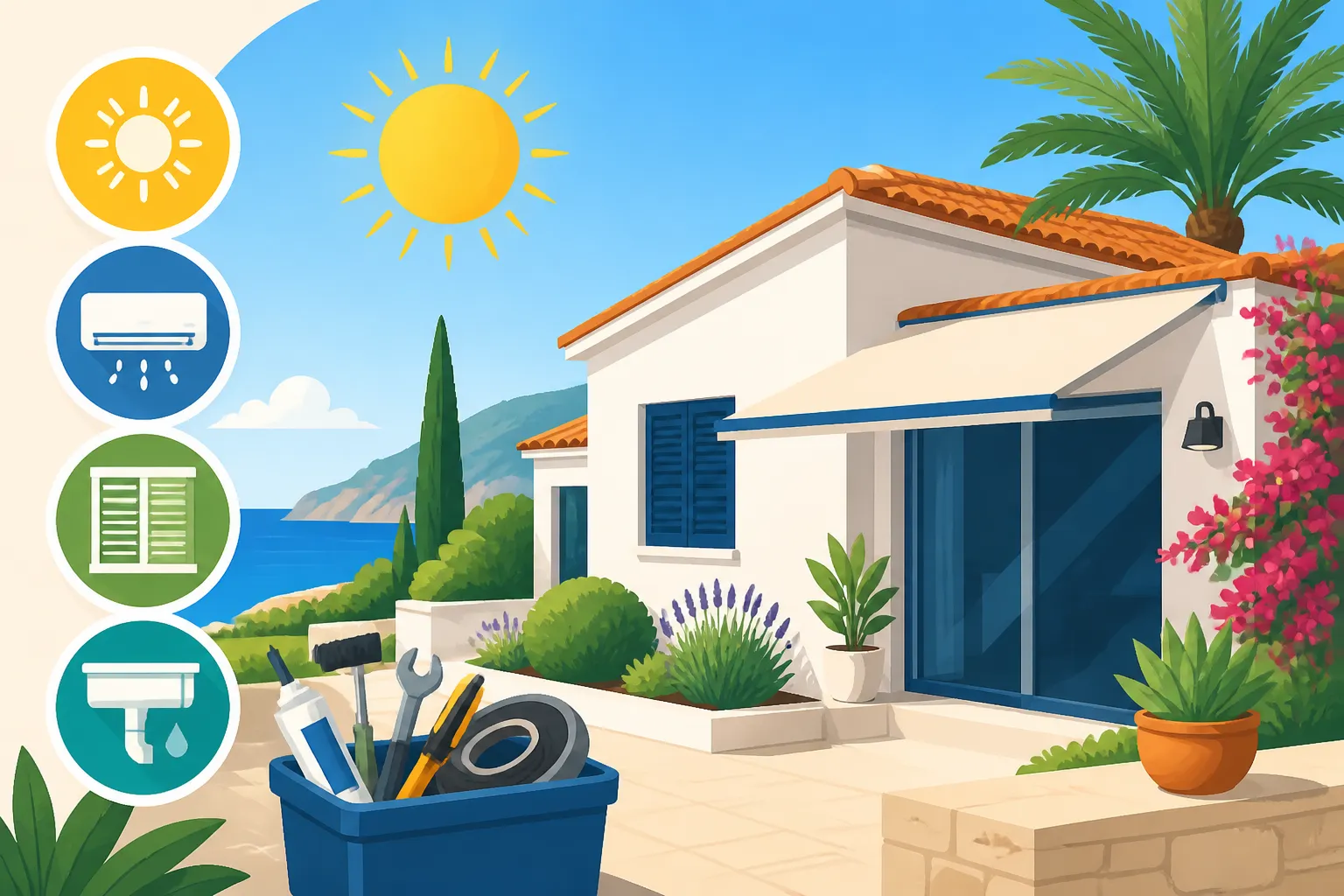
Before the intense heat sets in, perform a few critical maintenance checks. Inspect your roof and gutters for any issues that could lead to leaks during the occasional, but sometimes heavy, summer thunderstorms. Ensure your plumbing is in good order to prevent leaks, which can become more problematic in hot, humid conditions. Test your smoke detectors and CO alarms, as electrical systems are under more strain during peak AC usage.
Also, think about your outdoor furniture and plants. Bring delicate items indoors or cover them to protect them from the intense sun. Ensure any outdoor taps are working correctly for watering. If you've just moved to Cyprus, remember that companies like Sirelo can assist with shipping belongings, but it's your responsibility to then set up and maintain your home once here. Taking a proactive approach to these small tasks can prevent bigger headaches and expenses later in the season.
Disclaimer
The information provided in this guide is for general informational purposes only and does not constitute professional advice. While we strive to offer accurate and up-to-date guidance based on expat experiences in Cyprus, regulations, costs, and availability of services can change. It is always recommended to consult with relevant local authorities, service providers, or legal professionals for specific advice tailored to your personal circumstances. We cannot be held responsible for any outcomes resulting from the use of this information.