Can I Stay in Cyprus After Finishing My Studies?
Ah, the student dream! You’ve spent years hitting the books, perhaps enjoyed the sun and the laid-back Cypriot lifestyle, and now your graduation day is looming. Suddenly, the thought hits you: "Can I actually stay in Cyprus after all this, or do I pack my bags and head home?" It’s a question that many international students grapple with, and believe me, the path from student visa to long-term resident isn't always clear-cut. This guide is here to unravel the complexities and walk you through the real options and challenges of making Cyprus your permanent home after your studies.
The Harsh Reality: Student Visas are Temporary by Design
Let's start with a dose of realism, because that's what we expats do here, right? Your student visa or temporary residence permit for study was exactly that – temporary. It was granted specifically for the purpose of education, and it has an expiration date tied to your course completion. The Cypriot authorities, like those in many other countries, assume you'll eventually return to your home country once your academic journey is complete. This isn't meant to be discouraging, but rather to set the correct expectation: your student status doesn't automatically roll into another type of residency.
Understanding Your Student Visa Limitations: What Happens When the Course Ends?
The moment your graduation certificate is in hand, or even before that, once your official study period concludes, your student visa's validity begins its countdown. Typically, you're granted a short grace period – usually a few weeks or a couple of months – to wrap things up, pack, and prepare to leave. This period is not for job hunting or exploring new visa options; it's for exiting the country gracefully. Many students mistakenly believe they have ample time to transition, only to find themselves scrambling at the last minute. It’s crucial to know the exact expiry date of your permit and plan well in advance. Overstaying, even by a day, can lead to fines, deportation, and make future visa applications for Cyprus or even other EU countries incredibly difficult.
The Grace Period: Fact vs. Fiction
While a short "grace period" might be unofficially tolerated for administrative purposes, it's vital not to rely on it. The official stance is that your residence permit for study expires when your studies conclude. There isn't a widely advertised, legally enshrined extended period specifically for job searching post-graduation for non-EU students. For EU students, the situation is different, as their right to reside in Cyprus is based on their EU citizenship, making transitions simpler. However, for those from outside the EU, the clock truly starts ticking. If you intend to stay, you must initiate a change of status application before your current permit expires. This means securing a new purpose for your stay – most commonly, employment or self-employment – and starting the entire visa application process from scratch, often involving the Civil Registry and Migration Department (CRMD).
Pathways to Stay: Shifting Your Immigration Status After Studies
So, you're done with lectures and exams, and the thought of leaving Cyprus makes your heart sink. Don't despair! While your student visa won't magically morph into a permanent residence, there are legitimate pathways to transition your immigration status. It just requires proactive planning, a good understanding of the bureaucracy, and a bit of perseverance. The key is to find a new "purpose" for your stay that aligns with Cyprus's immigration policies.
The Employment Route: Finding a Job and a Sponsor
This is, by far, the most common and often the most straightforward path for non-EU graduates looking to stay. If you can secure a job offer from a Cypriot employer, they can apply for a work permit on your behalf. This is a crucial distinction: the employer applies for the permit for you. You can't just apply for a work permit yourself unless you're starting your own business.
Finding a job in Cyprus as a foreigner, especially right after graduation, can be a challenge. You're competing with local talent and EU citizens who don't require the same sponsorship process. However, certain sectors are often more open to international hires, particularly those with a skills gap or industries targeting international markets, like the Forex industry, IT, shipping, and certain financial services. Your university's career services might have resources, or you could explore job boards and recruitment agencies early on.
The employer will need to prove to the Department of Labour that there isn't a suitable Cypriot or EU candidate for the role. They'll also need to meet specific criteria regarding their company size, financial stability, and sometimes quotas for non-EU employees. Once the work permit is approved, you’ll then apply for a new residence permit (often called a "Pink Slip" for non-EU citizens) based on your employment. It’s a process, but a very achievable one if you have the right skills and a determined employer. You can learn more about this in our detailed guide on How to Get a Work Permit to Work in Cyprus (2026).
Venturing Solo: Self-Employment and Business
For those with an entrepreneurial spirit, or perhaps a niche skill set, establishing yourself as self-employed or starting a business can be another route. This path requires more capital and significantly more paperwork, but it offers greater independence. To register as self-employed, you'll need to demonstrate sufficient funds to support yourself without relying on public services, and often, that your business venture will contribute positively to the Cypriot economy.
You'll need to register with the Tax Department and the Social Insurance Services, and potentially obtain specific licenses depending on your profession. The process involves showing a viable business plan, demonstrating financial capacity, and proving you can genuinely generate income from your self-employment within Cyprus. This can be complex, and often benefits from legal or accounting advice. While it sounds daunting, many expats have successfully navigated this path. Our guide on How to Register as Self-Employed with the Tax Department in Cyprus can provide a deeper dive into the initial steps.
Other Residency Options: The Digital Nomad Visa or Category F
Cyprus has also embraced the remote work revolution, offering a Digital Nomad Visa for non-EU citizens. If your work is location-independent and your employer is outside Cyprus (or you freelance for clients abroad), this could be a fantastic option. The main requirements revolve around proving a stable and sufficient income from abroad, typically above a certain threshold (which, as of 2026, often requires around €3,500 net monthly income, plus additional for dependents), and having health insurance. This visa allows you to live and work from Cyprus without being tied to a local employer, and it has attracted a vibrant community of remote professionals. It’s worth checking out The Expat Guide to the Cyprus Digital Nomad Visa (2026) if this sounds like you.
Another option, though less common for recent graduates unless they have significant passive income, is the Category F Residence Permit. This is for third-country nationals with sufficient and stable income from abroad, allowing them to live in Cyprus without working locally. This could apply to someone with substantial pensions, rental income, or investments, but it's typically not the first choice for someone transitioning straight from student life. Still, it's a legitimate pathway for those who qualify. For more details, refer to How to Apply for the Category F Residence Permit in Cyprus.
Practical Steps and Paperwork: The Cypriot Bureaucracy Gauntlet
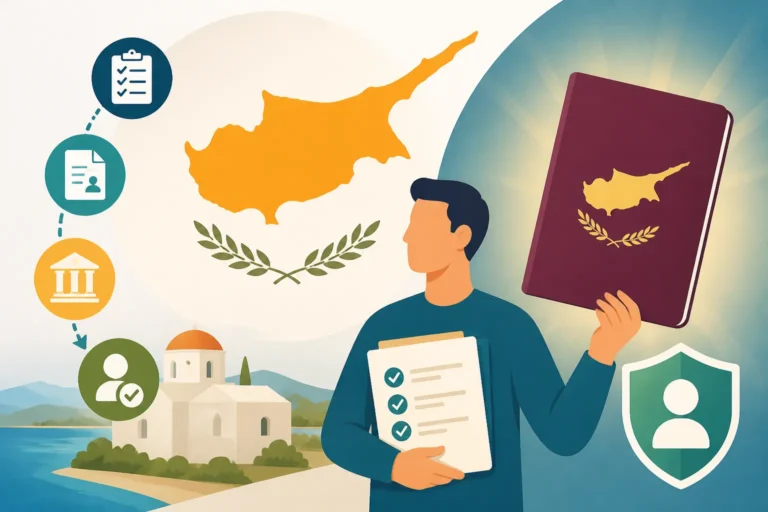
Let's be honest, dealing with bureaucracy in any new country can feel like navigating a maze blindfolded, and Cyprus is no exception. The key to success is patience, meticulous organization, and a healthy dose of persistence. Transitioning from a student visa to another type of residence permit means preparing for a significant administrative undertaking.
Gathering Your Arsenal of Documents: It's a Marathon, Not a Sprint
Regardless of which pathway you choose – employment, self-employment, or another visa category – you will be asked for a comprehensive list of documents. And when I say comprehensive, I mean everything. Expect to provide:
- Your passport: Valid for at least two years beyond your intended stay.
- Original degree certificates and transcripts: Proof of your completed studies.
- Proof of financial means: This is crucial. For employment, it's your job contract and salary. For self-employment or other visas, it's bank statements, proof of stable income from investments, pensions, or international clients. You need to demonstrate you won't be a burden on the state.
- Health insurance: Mandatory for all non-EU residence permits. While you might eventually be eligible for GeSY if employed and contributing to social insurance, initially you'll almost certainly need private health insurance. Options like Cigna Global offer comprehensive international plans that are widely accepted for visa purposes. Remember, you might need to show coverage for inpatient, outpatient, and sometimes even repatriation. Check out Understanding Health Insurance and Requirements for Cyprus Visas for more specifics.
- Rental agreement: A valid lease for your accommodation in Cyprus.
- Clean criminal record certificate: Usually from your home country, and sometimes from Cyprus if you've been here long enough.
- Medical certificates: Proof of good health, often requiring specific tests done at designated clinics in Cyprus.
- Social Insurance contributions (if applicable): If you're employed, your employer will handle this, and it’s what eventually gives you access to the General Healthcare System (GeSY).
- Apostilled or certified copies: Many documents from your home country will need to be officially authenticated (apostilled) or certified by the relevant Cypriot authorities.
It’s an extensive list, and often, what seems like a minor omission can cause significant delays. Start collecting these documents well in advance – some, like criminal record checks, can take weeks or months to obtain from your home country.
Navigating the Migration Department: Brace Yourself
Your main port of call will be the Civil Registry and Migration Department (CRMD). These are the folks who process all residence permit applications. Be prepared for queues, potentially slow processing times, and a strict adherence to procedure. While some departments might have English-speaking staff, having a local friend or, even better, a lawyer or immigration consultant can be invaluable for translating documents, filling out forms correctly, and understanding specific requirements. Remember to always keep copies of everything you submit.
The actual application for your new residence permit – whether it's an employment-based Pink Slip or a Digital Nomad Visa – usually involves an appointment at the CRMD, often preceded by online form submissions. The waiting period for approval can range from a few weeks to several months, depending on the type of permit and the current workload of the department. During this time, you might receive a temporary confirmation that your application is under review, which can offer some peace of mind regarding your legal status while waiting for the final decision. This initial period is often a state of limbo, but patience is key. For more on the general process, our article on Understanding Residence Permits and the Pink Slip in Cyprus (2026) is a great resource.
The Financial Prerequisite: Proving Your Means
One consistent thread across almost all non-EU residence permit applications is the requirement to prove you have sufficient financial means to live in Cyprus without becoming a burden on the state. The exact amounts vary depending on the type of permit and whether you’re applying as an individual or with dependents.
For example, a work permit will hinge on your salary being above a certain threshold, as outlined in your employment contract. For self-employment or the Digital Nomad Visa, you’ll need to show regular, stable income paid into a Cypriot bank account (or accessible from it). The authorities want to see that you can comfortably cover your living expenses, rent, and other costs. This often means demonstrating reserves in your bank account, beyond just your monthly income. Be prepared to provide bank statements covering several months, sometimes even a year, to illustrate your financial stability.
Here's a simplified overview of common financial requirements (always check current official figures, as these can change):
| Permit Type | Primary Financial Proof | Additional Considerations |
|---|---|---|
| Employment Permit | Valid employment contract with a Cypriot employer, stating salary above minimum thresholds. | Employer's financial stability; sufficient salary to cover living costs. |
| Digital Nomad Visa | Proof of stable net income from abroad (e.g., €3,500/month individual, €4,200/month for spouse). | Bank statements for previous 6-12 months; health insurance. |
| Self-Employment | Viable business plan, demonstrated capital, expected income to support self and business. | Bank statements, business accounts, evidence of professional qualifications. |
| Category F | Stable, guaranteed annual income from abroad (e.g., pensions, investments, rent) – significant sum. | Proof of funds in Cypriot bank; no intention to work in Cyprus. |
Note: These figures are indicative and subject to change. Always verify with the official CRMD guidelines.
Life After Student Life: Adapting to Your New Status
Congratulations, you've navigated the visa maze and secured your new residence permit! This is a huge milestone, but it's also just the beginning of your next chapter in Cyprus. Transitioning from student life to working life as an expat comes with its own set of adjustments and considerations, from integrating into the workforce to understanding your long-term residency prospects.
Integrating into the Workforce: Expectations and Reality
Moving from the university campus to a Cypriot workplace can be an interesting cultural shift. Workplace dynamics might differ from what you're used to, with a more hierarchical structure in some traditional Cypriot companies, while international firms often adopt a more global corporate culture. Networking becomes incredibly important, not just for landing a job, but for professional growth once you're in one. Embrace the opportunity to learn Greek, even if your workplace is English-speaking; it shows respect for the local culture and can open more doors socially and professionally.
Beyond the cultural aspects, understand your rights as a foreign worker. Familiarize yourself with Cypriot employment law, including aspects like working hours, annual leave, and social insurance contributions. Your employer is responsible for these, but it’s always good to be informed. Our guide on The Complete Guide to Working in Cyprus as a Foreigner (2026) delves deeper into these aspects.
Healthcare and Social Security: Essential Coverage
As an employed individual in Cyprus, your employer will register you with the Social Insurance Services. This is a critical step, as it means you’ll start contributing to the national social insurance fund, which eventually grants you access to the General Healthcare System (GeSY). This universal healthcare system is a huge benefit, offering comprehensive medical care with minimal co-payments.
However, access to GeSY isn't immediate upon starting work. There's usually a short period (sometimes a few weeks to a couple of months) until your contributions are registered and processed by the Health Insurance Organisation (HIO). During this interim, it's wise to maintain private health insurance. Once you are actively contributing, you can register with a personal doctor (GP) under GeSY. This is a vital step for accessing specialist care and prescriptions. Our articles like The Complete Guide to Healthcare in Cyprus for Expats (2026) and How to Register for GeSY (General Healthcare System) in Cyprus (2026) can walk you through the details of the Cypriot healthcare system.
Continuing Your Expat Journey: The Long Game
Staying in Cyprus after your studies opens up a world of possibilities for long-term integration. With your new residence permit, you're not just a temporary visitor; you're actively contributing to the community and economy. Keep in mind that continuous legal residency is often a prerequisite for future applications, such as permanent residency or even citizenship.
Each type of residence permit has its own renewal process and conditions. For example, employment permits are typically tied to your job, and you’ll need to renew them regularly as long as you remain employed. The Digital Nomad Visa also requires renewal. Always keep track of your permit's expiry date and start the renewal process well in advance to avoid any gaps in your legal status. Our guide on How to Renew Your Residence Permit in Cyprus can help you with this crucial step.
Moving your belongings from your student accommodation to a more permanent home, or even receiving items from back home, might require the services of international movers. Companies like Sirelo can assist with comparing options for transporting your possessions, ensuring a smooth transition into your new life phase.
Ultimately, your journey from a student in Cyprus to a long-term resident is a testament to your determination and adaptability. While it requires navigating administrative hurdles, the rewards of building a life in this beautiful island nation are immeasurable.
Disclaimer
The information provided in this guide is for general informational purposes only and does not constitute legal, financial, or immigration advice. Immigration laws and regulations in Cyprus are subject to change, and individual circumstances can vary greatly. It is highly recommended to consult with a qualified immigration lawyer, a licensed financial advisor, or the official Civil Registry and Migration Department (CRMD) for personalized advice pertaining to your specific situation.