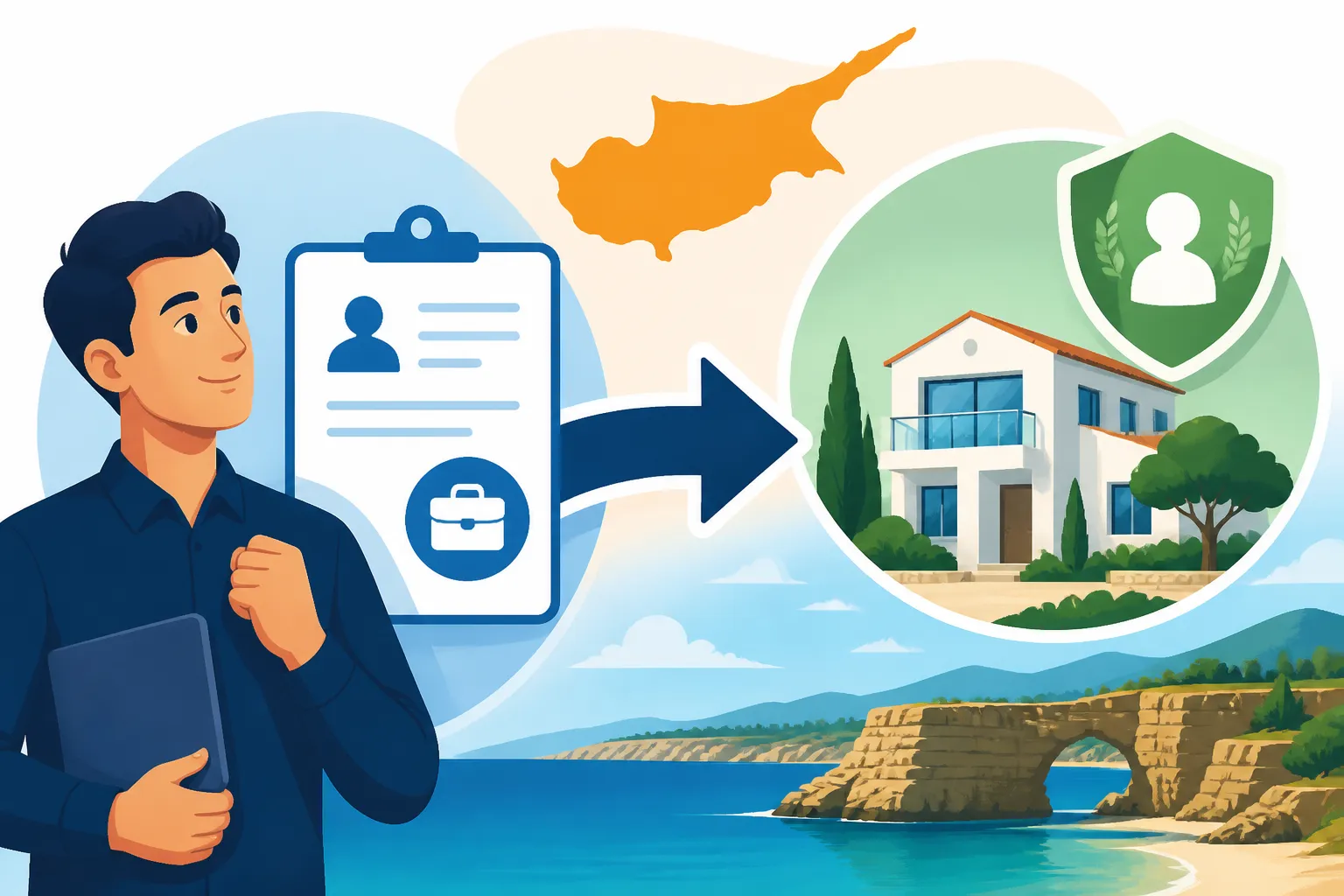
Can a Work Permit Lead to Permanent Residency in Cyprus?
Oh, the age-old question that keeps so many of us expats up at night: "Can a work permit actually lead to permanent residency in Cyprus?" It's a journey filled with paperwork, patience, and often, a good dose of frustration, but I'm here to tell you, yes, it absolutely can. This guide will walk you through the nuances of using your work permit as a stepping stone to long-term stability and a more permanent life on this beautiful island.
Understanding Your Initial Footing: Work Permits and Temporary Residency
When you first land a job here in Cyprus, especially if you're a non-EU citizen, your first official document isn't a direct pass to permanent residency. It’s a work permit, and it's intrinsically linked to your employment. Think of it as your golden ticket to legally work and reside here for a specific period, but it's just the start of the marathon, not the finish line.
The Nature of a Work Permit in Cyprus
A work permit in Cyprus is essentially a permission slip, granted by the Department of Labour, allowing a specific non-EU individual to work for a specific employer in a specific role. It’s not a standalone visa that gives you free rein to do whatever you want; it's a dependent status. Your employer is usually the one who initiates the process, proving that there isn't a suitable local or EU candidate for the position. This means your right to work and, by extension, your right to reside, is tied directly to that job. If your employment ends, so typically does the validity of your work permit.
The typical duration of these initial work permits is one year, sometimes two, and they come with the expectation of renewal, provided your employment continues and all conditions are met. It’s a bit like being on an annual review, not just for your job performance but for your right to stay on the island. Many expats initially find this unsettling because it lacks the long-term security they desire. However, every year you successfully renew your work permit and maintain your legal residence is a year that counts towards something bigger. For a more detailed look at the initial steps, you might find "How to Get a Work Permit to Work in Cyprus (2026)" particularly helpful.
The Pink Slip: Your First Step Towards Stability
Hand-in-hand with your work permit, you'll likely receive what locals affectionately (or sometimes exasperatedly) call a "Pink Slip." Officially known as a Temporary Residence Permit, this is the document that actually legitimises your stay in Cyprus as a non-EU citizen for periods longer than 90 days. While your work permit grants you the right to work, the Pink Slip grants you the right to live.
This permit is critical. It allows you to open bank accounts, sign rental agreements, get a local phone number, and generally integrate into Cypriot society. However, just like the work permit, the Pink Slip is usually issued for one year and needs to be renewed annually. It’s also largely dependent on your continued employment that secured your work permit. The process for renewing it involves demonstrating you still meet the criteria: continuous employment, sufficient financial means, and valid health insurance. Many expats feel the annual renewal ritual is a bit of a grind, but it's a necessary step on the path to something more permanent. "Understanding Residence Permits and the Pink Slip in Cyprus (2026)" dives deeper into what this means for you.
The Bridge to Permanent Residency: The 5-Year Rule for Non-EU Citizens
Here's where the good news comes in: your diligently renewed work permits and Pink Slips are not just administrative hurdles; they are building blocks for a more secure future. For non-EU citizens, Cyprus offers a pathway to permanent residency after a period of continuous legal residence.
Accumulating Lawful Residence
The primary route for non-EU citizens to gain permanent residency through a work permit is by accumulating five years of continuous legal residence in Cyprus. What does "continuous" truly mean in the eyes of the Civil Registry and Migration Department? It means you must not have been absent from Cyprus for more than six consecutive months within any five-year period, and your total absences should not exceed ten months within that entire five-year span. Short trips for holidays or business are usually fine, but prolonged absences can reset your clock, which is definitely something you want to avoid after all that effort.
Every year you legally reside here under your temporary residence permit (Pink Slip), whether it’s for work, study, or even as a spouse of a working expat, counts towards this five-year tally. It's a significant milestone because once you hit that mark, you can transition from a temporary, employer-dependent status to a more stable, independent residency. This shift is profound; it grants you a far greater sense of belonging and planning security.
Beyond the Work Permit: Transitioning to Category F or the Long-Term Resident Permit
Once you've accrued those crucial five years, you become eligible to apply for different types of permanent residency. The two main options that typically follow a work permit pathway are the Category F Residence Permit or the Long-Term Resident Permit.
The Category F Residence Permit is often referred to as a "retiree's permit" or "independent means permit," but it's also applicable to those who have built up their legal residence. It's designed for individuals with a stable, adequate annual income from abroad or within Cyprus (not necessarily employment income) that allows them to live comfortably without working or placing a burden on the public social assistance system. This means that while your work permit got you here and got your clock ticking, your application for Category F will need to demonstrate self-sufficiency, often with a higher income threshold than just minimum wage.
The Long-Term Resident Permit is specifically designed for non-EU citizens who have legally and continuously resided in Cyprus for five years and demonstrates that they have sufficient, stable, and regular resources for the maintenance of themselves and their family, without recourse to the social assistance system of Cyprus. This is a robust pathway for those who have been employed and paid taxes here. This permit is usually valid for five years and is renewable, offering a strong sense of security. It gives you rights similar to EU citizens in many respects, including easier access to the labour market.
Choosing between these often depends on your specific financial situation and future plans. Both offer a significant upgrade from the annual Pink Slip renewal, providing greater stability and peace of mind. To understand more about this specific permit, take a look at "Understanding the Category F Residence Permit in Cyprus".
Here's a quick comparison of the temporary vs. permanent residency statuses:
| Feature | Work Permit / Pink Slip (Temporary) | Permanent Residency (e.g., Category F, Long-Term) |
|---|---|---|
| Duration | Typically 1 year, renewable annually | Category F: Indefinite; Long-Term: 5 years, renewable |
| Dependency | Tied to specific employer/employment | Independent, not tied to one employer or job |
| Eligibility | Job offer, employer sponsorship | 5 years continuous legal residence, stable income |
| Main Goal | Short-term work & residence | Long-term stability, settlement, broader rights |
| Travel Rights | Restricted to Cyprus, Schengen if applicable | Easier travel within EU/Schengen (with conditions) |
| Family | Can usually sponsor dependents annually | Easier family reunification processes |
Navigating the Requirements for Permanent Residency
Once you've completed your five years, you're on the home stretch, but there are still important boxes to tick. The application for permanent residency requires meticulous attention to detail and a clear demonstration of your commitment to Cyprus.
Key Eligibility Criteria
Beyond the five years of continuous residence, several other crucial criteria must be met to secure permanent residency:
- Stable and Sufficient Income: This is paramount. You need to prove you have a reliable and adequate income to support yourself and any dependents without relying on public assistance. The exact amount can fluctuate but is generally designed to ensure a comfortable living standard. This income can come from your employment (if you're still working), pensions, investments, or other legitimate sources.
- Clean Criminal Record: You’ll need to provide a clean criminal record certificate from both Cyprus and your country of origin. This is standard procedure to ensure you are a law-abiding resident.
- Health Insurance: While GeSY (the General Healthcare System) is fantastic once you're fully integrated, for residency applications, you often need to show comprehensive private health insurance, especially during the application processing period or if your GeSY eligibility is not yet firmly established. "Understanding Health Insurance and Requirements for Cyprus Visas" offers guidance on this.
- Tax Compliance: Cyprus takes its tax system seriously. You must demonstrate that you have been diligently paying your taxes, including income tax and social insurance contributions, throughout your stay. This is where getting your finances in order and potentially seeking advice from services like Taxes for Expats can be incredibly beneficial. Having all your tax returns filed correctly is a non-negotiable part of the process. If you’re self-employed, this means showing proof of your registration and regular contributions to the Social Insurance Fund. For comprehensive guidance on your tax obligations, "The Complete Guide to Taxes in Cyprus for Expats (2026)" is an invaluable resource.
The Application Process: Documentation and Patience
The application itself is a journey through bureaucracy. You'll submit your application to the Civil Registry and Migration Department (CRMD), usually in Nicosia. The dossier you'll need to prepare is extensive and includes:
- Application Form: The official form (e.g., M.I.P.A.S. Form M.72 for Category F, or M.I.P.A.S. Form M.IP for Long-Term Resident Permit).
- Passport Copies: Valid passport copies for yourself and all family members included in the application.
- Temporary Residence Permits: Copies of all your previous Pink Slips and work permits.
- Financial Proof: Bank statements showing sufficient funds, employment contracts, salary slips, tax assessment forms, pension statements, or proof of other income. "Filing Your Tax Return in Cyprus: The Complete Walkthrough (2026)" will help ensure your tax documents are in order.
- Proof of Accommodation: Rental agreements or property title deeds.
- Health Insurance: Proof of comprehensive medical insurance.
- Clean Criminal Record Certificates: As mentioned earlier.
- Marriage Certificate/Birth Certificates: If applying with family.
Gathering all these documents can feel overwhelming. My advice? Start early, be organised, and make sure everything is translated into Greek or English by an authorised translator if it's not already in one of those languages. The processing times can vary, sometimes taking several months, so "patience" isn't just a virtue; it's a necessity. Don't underestimate the time it takes to get official documents from your home country, especially criminal record checks, which often have expiry dates.
Language and Integration
While there isn't a strict Greek language test requirement for general permanent residency (unlike, say, citizenship), demonstrating some level of integration into Cypriot society can only strengthen your case. Being able to communicate in basic Greek, understanding local customs, and engaging with the community shows you're not just passing through.
Learning the local language not only makes your daily life infinitely easier – from dealing with utility companies to ordering coffee – but also fosters a deeper connection to the island. There are plenty of resources available, and platforms like iTalki can connect you with Greek tutors who can help you pick up the basics, or even become fluent. It's an investment in your future here, both practically and socially. Plus, who doesn't love the look on a Cypriot's face when you respond to "Kalimera" with a confident "Kalimera sas!"?
Alternative Pathways and What Not to Confuse
It's important to distinguish the work permit pathway from other routes to permanent residency, and to understand that permanent residency is a step, not the final destination if your ultimate goal is full citizenship.
Fast-Track Permanent Residency: The Investment Route
For those with significant capital, Cyprus offers a fast-track permanent residency by investment program. This route typically involves a substantial investment in real estate (e.g., buying a new property for at least €300,000, plus VAT) or other approved investments. It's a much quicker way to gain PR, often approved within a few months, and doesn't require the five years of prior residence. However, it's a completely separate process from the work permit pathway. It's crucial not to confuse these two, as the requirements and benefits differ significantly. If you're curious about this option, "How to Apply for Fast-Track Permanent Residency in Cyprus" provides a detailed overview.
EU Citizens and Their Path
If you're an EU citizen, your path to permanent residency is different and generally much simpler. You don't need a work permit in the traditional sense; your right to live and work in any EU country is inherent. Upon moving to Cyprus, you would register for a "Yellow Slip" (officially known as a Registration Certificate for EU Citizens or MEU1), which confirms your right to reside. After five continuous years of legal residence, you can then apply for a Permanent Residence Certificate (MEU3). This is considered your permanent residency. While technically different from the non-EU process, the principle of accumulating years of residence is similar. "Understanding How EU and Non-EU Citizens Move to Cyprus (2026)" explains these differences in detail, and "How to Register as an EU Citizen (Yellow Slip / MEU1) in Cyprus" provides practical steps.
Citizenship: The Ultimate Goal
Permanent residency is often seen as a stepping stone to full Cypriot citizenship by naturalisation. While permanent residency grants you long-term stability and most rights of a citizen (excluding voting in national elections and holding a Cypriot passport), citizenship takes it a step further. The general rule for naturalisation in Cyprus requires at least seven years of legal residence (with specific allowances for absences) within the last ten years, including the last year being continuous. For spouses of Cypriot citizens, the requirement is typically less.
The citizenship application process is more rigorous, often involving a good command of the Greek language and a deeper assessment of your integration into Cypriot society. So, while your work permit can indeed lead to permanent residency, that permanent residency can then lead to citizenship if that is your ultimate goal. For more on this, check out "Cyprus Citizenship: How to Apply After Permanent Residency (2026)." Understanding the full immigration landscape from your first steps to the very last is key, so "The Complete Visa and Immigration Guide for Relocating to Cyprus (2026)" is also worth a read.
Disclaimer
Please remember that immigration laws and regulations in Cyprus can change. While I strive to provide the most accurate and up-to-date information based on my experience and available data, this guide is for informational purposes only and does not constitute legal advice. Always consult with the Civil Registry and Migration Department or a qualified immigration lawyer in Cyprus for personalised advice regarding your specific situation.