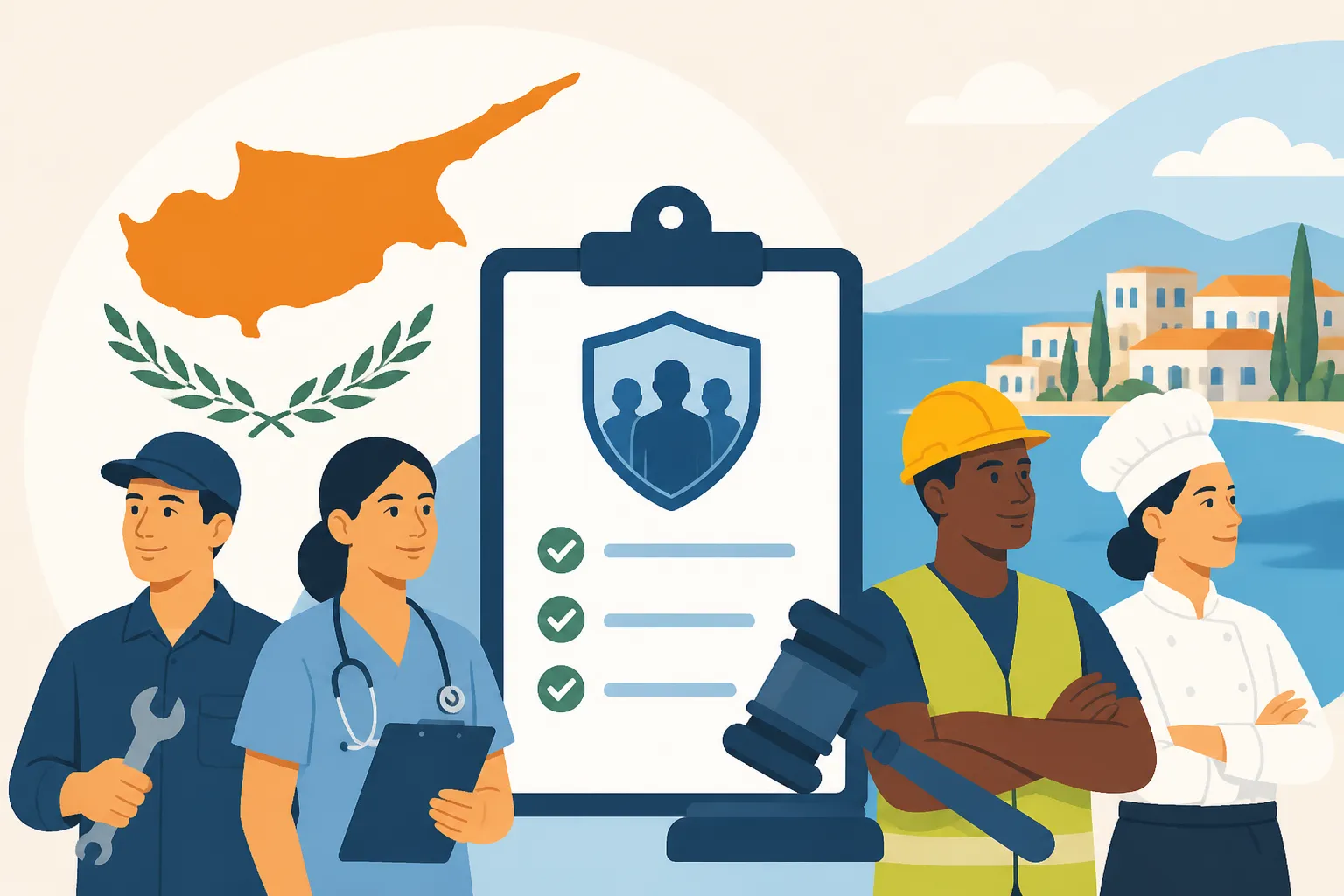
Understanding the Department of Labour Rules for Foreign Workers in Cyprus
Moving to Cyprus for work, especially if you're coming from outside the EU, can feel like navigating a labyrinth designed by someone who really enjoys bureaucracy. The Department of Labour, while essential for ensuring fair employment practices, often presents a complex set of rules that can leave foreign workers feeling confused, frustrated, and even vulnerable. This guide aims to demystify those regulations, offering you a clear, empathetic breakdown of what you need to know to protect your rights and understand your obligations as an expat working in Cyprus.
What is the Department of Labour and its Role?
When you first arrive in Cyprus, you’ll encounter several government departments, each with its own specific function. It’s easy to mix them up, but the Department of Labour is distinctly focused on your working conditions and rights, not primarily your immigration status – though the two are undeniably linked. Many expats initially struggle to differentiate between the various ministries and departments, often turning to the wrong one for queries, which just adds to the stress.
Its Mandate and Scope
The Department of Labour, under the Ministry of Labour and Social Insurance, is essentially the guardian of employment standards in Cyprus. Its mandate is broad, covering everything from ensuring employers adhere to health and safety regulations to mediating industrial disputes and protecting the rights of all workers, including foreigners. They set the rules for things like working hours, annual leave, minimum wage, and termination procedures. Their goal is to maintain a fair and equitable working environment across the island. Think of them as the primary watchdog for how you're treated on the job. They're not just about preventing exploitation; they're also about ensuring that businesses operate within the established legal framework for employment. This can be a huge relief to know you have a recourse, especially if you're coming from a country with less robust worker protections.
Distinguishing Between Department of Labour and Migration Department
This is where many expats get tripped up, and honestly, it’s understandable given the intertwined nature of work and residency. The Department of Labour focuses on your employment conditions once you're authorised to work. The Civil Registry and Migration Department, on the other hand, is the body responsible for your right to live and work in Cyprus, issuing things like your work permit and residence permit (the dreaded 'Pink Slip').
To put it simply: the Migration Department decides if you can work here, and the Department of Labour decides how you are treated once you are working here. Your employer interacts with both. They need approval from the Migration Department to hire a non-EU national, and then they must comply with the Department of Labour's rules regarding your salary, working hours, and benefits. It’s a two-pronged approach that can feel quite disjointed if you don’t understand the distinction. Many expats find themselves bounced between the two, which is incredibly frustrating when you just need a straightforward answer. You'll definitely want to understand the distinctions when you are trying to navigate How EU and Non-EU Citizens Get the Right to Work in Cyprus.
Key Regulations for Non-EU Foreign Workers
For non-EU citizens, the rules are considerably stricter than for EU nationals, and it’s critical to understand these nuances from the outset. Cyprus has specific policies designed to protect the local labour market, which means your path to employment might involve more hurdles. This isn't meant to discourage you, but rather to prepare you for the realities on the ground.
Work Permit Application Process
Securing a work permit as a non-EU citizen is arguably the most significant hurdle. It's usually the employer who initiates this process, as they need to prove to the Department of Labour that there isn't a suitable Cypriot or EU candidate for the position. This is often referred to as a 'labour market test.' The application goes through several stages, involving both the Department of Labour (for approval of the need for a foreign worker) and the Civil Registry and Migration Department (for issuing the actual work and residence permit).
The required documents are extensive: passport copies, educational certificates, a clean criminal record, medical certificates, the employment contract, and various forms from the employer detailing the position and justification for hiring a non-EU national. The processing times can vary significantly, sometimes taking several months, which means planning well in advance is crucial. You cannot legally start working until your permit is approved and issued. Attempting to do so can lead to severe penalties for both you and your employer, including deportation. For a deeper dive into the specifics, check out our guide on How to Get a Work Permit to Work in Cyprus (2026).
Sector-Specific Quotas and Requirements
Cyprus often imposes quotas on the number of foreign workers allowed in specific sectors to protect the local workforce. These quotas can change, reflecting the economic needs and unemployment rates within the country. For example, sectors like hospitality, agriculture, and domestic work often have specific, regulated procedures for hiring third-country nationals, sometimes with limits on the percentage of foreign staff a company can employ. High-tech and financial services, particularly in cities like Limassol, might have more streamlined processes due to a shortage of local specialized skills, but even there, strict criteria apply.
The Department of Labour actively monitors these quotas, and businesses seeking to hire foreign workers must demonstrate that they fall within the allocated limits for their industry. This means that even if you find a willing employer, their ability to hire you might be restricted by these overarching policies. It's a system designed to balance economic growth with national employment priorities, but for individual foreign workers, it can feel like another layer of unpredictable bureaucracy. It’s always best to check the latest regulations for your specific industry or ask your potential employer to confirm these details.
The Importance of a Valid Employment Contract
Your employment contract is not just a piece of paper; it's your legal shield in Cyprus. The Department of Labour scrutinizes these contracts to ensure they comply with Cypriot labour laws and that foreign workers are not being exploited. It must clearly state your salary, working hours, job description, start date, duration of employment, annual leave entitlements, and notice period. For non-EU workers, this contract is often a key document submitted during the work permit application, and any discrepancies or lack of detail can delay or even derail your application.
Crucially, the terms in your contract cannot offer you fewer rights or worse conditions than what is mandated by Cypriot law. For instance, if your contract states you get less annual leave than the legal minimum, the legal minimum will still apply. Always get your contract in writing and ensure you understand every clause before signing. If you're unsure about the legal standing of your contract, it's advisable to seek independent legal advice. Many foreign workers have faced issues due to ambiguous or exploitative contracts, making it difficult to claim their rights later. This document is central to understanding Understanding Cypriot Employment Law and Worker Rights (2026) and should be treated with utmost care.
Employer Responsibilities and Compliance
Employers in Cyprus, especially those hiring foreign workers, carry a significant burden of responsibility. The Department of Labour ensures that these responsibilities are upheld, primarily to prevent illegal employment and worker exploitation. As an expat, understanding these obligations is key to knowing your rights and identifying potential red flags.
Adherence to Local Labour Laws
Cypriot employers are legally bound to adhere to all local labour laws, regardless of the employee's nationality. This includes respecting minimum wage laws, statutory working hours, overtime regulations, and providing proper rest breaks. The Department of Labour actively investigates complaints regarding non-compliance. For foreign workers, particularly those from outside the EU, there can sometimes be a misconception or a deliberate attempt by unscrupulous employers to pay below the minimum wage or enforce excessive hours, assuming the worker is unaware of their rights or too vulnerable to complain.
It’s vital to remember that your rights under Cypriot law are generally the same as those of a Cypriot national in the same position. Your employer must ensure that your working conditions meet national standards. This covers everything from the physical safety of your workplace to ensuring you receive your salary on time and in full. If you find yourself in a situation where you believe your employer is not following these rules, the Department of Labour is the appropriate body to contact. This principle of equal treatment is a cornerstone of the legal framework for The Complete Guide to Working in Cyprus as a Foreigner (2026).
Social Insurance and Taxation Obligations
One of the most significant responsibilities of employers is correctly deducting and remitting social insurance contributions and income tax for their employees. These contributions are crucial as they entitle you to benefits like unemployment, sickness, maternity, and eventually, a pension. The Department of Social Insurance, also part of the Ministry of Labour and Social Insurance, oversees these contributions. Expats often scratch their heads trying to understand the various deductions on their payslips.
Your employer is legally obliged to register you with the Social Insurance Services and the Tax Department. They must provide you with regular payslips detailing these deductions. Failure to do so can have serious long-term consequences for you, impacting your future benefit entitlements. It's not uncommon for new expats to overlook this, only to find later that their employer didn't register them correctly. Always keep an eye on your payslips and ensure these deductions are being made. You can find more comprehensive information in our guide Understanding Social Insurance and Payroll Deductions for Employees in Cyprus, and also in The Complete Guide to Taxes in Cyprus for Expats (2026) for overall tax insights.
Ensuring Safe Working Conditions
Beyond salaries and hours, employers have a legal duty to provide a safe and healthy working environment. This falls under the purview of the Department of Labour's Occupational Safety and Health Inspectorate. They inspect workplaces to ensure compliance with health and safety regulations, which cover everything from fire safety and ergonomics to the provision of personal protective equipment (PPE) and adequate training.
For foreign workers, particularly in industries that might involve manual labour or specific machinery, understanding these rights is paramount. You should never feel pressured to work in unsafe conditions. If you identify hazards or believe your workplace is unsafe, you have the right to report it. Employers are prohibited from retaliating against employees who raise legitimate safety concerns. This commitment to safety is a non-negotiable aspect of employment in Cyprus and a core responsibility the Department of Labour takes very seriously.
Worker Rights and Protections
While Cyprus might have its bureaucratic quirks, it does have a robust framework for protecting worker rights. Understanding these protections is empowering for any expat, ensuring you’re not taken advantage of and can advocate for yourself if needed.
Minimum Wage and Working Hours
Cyprus has a statutory national minimum wage, which applies to all employees, including foreign workers, with some specific exceptions like certain agricultural or domestic roles, which have their own regulated minimums. The Department of Labour monitors adherence to these wage levels. As of recent updates, the general minimum wage has seen increments, reflecting economic changes and aiming to ensure a living wage. For instance, the minimum gross monthly salary has been set at certain thresholds for new employees and increases after six months of continuous employment. It's crucial to be aware of these figures.
Standard working hours are typically 40 hours per week, with specific rules for overtime pay. Employees are also entitled to daily and weekly rest periods. It’s common for certain sectors, like hospitality, to have varying shift patterns, but even these must comply with the maximum allowable working hours over a reference period. Employers are legally required to record working hours, and if you're ever in doubt, these records can be requested. Knowing Understanding the Minimum Wage and Average Salary in Cyprus will ensure you're paid fairly.
Leave Entitlements Annual, Sick, Maternity
Every employee in Cyprus is entitled to paid annual leave, the exact amount of which can depend on collective agreements or sector-specific rules, but there's a statutory minimum. Typically, this is 4 weeks (20 working days) for a five-day working week, or 24 working days for a six-day week, after completing 13 weeks of employment. Additionally, employees are entitled to public holidays.
Sick leave is also regulated. While employers are not always legally obliged to pay for short-term sick leave (this often depends on the employment contract or collective agreements), after a certain number of days, the Social Insurance Services might provide sickness benefit, provided you've made sufficient contributions.
For expectant parents, maternity leave is a significant entitlement. Female employees are entitled to a substantial period of maternity leave, during which they receive maternity benefit from the Social Insurance Fund. There are also provisions for paternity leave and parental leave, ensuring both parents can play a role in childcare. Understanding Annual Leave and Public Holiday Entitlements in Cyprus is essential for planning your time off and family life.
Protection Against Discrimination and Unfair Dismissal
Cypriot law provides strong protections against discrimination in the workplace based on gender, age, race, religion, sexual orientation, disability, or nationality. The Department of Labour, through its dedicated units, investigates complaints of discrimination. If you believe you have been discriminated against, it is your right to report it.
Furthermore, employees are protected against unfair dismissal. An employer cannot simply terminate your employment without a valid reason, and they must follow proper procedures, including giving adequate notice. Reasons for dismissal must be justified (e.g., redundancy, serious misconduct, poor performance after warnings). If you believe your dismissal was unfair, you have avenues for recourse, including filing a complaint with the Department of Labour or pursuing legal action. This protection is particularly important for foreign workers who might feel more vulnerable due to their immigration status. Understanding the Probationary Period for New Jobs in Cyprus is also important as rules differ during this initial phase.
Navigating Common Challenges and Grievances
Even with clear rules, real-life situations are rarely straightforward. Expats often face unique challenges, from language barriers to disputes, and knowing where to turn is half the battle.
Dealing with Employment Disputes
Should an issue arise with your employer – perhaps regarding unpaid wages, incorrect leave, or unfair treatment – your first step is usually to try and resolve it amicably with your employer. If direct communication fails, the Department of Labour offers mediation and conciliation services. This means they can act as a neutral third party to help you and your employer reach an agreement. This is often a quicker and less confrontational alternative to legal proceedings.
To initiate this, you would typically file a written complaint with the Department of Labour, outlining the nature of your grievance. They will then assess the situation and, if appropriate, invite both parties for a meeting to discuss a resolution. It's crucial to have all relevant documentation ready, such as your employment contract, payslips, and any correspondence related to the dispute. This structured approach can prevent minor disagreements from escalating into major legal battles.
Understanding Contractual Changes and Renewals
For non-EU workers, especially, your employment contract is inextricably linked to your work permit. Any significant changes to your job description, salary, or employer typically require approval from the Department of Labour and the Migration Department. You can't just switch jobs or get a promotion that drastically alters your role without the necessary administrative updates. Failure to report changes could invalidate your work permit or even lead to deportation.
Contract renewals also follow a similar process, often requiring a fresh application to justify the continued employment of a foreign worker. This can be a source of anxiety for many expats, as it means a period of uncertainty every few years. Always ensure your employer handles these renewals and changes meticulously and on time. It's not uncommon for delays in this process to leave foreign workers in limbo, unable to work legally while waiting for approvals.
Language Barriers in the Workplace
While English is widely spoken in Cyprus, especially in business hubs like Limassol and Nicosia, daily communication in some workplaces or with government departments can still pose a challenge. Many forms are primarily in Greek, and while translated versions exist, official communication might still be in the local language. This can make it difficult to fully understand your contract, workplace policies, or even official notices from the Department of Labour.
This language barrier can be a source of significant frustration and misunderstanding, leading to expats feeling isolated or unsure of their rights. It’s always advisable to have important documents translated or reviewed by a trusted, Greek-speaking friend or professional. For those looking to improve their Greek, platforms like iTalki can be invaluable. Learning even basic Greek phrases can make a huge difference in your daily interactions and understanding of local nuances, not just socially but professionally too. It shows a commitment to your new home and can genuinely ease communication with colleagues and officials.
Resources and Further Assistance
You don't have to navigate these complexities alone. There are several resources available in Cyprus designed to support foreign workers.
Official Department of Labour Services
The Department of Labour operates offices in all major cities – Nicosia, Limassol, Larnaca, Paphos, and Famagusta. These regional offices are your primary point of contact for inquiries, complaints, and mediation services. You can often find contact details and information on their official website (usually under the Ministry of Labour and Social Insurance). While getting through by phone can sometimes be a test of patience, an in-person visit (often requiring an appointment) can be the most effective way to get personalized advice. They provide guidance on labour law, social insurance, and occupational safety. Remember, when dealing with government offices in Cyprus, patience and politeness go a long way.
Trade Unions and Legal Aid
For more robust support, joining a trade union relevant to your industry can be incredibly beneficial. Unions in Cyprus, such as SEK (Cyprus Workers' Confederation) or PEO (Pancyprian Federation of Labour), advocate for worker rights, negotiate collective agreements, and offer legal support to their members in employment disputes. They often have a deeper understanding of specific sector challenges and can provide direct representation.
If your situation requires legal intervention beyond mediation, seeking legal aid is an option. Several law firms in Cyprus specialize in labour law and cater to the expat community, offering services in English. While private legal advice can be costly, some organizations might offer pro bono or reduced-fee services in specific cases, or you might be eligible for state-funded legal aid depending on your income and the nature of your case.
Beyond Labour: Tax and Financial Guidance
While the Department of Labour focuses on your employment, don't forget the broader financial landscape. Understanding your tax obligations is equally critical for a smooth life in Cyprus. Services like Taxes for Expats can be incredibly helpful here. They specialize in advising foreign residents on their tax residency, income tax, and other financial responsibilities, ensuring you comply with Cypriot law and potentially benefit from advantageous schemes like the non-domicile status.
Many foreign workers forget that their employment status directly impacts their tax liabilities and social insurance contributions. Getting proper financial guidance from the start can save you a lot of headaches down the line. Whether it's setting up your social insurance correctly, understanding how your salary is taxed, or planning for your pension, these are all interconnected aspects of working in Cyprus. Having a full picture of your financial responsibilities, not just your employment rights, is essential. This also ties into crucial aspects like Understanding How GeSY Contributions Are Calculated in Cyprus, which impacts your healthcare access.
The world of work permits, labour laws, and bureaucratic processes in Cyprus can feel overwhelming. But by understanding the Department of Labour's role, knowing your rights as a foreign worker, and utilizing available resources, you can navigate your employment journey with far more confidence. It's not about avoiding problems, but knowing how to effectively address them when they arise. Cyprus offers incredible opportunities, and with this knowledge, you can truly thrive here.
Disclaimer
The information provided in this article is intended for general guidance and informational purposes only and does not constitute legal, financial, or professional advice. While we strive to keep the information up-to-date and correct, laws and regulations in Cyprus can change rapidly. Readers are strongly advised to seek independent legal advice from a qualified professional regarding their specific circumstances before making any decisions related to immigration, employment, or any other legal or financial matters in Cyprus.