How Do I Choose Between an Apartment and a House in Cyprus?
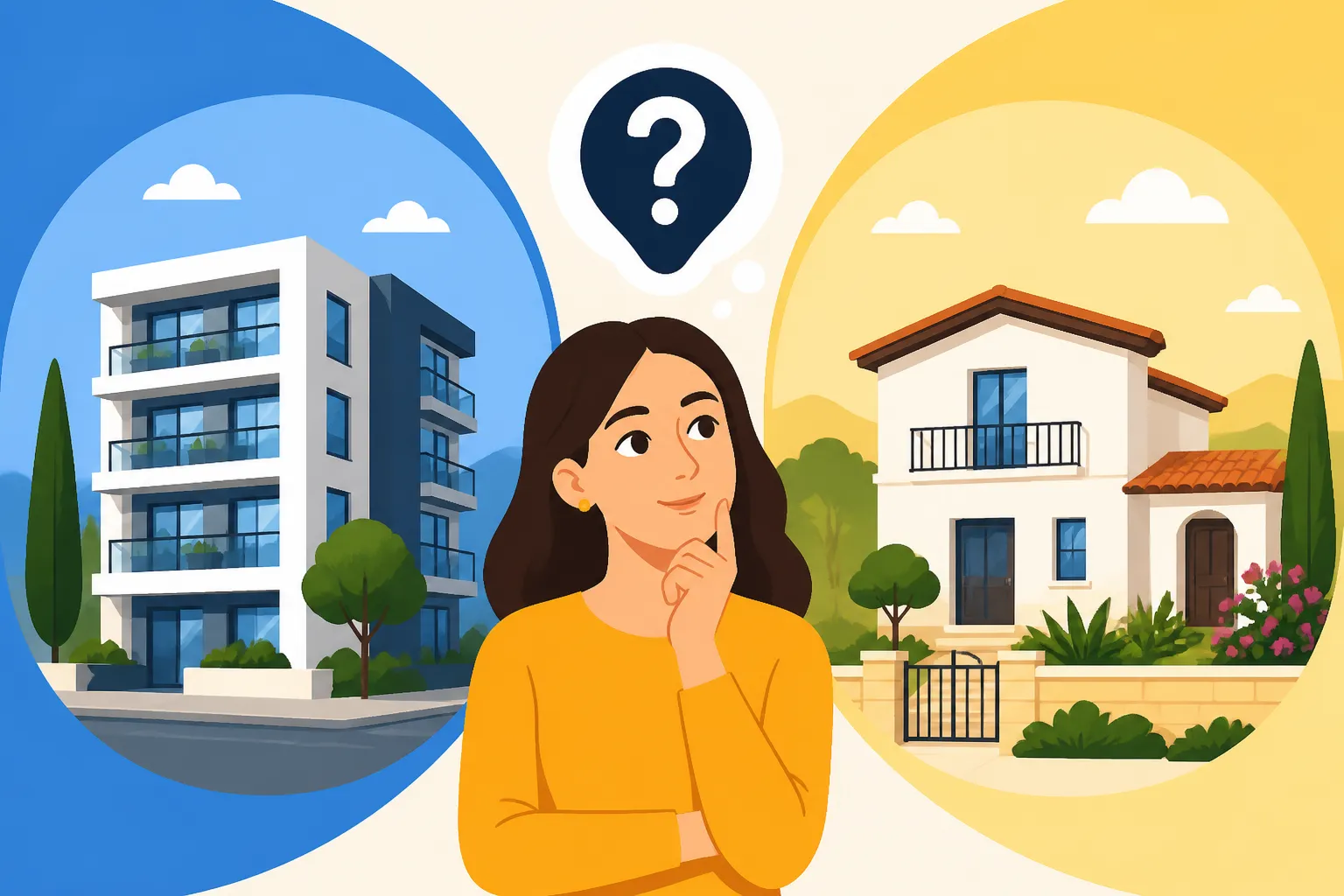
Ah, the eternal expat question when you first arrive in Cyprus, full of dreams and sunshine: 'Should I get an apartment or a house?' It's a choice that sounds simple on the surface, but anyone who's lived here for a while knows it can feel like a monumental decision. It's not just about four walls and a roof; it's about your entire lifestyle, your daily grind, and your long-term vision for life on this beautiful island. This guide will help you navigate the nuances, weigh the practicalities, and ultimately find the perfect Cypriot home that truly fits your expat life.
Understanding Your Lifestyle and Needs in Cyprus
Before you even start browsing listings, take a moment to really think about what kind of life you envision for yourself and your family here in Cyprus. This isn't just about practicalities; it's about matching your living situation to your personal rhythm and desires. Many expats rush into a decision based on preconceived notions, only to find themselves regretting it months down the line when the reality of Cypriot living sets in. Don't be that expat!
Your Daily Rhythm and Social Life
Are you a social butterfly who thrives on spontaneous meet-ups and walking to your local coffee shop or taverna? Or are you more of an introvert who cherishes peace, quiet, and a good book in your private garden? An apartment in a bustling city centre like Limassol or Nicosia might put you right in the thick of things, with bars, restaurants, and shops just a short stroll away. You’ll likely bump into fellow expats, make friends easily, and have a vibrant social calendar without needing a car for every outing.
Conversely, if your idea of a perfect evening involves stargazing from your patio or hosting a BBQ with a few close friends, a house in a quieter village or a suburban area might be more your speed. You’ll have more space to breathe, but you might also find yourself more reliant on transportation for social activities. Think about your current habits and how you want them to evolve (or not) once you're settled here.
Family Dynamics and Future Plans
If you're moving with a family, especially young children, the apartment vs. house debate takes on a whole new dimension. Kids need space – space to run, to play, to be noisy without worrying about neighbours below or beside them. A house with a garden, even a small one, can be a godsend for families, offering a safe outdoor area for children and pets. This also brings up the topic of schools, as proximity to good educational institutions is often a top priority. Areas popular with expat families, like parts of Limassol or the outskirts of Nicosia, might offer more houses but can also come with higher price tags.
Are you planning to expand your family? Will elderly relatives be joining you in the future? Do you need a dedicated home office, a guest room for visitors, or a hobby space? Apartments, particularly in urban areas, can sometimes feel restrictive as your family grows or your needs change. A house offers more flexibility for renovations or extensions down the line, assuming you own it and have the necessary permits, which is a whole other adventure!
Financial Comfort and Long-Term Goals
Let's be brutally honest: Cyprus isn't as cheap as it once was, and your budget will play a massive role in this decision. Are you looking to rent or buy? Renting an apartment is generally more accessible, with lower upfront costs compared to buying. If you're still figuring out if Cyprus is your forever home, or if your job might require you to move again in a few years, renting an apartment offers the flexibility you might need. Check out guides like The Complete Guide to Renting a Home in Cyprus (2027) for more details on the rental process.
If you're planning to put down roots and invest, buying property is a different ball game entirely. While buying a house can offer long-term stability and potential capital appreciation, it comes with significant upfront costs, property transfer fees, and ongoing maintenance expenses. For those considering buying, our guide on How to Buy Property in Cyprus as a Foreigner The Full Guide (2026) will be an invaluable resource. Your financial comfort and what you hope to achieve with your property investment in the long run will heavily influence this choice.
The Practicalities of Apartments in Cyprus
Apartment living in Cyprus has a certain charm, especially if you're coming from a fast-paced urban environment or simply prefer a low-maintenance lifestyle. However, it's not without its quirks, and understanding these upfront can save you a lot of headaches later. Expats often gravitate towards apartments initially because they seem like the easier option, and in many ways, they are. But "easy" doesn't always mean "perfect."
The Allure of Apartment Living: Convenience and Community
One of the biggest draws of an apartment, particularly in cities like Limassol or Paphos, is convenience. You're often closer to amenities, public transport hubs, and your workplace. Many modern apartment complexes offer shared facilities like swimming pools, gyms, and even concierges, which can be a huge bonus. Imagine coming home from a long day and simply walking downstairs for a swim without worrying about cleaning a private pool!
Apartments also foster a sense of community, for better or worse. You'll likely get to know your neighbours, which can be great for making new friends or finding local tips. If you're single or a couple, a compact apartment means less cleaning and less general upkeep, freeing up your precious weekend time to explore the island or simply relax. For instance, in bustling areas, you might be just steps away from fantastic cafes and restaurants, making your social life incredibly vibrant. Need to stay connected while you're out and about exploring your new neighbourhood? Consider a global eSIM from Airalo for seamless data access.
The Downsides: Space, Noise, and Control
Now for the less glamorous side. Space is often the primary trade-off. Cypriot apartments can feel smaller than what many expats are used to, especially if you’re moving from a country with larger average home sizes. Storage can be a nightmare, and if you have a lot of furniture or belongings, you might find yourself feeling cramped.
Noise is another significant factor. Thin walls, noisy neighbours, and street sounds can quickly erode your peace of mind. While some buildings are better insulated than others, it's a gamble you take with apartment living. You also have less control over your immediate environment. Want to paint your front door a quirky colour? Unlikely. Want to grow a massive bougainvillea up the wall? Probably not allowed. Many aspects of your property are governed by communal rules, and these can sometimes feel restrictive, especially if you're used to having full autonomy over your home.
Navigating Communal Fees and Shared Spaces
This is where many newcomers get a nasty surprise. Most apartments in Cyprus, especially in complexes, come with communal fees. These fees cover the maintenance of shared areas like elevators, hallways, gardens, and pools. While they ensure that the building looks good and facilities are kept up, they can add a significant amount to your monthly expenses. Make sure you understand What Are the Communal Fees for an Apartment in Cyprus? before you sign anything.
The amount can vary wildly depending on the size of the complex, the number of amenities, and the management company. Sometimes, disputes can arise within the communal committee, leading to frustrations. It’s crucial to ask about these fees upfront, understand what they cover, and inquire about any outstanding issues or planned major works that might incur additional charges. Transparency here is key to avoiding unforeseen costs and maintaining a harmonious living situation.
| Feature | Apartment Living | House Living |
|---|---|---|
| Space | Generally smaller, less storage, shared outdoor areas. | More living space, private garden/yard, potential for expansion. |
| Maintenance | Low personal maintenance, communal fees for shared areas. | High personal maintenance, full responsibility for property. |
| Privacy | Limited due to close neighbours, shared walls, communal areas. | High, private outdoor spaces, less noise from neighbours. |
| Cost | Potentially lower rent/purchase price, communal fees. | Generally higher rent/purchase price, no communal fees (usually). |
| Amenities | Often shared (pool, gym, security) within complexes. | Private amenities (pool, garden) require personal upkeep. |
| Location | Often central, close to urban amenities, public transport. | More flexible, can be urban, suburban, or rural, often requires a car. |
| Control | Restricted by communal rules and management. | Full control over property, subject to local planning laws. |
The Reality of Houses in Cyprus
For many expats, the dream of a Mediterranean house with a private garden, a pool, and ample space is what draws them to Cyprus. It evokes images of a relaxed lifestyle, sunny days by the pool, and dinners under the stars. While this dream is absolutely achievable, it comes with a distinct set of responsibilities and considerations that differ significantly from apartment living.
The Dream of Space and Privacy
The most obvious advantage of a house is the space – both indoors and out. Imagine having a proper garden where your children or pets can play freely, or a large patio for entertaining friends without worrying about disturbing the neighbours below. A private swimming pool, while a luxury, is a fantastic perk during the scorching Cypriot summers. You have more rooms, often dedicated spaces for hobbies, work, or guests, and generally, more storage than you could ever hope for in an apartment.
Privacy is another huge draw. You don't share walls with noisy neighbours, you don't have to contend with communal rules about barbecues, and your outdoor space is truly your own. This autonomy can be incredibly liberating, allowing you to tailor your home and garden precisely to your tastes and needs. This is especially appealing if you value quiet, personal space, and the freedom to truly make a property your own.
The Responsibilities: Maintenance and Upkeep
With great space comes great responsibility, and nowhere is this truer than with a house in Cyprus. You are solely responsible for all maintenance and upkeep. This means everything from cleaning the pool and tending the garden to fixing leaky faucets, maintaining air conditioning units, and repainting exteriors. These tasks are time-consuming, and if you're not a DIY enthusiast, they can become costly.
The Cypriot climate, while beautiful, is tough on properties. The intense summer sun can fade paint, crack plastics, and dry out gardens, while winter rains can bring dampness or roof issues. You'll need to budget not only for regular maintenance but also for unexpected repairs. If you're renting, your landlord is responsible for major repairs, but you'll still deal with the hassle. If you own, it's all on you. This is a significant factor to weigh, especially if you're accustomed to having a building management company handle these things.
Location, Accessibility, and the Car Conundrum
Houses, especially more affordable ones or those with larger plots, tend to be located further away from city centres. This often means you'll be more reliant on a car for daily errands, school runs, and social activities. While public transport in Cyprus is improving, it's still not as comprehensive as in many other European countries, and owning a car is almost a necessity for house dwellers outside the main urban hubs. Read our guide on Driving in Cyprus: Licences, Registration and Rules for Expats (2027) to prepare yourself.
This location factor can impact your commute, your children's access to schools, and your overall convenience. While living in a quiet village sounds idyllic, consider the practicalities of a daily drive to work or the nearest supermarket. You might find yourself spending more on fuel and car maintenance, offsetting some of the potential savings you might have found on rent or purchase price compared to a city apartment. Conversely, if you love the idea of rural living and are prepared for the logistics, a house offers that perfect escape.
Key Considerations for Your Decision
Now that we’ve explored the broad strokes of apartment and house living, let's drill down into some of the nitty-gritty details that will undoubtedly influence your final decision. These are the practical considerations that, while perhaps not as exciting as dreaming of a pool, are absolutely vital for a smooth transition and happy life in Cyprus.
Budgetary Realities: Purchase vs. Rental Costs
Your budget is likely the most significant factor here. When considering an apartment, especially for rent, the initial outlay is typically lower. You’ll pay a security deposit (usually one or two months' rent), the first month's rent, and possibly a real estate agent's fee. For buying, even an apartment, the costs are much higher, involving a down payment, legal fees, stamp duty, and potentially VAT.
Houses, whether renting or buying, generally command higher prices than comparable apartments. The rental cost will be higher due to more space and private amenities, and if you’re buying, the purchase price will also reflect the larger plot and property. Beyond the headline price, remember to factor in ongoing costs. For a house, this includes higher utility bills (especially if you have a pool), garden maintenance, and general repairs. For an apartment, while your individual utility bills might be lower, you’ll have those communal fees to contend with. Our comprehensive guide on The Complete Guide to Cost of Living in Cyprus for Expats (2026) can help you budget realistically.
The Legalities: Deeds, Deposits, and Contracts
Whether you choose an apartment or a house, navigating the legal framework in Cyprus can be a maze, especially if you’re buying. For apartments, particularly in older buildings, ensuring the developer has obtained individual title deeds for each unit can be crucial. The infamous "title deed issue" has affected many buyers in the past, so due diligence is paramount. Understanding Property Ownership and Title Deeds in Cyprus (2027) is essential knowledge for any potential homeowner.
For renters, thoroughly understanding your rental agreement and deposit terms is vital. Make sure everything is clear regarding responsibilities, notice periods, and how your rental deposit will be returned. Regardless of your choice, it’s highly recommended to engage a reputable, independent lawyer to review all contracts and conduct necessary checks, ensuring your interests are protected throughout the process.
Furnished vs. Unfurnished: What's Best for You?
This often comes down to personal preference and how long you plan to stay. Many apartments in Cyprus are offered fully furnished, especially those targeted at expats or holiday rentals. This can be incredibly convenient for newcomers, allowing you to move in with just your suitcases and personal belongings. It saves the hassle and expense of buying furniture, which can be a significant upfront cost. However, furnished places might be more expensive, and you're stuck with the landlord's taste (and sometimes, their older furniture).
Houses are more often offered unfurnished, giving you a blank canvas to create your dream home. This offers greater flexibility in design and comfort, but it means a much larger initial investment in furniture, appliances, and decor. If you're planning a long-term stay and want to truly make a place your own, an unfurnished house might be ideal. But remember the logistics and cost of moving all your belongings; a service like Sirelo can help you compare quotes from international movers to Cyprus, making the transition much smoother. Consider the overall picture of what works for your current situation and future aspirations.
Finding Your Ideal Cypriot Home
So you've weighed the pros and cons, envisioned your expat life, and decided whether an apartment or a house aligns better with your needs. Now comes the exciting part: the hunt! But like all things in Cyprus, a little local knowledge and patience go a long way in navigating the property market. It’s not always straightforward, but with the right approach, you’ll find your perfect spot.
Utilising Real Estate Agents and Online Platforms
In Cyprus, particularly for expats, real estate agents are often your first port of call. They have access to a wider range of properties, can filter options based on your criteria, and ideally, will speak English. However, just like anywhere else, the quality of agents varies. Look for agents who specialize in expat services and have good reviews. Don't be afraid to interview a few before committing. Our guide on How to Find a Reliable Real Estate Agent in Cyprus offers valuable tips.
Beyond agents, online platforms are a great resource. Popular local property websites like Bazaraki.com, as well as international platforms, list properties for rent and sale. Social media groups for expats in Cyprus are also surprisingly effective – landlords often post directly, or you can ask for recommendations. Just be cautious of scams and always verify listings and landlords. Remember that pictures can sometimes be deceiving, and a site visit is always essential.
The Importance of Location Scouting
Choosing between an apartment and a house is one thing, but choosing the right location is just as, if not more, critical. A fantastic house in a remote village might sound appealing, but if it means an hour's drive to work or your kids' school, the novelty can quickly wear off. Similarly, a city-centre apartment might be convenient, but if you crave peace and quiet, the constant hustle and bustle could become a source of stress.
Spend time in different areas. If you're eyeing Limassol, explore not just the city centre but also areas like Germasogeia, Agios Tychonas, or the more residential parts further inland. For Nicosia, consider neighbourhoods like Engomi, Strovolos, or Latsia. Understanding the Best Cities and Areas for Expats in Cyprus can really help narrow down your search. Visit at different times of day – what's peaceful at noon might be a traffic nightmare at rush hour, or a party zone at night. Walk around, check out local amenities, and gauge the general vibe.
Preparing for the Move
Once you’ve made your choice and secured your home, whether it’s a cosy apartment or a spacious house, the logistics of moving in begin. If you're coming from abroad, this means arranging shipping for your belongings. This is where services like Sirelo can be incredibly useful, allowing you to compare quotes from various moving companies and manage the process efficiently. Whether you're bringing a full container for a house or just a few boxes for an apartment, proper planning is key.
You'll also need to get your utilities set up. For electricity, it’s the Electricity Authority of Cyprus (EAC); for water, your local Water Board; and for internet, providers like Cyta, Epic, or Primetel. This process can sometimes involve a bit of bureaucracy, but it's manageable. Our guide on The Expat Guide to Setting Up Utilities Electricity, Water, Internet in Cyprus provides a step-by-step walkthrough. Getting a local SIM card, perhaps from Airalo initially, will ensure you have communication while you're tackling all these setup tasks. Moving to Cyprus is an adventure, and setting up your home is a major milestone in making this beautiful island truly feel like home.
Disclaimer
The information provided in this guide is for general informational purposes only and does not constitute legal, financial, or real estate advice. While every effort has been made to ensure accuracy, regulations and market conditions in Cyprus can change rapidly. Always consult with qualified professionals, such as lawyers, real estate agents, and financial advisors, for advice tailored to your specific situation.