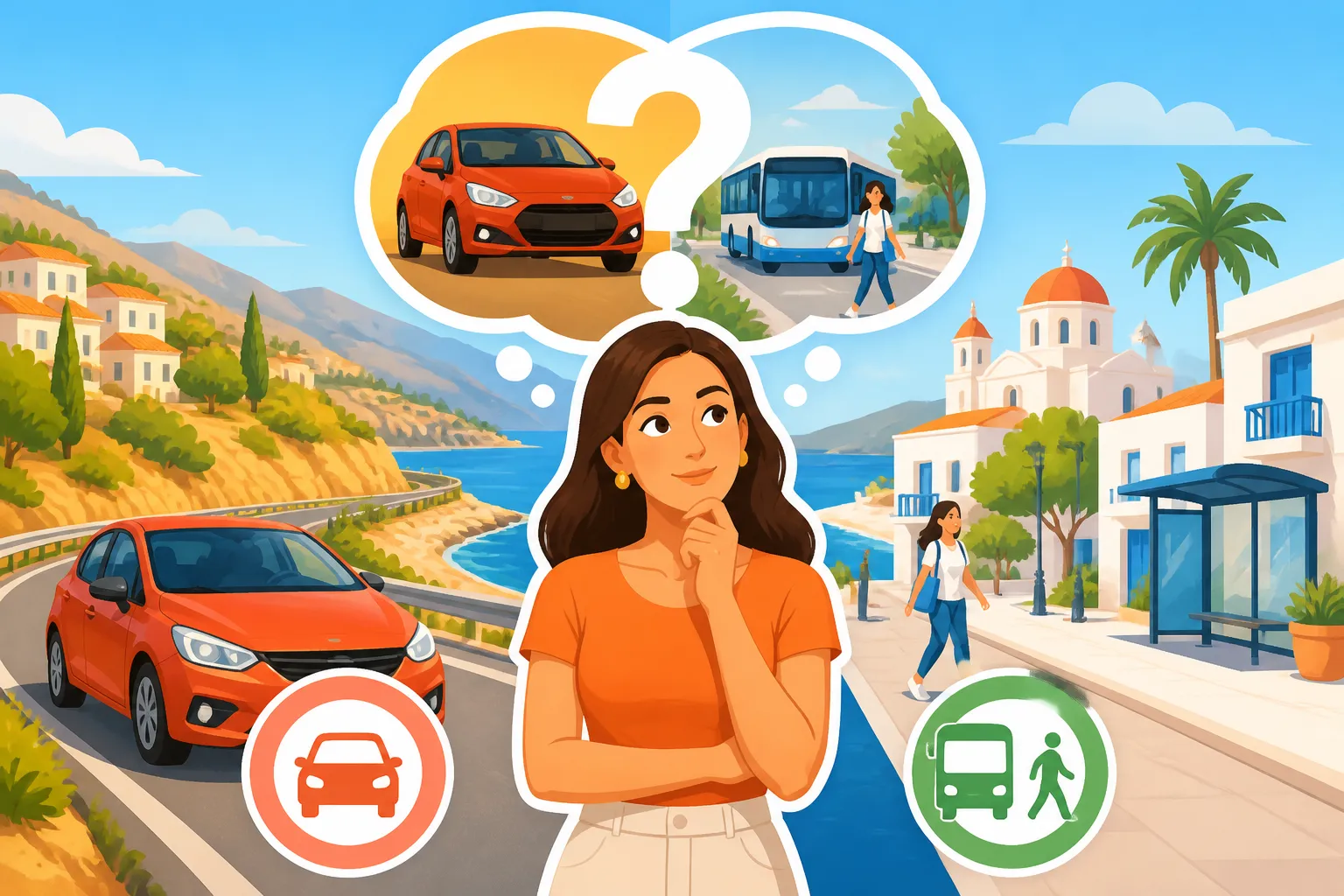
Do I Need a Car to Live in Cyprus?
Ah, the age-old question that plagues every newcomer stepping off the plane at Larnaca or Paphos airport: "Do I really need a car in Cyprus?" It’s a thought that crosses every expat's mind, often met with conflicting advice. Navigating daily life on this beautiful island without your own wheels can be a real head-scratcher, especially when you’re used to robust public transport back home. This guide will dive deep into the realities, frustrations, and practicalities of getting around Cyprus, helping you decide if a car is a necessity for your new life here.
The Reality of Public Transport in Cyprus
Let's be brutally honest from the outset: Cyprus's public transport system, while it exists, is not what most expats from Western Europe or North America would consider comprehensive or particularly convenient. It's functional in certain areas, yes, but it often falls short of meeting the daily needs of someone truly integrating into Cypriot life.
Bus Networks: Coverage and Limitations
Cyprus operates a bus network that connects major cities and offers some intra-city routes. You have the Intercity Buses, which are quite reliable for getting between, say, Limassol and Nicosia, or Paphos and Larnaca. They're generally comfortable, air-conditioned, and punctual for these longer routes. If your primary goal is just to commute between two main city centers for work or leisure a few times a week, these buses can actually be quite good.
However, the moment you step off the Intercity routes, the picture changes dramatically. Within cities like Limassol (served by EMEL) or Paphos (OSYPA), the urban bus networks exist, but their coverage can be patchy. They often stick to main roads and tourist areas, with less frequent services to residential neighbourhoods, especially those a bit further out. Schedules can be less frequent, especially on weekends and public holidays, leaving significant gaps in service. Imagine needing to get to a specific doctor's appointment in an industrial area, or trying to visit friends in a residential suburb; you might find yourself waiting for ages or facing a long walk from the nearest stop. Trying to do your weekly grocery shop for a family without a car, relying solely on urban buses, quickly becomes a logistical nightmare. The sheer heat in summer makes even a short walk with heavy bags feel like an endurance test. You can find more detail on your options in our guide to The Expat Guide to Public Transport in Cyprus.
Taxis and Ride-Sharing: Convenience vs. Cost
Taxis are, of course, available throughout Cyprus, particularly in tourist hot spots and city centres. They offer door-to-door convenience, and many drivers speak English, which is a huge plus when you're still grappling with the local language. You can hail them on the street in busier areas, or call ahead. In larger cities like Limassol and Nicosia, ride-sharing apps like Bolt or Cabs have gained popularity, offering a slightly more streamlined and often transparent pricing structure than traditional taxis. These apps can be a lifesaver for a night out or when you absolutely need to get somewhere quickly and the bus isn't an option.
The catch, as with taxis everywhere, is the cost. While they’re fine for occasional use, relying on them for daily commutes, school runs, or even just regular errands quickly adds up. A few euros here and there might not seem like much, but a couple of return trips a day, five days a week, will quickly make a significant dent in your budget. For someone on a standard salary, this becomes unsustainable very fast. This is why, for many, the initial cost of a car often seems more palatable than the ongoing expense of taxi fares.
The Geographic and Lifestyle Factors to Consider
Your need for a car in Cyprus is heavily influenced by where you choose to live and the kind of lifestyle you intend to lead. This island, while small, has diverse geographies and urban layouts that greatly impact mobility.
Urban vs. Rural Living: Where You Settle Matters
If you're envisioning a life right in the beating heart of a city like Nicosia or Limassol, surrounded by shops, cafes, and perhaps even within walking distance of your workplace, you might be able to get by without a car for a while. These city centres have the highest concentration of amenities and, consequently, the most frequent bus services. For quick trips to the local kiosk, a stroll to a restaurant, or an evening out, walking or a short taxi ride could suffice. In such densely populated areas, you'll find more pedestrian zones and a general buzz that makes car-free living somewhat more feasible, though still challenging for anything beyond a narrow radius. You might wonder, for instance, How Do I Find an Apartment to Rent in Nicosia? and discover that some central areas could support a car-free existence.
However, the vast majority of expat life in Cyprus, even in the cities, tends to extend beyond the absolute centre. Many expats prefer residential areas a little further out, or embrace village life. Think about communities just outside Limassol or Larnaca, or the tranquil villages scattered across the Paphos district. In these areas, public transport quickly becomes sparse, if it exists at all. A bus might come once an hour, or even just a few times a day, and not at all on Sundays. If you settle in a charming village like Episkopi or Pissouri, the idea of doing your weekly shop, getting to an English-speaking doctor, or simply meeting friends for coffee in the nearest town without a car is, quite frankly, a non-starter. You'd be isolated, reliant on favours, or facing exorbitant taxi bills. This is a critical factor when considering What Are the Best Places to Live in Cyprus?
Daily Commutes, Groceries, and Errands
Beyond the general location, consider the sheer practicalities of daily life. Do you have children who need to be taken to school or after-school activities? Most international schools and many local schools are not conveniently located on major bus routes for everyone. School runs are a prime example where a car moves from being a convenience to an absolute necessity.
Then there's grocery shopping. While there are smaller kiosks and mini-markets dotted around, most people do their main shop at larger supermarkets like AlphaMega, Metro, or LIDL, which often require driving to, especially if you're buying for a family. Imagine trying to carry multiple bags of groceries, bottled water, and household essentials on a bus in 35-degree Celsius heat. It's simply not feasible. Errands like visiting the bank, the post office, various government departments (and believe me, you’ll be visiting them a lot in your first year here!), or even just picking up a parcel can often involve multiple stops spread across different parts of town or even different cities. Public transport simply isn't designed for this kind of multi-stop efficiency.
The Undeniable Advantages of Car Ownership in Cyprus
While the initial thought of buying a car in a new country can feel daunting, the benefits of having your own set of wheels in Cyprus quickly become apparent. It's about more than just getting from A to B; it's about truly embracing the island and living life on your own terms.
Freedom and Flexibility: Exploring the Island
One of the greatest joys of living in Cyprus is its incredible diversity, all packed into a relatively small island. You can go from stunning sandy beaches to cool, pine-clad mountains in under an hour. Without a car, much of this natural beauty and cultural richness remains inaccessible. Imagine a spontaneous decision to drive up to Troodos for a cooler escape in summer, or to visit a remote monastery hidden in the hills, or even to explore one of the many charming, traditional villages where time seems to stand still. These are experiences that define living in Cyprus, and they are almost impossible to achieve without a car.
Having your own vehicle means you're not beholden to bus schedules or expensive taxi fares. You can visit friends in other cities, explore archaeological sites at your leisure, or discover a secluded beach that isn't on the tourist map. It's about the freedom to be truly independent, to discover the island at your own pace, and to fully immerse yourself in all that Cyprus has to offer. This flexibility is invaluable for quality of life as an expat.
Practicalities for Families and Professionals
For families, the advantages of car ownership are multiplied. Beyond the school runs and grocery hauls, think about extracurricular activities, doctor's appointments, and weekend outings. Children's lives in Cyprus, much like anywhere else, involve a fair bit of logistics. A car simplifies this immensely, allowing parents to manage multiple schedules without stress. Moreover, the capacity of a car means you can easily transport sports equipment, beach gear, or luggage for a weekend away without compromising comfort or convenience.
For professionals, especially those working outside the main city centres or in specific industrial zones, a car is often non-negotiable. Many offices, factories, and even some schools are located in areas poorly served by public transport. Even if your workplace is on a bus route, the time spent commuting can be significantly longer than driving, eating into valuable personal time. Furthermore, in many professional roles, having a car is expected for client meetings, site visits, or simply projecting an image of reliability and professionalism. Your job search might even be limited if you cannot drive.
Navigating the Costs and Practicalities of Owning a Car
Okay, so we've established that a car is likely a strong contender for a comfortable life here. But what about the practicalities and, let's be honest, the costs involved? It’s not just about the purchase price; there’s a whole host of ongoing expenses and administrative hurdles to consider.
Buying, Registering, and Maintaining a Vehicle
First off, you'll need a car. You can either buy a brand new vehicle from one of the many dealerships across the island or opt for a used car. The used car market in Cyprus is quite active, with options ranging from smaller city cars to larger family vehicles. You’ll find listings online, through local dealerships, and word-of-mouth within expat communities. Be mindful of the import process if you're considering bringing a car from outside the EU; it can be complex and costly. Once you've purchased a vehicle, it needs to be registered in your name, a process handled by the Department of Road Transport. This involves paperwork, fees, and ensuring the vehicle meets Cypriot standards. It's a key step you'll need to understand – a useful resource is our guide on How Do I Register a Car in Cyprus?
Then there's the ongoing maintenance. Like any car, it will need regular servicing, occasional repairs, and an annual inspection known as the MOT (Ministry of Transport) test to ensure it's roadworthy. Finding a reliable mechanic who speaks English is usually not difficult, especially in larger towns, but it's another expense to budget for. Over the lifetime of a car, these costs can accumulate, so it's wise to factor them into your overall budget when considering The Complete Guide to Cost of Living in Cyprus for Expats (2026).
Insurance, Fuel, and Parking Realities
Every vehicle on Cypriot roads must have at least third-party liability insurance, which covers damages to other vehicles and individuals in case of an accident. Comprehensive insurance, offering broader coverage for your own vehicle, is also available and recommended for peace of mind. Insurance premiums can vary based on the vehicle's age, engine size, your driving history, and even your age. It's worth shopping around to compare quotes. For a deep dive, check out How Much Is Car Insurance in Cyprus?.
Fuel costs are another significant factor. Petrol and diesel prices in Cyprus fluctuate, much like they do globally. While not as expensive as some European countries, they are a regular and unavoidable expense, especially if you plan on doing a lot of driving. Keep an eye on local petrol station prices, as they can differ slightly.
Finally, parking. While often straightforward in residential areas and smaller towns, parking can be a significant challenge and expense in the centres of Limassol and Nicosia. Paid parking lots and street parking are common, and fines for illegal parking are routinely issued. Always be mindful of parking signs and restrictions to avoid unpleasant surprises. Understanding the full picture of Driving in Cyprus: Licences, Registration and Rules for Expats (2026) is vital. And don't forget the annual road tax, which is calculated based on your vehicle's engine size and emissions, and must be paid to the Department of Road Transport. You can find out more about this in How Much Is Road Tax for a Car in Cyprus?.
Exploring Alternatives and Hybrid Mobility Solutions
Even with all the strong arguments for car ownership, it's worth considering if there are any workable alternatives or hybrid approaches, especially if you're only here for a short stint or your specific circumstances allow for less reliance on a private vehicle.
Car Rentals and Ride-Sharing for Occasional Needs
If you're only in Cyprus for a few months, or if your lifestyle genuinely means you rarely need to travel beyond a small local radius, renting a car might be a more cost-effective solution than buying. Car rental companies are plentiful, especially at the airports and in tourist areas, offering a range of vehicles for daily, weekly, or even monthly rates. This can be perfect for exploring the island on weekends or for when visitors come to stay. However, long-term rentals (many months) can still be expensive compared to the cost of ownership, and the available car models might be limited.
As mentioned earlier, ride-sharing apps like Bolt or Cabs can fill the gaps for those urgent, one-off trips or nights out where you don't want to drive. They offer a convenient, on-demand service in the major urban centres. For expats who work from home, live near essential amenities, and only venture further afield occasionally, a combination of walking, limited bus use, and ride-sharing might just about work. But be prepared for the costs to add up if "occasional" becomes "frequent."
Cycling and Walking: Limitations and Opportunities
For short distances, particularly in smaller towns or specific, pedestrian-friendly parts of larger cities, walking can be a pleasant way to get around. It's great for local errands, a quick coffee run, or enjoying the Mediterranean climate (outside of the scorching summer months, that is!). However, Cyprus generally isn't set up for extensive walking or cycling as a primary mode of transport. Sidewalks can be inconsistent, and dedicated cycling paths are still quite rare, largely confined to specific seafront promenades in cities like Limassol.
The climate is another significant factor. While winter and spring are lovely for outdoor activities, the summer heat from June to September makes anything more than a short walk uncomfortable, if not risky, during peak daylight hours. Carrying groceries or children on foot for any significant distance in that heat is simply not practical. So, while cycling and walking can be enjoyable leisure activities or supplements for very local travel, they are not robust replacements for a car for most expats living in Cyprus.
The Digital Nomad Solution and Connectivity
For digital nomads, whose work doesn't require a physical commute and who might prefer a quieter, more isolated lifestyle, the need for a car can sometimes be slightly less immediate, particularly if they choose to live in a village or town with a good community feel and a few essential shops. However, even for digital nomads, a car greatly enhances their quality of life, allowing them to explore, connect with other expats, and access a wider range of services and leisure activities.
One thing that is universally essential for digital nomads, whether they have a car or not, is staying connected. Having reliable internet and mobile data is key for work, navigation, and using ride-sharing apps. Services like Airalo, which offer eSIMs for international travel, can be a great way to ensure you have local data connectivity as soon as you land, making it easier to navigate, call a taxi, or look up bus schedules, even before you sort out a local SIM card. This connectivity empowers you to manage logistics, car or no car, from day one. You can also explore how to set up internet and mobile services in our guide on The Expat Guide to Setting Up Utilities (Electricity, Water, Internet) in Cyprus.
Conclusion: Making Your Decision
So, do you need a car to live in Cyprus? The honest, empathetic answer from a veteran expat is almost certainly yes. While it's technically possible to exist without one, particularly if you're a single person living in a very central, amenity-rich part of Limassol or Nicosia and rarely venture far, it comes at a significant cost to your convenience, independence, and overall quality of life. For families, or anyone living outside the immediate urban core, a car transitions from a luxury to a near-essential requirement.
The limitations of public transport, the geographic spread of amenities and attractions, and the practicalities of daily life, especially under the Cypriot sun, all strongly lean towards car ownership. The freedom to explore this beautiful island, manage family logistics, and simply live life on your own terms is a significant factor in expat satisfaction here. Weigh the costs carefully, but understand that investing in a vehicle is often an investment in your peace of mind and enjoyment of your new Cypriot home.
| Factor | Living with a Car in Cyprus | Living Without a Car in Cyprus |
|---|---|---|
| Independence & Freedom | High. Explore the entire island at your leisure. | Low. Reliant on schedules, taxis, or others. |
| Daily Commute | Flexible, often quicker, door-to-door. | Time-consuming, limited routes, heat exposure. |
| Grocery Shopping | Easy for large hauls. | Challenging, limited by carrying capacity, weather. |
| Access to Amenities | Excellent. Reach doctors, schools, shops anywhere. | Limited to areas with bus routes or walkable distance. |
| Cost | Higher upfront + ongoing (fuel, insurance, maintenance). | Lower upfront, but high for regular taxi/ride-sharing. |
| Social Life | Easier to visit friends, attend events across cities. | Can be isolating if friends live far or transport is poor. |
| Family Logistics | Essential for school runs, activities, appointments. | Very difficult, stressful, time-consuming. |
| Exploration | Unrestricted access to beaches, mountains, villages. | Severely limited to tour buses or expensive private tours. |
| Environmental Impact | Higher individual carbon footprint. | Lower individual carbon footprint. |
Disclaimer
The information provided in this guide is for general informational purposes only and does not constitute professional advice. While we strive to ensure the information is accurate and up-to-date, regulations and circumstances in Cyprus can change. Always consult with relevant professionals or government departments for specific advice pertaining to your individual situation.